
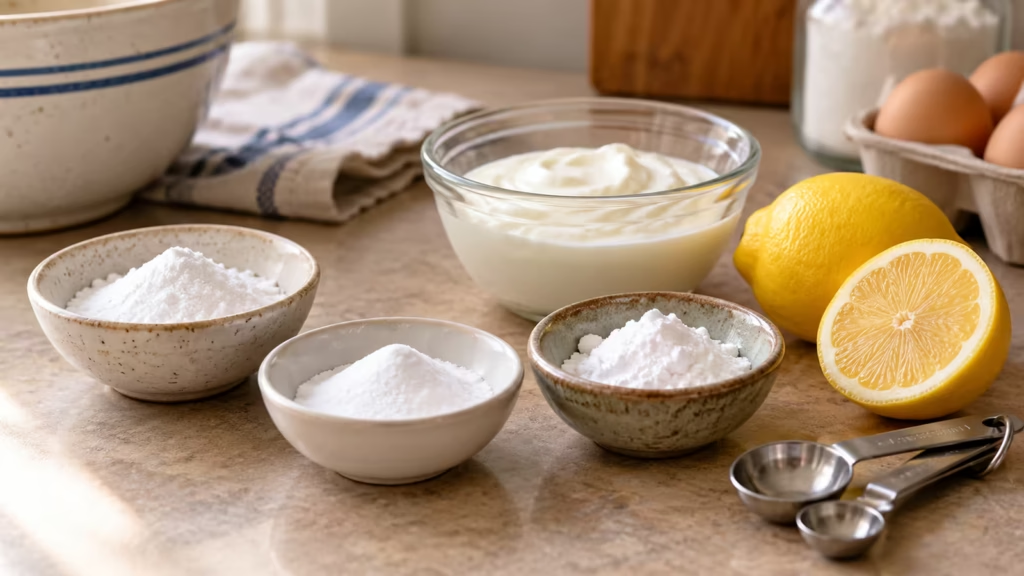
The most reliable substitute for 1 teaspoon of baking powder is 1/4 teaspoon baking soda plus 1/2 teaspoon cream of tartar. Whisk them together, add them with the dry ingredients, and bake soon after mixing because this homemade version reacts quickly.
A good baking powder substitute must supply both a base and enough acid—baking soda alone is not an equal swap.
I’m Laura, and this is one kitchen substitution where precision matters. Chemical leaveners control rise, tenderness, browning, and flavor. The wrong amount can leave muffins dense, pancakes flat, or a cake with a soapy aftertaste.
What baking powder does
Baking powder contains baking soda, one or more powdered acids, and usually starch to keep the mixture dry. When liquid is added, the acid and base react and release carbon dioxide bubbles. Heat expands those bubbles and helps set the lifted structure.
Most supermarket baking powder is double-acting: it reacts once when wet and again with heat. A cream-of-tartar mixture acts mainly when moistened, so the batter should not sit around. Baking powder and baking soda also lose strength over time, especially after moisture gets into the container.
- Baking powder already contains acid and base.
- Baking soda is only the alkaline half of the reaction.
- An acidic ingredient can activate baking soda, but changing liquids affects texture and flavor.
- Too much leavener can make a bake rise quickly and then collapse.
The best baking powder substitutes
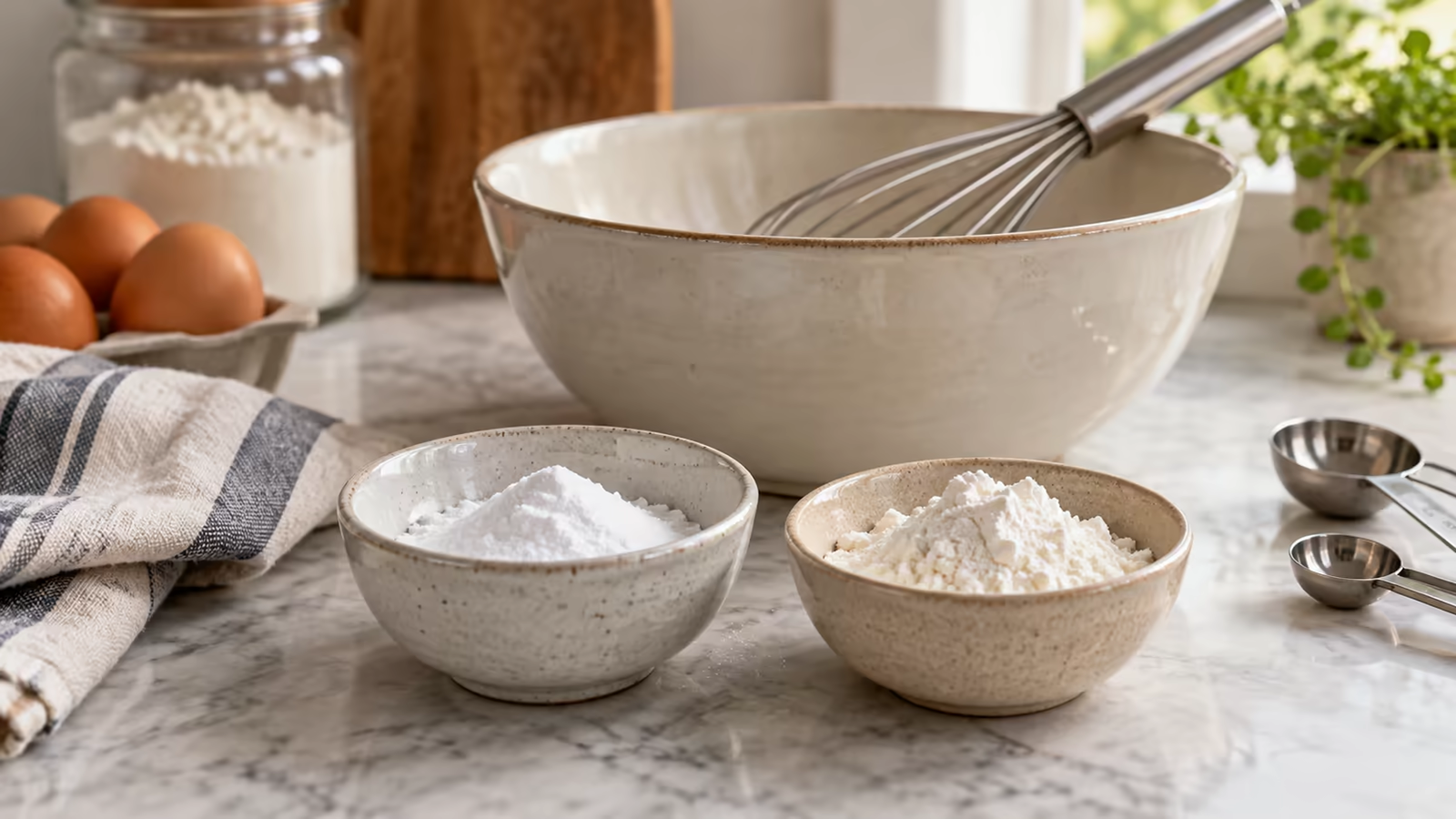
- For 1 teaspoon baking powder: combine 1/4 teaspoon baking soda with 1/2 teaspoon cream of tartar.
- For 1 tablespoon baking powder: combine 3/4 teaspoon baking soda with 1 1/2 teaspoons cream of tartar.
- If the recipe already contains a strong acid: 1/4 teaspoon baking soda may replace 1 teaspoon baking powder, but results depend on whether there is enough acid to react.
- Self-rising flour: useful only when you can replace the recipe’s flour as well; it is not a spoon-for-spoon powder substitute.
If making a larger batch for later, some bakers add cornstarch to reduce clumping, but homemade mixtures still have different timing from commercial double-acting powder. For one recipe, mixing only what you need is simpler and more predictable.
Yogurt, buttermilk, sour milk, molasses, and lemon juice are acids, not complete leaveners. They need baking soda and usually require replacing some of the recipe’s liquid. Do not add a large amount of extra acid without reducing another liquid, or the batter balance will change.
Which option works for different bakes
The cream-of-tartar combination works well in pancakes, muffins, quick breads, cakes, and biscuits. Mix the batter and cook or bake promptly. For pancakes, preheat the pan before combining wet and dry ingredients so the first batch does not wait.
Whipped egg whites can add lift to sponge-style cakes, waffles, or pancakes, but they do not reproduce baking powder’s chemistry or flavor effects. They work best when the recipe can support a foam. Yeast is even less direct: it changes flavor, hydration, and rising time.
If you are also adjusting dairy ingredients, remember that concentrated and cultured products behave differently. Tastiva’s guide to evaporated milk explains why it is not the same as buttermilk, and the heavy cream comparison can help with richer bakes.
Avoid flat, bitter, or uneven results

- Measure with level spoons, not rounded spoonfuls.
- Whisk the leavener through the flour so it is evenly distributed.
- Do not substitute baking soda one-for-one; it is much stronger.
- Have the oven or griddle fully heated before wet and dry ingredients meet.
- Bake a small test pancake when adapting a recipe, then adjust only if necessary.
You can test baking powder by stirring a small amount into hot water; active powder should bubble vigorously. Baking soda should fizz when combined with an acid such as vinegar. These tests show activity, not exact strength, so replace an old container when a precision bake matters.
If you have no acidic ingredient and no cream of tartar, choose a recipe designed around the leavener you do have rather than improvising several major changes. A dependable substitution should make baking easier, not turn the whole formula into a guess.
Sources
- King Arthur Baking: Testing Baking Powder and Baking Soda
- Colorado State University Extension: High-Altitude Food Preparation
- USDA FSIS: Food Product Dating

Hi, I’m Laura, the voice behind Tastiva. I’ve always believed that eating well should feel enjoyable, comforting, and realistic—not like another complicated rule to follow. I love creating recipes that fit into everyday life, sharing simple nutrition ideas, and finding small ways to make meals feel a little better without losing the pleasure of good food.