
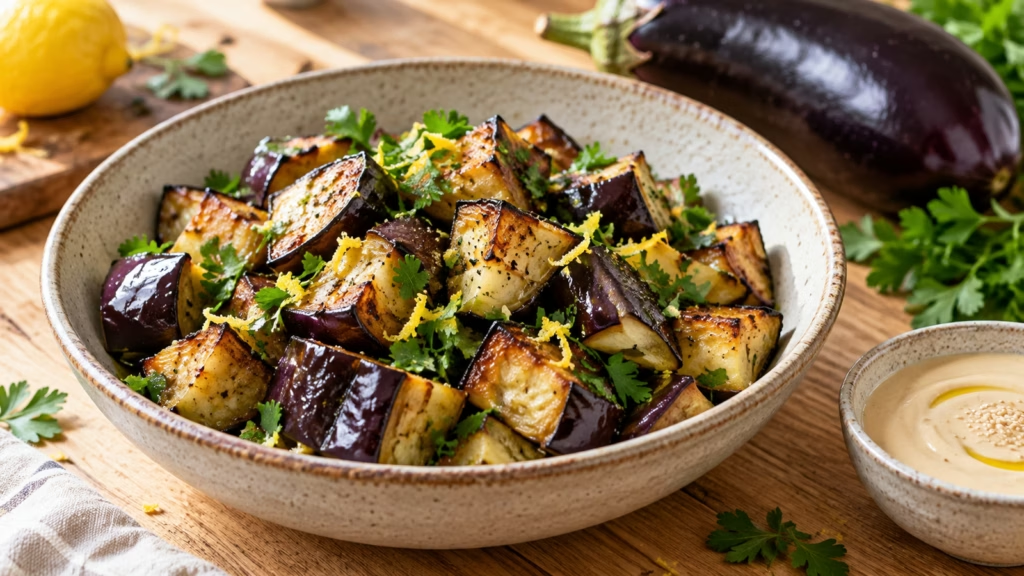
Eggplant recipes make more sense when you decide what texture you want first. A tray of browned cubes, a silky dip, and a layered casserole all begin with the same vegetable, but they ask different things of it. These five dishes give you useful starting points, with full recipe links and the preparation details worth noticing before you turn on the heat.
Let the dish choose the cut: small cubes for browning, slices for the grill, and soft roasted flesh for a dip.
Choose eggplant recipes by the meal you want
I’d choose the method before buying several eggplants simply because they look beautiful. A single side dish may need much less than a pan of moussaka. Check the recipe’s weight as well as its count, especially when the shop has both large globe eggplants and slender varieties.
- For an easy side or bowl addition: roast cubes until the centers soften and the edges brown.
- For distinct slices: grill evenly cut rounds and check tenderness through the middle.
- For a dip: cook the eggplant until the flesh is soft enough to mash, then remove the skin.
- For a vegetable-led dinner: combine eggplant with tomatoes, squash, and chickpeas.
- For a longer cooking project: layer it into moussaka with meat sauce and béchamel.
The linked recipes supply the exact quantities and methods. These are different dishes with eggplant, not five names for the same preparation. Some are sides or appetizers rather than complete meals; decide what will accompany them before assuming a recipe’s serving count covers dinner.
Two simple ways to keep eggplant in recognizable pieces
- 1. Oven-roasted eggplant cubes. Love and Lemons’ roasted eggplant is a four-serving side with a short ingredient list. The recipe uses evenly cut cubes, a single layer, and a hot oven. Look for both browned edges and a tender center, rather than taking color alone as the finish line. It works when you want a flexible side without another sauce or casserole to manage.
- 2. Grilled eggplant with a couscous topping. Love and Lemons’ grilled eggplant pairs thin rounds with a lemony couscous mixture, herbs, dried fruit, and almonds. The full dish serves four as a side or two as a main. The slices should yield easily to a fork. The topping is an additional preparation step, and contains wheat and almonds; plain grilled slices are a different, simpler option.
For the roasted cubes, a small spoonful of lemon tahini sauce can add a creamy contrast. Keep it separate until serving, and remember that tahini contains sesame. A cooked grain, beans, or another protein food can turn a side into a more substantial plate without pretending the eggplant alone does every job.
A creamy dip and two more substantial dishes
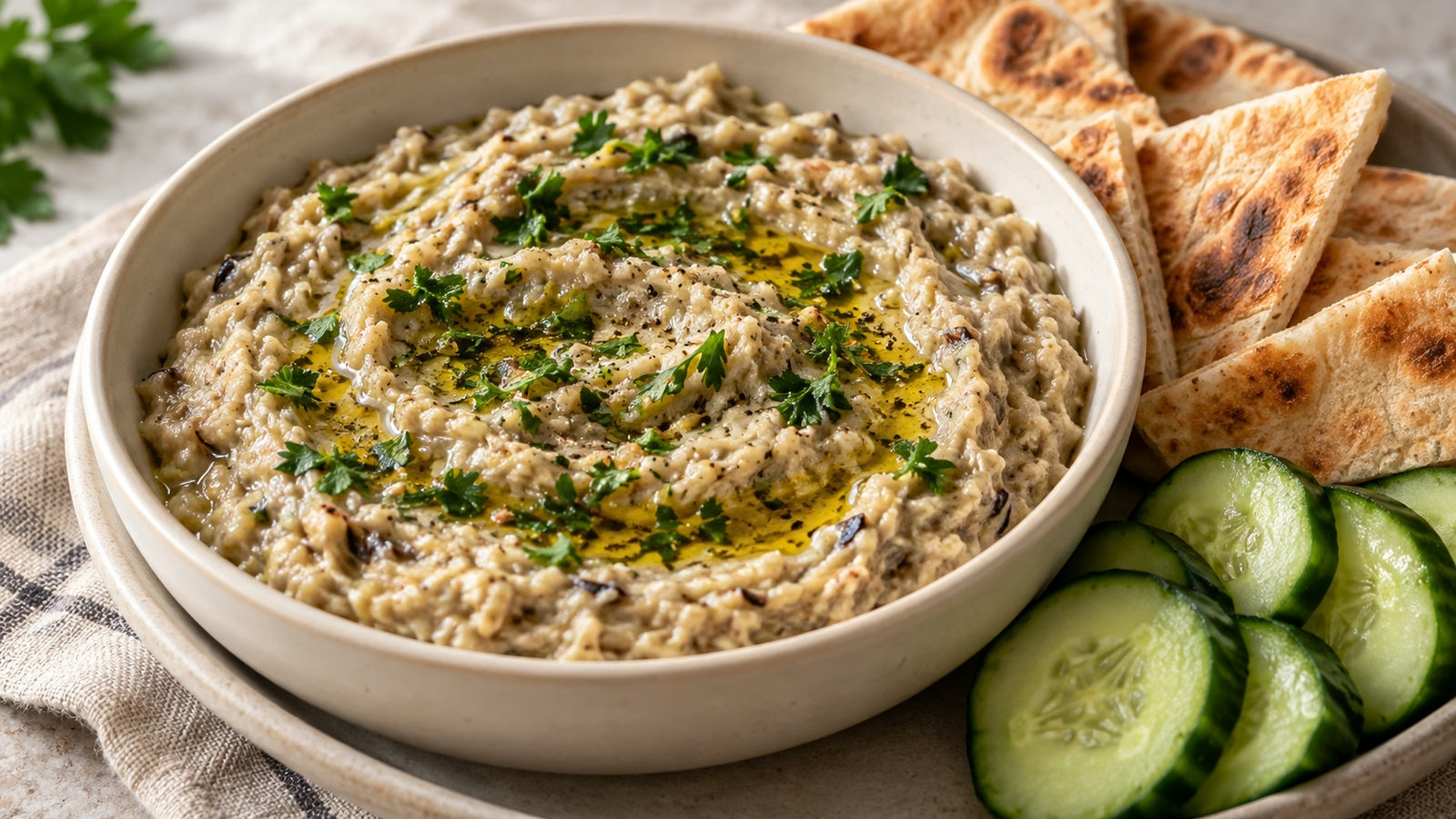
- 3. Baba ganoush. Downshiftology’s baba ganoush combines cooked eggplant flesh with tahini, lemon, garlic, and olive oil. It is a Middle Eastern and Eastern Mediterranean-style dip with a slightly chunky, hand-mixed texture. The recipe describes grill, gas-stovetop, and broiler approaches; use a method suitable for your appliance and follow its safety instructions. Cooking and draining the eggplant come before mixing, so this is not a five-minute dip from raw vegetables.
- 4. Roasted chickpea ratatouille. Love and Lemons’ roasted version combines eggplant, squash, tomatoes, onion, and cooked chickpeas. It is written for two as a meal, with bread, a grain, or another accompaniment as desired. This is a juicier vegetable dish than a tray of separate browned cubes. The chickpea portion is modest, so add a protein food or more beans if that better fits your meal.
- 5. Moussaka. Tastiva’s moussaka recipe layers roasted eggplant and potatoes with spiced beef sauce and béchamel. It makes eight servings and takes about 2 hours 40 minutes, including the rest before slicing. Choose it when you have time for several components. Thick sauce, tender vegetables, and a proper rest help the layers stay distinct; it is a different commitment from a quick vegetable side.
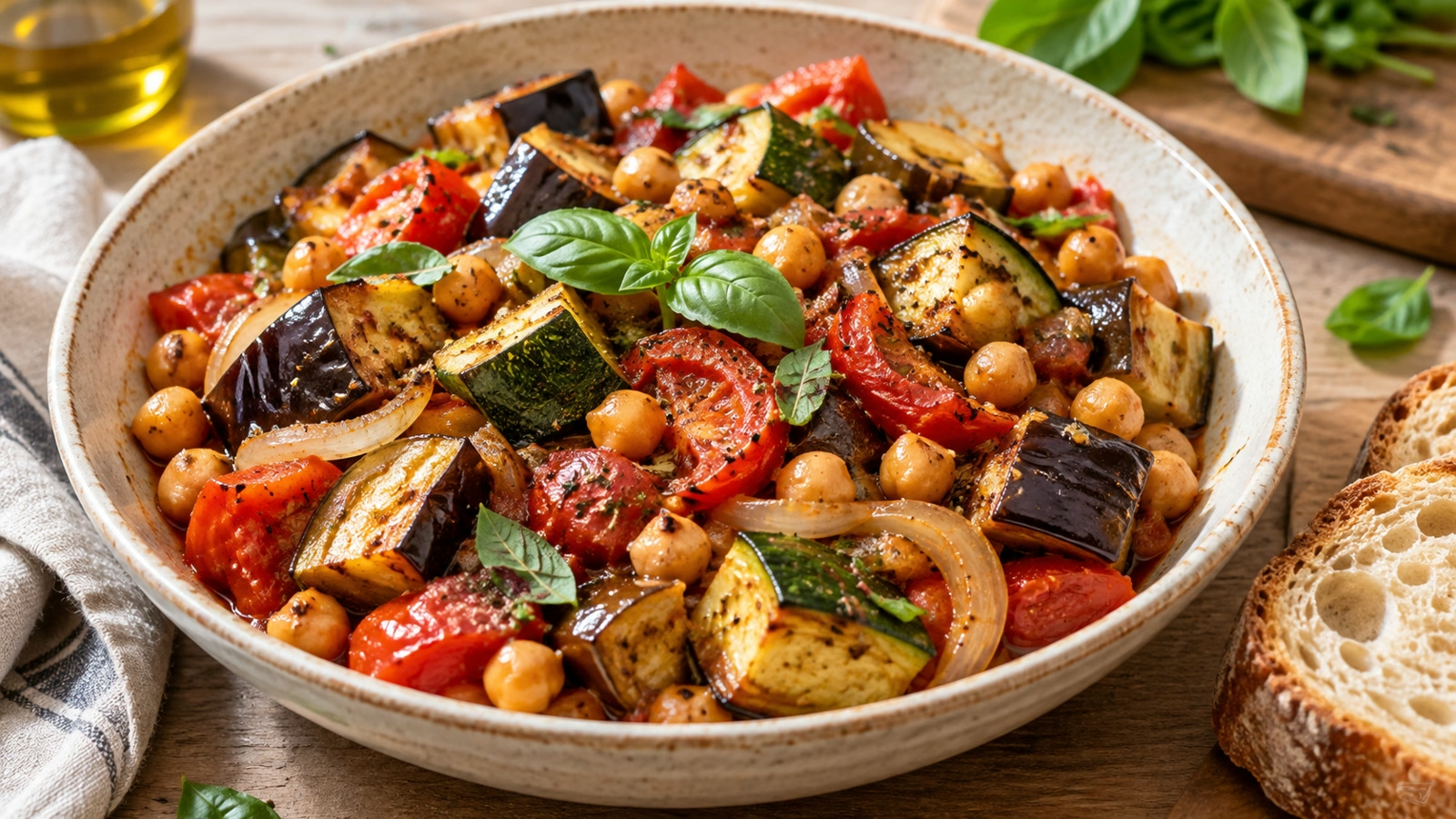
Baba ganoush fits a spread with pita and crisp vegetables, while ratatouille can take the center of a smaller dinner. Moussaka is rich enough that a simple salad makes a useful companion. Check each recipe for allergens: sesame in the dip and dairy, wheat, and eggs in the casserole are important differences.
The texture checks that make the choice easier
A clock helps you plan, but the middle of a piece tells you more about the result. If an eggplant cube is brown outside and firm inside, it needs more cooking or a gentler finish, not just a new garnish. Cut size, crowding, and the particular pan all change how quickly the center catches up.
- Keep cuts consistent. Pieces of similar thickness are easier to finish together. Do not use a thin-slice cooking time for a thick wedge.
- Follow the recipe’s salting step. The linked grilled and roasted preparations do not require a separate salt-and-drain stage, while the moussaka includes one. Salting is not a universal prerequisite for every eggplant dish.
- Match pan space to the result. Separate cubes need room to brown. A juicier mixed-vegetable dish has a different goal; do not treat every crowded tray as the same mistake.
- Allow time for the dip. Softening, cooling enough to handle, and draining are real preparation steps. Do not simply blend raw or firm eggplant into tahini.
- Store prepared food promptly. Refrigerate perishables within two hours, or one hour above 90°F, at 40°F or below. Use cooked leftovers within three to four days, or follow a shorter applicable instruction. Reheat hot leftovers to 165°F.
Downshiftology’s video below shows its baba ganoush approach, including the hand-mixed finish. If you prefer to avoid an open-flame method, use a suitable oven method from a complete recipe and follow your appliance instructions. Thaw any frozen cooked eggplant in the refrigerator, rather than on the counter.
Sources
- Love and Lemons: Roasted Eggplant
- Love and Lemons: Grilled Eggplant
- Downshiftology: Baba Ganoush
- Love and Lemons: Roasted Chickpea Ratatouille
- FoodSafety.gov: Four Steps to Food Safety
- FoodSafety.gov: Leftover Storage Guidance
- FoodSafety.gov: Safe Minimum Internal Temperatures

Hi, I’m Laura, the voice behind Tastiva. I’ve always believed that eating well should feel enjoyable, comforting, and realistic—not like another complicated rule to follow. I love creating recipes that fit into everyday life, sharing simple nutrition ideas, and finding small ways to make meals feel a little better without losing the pleasure of good food.