
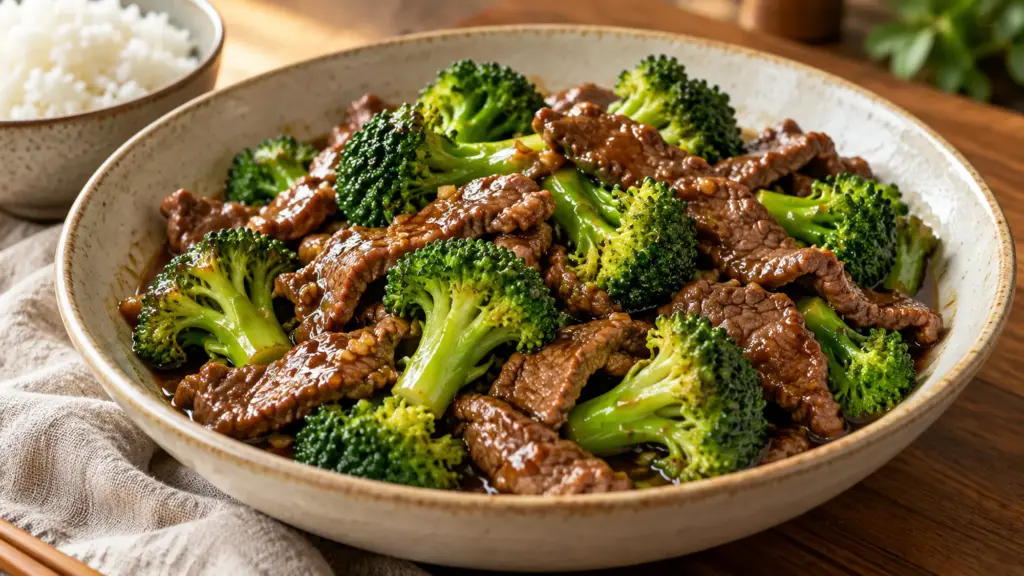
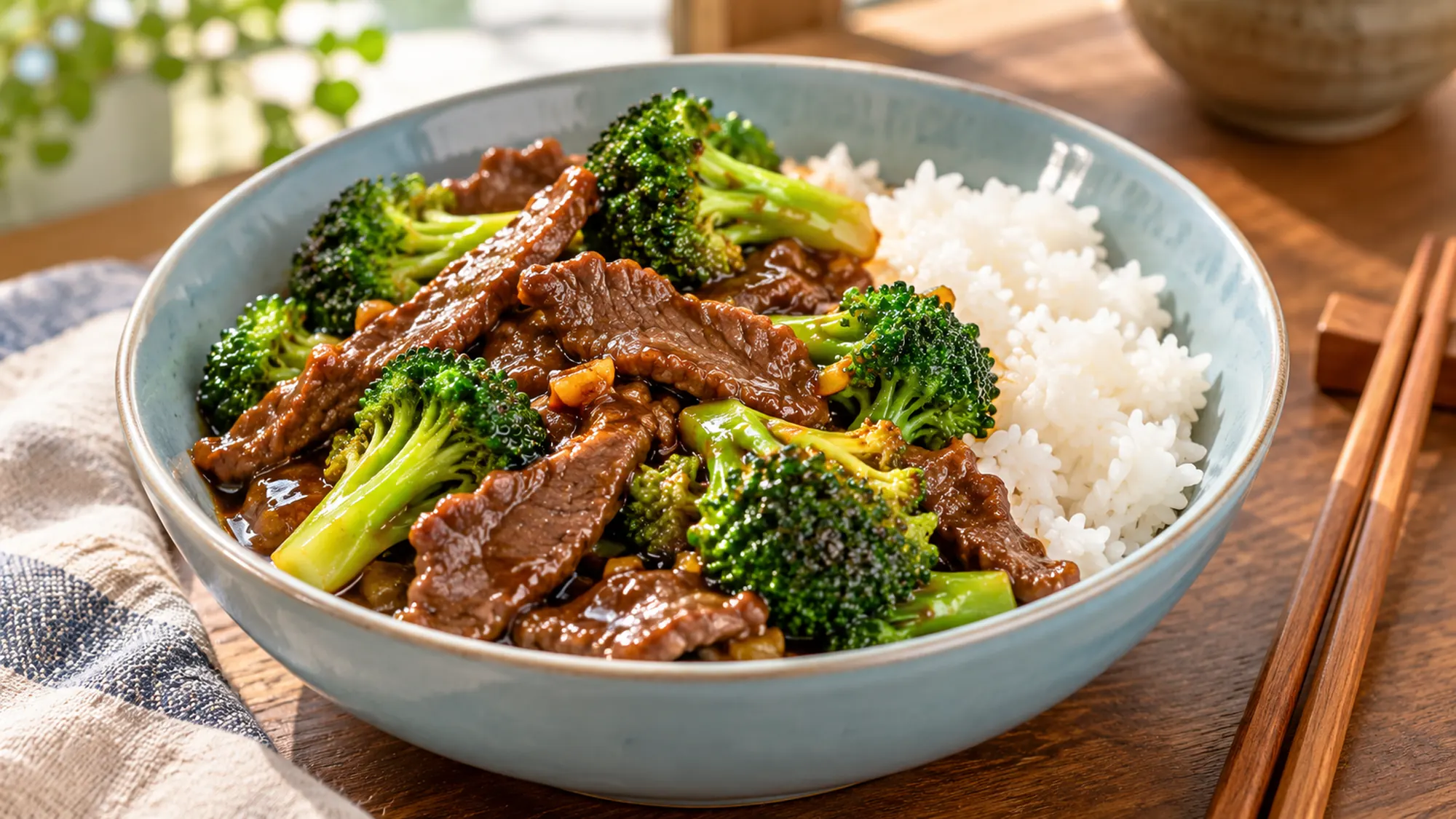
When dinner needs to move quickly, the useful trick is not turning the burner higher and hoping for the best. This beef and broccoli starts with everything sliced and the sauce mixed before the skillet gets busy. Thin steak, green florets and a glossy ginger-garlic sauce come together in short stages rather than one crowded pile.
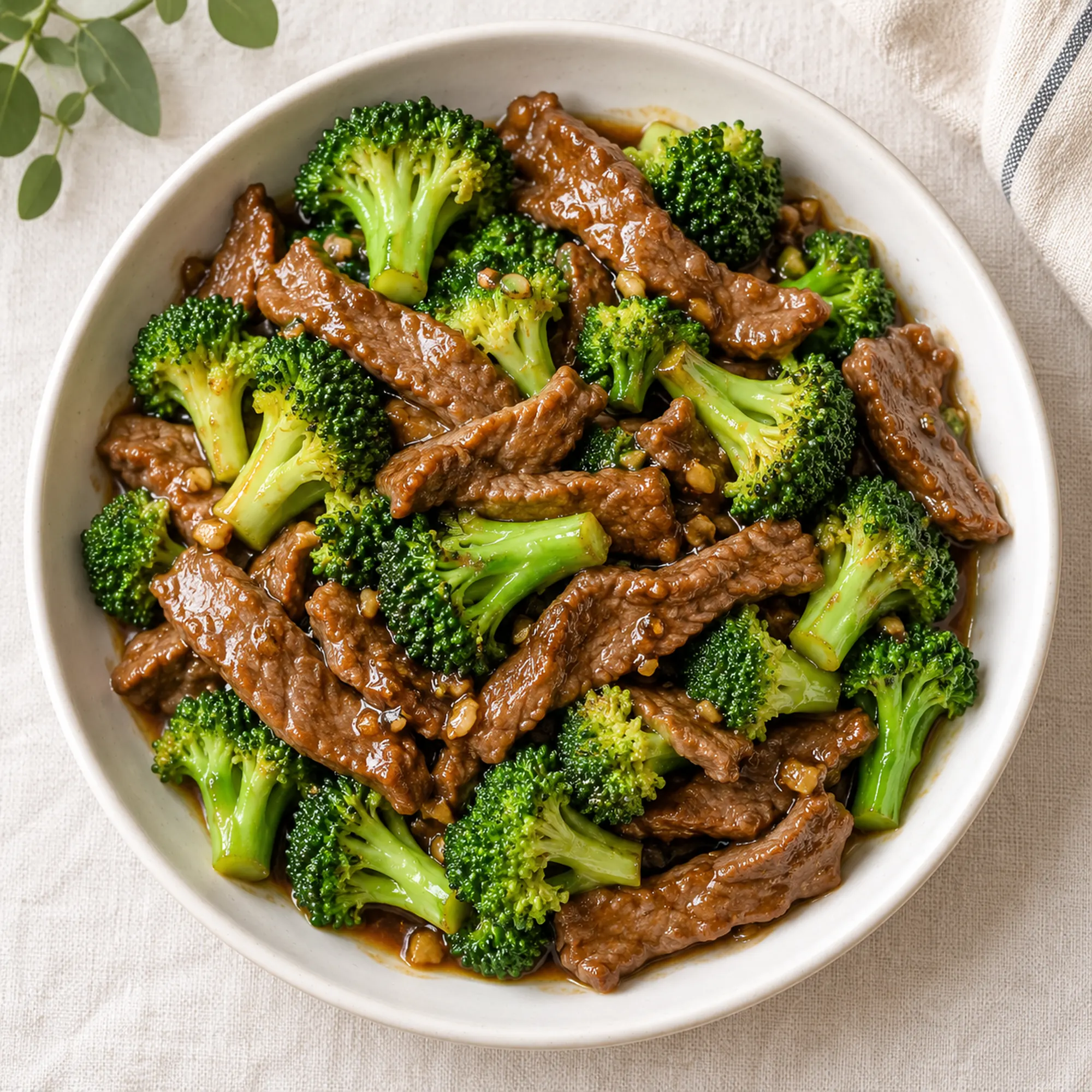
For tender beef and broccoli, slice flank steak thinly across the grain, cook the broccoli separately, and bring everything together only after the sauce thickens.
I like this approach because each ingredient gets the cooking time it needs. The broccoli should keep a little bite, while the beef needs enough room to brown. A broad skillet is more helpful than a small pan filled to its rim, even if washing it requires a little negotiation with the sink.
Serving Beef and Broccoli
Start rice before you begin the stir-fry so the finished beef does not wait while a second pot catches up. Tastiva’s white-rice guide is useful if you want distinct grains rather than a sticky mound. Rice is a serving suggestion here, not part of the card’s nutrition or cost.
A bowl with a modest rice base leaves space for the beef and vegetables. For something cool alongside, try the soy-sesame cucumber salad, but taste before adding more dressing: the main dish already brings a salty sauce. Plain sliced cucumber is a simpler alternative.
- Serve promptly, while the broccoli is green and the sauce still coats the meat lightly.
- Set out extra chili only for people who want it; heat is optional.
- Avoid pouring additional soy sauce over the finished bowl before tasting.
| Serving choice | Useful adjustment |
|---|---|
| White rice | Start it before heating the skillet |
| Cooked noodles | Drain well so the sauce is not diluted |
| Cucumber alongside | Keep its dressing light |
Prepare the side first, then let the stir-fry go straight from skillet to table.
Steak, Vegetable and Sauce Variations
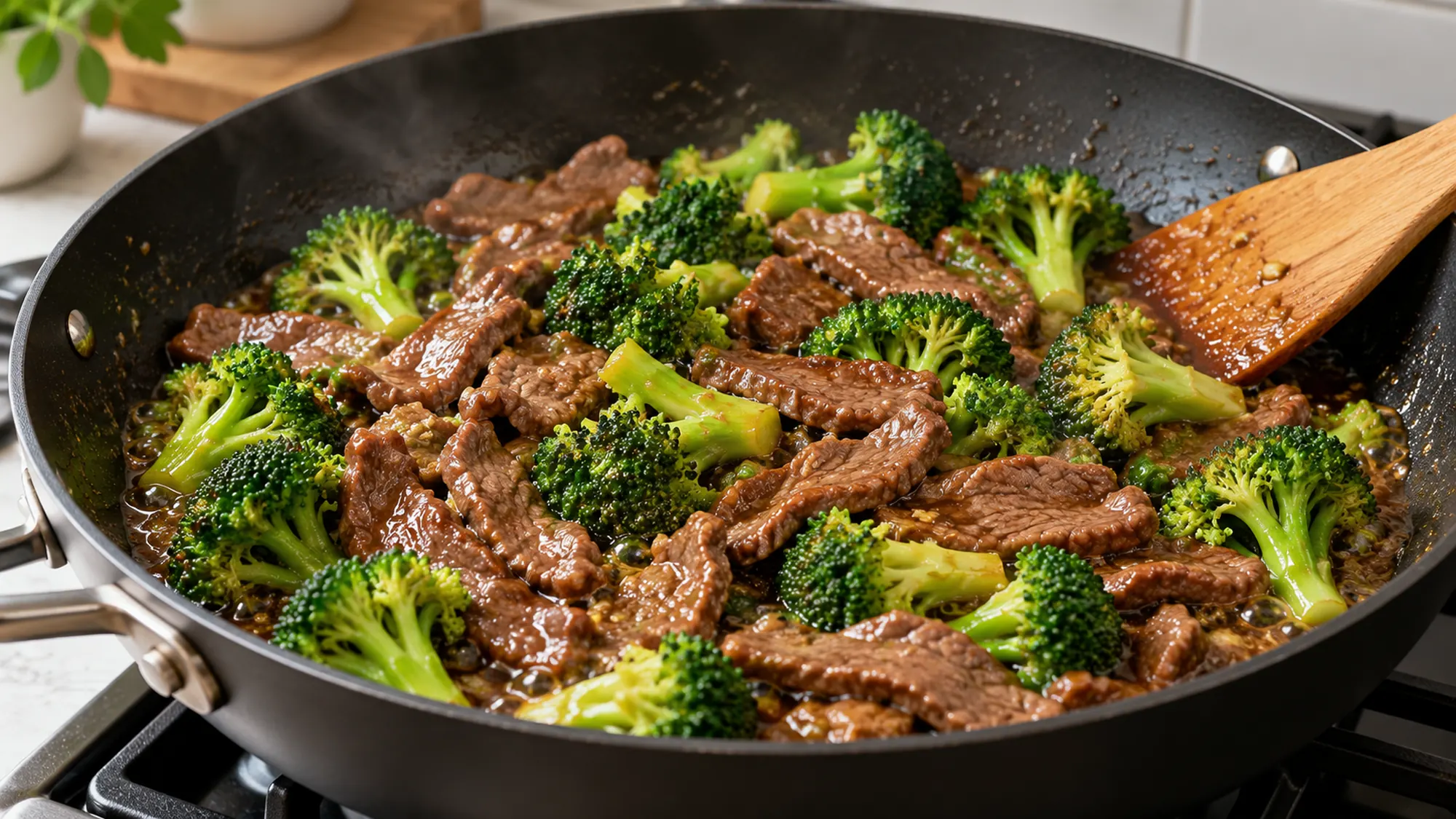
The recipe follows the skillet sequence demonstrated by Natasha’s Kitchen: cook the broccoli, remove it, brown the beef, then finish with sauce. Flank steak has a visible grain, so look at the fibers before slicing. Cutting across them gives shorter strands to chew; cutting parallel works against the goal.
I would adjust the sweetness only after trying the measured sauce, rather than adding sugar by eye. Brown sugar balances the soy and ginger, but the cornstarch—not the sugar—does most of the thickening. Stir the sauce again just before pouring because starch settles while you work.
- Frozen broccoli releases extra water. Thaw and drain it well, and expect a softer result than fresh florets.
- Reduced-sodium soy sauce is still salty. A gluten-free version needs a verified gluten-free sauce, not an assumption that all soy sauces qualify.
- A larger batch should be cooked in separate rounds. Doubling the ingredients does not double a skillet’s usable browning surface.
Keep the separate cooking stages even when you change the vegetables or serving size.
Nutrition Benefits and Sensible Portions
Beef contributes protein, and the broccoli adds a substantial vegetable portion to each serving. The calculated estimate is about 372 calories and 28 grams of protein for one quarter of the stir-fry, without rice or noodles. All the measured cooking and sesame oil is included, even if a little remains in the pan.
The sauce contains soy and wheat in the specified brand, plus sesame oil. Check bottles when cooking for someone with an allergy. Lower-sodium soy reduces sodium compared with the regular version of that product, but it does not make this a low-sodium meal; smaller sauce portions and unsalted sides can help with overall balance.
- Keep raw-beef utensils and plates separate from ready-to-eat vegetables and cooked food.
- Slice pieces evenly so they cook at a similar rate; do not leave a few thick strips among paper-thin ones.
- Refrigerate leftovers promptly in shallow containers. Reheat only the portion needed until thoroughly hot, with a small splash of water if the sauce has tightened.
Count the sauce and oils as part of the meal, and add the chosen grain separately to any nutrition estimate.
Bottom Line
Good beef and broccoli is mostly a matter of order: prepare first, give the ingredients space, and stop treating the vegetables and steak as though they need identical cooking. The sauce should cling rather than pool like soup. Keep a side ready and this becomes a practical skillet dinner with clear, repeatable cues.
Thin slices, a roomy skillet and separately cooked broccoli matter more than rushing the heat.
Beef and Broccoli Recipe

Ingredients
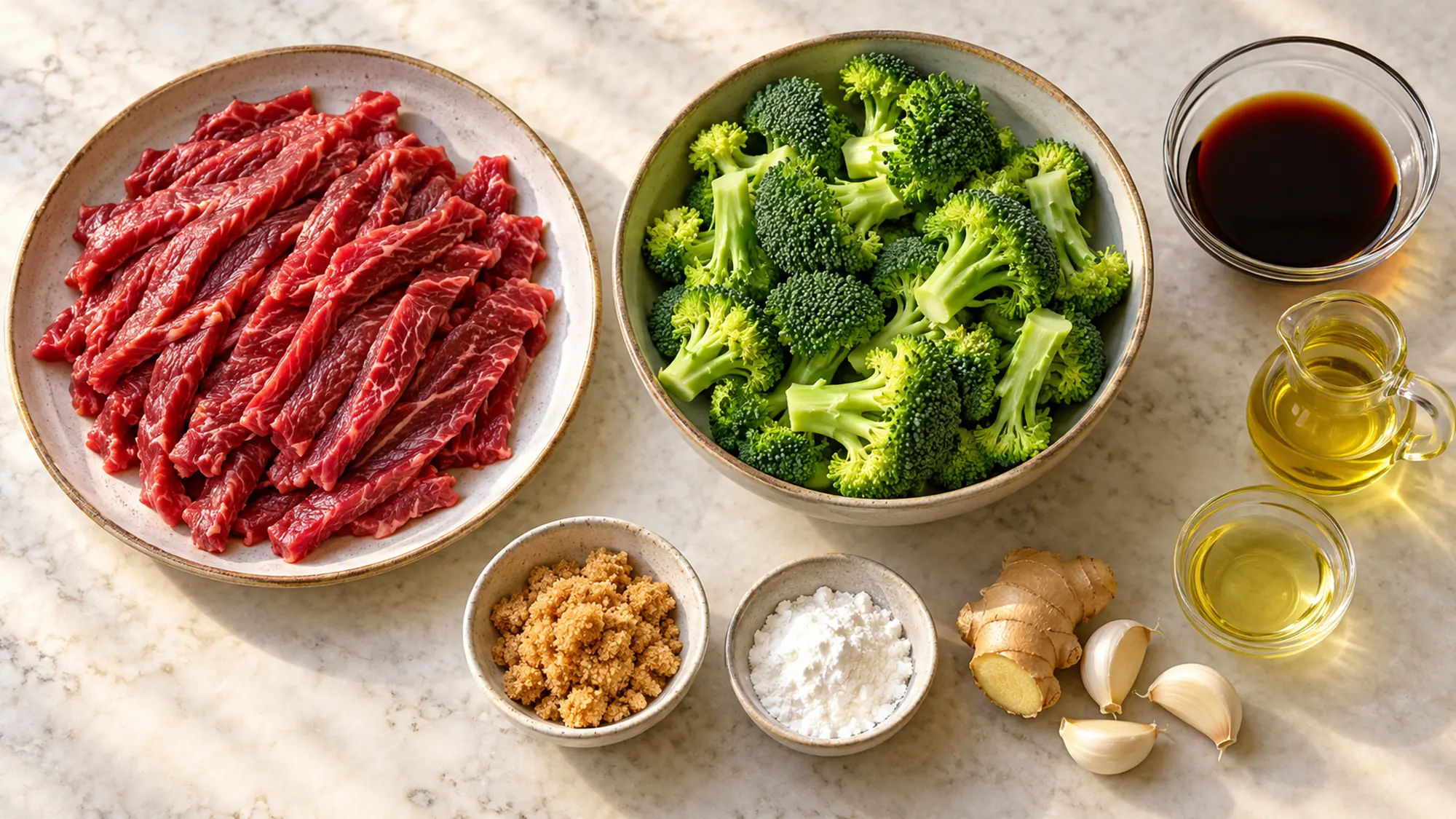
- 454 g flank steak 1 pound, thinly sliced across the grain
- 454 g broccoli florets 1 pound
- 27 g olive oil 2 tablespoons
- 5 g fresh ginger finely grated
- 6 g garlic minced
- 120 ml water 1/2 cup, plus a splash for broccoli if needed
- 90 ml less-sodium soy sauce 6 tablespoons
- 36 g light brown sugar 3 packed tablespoons
- 12 g cornstarch 1 1/2 tablespoons
- 0.5 g black pepper 1/4 teaspoon
- 27 g sesame oil 2 tablespoons
Equipment
- 1 Large skillet
- 1 Sharp knife
- 1 Mixing bowl
Instructions
- Slice the steak thinly across the grain. Mix ginger, garlic, water, soy sauce, brown sugar, cornstarch, pepper and sesame oil in a bowl until the starch disperses. Have the broccoli ready before heating the pan.
- Heat 1 tablespoon olive oil in a large skillet over medium-high heat. Add broccoli and stir-fry 4–5 minutes until bright green and crisp-tender. Add a small splash of water and cover briefly if needed to soften the stems. Transfer broccoli to a bowl.
- Add the remaining tablespoon olive oil. Spread beef in a single layer, working in batches rather than crowding. Cook about 2 minutes per side, until browned and cooked through. Transfer any completed batch to a clean plate.
- Return all beef to the skillet. Stir the sauce again and pour it in. Simmer 3–4 minutes, stirring, until glossy and thickened and the beef is fully cooked; extend time for any thicker strips. Return broccoli and toss until hot and coated.
- Divide into four portions and serve promptly. Rice or noodles are optional sides and are not included in the recipe quantities, nutrition or estimated cost.
Nutrition
Video
Notes
Tried this recipe?
Let us know how it turned out!Hi, I’m Laura, the voice behind Tastiva. I’ve always believed that eating well should feel enjoyable, comforting, and realistic—not like another complicated rule to follow. I love creating recipes that fit into everyday life, sharing simple nutrition ideas, and finding small ways to make meals feel a little better without losing the pleasure of good food.