
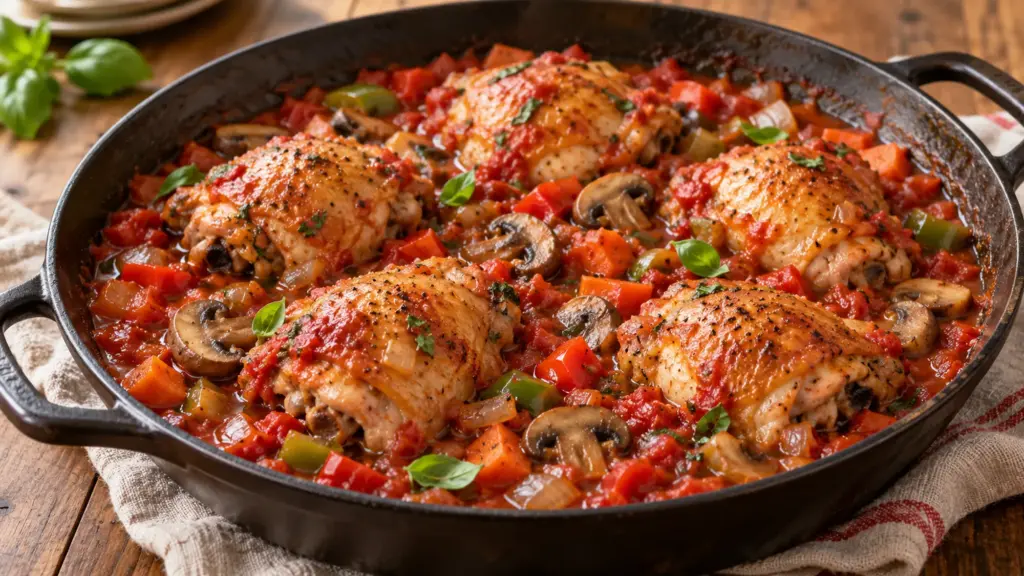
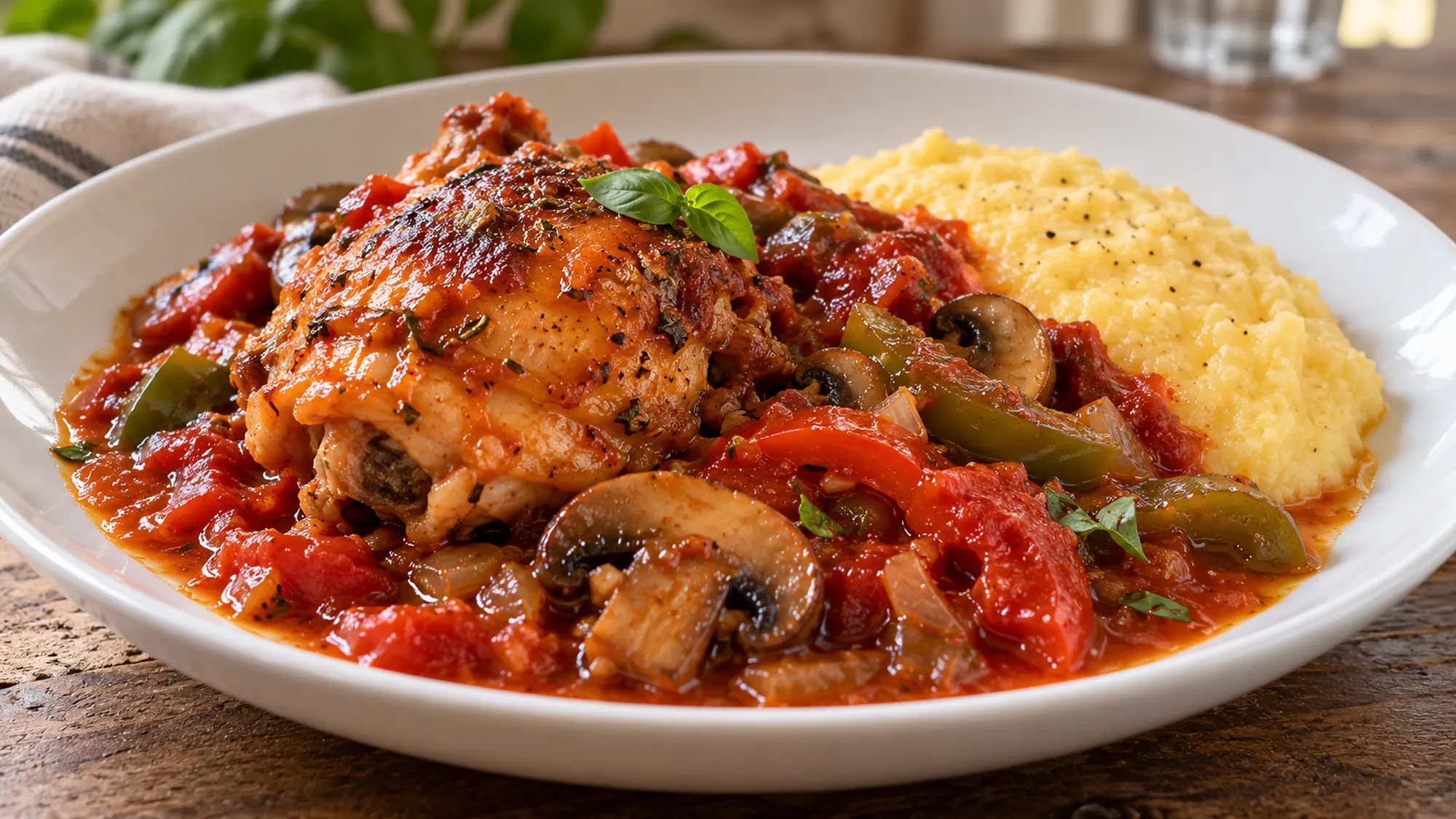
A pot of chicken cacciatore is a good answer to the evening when you want a proper dinner but would rather let the stove do the patient work. Browned thighs settle into tomatoes, peppers and mushrooms, and the sauce becomes more rounded as everything simmers together. The chicken stays tender; the vegetables soften without disappearing.
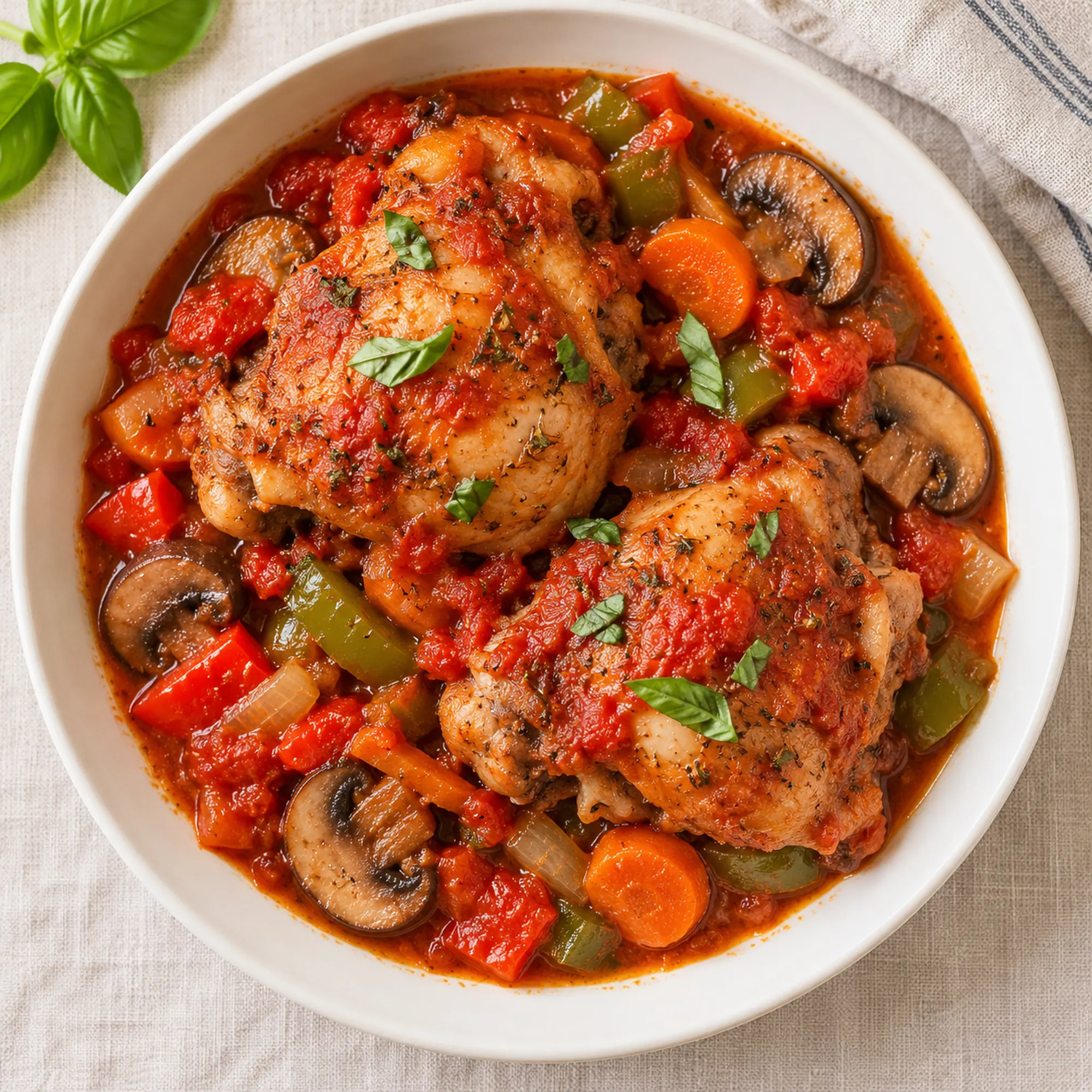
This chicken cacciatore uses bone-in thighs and a partially covered simmer for tender meat and a tomato sauce that thickens without drying out.
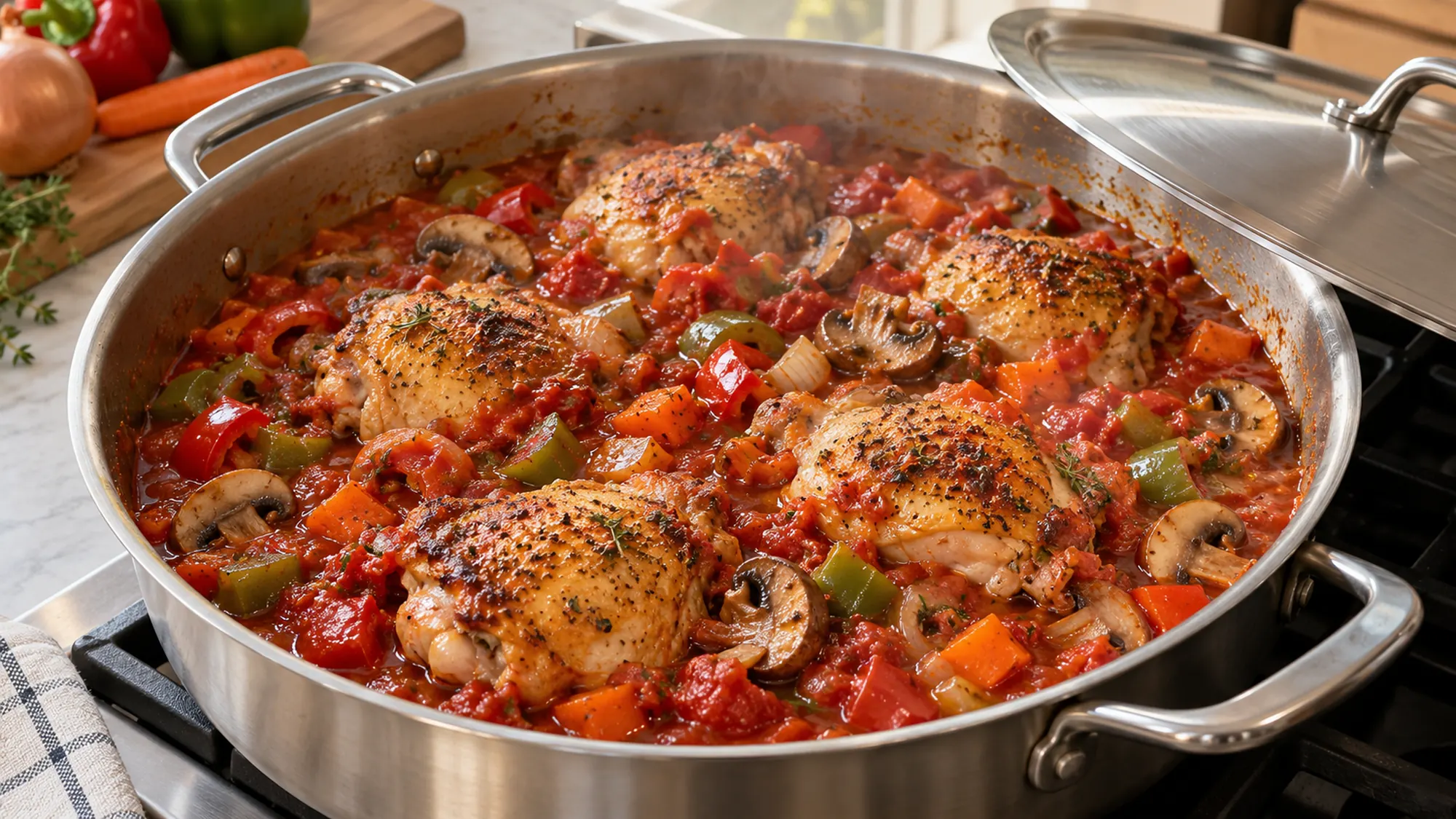
I prefer a wide, heavy pot here because the chicken can sit in one layer instead of forming a crowded stack. Browning builds savory flavor before the tomatoes arrive. It does not promise crisp skin at the table: once the thighs simmer in sauce, that browned skin becomes soft. Keep the lid slightly ajar during the braise so steam can escape while the chicken remains surrounded by moisture.
Serving Chicken Cacciatore
Give the sauce somewhere useful to go. Creamy polenta catches the peppers and tomato juices, while a modest scoop of rice makes an easy alternative. For a familiar starting point, Tastiva’s guide to fluffy white rice explains the grain separately, so its cooking time need not compete with the chicken.
Serve one thigh with a generous share of vegetables, then offer the starch alongside. A crisp salad or steamed green beans adds contrast without another rich sauce. Bread works too, particularly when someone is determined not to leave the last spoonful of tomato behind.
- Use shallow bowls for polenta or rice; they keep the sauce gathered around the chicken.
- Set out a small spoon as well as a fork if serving with crusty bread.
- Add optional basil at the table rather than hiding its fresh aroma through a long simmer.
| Alongside | What it adds |
|---|---|
| Polenta | A soft base for the chunky sauce |
| Rice | Separate grains and a mild flavor |
| Green beans | A green vegetable with a firmer bite |
Choose one simple starch and one contrasting vegetable; the chicken and sauce already carry plenty of flavor.
Flavor and Chicken-Cut Variations
The card replaces the wine in Preppy Kitchen’s cacciatore method with unsalted chicken stock, an option that source explicitly allows. This changes the sauce’s acidity, not the basic browning-and-braising approach. If using wine instead, choose a dry white rather than something sweet, and expect a different nutrition estimate.
I would keep both peppers before adding olives or capers. Their sweetness balances the tomatoes and gives the dish its particular character. Mushrooms contribute a savory, earthy note; if you leave them out, the sauce will have less vegetable bulk rather than an identical texture.
- Boneless thighs cook differently: begin checking earlier and still confirm the safe internal temperature.
- A pinch of crushed red pepper is an optional heat adjustment, not a required ingredient.
- If the sauce looks thin once the chicken is cooked, remove the thighs briefly and simmer the sauce uncovered. Return them before serving.
Change the seasonings freely, but adjust timing whenever you change the chicken cut.
Nutrition Benefits and Safe Cooking
Chicken supplies protein, while peppers, tomatoes, carrot and mushrooms add vegetables and some fiber to the plate. The card estimate is about 430 calories and 31 grams of protein per serving, before rice, bread or polenta. That is a useful starting point, not a promise that every thigh has exactly the same edible weight.
Nutrition counts all measured oil and sauce and assumes roughly 900 grams of edible meat and skin from 1.2 kilograms of bone-in thighs. Bones are not food weight. Leaving skin or sauce behind changes what is eaten; adding Parmesan or a larger starch serving changes it in the other direction.
- Check the thickest part of each thigh, away from bone, reaches 165°F (74°C); color alone is not a reliable test.
- Keep utensils used for raw chicken away from the finished meal.
- Cool leftovers promptly in shallow containers, refrigerate, and reheat the portion you need rather than repeatedly warming the entire pot.
The vegetables are part of the meal, but portions, added sides and safe cooking still deserve attention.
Bottom Line
Chicken cacciatore rewards a little attention at the beginning and a gentler pace afterward. Brown the thighs, give the vegetables room to soften, and let the tomato sauce settle into a steady simmer. Keep the serving plan simple so the peppers, mushrooms and tender chicken remain the reason to sit down.
A wide pot, a gentle simmer and a clear serving plan turn this chicken dinner into comfortable, practical cooking.
Chicken Cacciatore Recipe

Ingredients
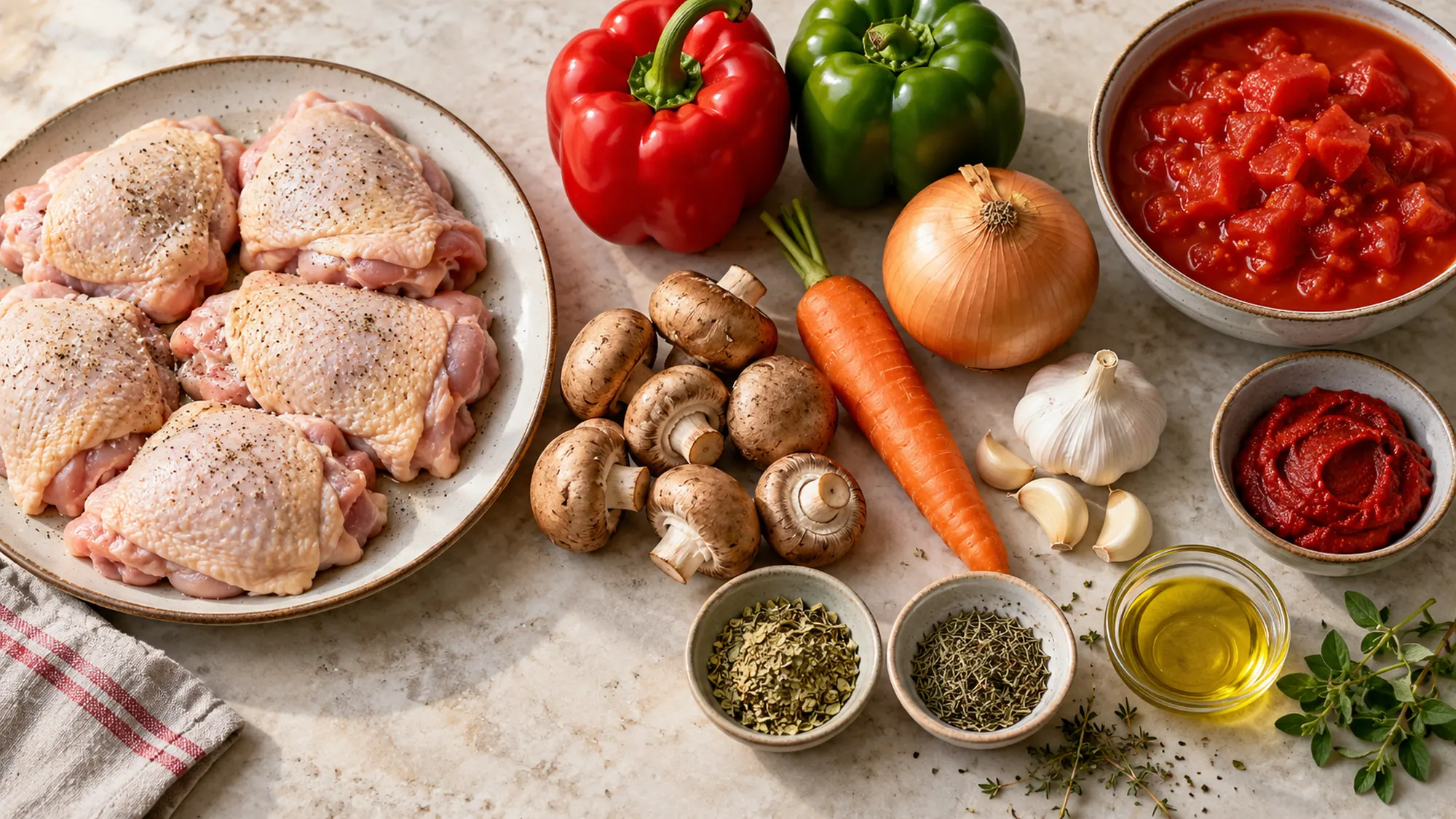
- 1200 g bone-in skin-on chicken thighs about 6 thighs; raw bone-in weight
- 27 g olive oil 2 tablespoons
- 150 g yellow onion diced
- 150 g green bell pepper seeded and diced
- 150 g red bell pepper seeded and diced
- 100 g carrot peeled and diced
- 12 g garlic 4 cloves, minced
- 225 g white mushrooms sliced
- 170 g tomato paste one 6-ounce can
- 2 g dried oregano about 2 teaspoons
- 1 g dried thyme leaves about 1 teaspoon
- 240 ml unsalted chicken stock 1 cup
- 794 g canned diced tomatoes one 28-ounce can, with juices
- 9 g fine salt 1 1/2 teaspoons, divided
- 1 g black pepper 1/2 teaspoon
- fresh basil optional garnish, excluded from estimates
Equipment
- 1 Wide heavy pot with lid
- 1 Tongs
- 1 Instant-read thermometer
Instructions
- Pat the thighs dry. Season with half the salt and all the pepper. Heat the oil in a wide heavy pot over medium-high heat. Brown the thighs skin-side down for about 8–10 minutes, then turn and cook 4–5 minutes. Work in batches if needed; transfer to a plate.
- Reduce heat to medium. Add onion, both peppers and carrot. Cook about 8 minutes, stirring, until beginning to soften. Add garlic and mushrooms and cook 5 minutes. Stir in tomato paste, oregano and thyme for 2–3 minutes, without scorching the paste.
- Pour in the stock and scrape up the browned bits. Add tomatoes with their juices and remaining salt. Return the chicken and accumulated juices in one layer. Bring to a gentle simmer, then partly cover.
- Simmer about 25–30 minutes, until the thighs are tender and each thickest part reaches 165°F (74°C), measuring away from bone. If the sauce needs thickening, lift out the cooked thighs and simmer it uncovered briefly, then return the chicken.
- Divide the thighs and sauce among six servings. Add optional basil. Rice, polenta, bread and other sides are separate from this recipe and its estimates.
Nutrition
Video
Notes
Tried this recipe?
Let us know how it turned out!Hi, I’m Laura, the voice behind Tastiva. I’ve always believed that eating well should feel enjoyable, comforting, and realistic—not like another complicated rule to follow. I love creating recipes that fit into everyday life, sharing simple nutrition ideas, and finding small ways to make meals feel a little better without losing the pleasure of good food.