
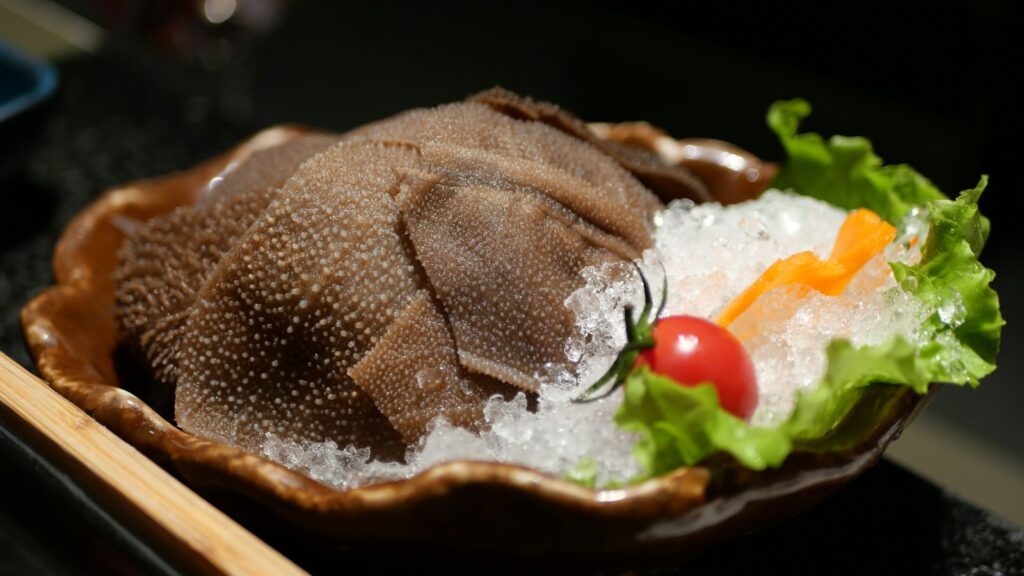
At the butcher counter, beef tripe may look like a pale honeycomb, a broad sheet, or tightly folded pages. It's edible tissue from a cow's stomach, and the different forms come from different stomach compartments. Before choosing a recipe, find out what the shop has already done to it: cleaned, blanched, and fully cooked are different starting points.
The most useful question at the counter is how the tripe has been prepared, because that determines what your kitchen still needs to do.
The main types of beef tripe
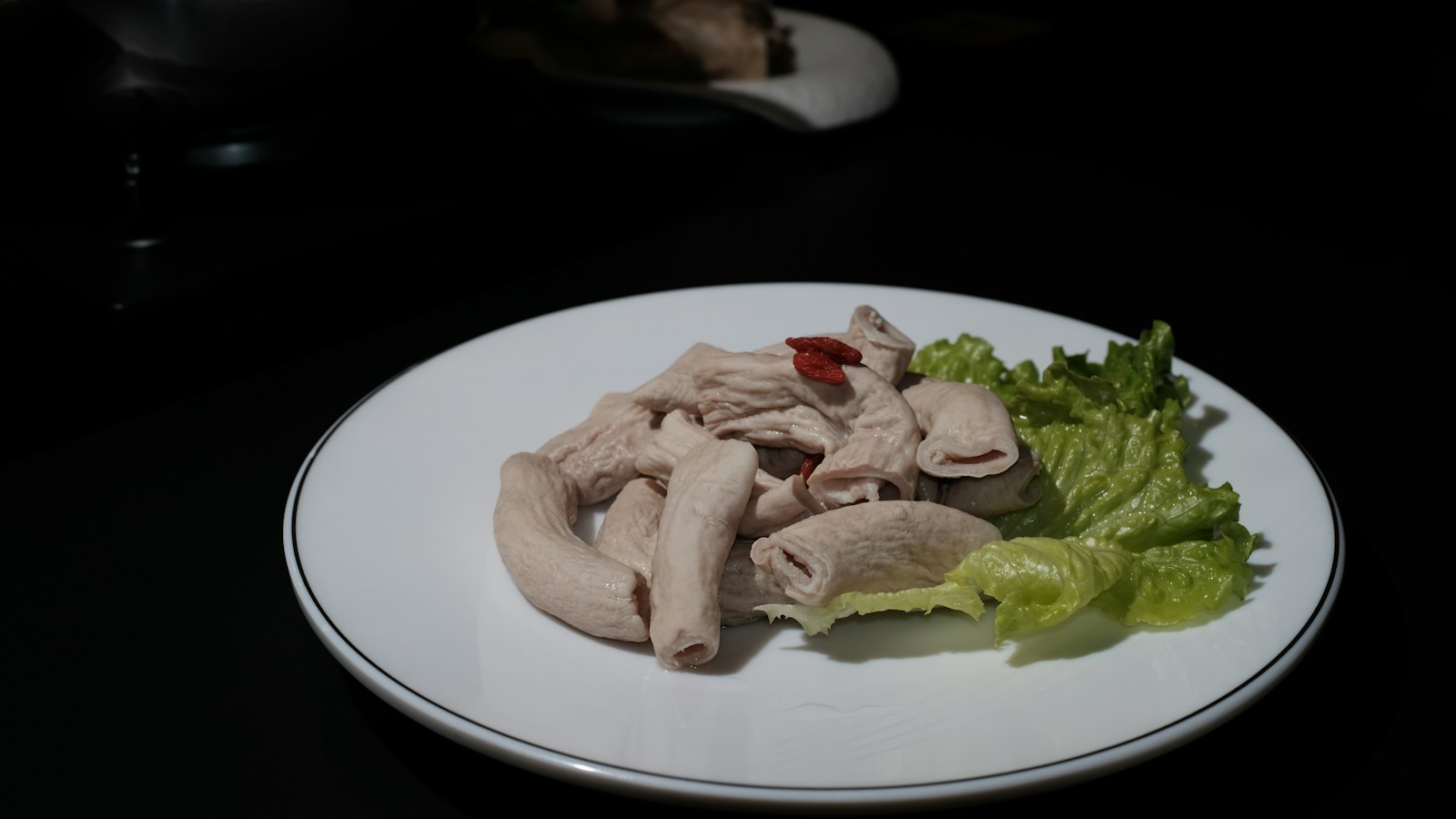
Honeycomb tripe comes from the reticulum, the second stomach compartment, and has a recognizable network of small pockets. Blanket tripe comes from the rumen and looks more like a broad sheet. Book or bible tripe comes from the omasum, where thin folds give it the page-like appearance behind the name.
Those forms differ in texture and shape, so choose the one the recipe specifies when possible. A preparation designed around thin strips of book tripe won't necessarily behave the same way with thick pieces of another type. Tripe is also different from intestines, even though both may be grouped under the broader term offal.
| Type | Visual cue | Question for the seller |
|---|---|---|
| Honeycomb | A surface of small, honeycomb-like pockets | Is it cleaned only, blanched, or fully cooked? |
| Blanket | A comparatively broad, sheet-like surface | What preparation does this product still need? |
| Book or bible | Many thin folds | How is this cut normally prepared? |
| Prepared tripe dish | Already seasoned or cooked | What are the reheating and storage instructions? |
I would buy from a food retailer who can answer those questions clearly. Product intended as animal feed is a different category and shouldn't be treated as a shortcut to a human-food recipe. Keep the package information or ask for written handling directions when available.
Cleaned doesn't necessarily mean ready to eat
Tripe sold for cooking may already have undergone substantial cleaning or blanching. That can change its appearance without making it a ready-to-eat food. Check the label or ask the seller rather than deciding from its pale color, smell, or the fact that someone has already applied heat during processing.
Use a tested recipe suited to the product you have. Avoid improvised cleaning treatments, particularly household chemicals or nonfood cleaners. If a seller can't explain whether the tripe needs further preparation, choose a clearly identified product instead of trying to reverse-engineer its processing at home.
- Ask whether the stated weight is raw, cooked, frozen, or thawed, especially when matching a recipe quantity.
- Check whether the recipe assumes precleaned or precooked tripe before starting its timing.
- Keep raw tripe separate from ready-to-eat foods, boards, and utensils.
- Follow supplier and recipe instructions for any required rinsing or preparation while avoiding splashes onto nearby food and surfaces.
- Wash hands and clean equipment after handling raw meat.
This is one place where a few minutes of information gathering can save a long, confusing afternoon. “Cook until tender” means something different when one package is raw and another has already been simmered. The starting condition is part of the method, not a minor label detail.
Cooking for tenderness takes its own judgment
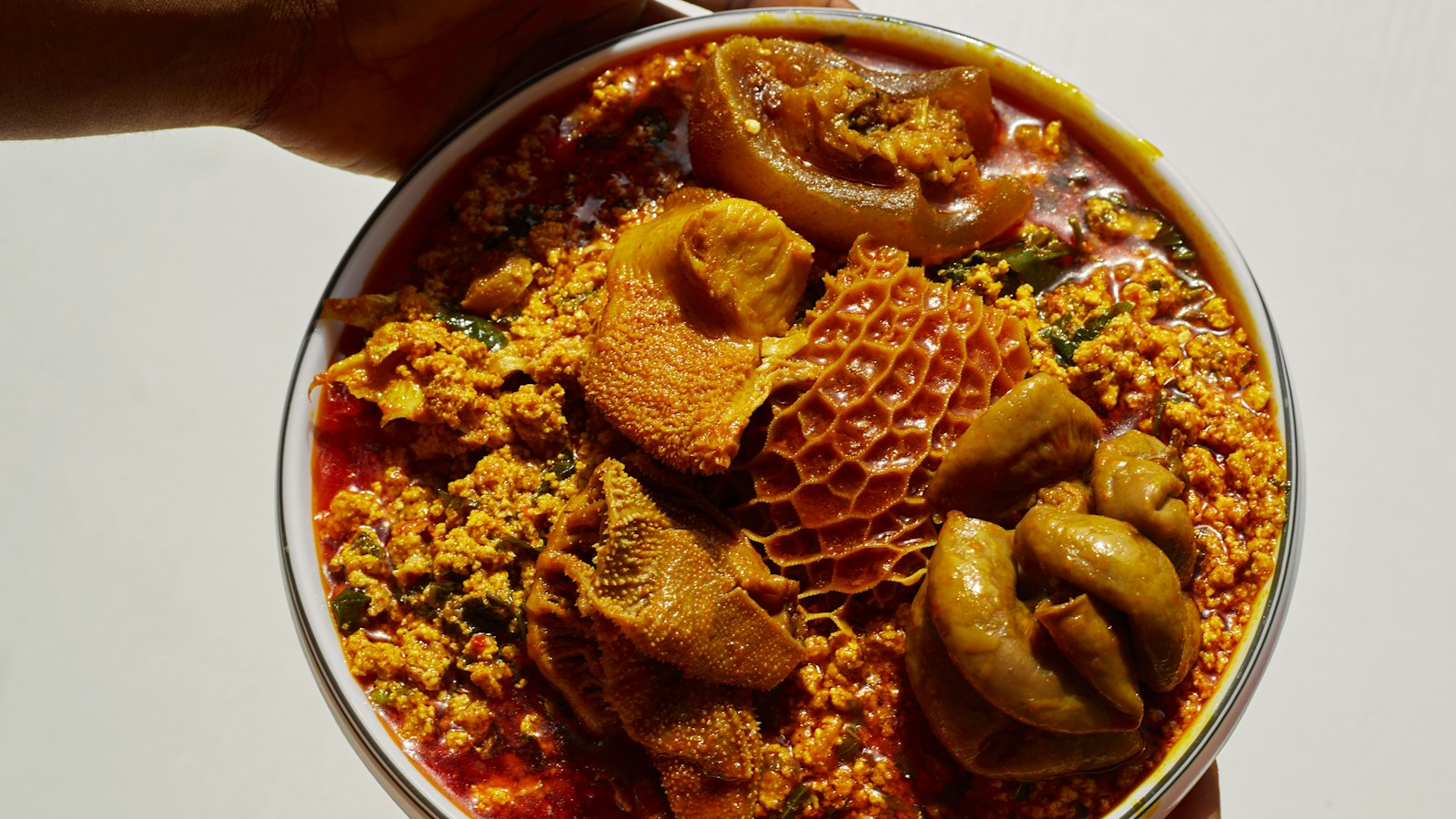
Many tripe dishes use a long, moist cooking stage before or during the final preparation. Tripe can also appear in dishes finished quickly after earlier cooking. A short final stir-fry doesn't necessarily mean the ingredient went from raw to tender in those few minutes; read the complete preparation before choosing it for a quick dinner.
Follow a reliable method for the exact product and type, including its food safety directions. Check tenderness at the stage the recipe specifies: a fork or a cut piece can help assess texture, but a tenderness check isn't a substitute for safe cooking and handling. There isn't one dependable minute count for every cut and processing history.
- Cut pieces consistently when the recipe asks you to, so the final dish has an even texture.
- Use the cooking liquid and seasoning specified rather than assuming every tradition prepares tripe the same way.
- If the recipe has separate simmering and finishing stages, allow time for both.
- Taste seasoning only through safe handling and at an appropriate point in cooking; don't sample raw or undercooked meat.
- Plan the side dishes around the complete meal instead of expecting the tripe alone to provide every food group.
Tripe's role in a meal is different from that of liver, another commonly discussed offal. Our chicken liver guide covers that ingredient separately. Don't transfer liver's nutrient claims or cooking instructions to tripe simply because both sit under the same broad category.
Bring it home cold and plan the leftovers
Keep refrigerated tripe cold during the trip home and follow its use-by and storage instructions. If you're buying it frozen, maintain the cold chain and thaw safely according to the package or a reliable food safety method. Don't leave meat on the counter for hours to speed up the process.
Refrigerate cooked leftovers promptly in shallow containers. FoodSafety.gov lists three to four days for cooked meat leftovers in a refrigerator at 40°F (4°C) or below. Freeze suitable portions you won't use in that window, and keep any shorter product-specific directions in mind. Mark the date and whether the portion is plain cooked tripe or a finished dish.
- Separate a large batch into manageable containers so it can cool promptly.
- Store sauce and tripe together when the recipe or intended reheating method calls for it.
- Reheat only the amount you need, following appropriate food safety guidance.
- Discard food with an unsafe storage history rather than relying on reheating or a normal smell to make it acceptable.
Sources
- Offally Good Cooking: Beef Tripe Types and Anatomy
- FoodSafety.gov: Four Steps to Food Safety
- FoodSafety.gov: Cold Food Storage Chart

Hi, I’m Laura, the voice behind Tastiva. I’ve always believed that eating well should feel enjoyable, comforting, and realistic—not like another complicated rule to follow. I love creating recipes that fit into everyday life, sharing simple nutrition ideas, and finding small ways to make meals feel a little better without losing the pleasure of good food.