
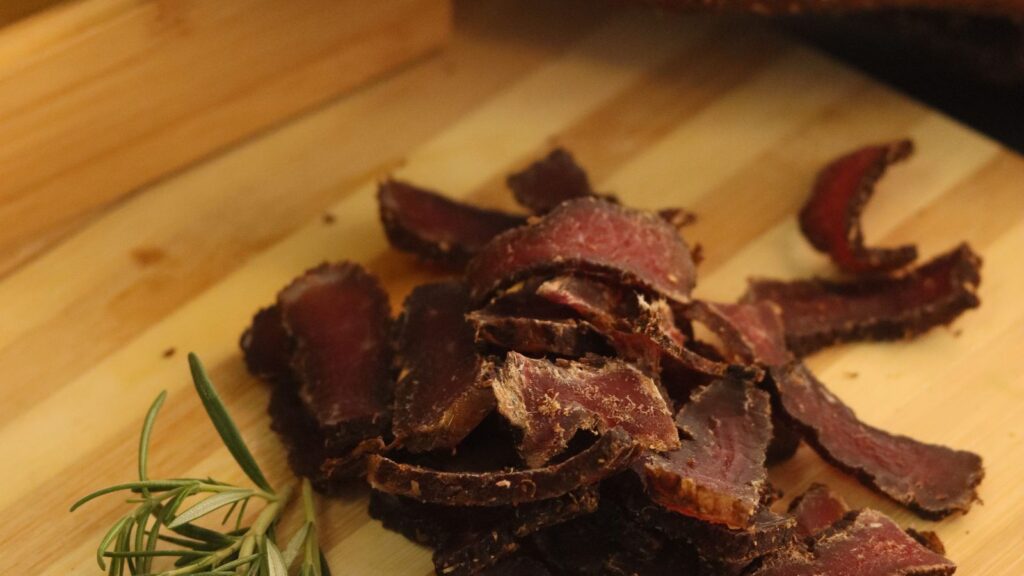
Biltong is a South African style of dried, seasoned meat with a tangy edge and a satisfying chew. You may see it in a snack aisle beside jerky, but the two products are not made in exactly the same way. I would start by tasting a plain or coriander-seasoned slice, then reading the package for the meat, salt, and storage instructions. Its compact size makes it convenient; it is still a food whose processing and handling matter.
A good biltong package tells you what meat was dried, how it was seasoned, and how to store it after opening.
What biltong is and how it gets its flavor
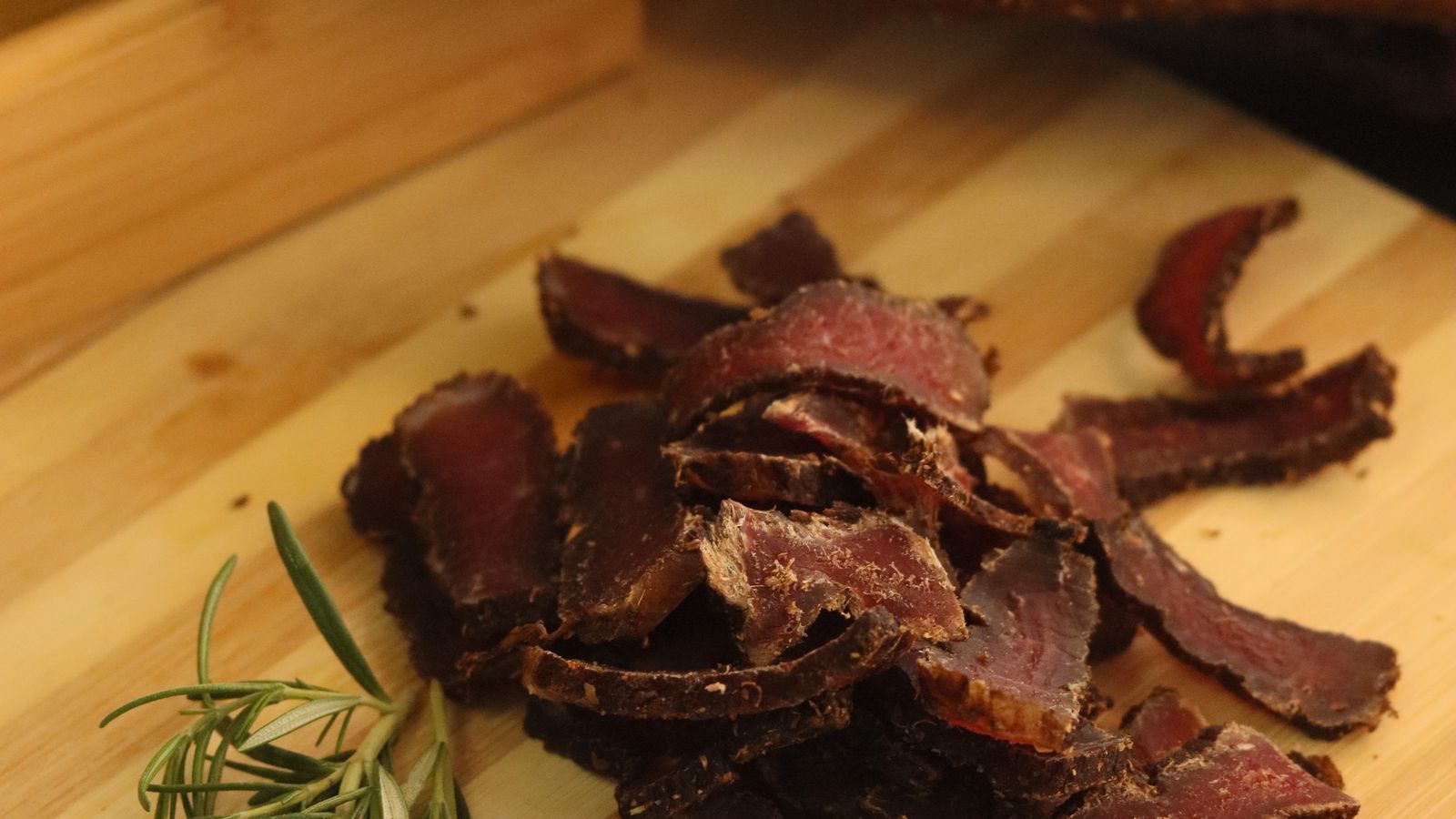
Biltong is commonly made from beef cut into strips or pieces, seasoned with salt, vinegar, and spices, then air dried. A published food-safety study describes the combined roles of vinegar, salt, and drying in reducing conditions that support microbial growth. Coriander and black pepper are familiar flavor notes, though each maker has a different blend. Read the ingredients rather than assuming every bag tastes identical.
The finished texture can range from quite dry to a softer, moister chew. Thickness, drying time, and how it is sliced all matter. Some packages contain lean slices; others include more fat, which changes the bite. A tangy, peppery edge is common, but a heavily seasoned or sweetened version will take the flavor somewhere else.
Biltong is often associated with South Africa, and its name deserves more than being reduced to ‘another jerky.’ A related USDA food-safety research project explicitly distinguishes ambient air-dried beef such as biltong from typical U.S. jerky processes. Both are convenient dried meats, but the steps used to make them safe are not interchangeable.
How it differs from jerky
Jerky is often cut thin and dehydrated with a heat step. Biltong can be thicker and traditionally relies on a particular combination of vinegar, salt, and controlled drying. The distinction is a general description, not a guarantee about every commercial product. Brands may use different equipment and processes, so the label is the best guide to the bag in your hand.
USDA FSIS advises heating meat to 160°F before dehydrating when making jerky at home. That guidance does not turn into an untested biltong method simply by adding vinegar. A research paper on biltong evaluated processing conditions for pathogen reduction; it underscores why home drying meat safely requires a validated method, not a casual room-temperature experiment.
Flavor also differs. Jerky may lean smoky or sweet depending on marinade, while biltong often tastes more tangy and spice-forward. I would taste each as its own snack and choose by texture and seasoning. If you want a softer bite, read descriptions such as moist or traditional and check how the maker asks you to store it.
Reading the label before you buy
Start with the meat and ingredient list. Is it beef, another animal, or a mixed product? Look for vinegar, spices, sugar, and allergens if relevant. Then compare sodium per serving using the Nutrition Facts panel, since dried meat can pack seasoning into a small portion. FDA’s label guide helps put the percent Daily Value in context.
A protein number on the front can be useful, but the serving size tells you how much the number represents. A small bag can contain more than one serving. I would compare two packages on the same basis and choose the flavor I actually want, rather than treating a ‘high protein’ claim as the whole story.
Follow the package’s unopened and after-opening storage directions. Some products may be shelf-stable while sealed yet require refrigeration after opening; others have different instructions. If a bag is damaged, smells wrong, or shows mold, discard it. A dried product is not automatically safe forever, and moisture changes can shorten its useful life.
Ways to serve it without overthinking
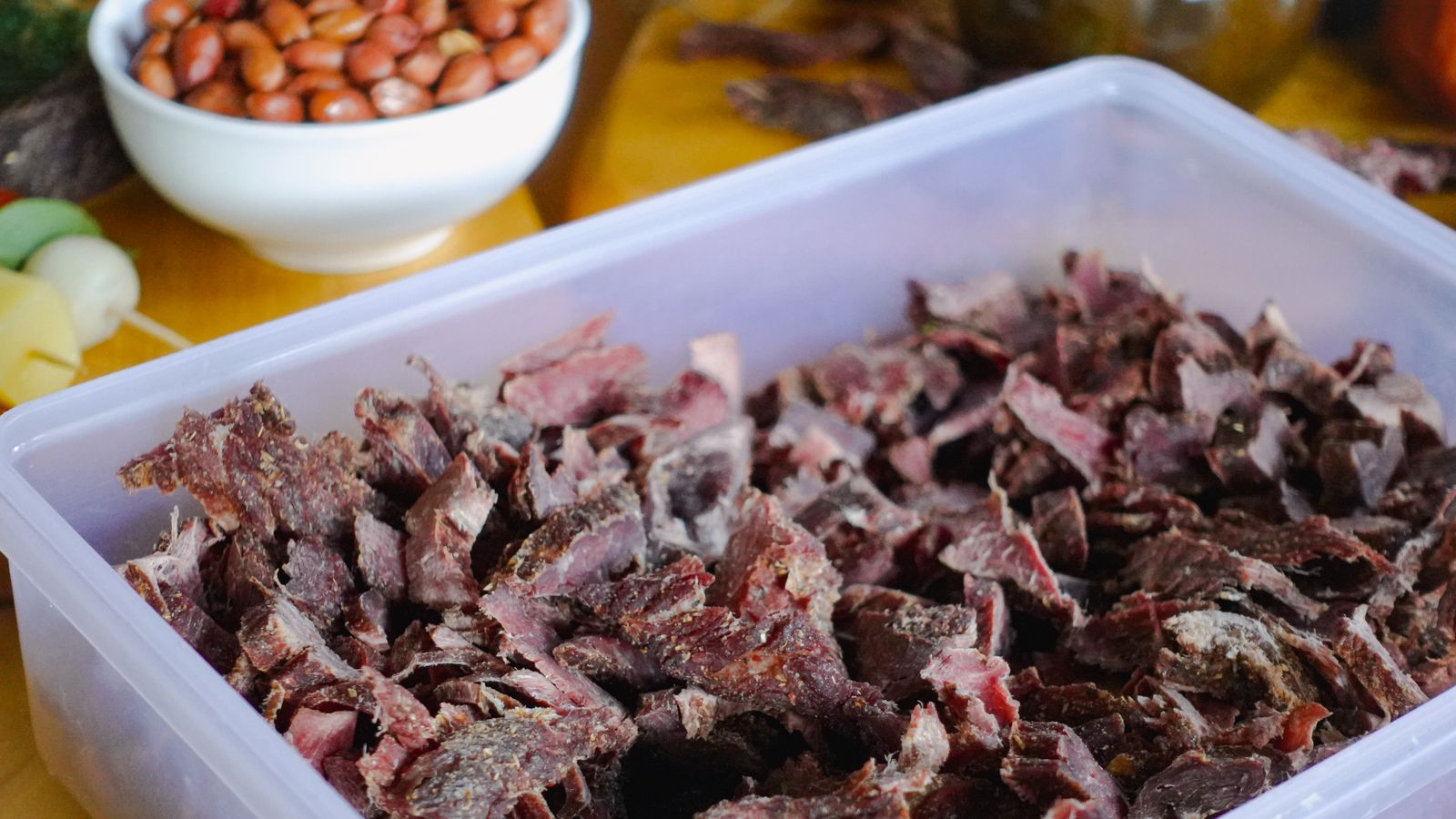
A few slices are a simple savory snack with fruit or cut vegetables. You can add thin pieces to a lunch plate with crackers, cheese, and tomatoes, keeping the package storage instructions in mind. If a seasoning is assertive, pair it with something mild. A plain version lets the dried beef flavor come through more clearly.
For a trail snack, pack an individually sealed portion rather than opening a large bag and carrying it unrefrigerated without checking directions. If you are serving it to a group, use clean hands or tongs and return leftovers to storage promptly. These small habits matter more than whether the product is marketed as adventurous or artisanal.
If you are trying biltong for the first time, a small package can help you learn whether you prefer thin, dry slices or a thicker chew. Slice a larger piece across the grain if the manufacturer suggests it, and pay attention to the storage instructions once the seal is broken. It is easy to eat more than the labeled portion while grazing, so set out the amount you want with the rest of your snack.
Biltong can be a flavorful, compact way to eat dried meat. I would choose a reputable package, compare salt and serving size, and follow its handling directions. Enjoy the tangy chew on its own terms, with respect for the careful processing that makes a ready-to-eat meat possible.
Sources
- Karolenko et al., Processing of Biltong (Dried Beef) to Achieve USDA-FSIS Reduction
- USDA National Agricultural Library, Safety of Ambient Air-Dried Beef Research Project
- USDA FSIS, Jerky and Food Safety
- FDA, How to Understand and Use the Nutrition Facts Label

Hi, I’m Laura, the voice behind Tastiva. I’ve always believed that eating well should feel enjoyable, comforting, and realistic—not like another complicated rule to follow. I love creating recipes that fit into everyday life, sharing simple nutrition ideas, and finding small ways to make meals feel a little better without losing the pleasure of good food.