
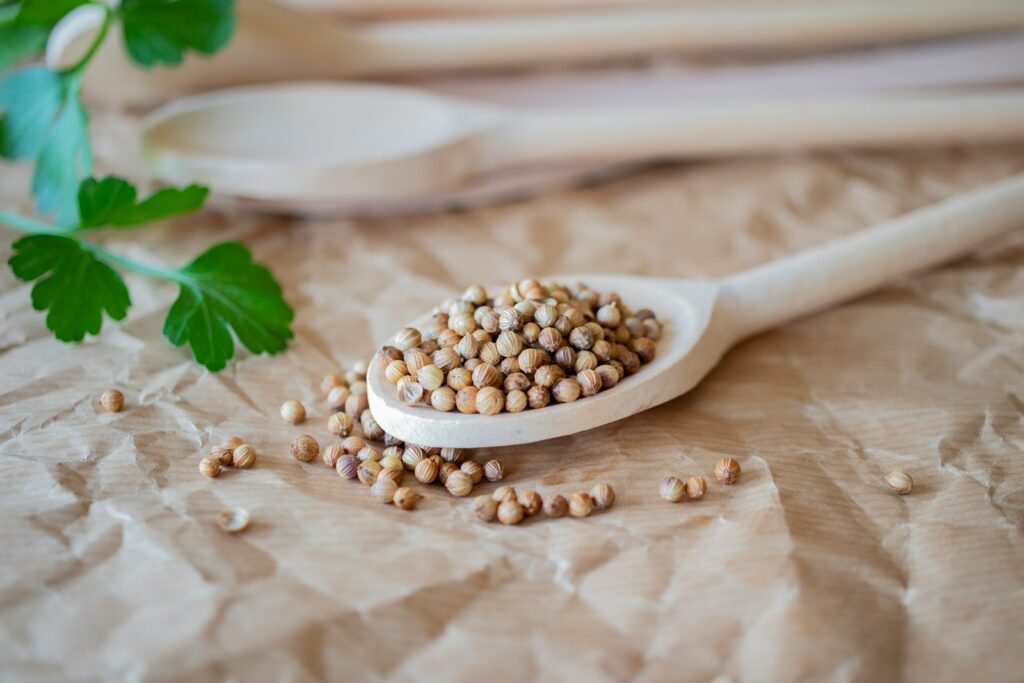
Ground coriander is the dried seed of the coriander plant, milled into a pale brown spice with a warm, citrusy, gently nutty flavor. It is not the same thing as fresh cilantro in a recipe, even though both come from Coriandrum sativum. A teaspoon can soften the sharp edges of cumin, brighten roasted vegetables, and give soups, curries, rubs, and baked goods a quiet layer of fragrance.
Ground coriander is the spice that quietly rounds the corners—citrusy, warm, and never as leafy as cilantro.
What ground coriander actually is
Coriander belongs to the parsley family. The fresh leaves and stems are usually called cilantro in the United States, while the dried round fruits are sold as coriander seeds. Botanically they are fruits, but every spice jar and almost every cook calls them seeds, so I will not make dinner carry the full weight of botanical precision.
Those seeds can be used whole, cracked, or ground. Whole coriander releases flavor slowly and works well in pickles, braises, and spice blends. Ground coriander disperses immediately, which makes it easier for marinades, doughs, soups, and quick weeknight cooking. It contributes nutrients on paper, but a normal culinary teaspoon is small; its most meaningful job in the kitchen is flavor, not performing nutritional acrobatics.
What does ground coriander taste like?
Ground coriander tastes warm, lightly sweet, citrusy, and a little floral, with a mild toasted quality. It is far less green and pungent than cilantro leaves. People who think fresh cilantro tastes soapy may still enjoy coriander seed because the aroma is different enough that the two ingredients are not interchangeable.
Cumin brings earth and smoke; coriander brings lift. That is why the pair appears together so often. Coriander also gets along beautifully with turmeric, ginger, cinnamon, cardamom, chiles, garlic, and black pepper. In a blend, it often acts like the friend who keeps everyone talking without demanding the center chair.
Freshly ground seed is more vivid than an older jar, but good pre-ground coriander should still smell noticeably lemony when you rub a pinch between your fingers. If it smells like beige dust, it will mostly taste like beige dust too.
How to use ground coriander in everyday cooking
Start with 1/2 to 1 teaspoon in a four-serving savory dish, then adjust. Blooming it for 20 to 30 seconds in warm oil can deepen the aroma, but keep the heat moderate because powdered spices scorch quickly. In a dry rub or dough, whisk it evenly with the other dry ingredients before adding moisture.
- Beans and lentils: Add it with cumin, garlic, and chile.
- Roasted vegetables: Toss it with carrots, cauliflower, squash, or potatoes.
- Meat and fish: Use it in rubs with paprika, pepper, and lemon zest.
- Soups and curries: Bloom it near the beginning so the flavor spreads through the pot.
- Baking: Try a small amount in rye bread, gingerbread, citrus cakes, or savory crackers.
Coriander is one of the background flavors that helps falafel taste rounded rather than simply chickpea-and-garlic loud. It also makes a good bridge between sweet and savory ingredients, which is why a pinch can feel at home beside orange, honey, lamb, tomato, or toasted nuts.
Substitutes, whole seeds, and smarter storage
There is no perfect substitute. For a savory dish, try an equal amount of cumin softened with a little lemon zest, or use a blend of cumin and caraway. The result will be earthier and less floral, so begin with less and taste. Curry powder may work when its other spices suit the dish, but it changes much more than the missing coriander.
To grind your own, toast whole coriander seeds in a dry skillet over medium-low heat just until fragrant, moving them often. Let them cool completely, then use a spice grinder or mortar and pestle. Grind only what you need when possible; whole seeds protect their aromatic oils better than powder does, and that small step makes a surprisingly noticeable difference.
Store both forms tightly sealed in a cool, dark, dry cupboard—not above the stove, where heat and steam visit every evening. Date the jar, but trust your nose more than a dramatic expiration countdown. Replace ground coriander when its citrus aroma has faded, and discard any spice that becomes damp, moldy, insect-damaged, or musty.
Sources

Hi, I’m Laura, the voice behind Tastiva. I’ve always believed that eating well should feel enjoyable, comforting, and realistic—not like another complicated rule to follow. I love creating recipes that fit into everyday life, sharing simple nutrition ideas, and finding small ways to make meals feel a little better without losing the pleasure of good food.