
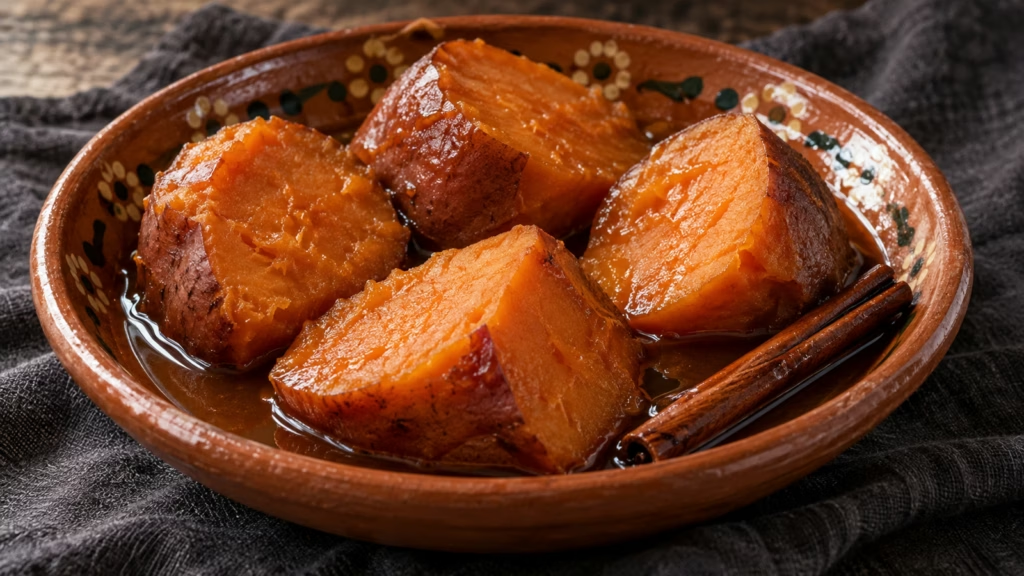
The sweet potatoes are tender, but the syrup still looks thin. That small mismatch is where camotes en dulce can turn from neat pieces into a pot of sweet mash. The easy solution is to lift the cooked potatoes out before reducing the liquid. This version uses orange-fleshed sweet potatoes, piloncillo and cinnamon, keeping the pieces substantial and the finished syrup fluid enough to spoon over them.
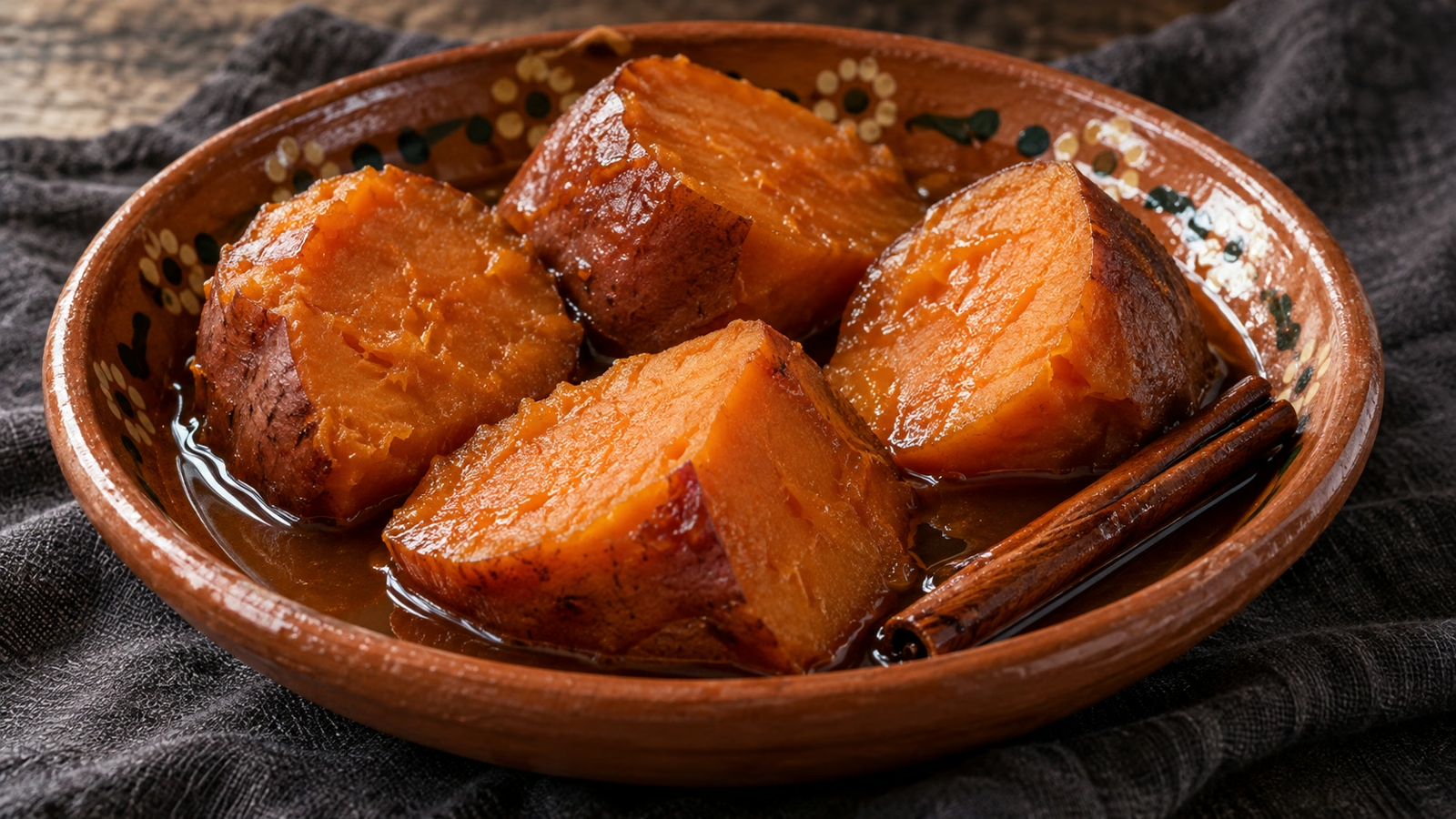
Judge the sweet potatoes and syrup separately: tender centers come first, and the liquid can thicken after the pieces leave the pot.
A simple version of camotes en dulce
Camote means sweet potato, and cooking it with a sweet syrup is one way to turn the root into dessert. Guanajuato’s Del Campo a la Mesa collection includes a piloncillo-sweetened preparation. Here, the ingredient list is pared down to sweet potatoes, piloncillo, water and cinnamon, without additional spices or elaborate garnishes.
- The pieces are thick. Cutting them about 2 inches, or 5 centimeters, thick gives you enough structure to handle once cooked. Try to keep neighboring pieces reasonably similar in size.
- The skin stays on. Scrub it well and trim damaged areas. It provides a boundary around the soft flesh, although gentle handling still matters.
- The syrup should flow. You are making something to spoon over the sweet potato, not a hard candy coating. Check a cooled spoonful before reducing further.
- The flavor comes from piloncillo. This solid cane sugar dissolves into the cooking liquid. Break it into manageable pieces so it dissolves before the potatoes need your attention.
I’d serve this in a shallow bowl rather than chase a perfectly arranged plate. A little syrup collecting around a tender piece is part of the appeal.
Ingredients and swaps that change the result
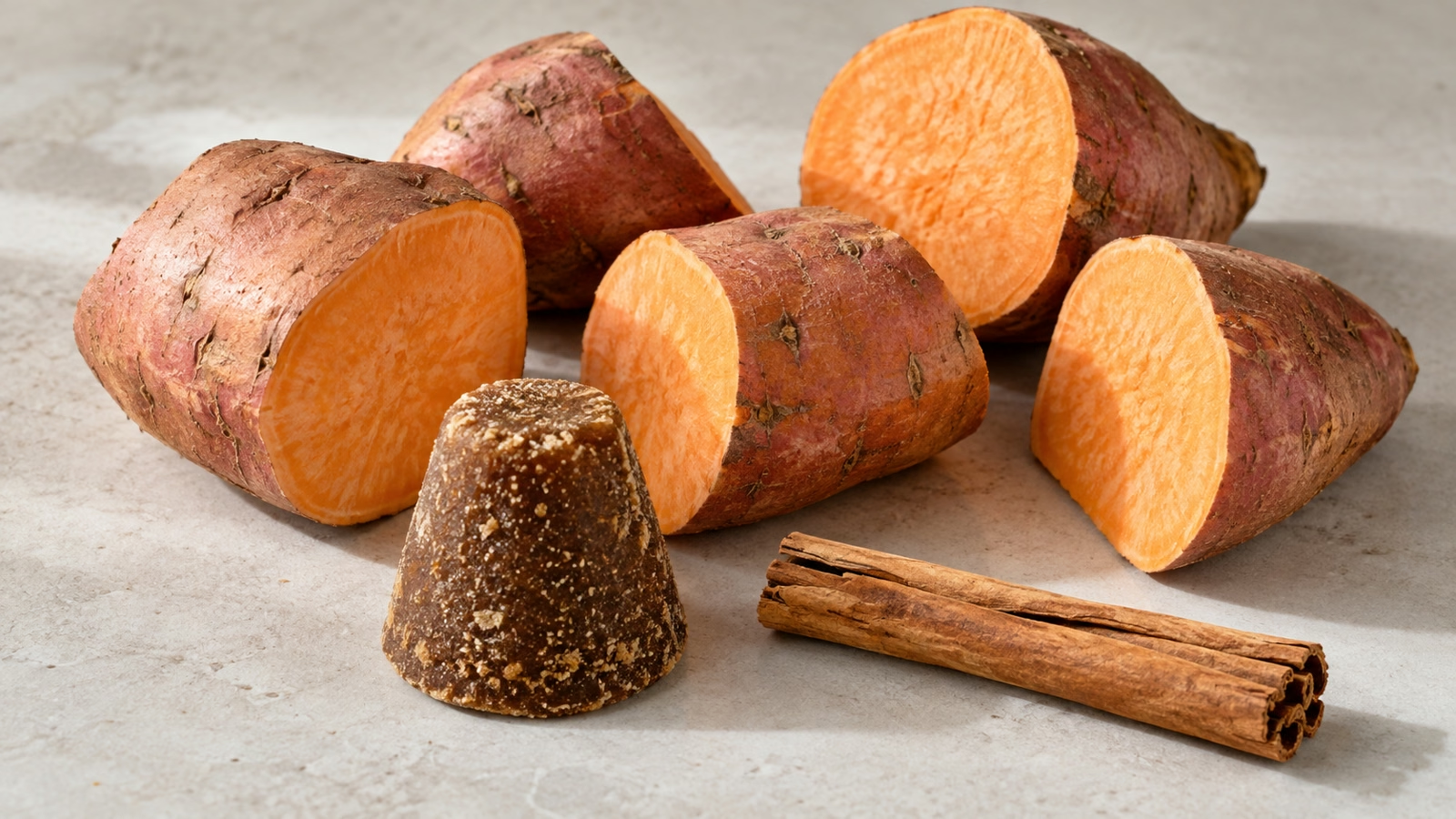
Use orange-fleshed sweet potatoes for the pictured result. White or purple varieties can have a different texture and moisture level, so their timing may change. Buy firm roots without soft, deteriorating areas, and weigh the amount after trimming rather than relying on a fixed number of potatoes.
- Piloncillo: weigh 200 grams, about 7 ounces. Cone sizes vary, so “one cone” is not a reliable measurement. The weight also makes the sweetness easier to repeat.
- Brown sugar: it can produce a different version, but it is not an identical ingredient. If using it, measure by weight and expect a change in the syrup’s flavor.
- Cinnamon: one short stick keeps the seasoning focused. Our cinnamon guide explains label differences if you are choosing between types.
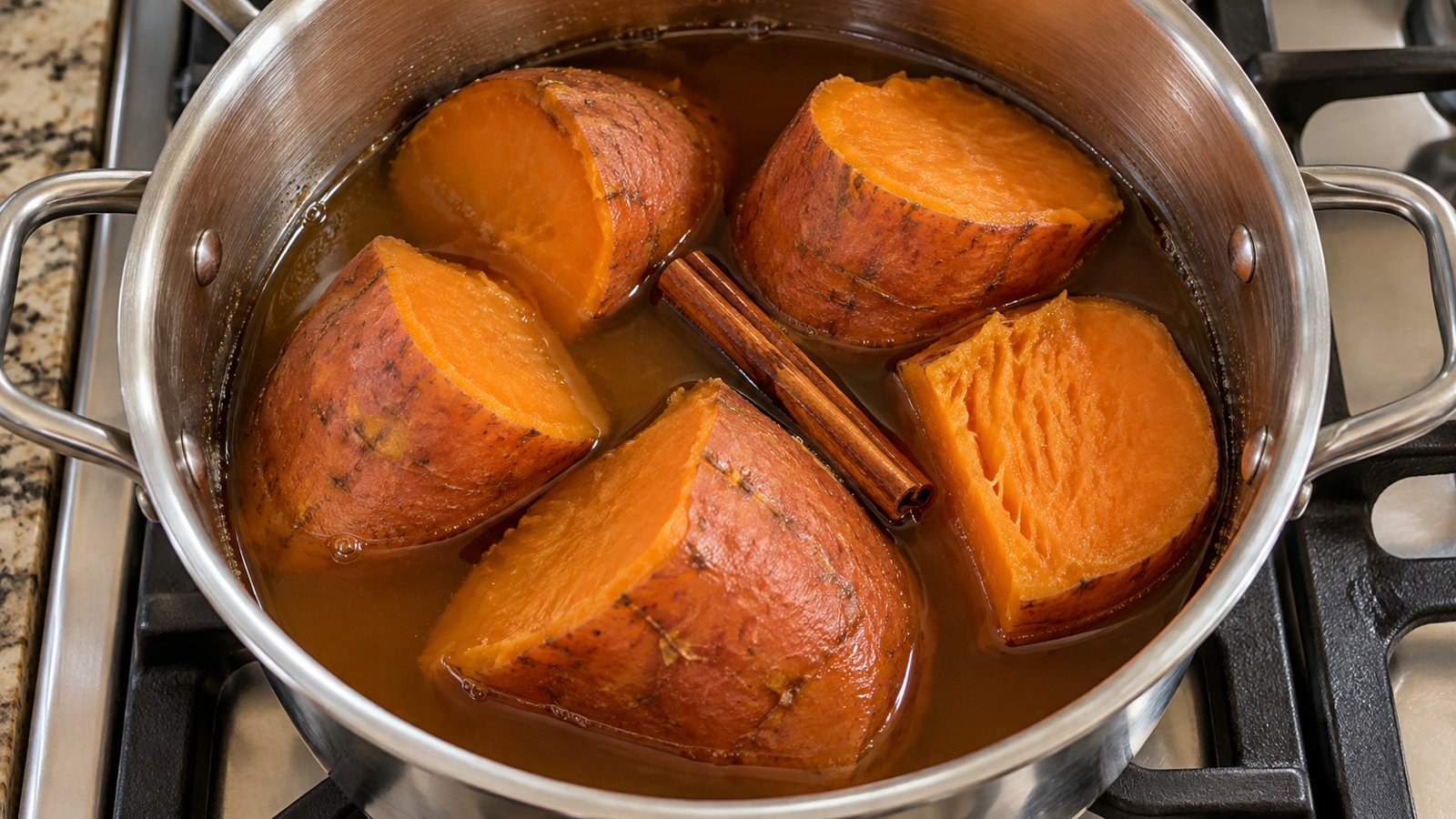
- Water: the liquid does not need to cover every piece completely. A covered pan and a gentle simmer help the thick pieces cook while you watch the liquid level.
I’d avoid adding milk to the cooking pot for this version. If you like the contrast, a splash at serving is easier to control and leaves the rest of the batch suitable for anyone avoiding dairy.
How to avoid broken pieces and sticky syrup
A wide pot gives the pieces room to sit in an even layer. Keep the heat low enough that they are not knocking against one another, and resist frequent stirring. You can carefully spoon syrup over exposed surfaces without turning the contents into a tumble.
- Start checking the largest piece. A skewer should reach the center with little resistance. The surface can look cooked while the middle is still firm.
- Add hot water if the pan is drying. Do this before the sugar catches. A tight lid, pan size and burner strength all affect how quickly the water disappears.
- Remove tender pieces with a broad spoon. If smaller pieces finish first, lift them out and let the larger ones continue. Matching their size at the start reduces this juggling.
- Concentrate the liquid only as needed. Simmer it briefly without the lid and check a small cooled spoonful. Very hot syrup looks looser than it will after cooling.
Return the pieces to the syrup off the vigorous heat and spoon it over gently. If the liquid has become too thick, add a little hot water carefully and loosen it before returning the potatoes. The spoon should not need a workout.
Camotes en Dulce Recipe

Ingredients
- 1000 g orange-fleshed sweet potatoes about 2.2 lb, scrubbed, skin on, damaged areas trimmed
- 200 g piloncillo about 7 oz, broken into pieces
- 750 ml water plus a little hot water if needed
- 1 stick cinnamon about 2 inches or 5 cm; removed before serving
Equipment
- 1 Wide saucepan with lid
- 1 Broad serving spoon
- 1 Skewer
- 1 Kitchen scale
- 1 Food thermometer
Instructions
- Cut the scrubbed sweet potatoes into pieces about 2 inches (5 cm) thick, keeping sizes similar and leaving the skin on.
- Put the water, piloncillo and cinnamon in a wide saucepan. Heat for approximately 5 to 8 minutes, stirring until the sugar dissolves.
- Arrange the sweet potato pieces in an even layer. The liquid need not cover them completely. Cover and simmer gently for 25 to 35 minutes, checking that the pot does not dry out. Add a little hot water if needed.
- Pierce the largest piece with a skewer. It should slide easily to the center. Continue cooking firm pieces, and lift tender ones out carefully with a broad spoon.
- If the syrup is thin, simmer it uncovered for 3 to 7 minutes, checking a cooled spoonful. Keep it pourable rather than reducing it to caramel. Return the sweet potatoes off the vigorous heat and spoon syrup over them.
- Remove the cinnamon, let the dessert cool slightly and divide the pieces and syrup among eight servings. Timing varies with the sweet potatoes, their size and the pan.
Nutrition
Notes
Tried this recipe?
Let us know how it turned out!Serving and saving the rest
The batch makes eight modest dessert portions. Divide the pieces first and add syrup to each bowl; the total yield will depend on evaporation. Serve warm once the heat has eased, or enjoy a refrigerated portion cold if you like a firmer texture.
- Keep additions separate. Plain yogurt or a little milk changes the serving, not the base recipe. These additions are not included in the nutrition estimate.
- Refrigerate promptly. Use shallow containers and chill within two hours, or one hour above 90°F (32°C). Keep the refrigerator at 40°F (4°C) or below.
- Use within three to four days. Follow USDA’s leftover guidance and reheat leftovers to 165°F (74°C). A splash of water can loosen refrigerated syrup during reheating.
- Treat nutrition as an estimate. It counts the entire batch of syrup divided by eight. Brown sugar is used as a composition proxy for piloncillo, so the actual product and amount eaten can change the values.
This is a cooked dessert for the refrigerator. Do not transfer it to a jar and assume the sugar makes it safe to keep in a pantry.
Sources
Hi, I’m Laura, the voice behind Tastiva. I’ve always believed that eating well should feel enjoyable, comforting, and realistic—not like another complicated rule to follow. I love creating recipes that fit into everyday life, sharing simple nutrition ideas, and finding small ways to make meals feel a little better without losing the pleasure of good food.