
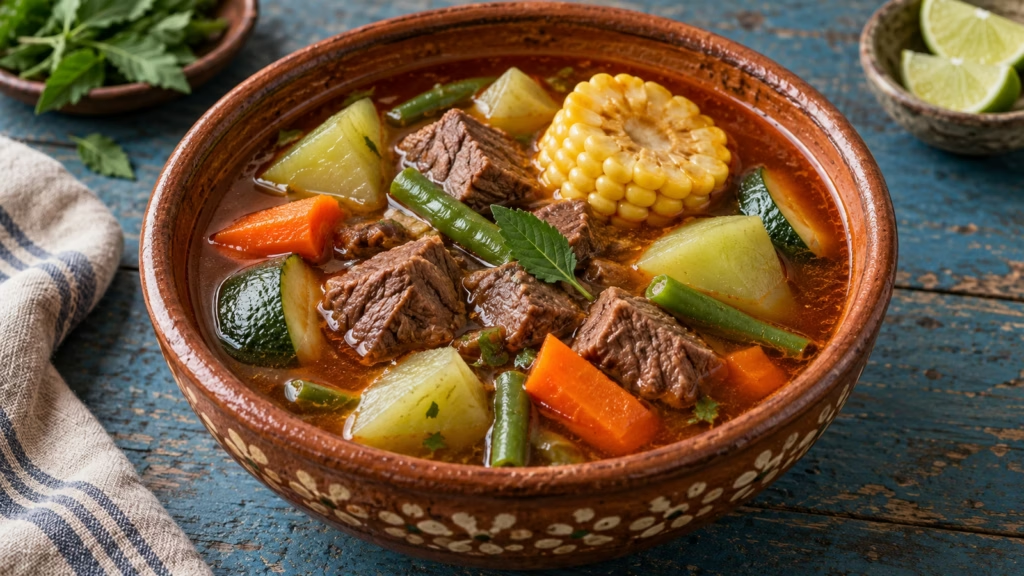
The corn looks ready, the zucchini is soft, and the beef still needs another half hour. That is the timing problem this mole de olla recipe is built to avoid. Start the beef first, make a red guajillo-and-ancho base while it simmers, and let the vegetables join in stages. You get a generous Mexican soup with distinct pieces of meat and vegetables in a broth you can actually sip.
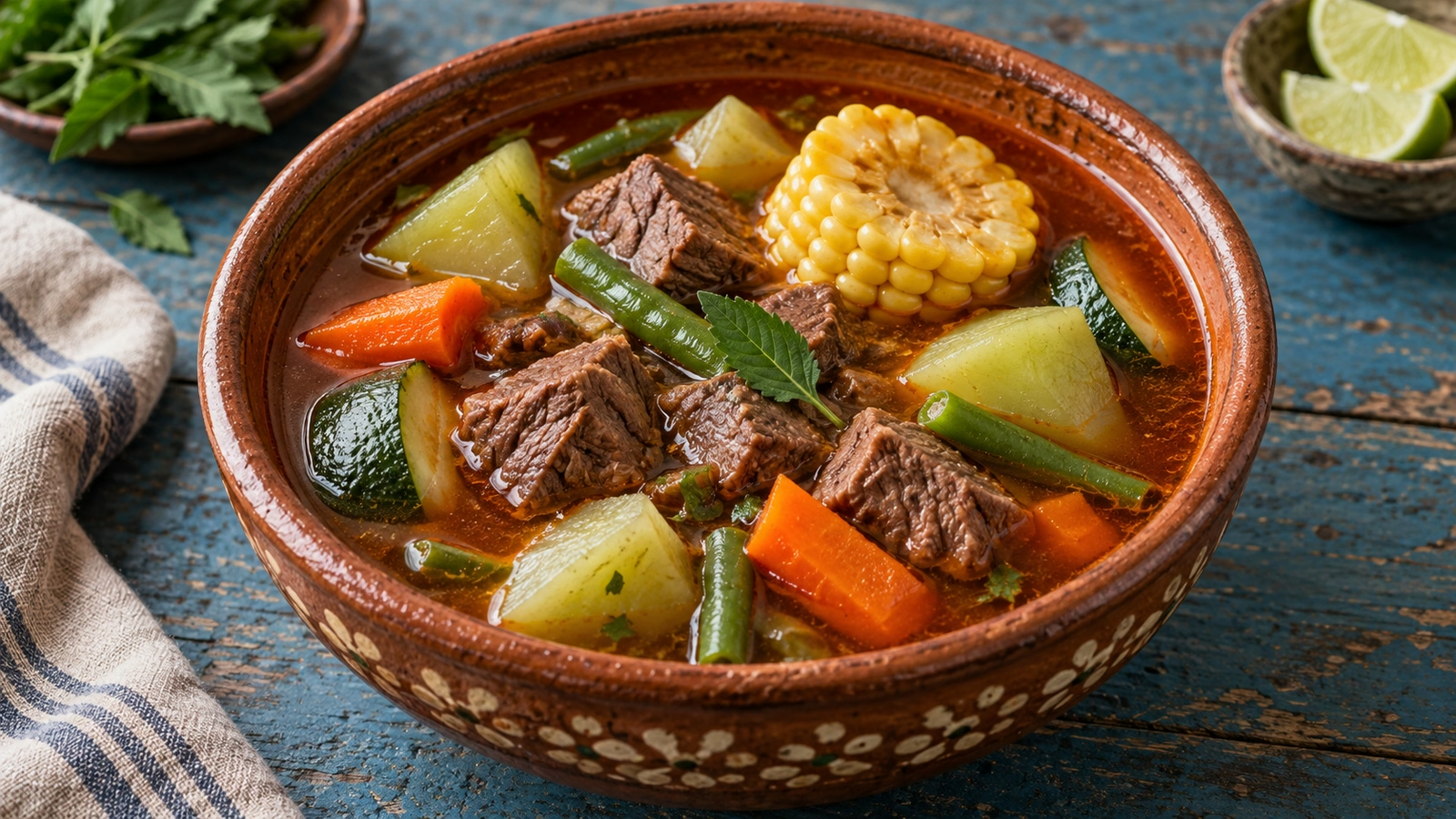
A good pot of mole de olla gives the beef a head start and lets the vegetables keep their own textures.
What goes into this mole de olla
If the word mole makes you picture a thick sauce, the first spoonful here will look different. This is a brothy preparation with beef, dried chiles, corn and vegetables. Mexico’s Secretaría de Cultura documents several Tlaxcala versions in its collection Memorias en mole de olla; one ingredient list cannot stand in for all of them.
For this version, I would choose a trimmed chuck roast over an expensive quick-cooking steak. Cut it into roughly equal pieces and plan for a leisurely simmer. Boneless meat makes six bowls easier to divide, while corn rounds give everyone something substantial to work around. Water lets the beef build the broth without extra packaged seasoning; our broth and bouillon guide explains the salt differences.
- Beef: about 2 pounds, or 900 grams, weighed after trimming. Larger, even chunks are easier to follow through a long simmer than tiny stew-meat scraps.
- Dried chiles: guajillo supplies much of the red color, with ancho rounding out the sauce. This is not a recipe for a jar of prepared mole paste.
- Vegetables: corn, chayote, carrots, green beans and zucchini each have a place. Chayote is a mild, firm squash; look for it near the other squash or at a Mexican market.
Set up the chile base before the vegetables go in
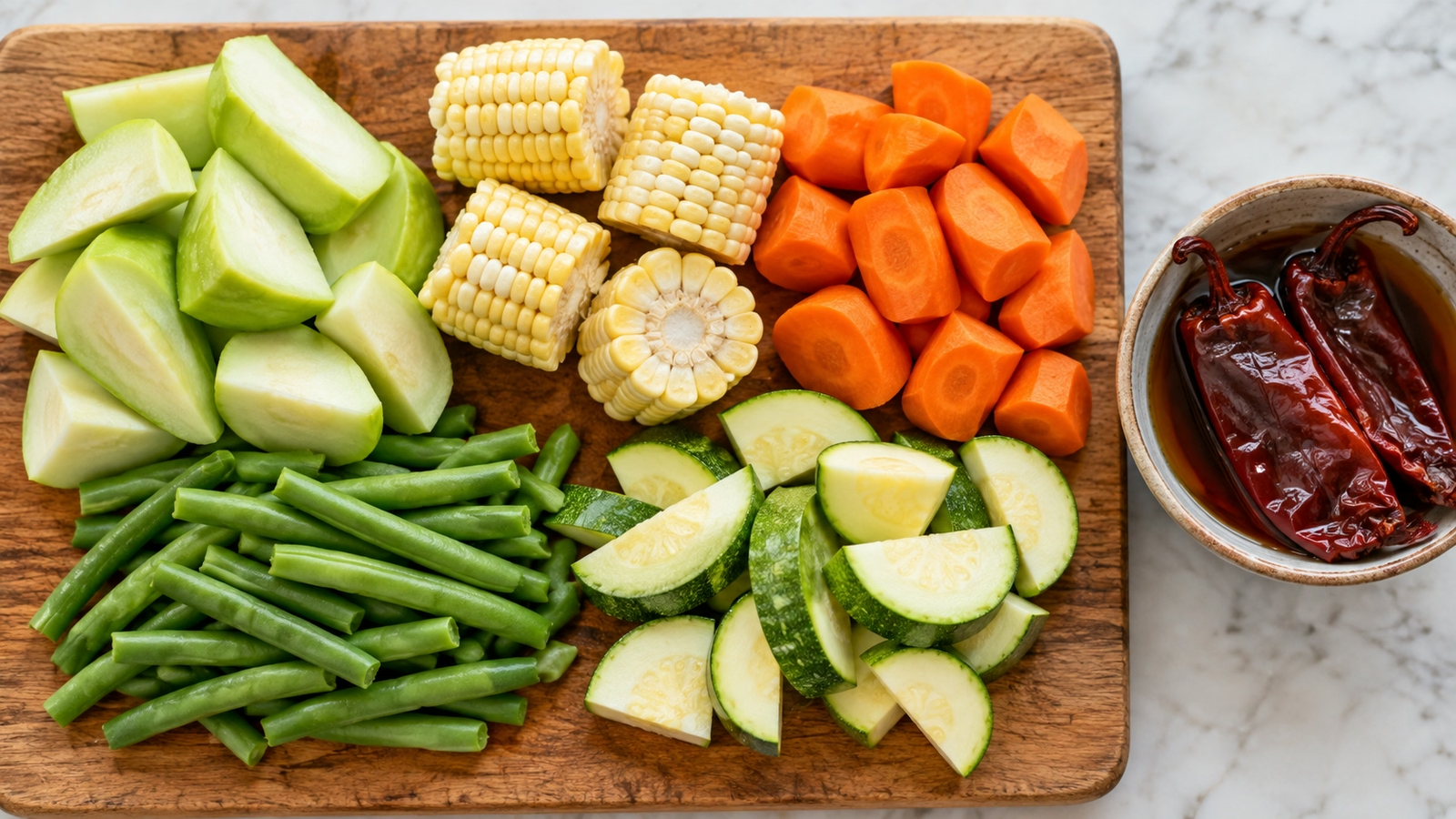
Dried chiles should smell pleasantly earthy, without mold or mustiness. Wipe them, remove the stems and seeds, and give them only a brief turn in a warm skillet before soaking. I would rather toast a little less than spend the rest of dinner trying to hide a scorched flavor.
- Use warm, softened chiles: after soaking, they should bend easily. Stubborn leathery pieces need more time before they meet the blender.
- Keep the tomato juices: roast the tomatoes until softened and spotted, then collect the juices with the flesh for the sauce.
- Blend safely: let hot ingredients cool if your blender is not designed for them. Work in manageable batches instead of filling the jar to the lid.
- Strain for a lighter broth: a sieve catches tough chile-skin fragments. Briefly cook the strained mixture in the measured oil before adding it to the soup.
- Cut ahead: make chunky chayote and carrot pieces, short green-bean lengths and thick zucchini half-moons. Keep each vegetable in its own pile.
Let tenderness decide the next step
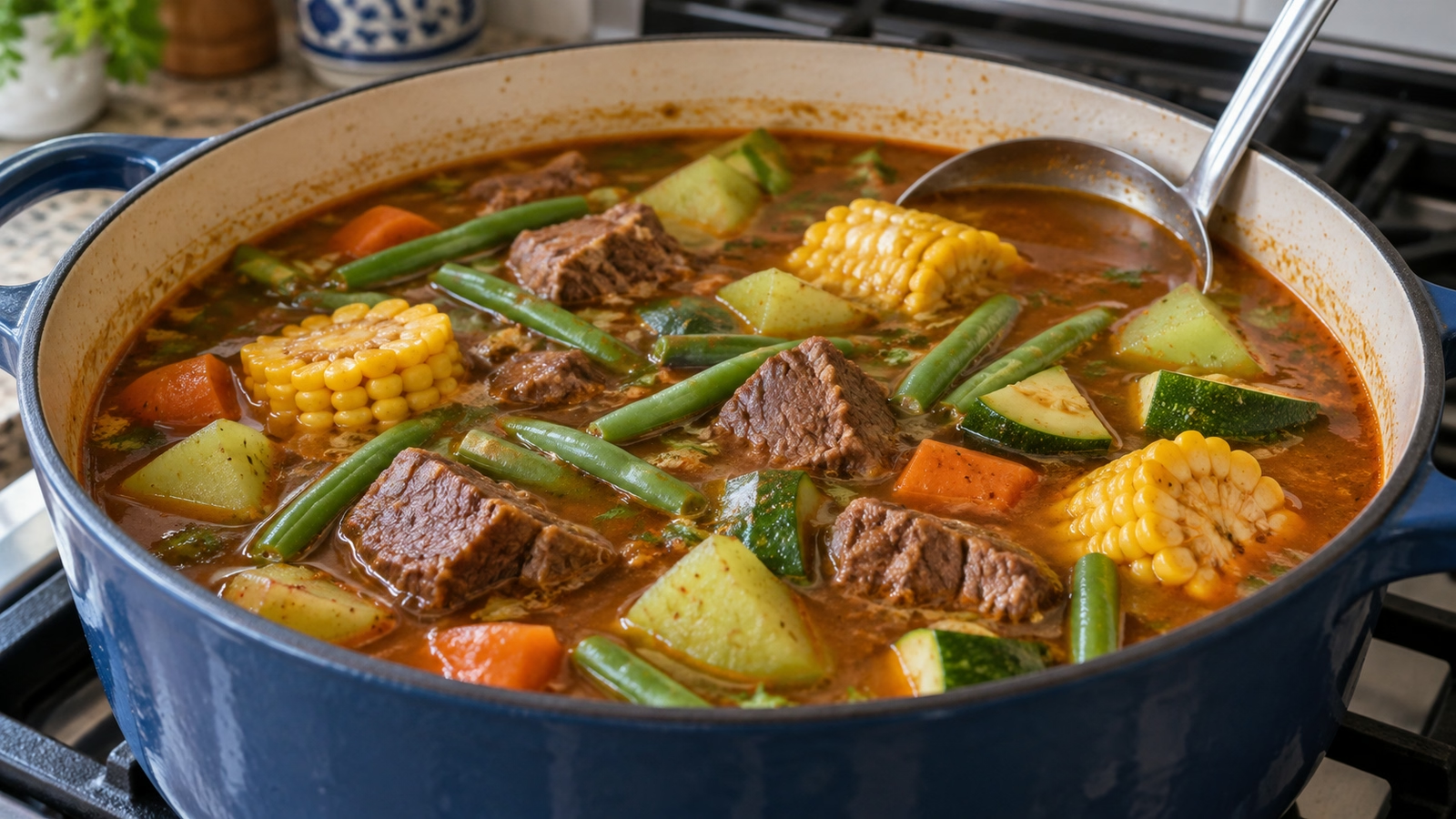
The recipe gives a time range, but the beef gets the deciding vote. A fork should enter with little resistance before the corn and firmer vegetables go in. If it does not, keep simmering and add hot water as needed; adding zucchini will not persuade a stubborn piece of chuck to hurry.
Aim for small, steady bubbles and a partially covered pot. A rolling boil spends your broth faster and knocks the vegetables around. Let the spoon rest between checks; constant stirring is not needed to prove that dinner is progressing.
- First stage: beef, water and aromatics build the base. Skim foam if it collects on the surface, but do not drain away the cooking liquid.
- Middle stage: the cooked chile mixture, corn, chayote and carrots go in when the beef is nearly tender. Check the corn rather than assuming every ear cooks equally fast.
- Final stage: green beans come before zucchini and epazote. Stop when the vegetables yield to a knife but still hold their edges.
- Last adjustment: taste after the simmer, then add the remaining salt only if needed. Evaporation changes concentration, so early seasoning is not the final word.
Serve fair bowls and save the broth
Divide the beef and vegetables among six deep bowls before ladling in the broth. That small step prevents the last serving from becoming mostly liquid. Offer lime and warm corn tortillas separately; neither is included in the nutrition estimate.
For leftovers, I would portion the soup before it reaches the refrigerator rather than put away one deep, crowded pot. Keep enough broth with each portion to cover the meat when you reheat it.
- Chill promptly: refrigerate in shallow containers within two hours, or within one hour when the temperature is above 90°F.
- Cold storage: keep at 40°F or below and use within three to four days, following USDA guidance.
- Reheat gently: reach 165°F throughout, stirring carefully. Add water if the broth needs loosening rather than boiling the zucchini to pieces.
- Nutrition context: the estimate includes the meat, vegetables, chiles and measured oil. Beef trimming and the edible amount of corn can change the result.
Mole de Olla Recipe

Ingredients
- 900 g boneless beef chuck roast about 2 lb; raw weight after trimming exterior fat, cut into 1 1/2-inch cubes
- 2500 ml water about 10 1/2 cups, plus more as needed
- 100 g white onion about 1/2 medium onion, chopped and divided
- 12 g garlic about 4 cloves, peeled and divided
- 6 g fine salt about 1 tsp, divided; adjust at the end
- 30 g dried guajillo chiles about 5; weight without stems and seeds
- 20 g dried ancho chiles 1–2; weight without stems and seeds
- 400 g ripe red tomatoes about 14 oz
- 10 g canola oil about 2 tsp
- 3 ears fresh corn cut into thirds; approximately 450 g edible kernels, excluding cobs
- 350 g chayote about 12 oz trimmed, in 1 1/4-inch pieces
- 300 g carrots about 10 1/2 oz peeled, in 3/4-inch pieces
- 200 g green beans about 7 oz trimmed, in short lengths
- 250 g zucchini about 9 oz, in thick half-moons
- 3 g fresh epazote 1 small washed sprig
Equipment
- 1 6-quart pot with lid
- 1 Heavy skillet or griddle
- 1 Blender
- 1 fine-mesh strainer
- 1 Kitchen scale
- 1 Instant-read thermometer
Instructions
- Combine beef, water, half the onion, half the garlic and 4 g of the salt in the large pot. Bring just to a boil, skim surface foam and reduce the heat. Partially cover and simmer 90–120 minutes, until a fork enters the meat with little resistance. Add hot water as needed to keep the meat covered.
- While the beef cooks, briefly toast the cleaned guajillo and ancho chiles in a dry skillet, without smoke or black patches. Cover with hot water, soak 15–20 minutes and drain. Roast the tomatoes on the skillet until softened, retaining the juices.
- Blend the softened chiles, tomatoes with juices, remaining onion and garlic, and 300 ml of the beef broth. Cool first if your blender cannot handle hot liquids. Strain the mixture. Heat the oil in a skillet and cook the strained sauce 5 minutes over medium-low heat, stirring.
- Add the chile mixture to the pot once the beef is nearly tender. If the beef still resists a fork, continue simmering before adding vegetables.
- Add the corn, chayote and carrots. Simmer gently about 20 minutes, or until the corn is beginning to soften, replenishing hot water if necessary.
- Add the green beans and cook 5 minutes. Add zucchini and epazote and simmer another 8–10 minutes, until all the vegetables are tender but keep their shape and the beef is fully tender. Extend cooking if the corn or beef needs it.
- Taste and add up to the remaining 2 g salt as needed. Remove a tough epazote stem. Divide the beef and vegetables among six bowls, then ladle in the broth. Lime and warm corn tortillas may be served separately.
Nutrition
Notes
Tried this recipe?
Let us know how it turned out!Sources
- Mexican Secretaría de Cultura: documented mole de olla variations
- USDA: safe leftover storage
- USDA: reheating leftovers
- USDA FoodData Central: ingredient composition
Hi, I’m Laura, the voice behind Tastiva. I’ve always believed that eating well should feel enjoyable, comforting, and realistic—not like another complicated rule to follow. I love creating recipes that fit into everyday life, sharing simple nutrition ideas, and finding small ways to make meals feel a little better without losing the pleasure of good food.