
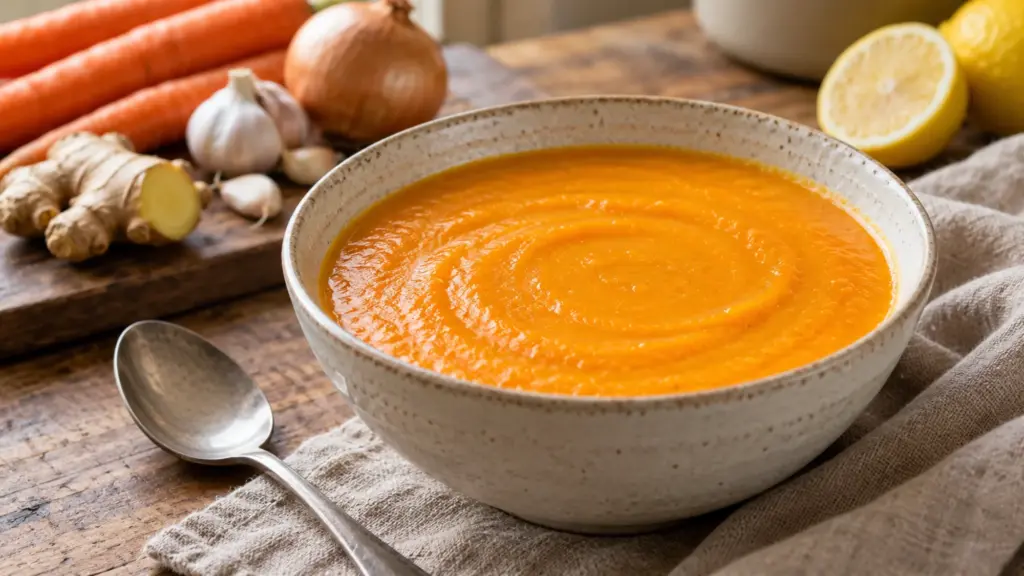
A pot of carrot soup can smell wonderful and still taste a little flat. This carrot ginger soup solves that problem with gently softened onion, fresh ginger and lemon stirred in at the end. The other trick is patience: let the carrot rounds become truly tender before blending, rather than asking the blender to finish the cooking.
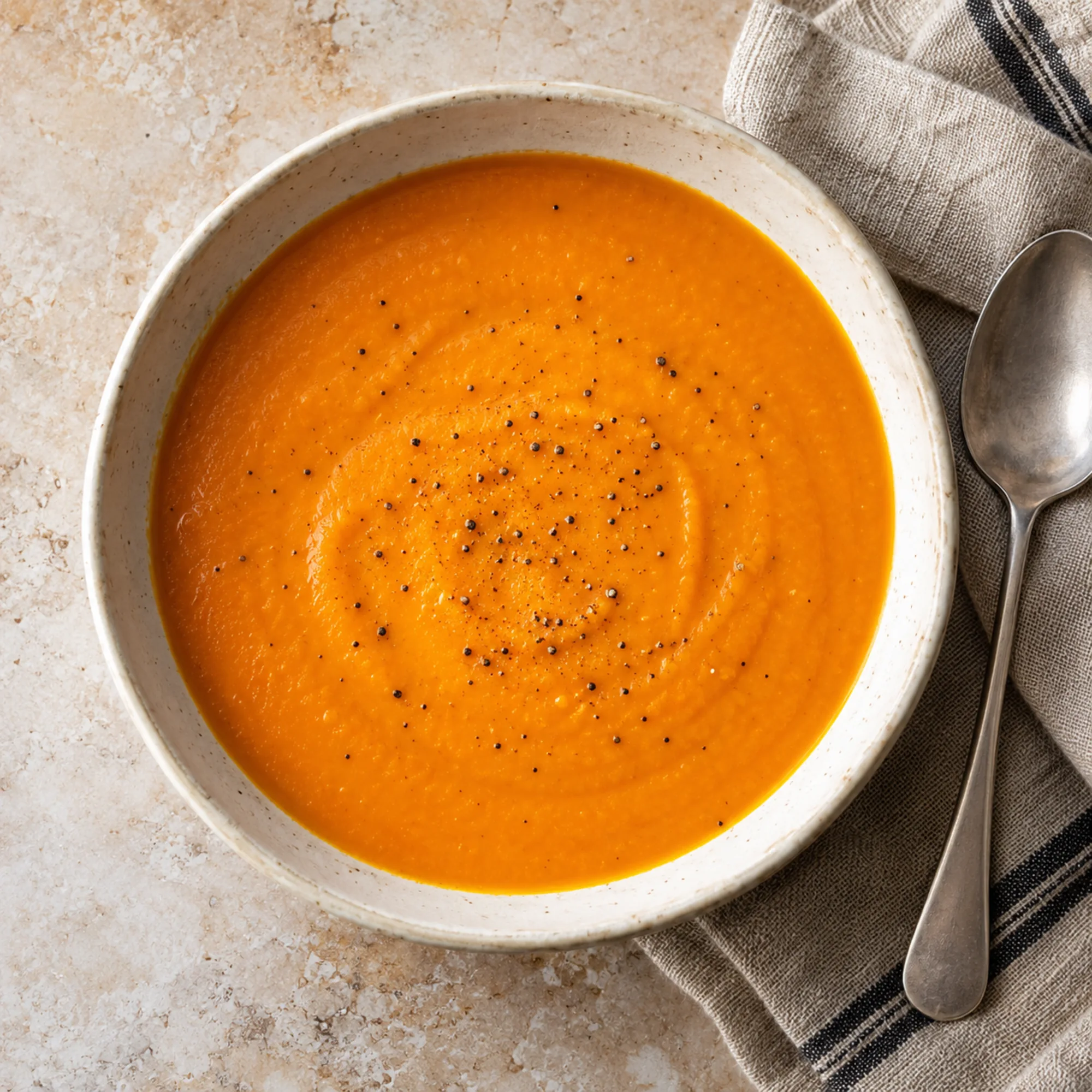
The silky texture comes from puréed carrots, not cream. Cook until a carrot round crushes easily, blend off the heat, then add lemon and just enough water to loosen the soup.
I prefer a gentle ginger warmth here so the carrots still taste like carrots; lemon should brighten the pot, not make it sour. Cutting the carrots evenly matters more than making perfect rounds: similar-sized pieces soften at roughly the same pace. You’ll need ordinary vegetables, one pot and about 50 minutes.
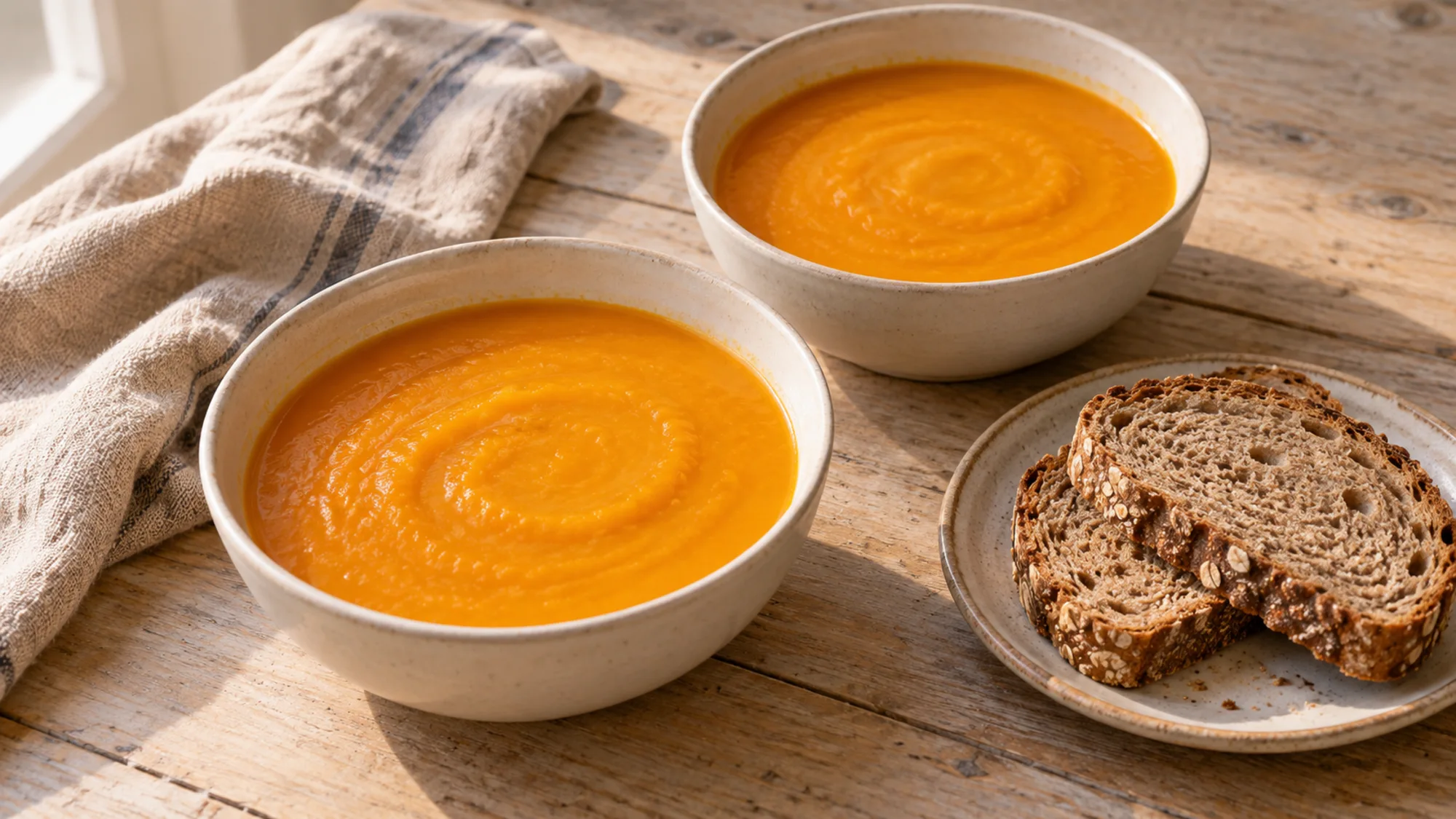
Serving Suggestions for Carrot Ginger Soup
Serve this as a generous starter or pair it with something substantial for lunch. On its own, the soup is relatively light and contains little protein; a beautiful orange bowl doesn’t magically become a complete dinner.
- For a more filling lunch: add a white-bean toast, a hummus sandwich or a lentil salad alongside it. Those accompaniments change the meal’s nutrition and aren’t included in the recipe estimate.
- For contrast: offer toasted bread separately so it stays crisp. A spoonful of plain yogurt is another option, but it introduces dairy and changes the cream-free finish.
- For a head start: make the soup ahead, then thin it after reheating. It may seem thicker once chilled, so add water a tablespoon at a time rather than flooding the pot.
Divide leftovers into shallow containers and refrigerate within two hours, or one hour when the temperature is above 90°F (32°C). Follow USDA leftover guidance: use refrigerated portions within three to four days and bring reheated soup to a rolling boil, reaching 165°F (74°C).
Keep the soup simple and let the side dish do a different job: crunch, protein or both.
Carrot Ginger Soup Variations and Texture Fixes
I’d adjust the finished texture before changing the ingredients. Carrots vary in size and water content, and an uncovered pot loses more liquid than a tightly covered one. Start with the measured broth, then use the table to decide what the soup needs.
| What you notice | What to change | What to expect |
|---|---|---|
| Thicker than you like | Blend in warm water, ¼ cup at a time | A looser soup without extra salt |
| Too little ginger warmth | Use 2 tablespoons grated ginger next time | A more assertive flavor |
| Sweet but flat | Add lemon juice a teaspoon at a time | A brighter finish; stop before it tastes sour |
| Grainy after blending | Check that carrots crush easily; cook longer if firm | Softer carrots blend more smoothly |
Low-sodium broth gives you more room to season at the end. Tastiva’s mushroom vegetable stock is a homemade alternative with a more savory character; its salt level and nutrition differ from the packaged broth used here. Avoid adding ground ginger as a one-for-one substitute for fresh: its flavor and strength are different.
A splash of water fixes thickness; it cannot fix undercooked carrots. Check tenderness before reaching for the blender.
Health Benefits and Practical Nutrition
Carrots supply carotenoids that the body can convert to vitamin A, which supports normal vision and immune function, as explained by the NIH vitamin A fact sheet. That’s a reason to enjoy vegetables, not a promise that a bowl of soup prevents illness or improves eyesight beyond normal function.
- The vegetable solids stay in: blending, unlike straining, keeps the carrot pulp in your bowl.
- Broth matters: sodium varies widely by brand. Check the label, especially if you need to limit sodium.
- Keep the whole meal in view: cream-free doesn’t mean nutritionally complete. Pair this soup with a protein-containing food and enough food for your appetite.
Enjoy the carrots for their flavor and useful nutrients, without asking ginger or a single meal to perform health miracles.
Bottom Line
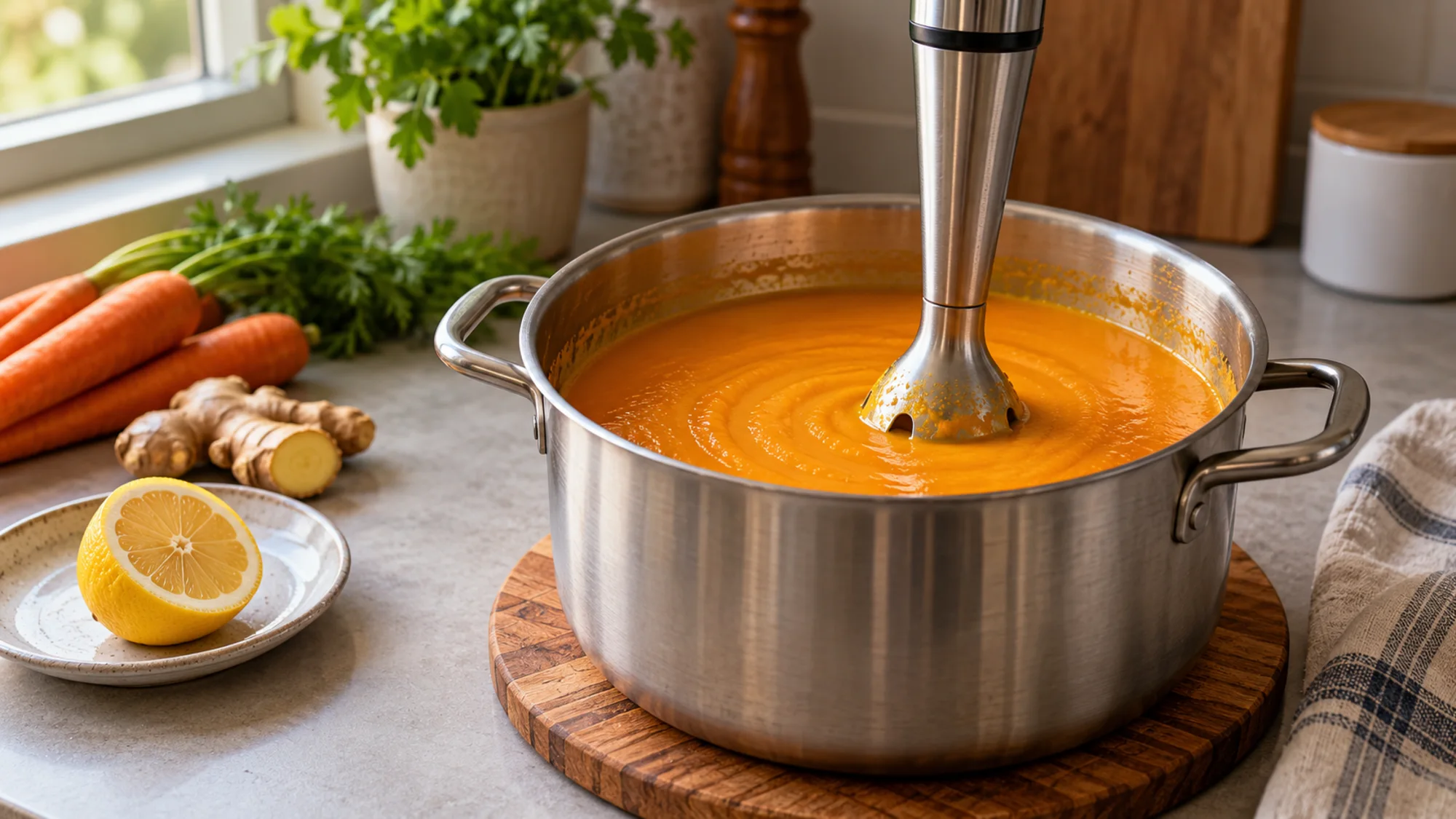
This is a straightforward soup with a useful finishing order: soften, simmer, blend, then brighten. Use an immersion blender off the heat with its head submerged to limit splashing; for a countertop blender, follow its manufacturer’s hot-liquid limits and venting instructions.
Tender carrots provide the body, ginger adds warmth and lemon brings the flavors into focus. Taste before adding more salt, then serve it your way.
Carrot Ginger Soup Recipe

Ingredients
- 2 tablespoons olive oil 27 g
- 1 medium yellow onion 150 g, chopped
- 2 cloves garlic 6 g, minced
- 1 tablespoon fresh ginger 6 g, finely grated
- 1 1/2 lb carrots 680 g trimmed weight; peel if needed and cut into ¼-inch rounds
- 3 cups low-sodium vegetable broth 720 ml
- 1/4 teaspoon fine salt 1.5 g; plus more only if needed
- 1/4 teaspoon black pepper 0.6 g
- 2 tablespoons lemon juice 30 g
- 1/2–1 cup water 120–240 ml, only as needed to thin
Equipment
- 1 Large saucepan or soup pot at least 3 quarts
- 1 immersion blender
- 1 Cutting board and knife
- 1 Fine grater
- 1 Measuring cups and spoons
Instructions
- Heat the olive oil in a large saucepan or soup pot over medium heat. Add the chopped onion and cook for 6–8 minutes, stirring occasionally, until softened but not browned.
- Stir in the garlic and grated ginger and cook for 30 seconds, stirring, until fragrant.
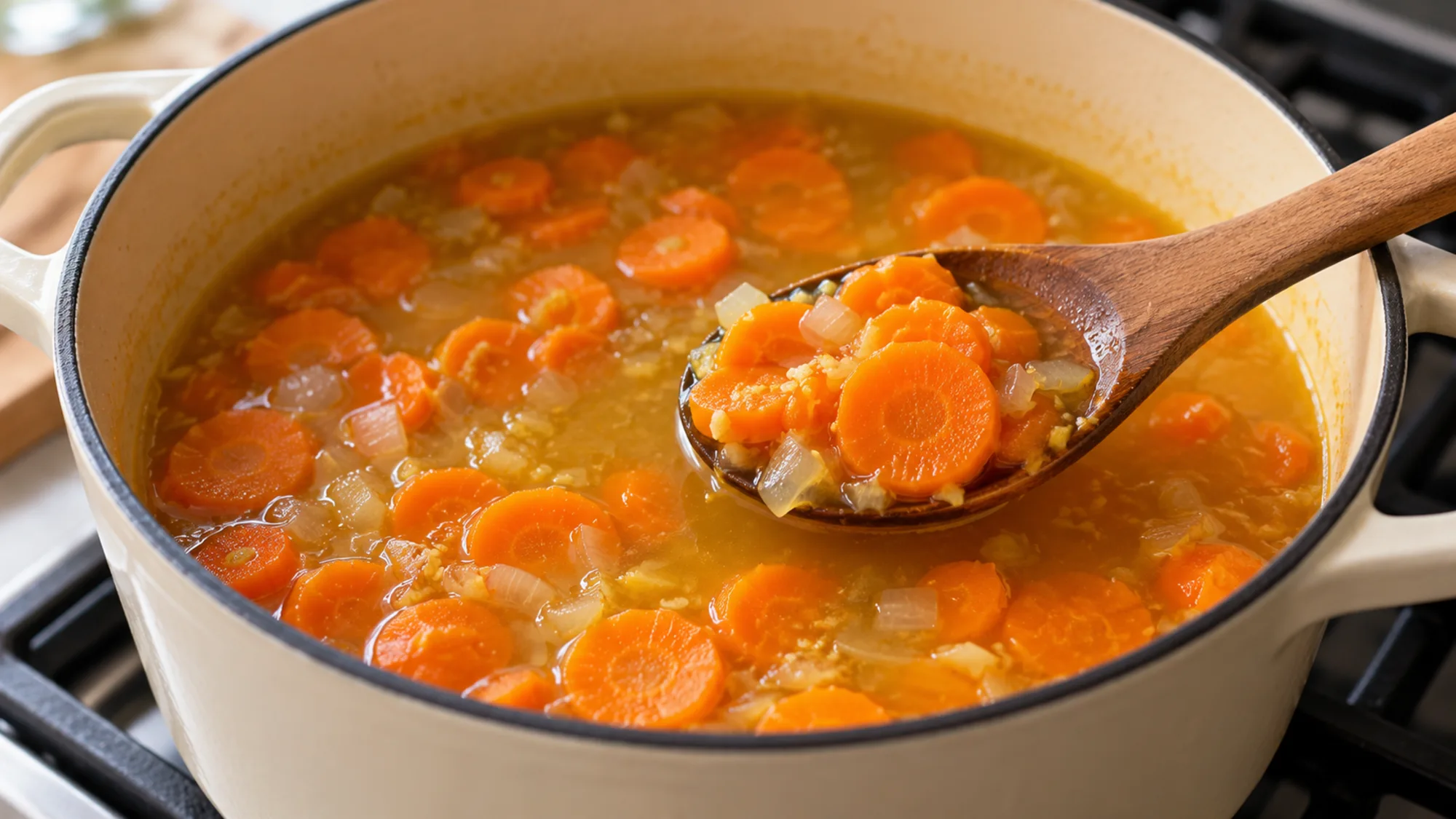
- Add the carrot rounds, broth, salt and pepper. Bring to a gentle boil, then reduce the heat, partially cover and simmer for 20–25 minutes. The carrots are ready when a round crushes easily against the side of the pot with a spoon; cook longer if needed.
- Remove the pot from the heat. Use an immersion blender with its head fully submerged and blend until smooth, keeping the head below the surface to limit splashing. If using a countertop blender instead, first check that its manufacturer permits hot soup, then follow its cooling, fill-limit and venting instructions.
- Stir in the lemon juice. Add water ¼ cup at a time until the soup reaches your preferred consistency; you may not need all of it. Taste, adjust salt only if needed, and divide into four portions. Rewarm gently if necessary.
Nutrition
Video
Notes
Tried this recipe?
Let us know how it turned out!Hi, I’m Laura, the voice behind Tastiva. I’ve always believed that eating well should feel enjoyable, comforting, and realistic—not like another complicated rule to follow. I love creating recipes that fit into everyday life, sharing simple nutrition ideas, and finding small ways to make meals feel a little better without losing the pleasure of good food.