
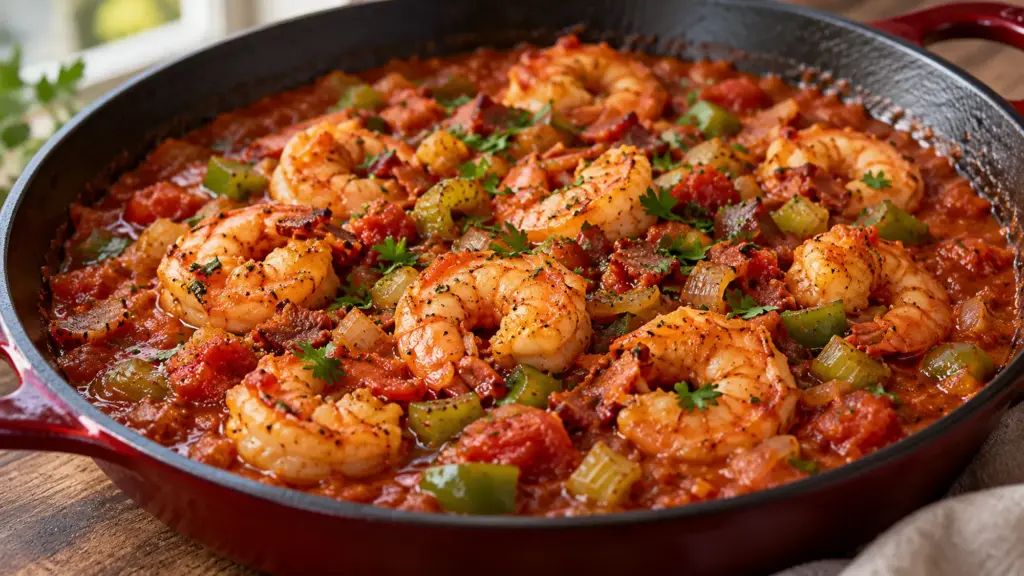
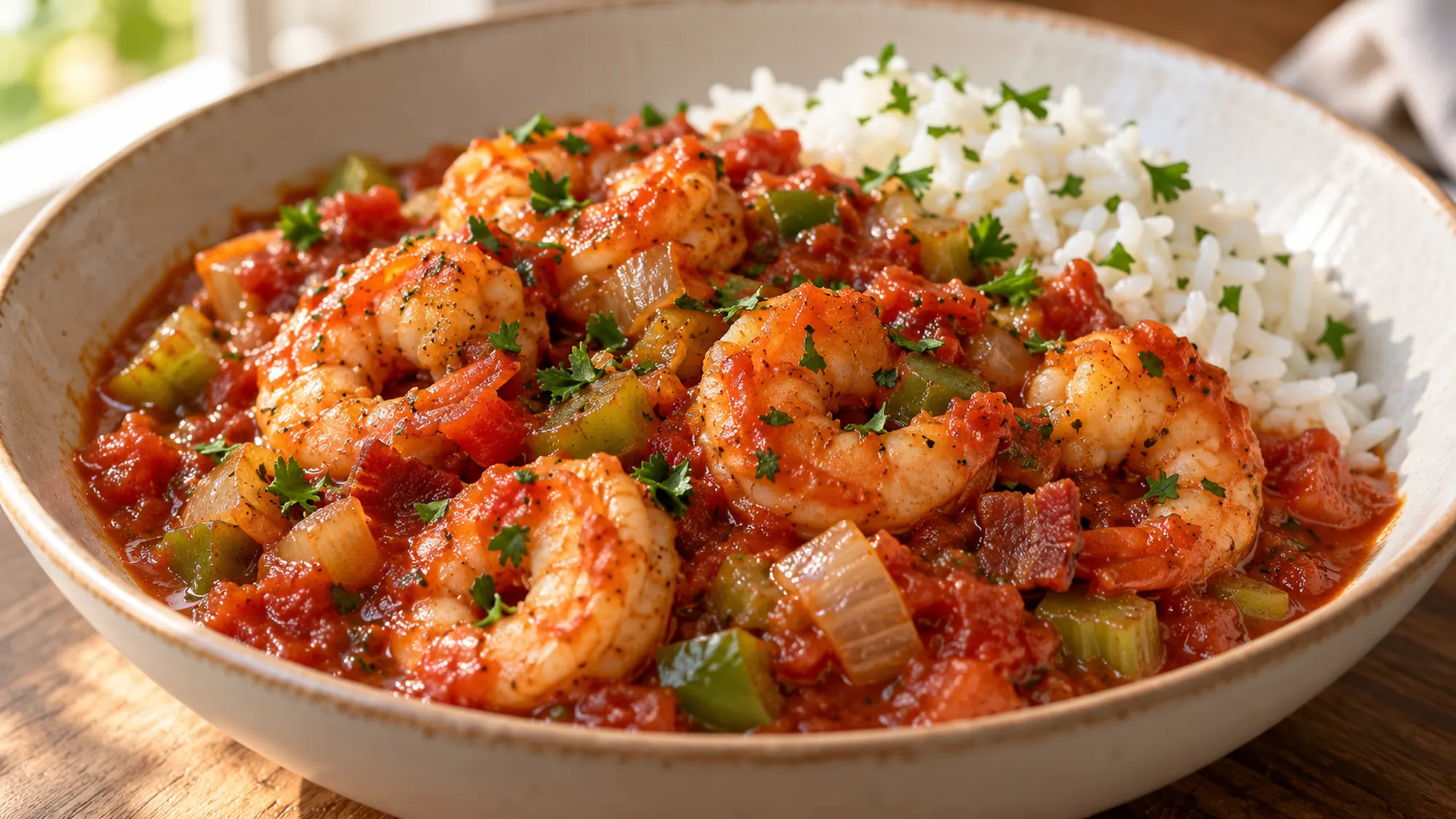
Shrimp cook quickly; a tomato sauce with onion, celery and green pepper needs a little more patience. Shrimp creole brings those two schedules together by cooking the seafood separately and returning it near the end. This version adds small pieces of bacon for a smoky note beneath the tomato, herbs and cayenne.
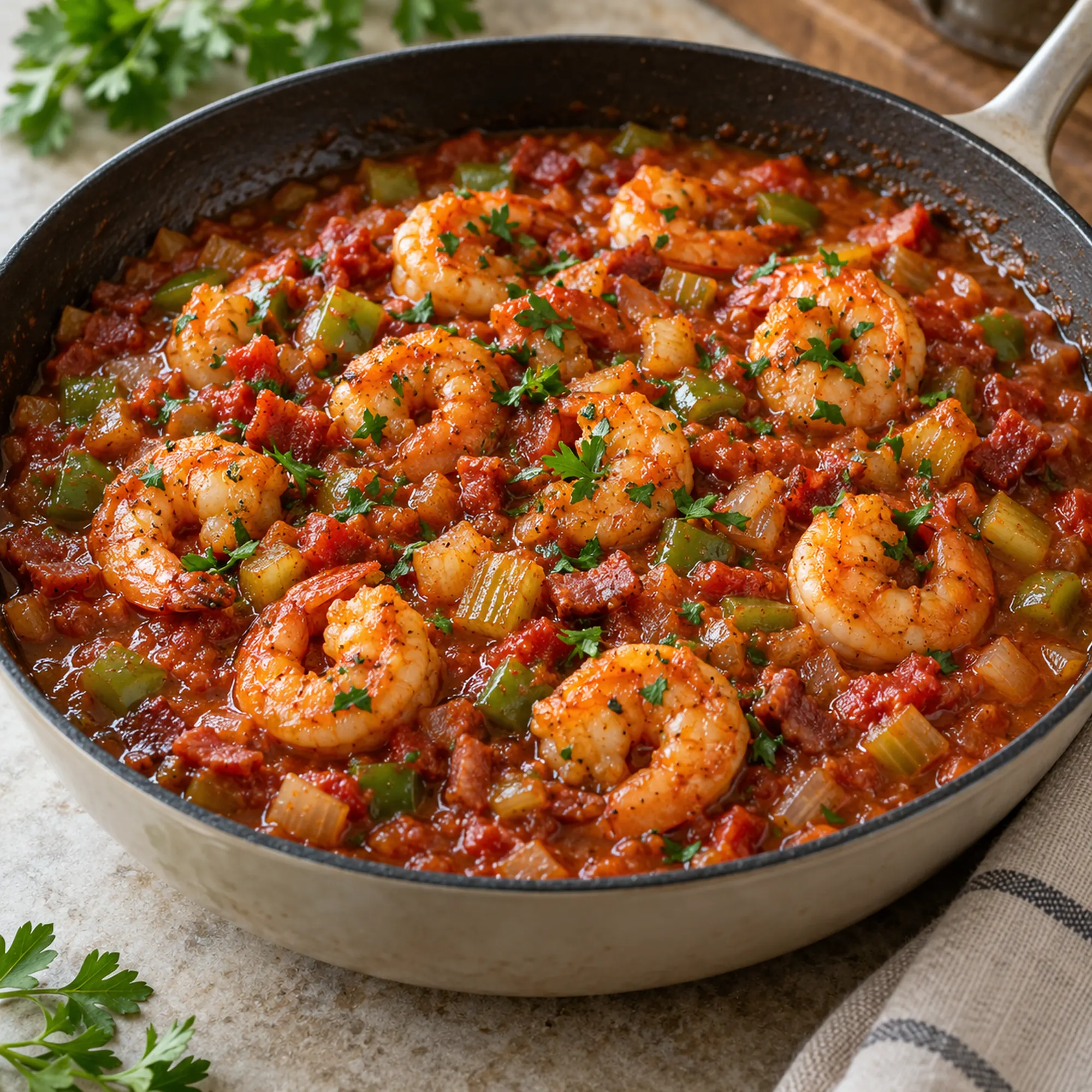
This shrimp creole builds a tomato-and-vegetable sauce before the cooked shrimp return to the pan, so the sauce can develop without giving the seafood a long simmer.
I prefer the vegetables diced small enough to sit with the shrimp on the spoon. Large celery chunks can feel out of place in an otherwise cohesive sauce. The goal is a savory mixture with texture, not a completely smooth puree or a skillet crowded with competing pieces.
Serving Shrimp Creole
Serve in shallow bowls with a modest mound of rice and a share of the sauce. Tastiva’s rice cooking guide is useful for timing the side while the tomato mixture simmers. Keep the rice separate until serving so each person can choose the balance.
A leafy salad or simply cooked green vegetables can round out the plate. There is already plenty of flavor from the bacon, Worcestershire and spices, so the side does not need another heavy sauce. Offer extra hot sauce at the table rather than making every bowl equally fiery.
- Divide the shrimp evenly before ladling over the remaining sauce.
- Use bowls with enough room to mix a little rice into each bite.
- Set out the sides before returning the shrimp to the pan; the seafood should not wait through a long final boil.
| Serving addition | What it does |
|---|---|
| Plain rice | Carries the tomato sauce |
| Leafy salad | Adds cool freshness |
| Extra hot sauce | Lets each person choose heat |
Have the table ready before the shrimp go back in; they only need a brief final warming.
Shrimp Creole Variations
The bacon-based approach comes from Laura in the Kitchen’s shrimp creole, shown in the accompanying video. This recipe supplies measured individual spices instead of an unspecified Creole seasoning blend, and uses plain passata for a consistent tomato base.
I would start with the written cayenne and let the hot sauce do any extra work at the table. Spice blends and bottled sauces vary, and a spoonful added late cannot easily be removed. The garlic belongs with the softened vegetables so it becomes fragrant without scorching.
- Raw shrimp should be peeled and deveined before cooking. Frozen shrimp can work after safe thawing and thorough drying.
- Bacon is part of this particular version. Omitting it changes the flavor and the amount of fat available for the vegetables.
- Passata is plain strained tomato, not a finished pasta sauce with its own herbs and sugar.
- Shrimp size changes cooking time. Watch for an opaque, pearly appearance instead of assuming every batch takes the same minutes.
- For less heat, reduce the cayenne while keeping the paprika and herbs for flavor.
Measure the seasoning and adapt the heat deliberately; the tomato and seafood should still be recognizable.
Nutrition and Safe Cooking
Shrimp provide protein, and the sauce contains several vegetables. Bacon and salty condiments also contribute to the finished dish, so it is more useful to consider the whole recipe than label it light simply because seafood is involved. Rice or bread adds a separate portion of starch.
The nutrition estimate counts all the measured raw bacon and oil even though some rendered fat is removed. That makes it conservative rather than an exact measurement of what remains in the pan. Brands, shrimp size and the amount of sauce served can change the final numbers.
- Keep raw shrimp chilled and use separate utensils and plates for raw and cooked seafood.
- Cook shrimp until their flesh is pearly or white and opaque; avoid relying on pink color alone.
- Return the cooked shrimp only long enough to heat through in the finished sauce.
- Refrigerate leftovers promptly and reheat thoroughly, recognizing that repeated heating makes shrimp firmer.
Cook the seafood safely, then protect its texture by keeping the final time in the sauce brief.
Bottom Line
Shrimp creole works when the sauce and seafood are allowed different amounts of cooking time. Give the vegetables and tomato their simmer, keep the spices measured and return the shrimp at the end. With rice ready alongside, the result is a generously sauced dinner without asking delicate seafood to behave like a slow-cooked stew.
Let the sauce take its time and let the shrimp make a short final appearance.
Shrimp Creole Recipe

Ingredients
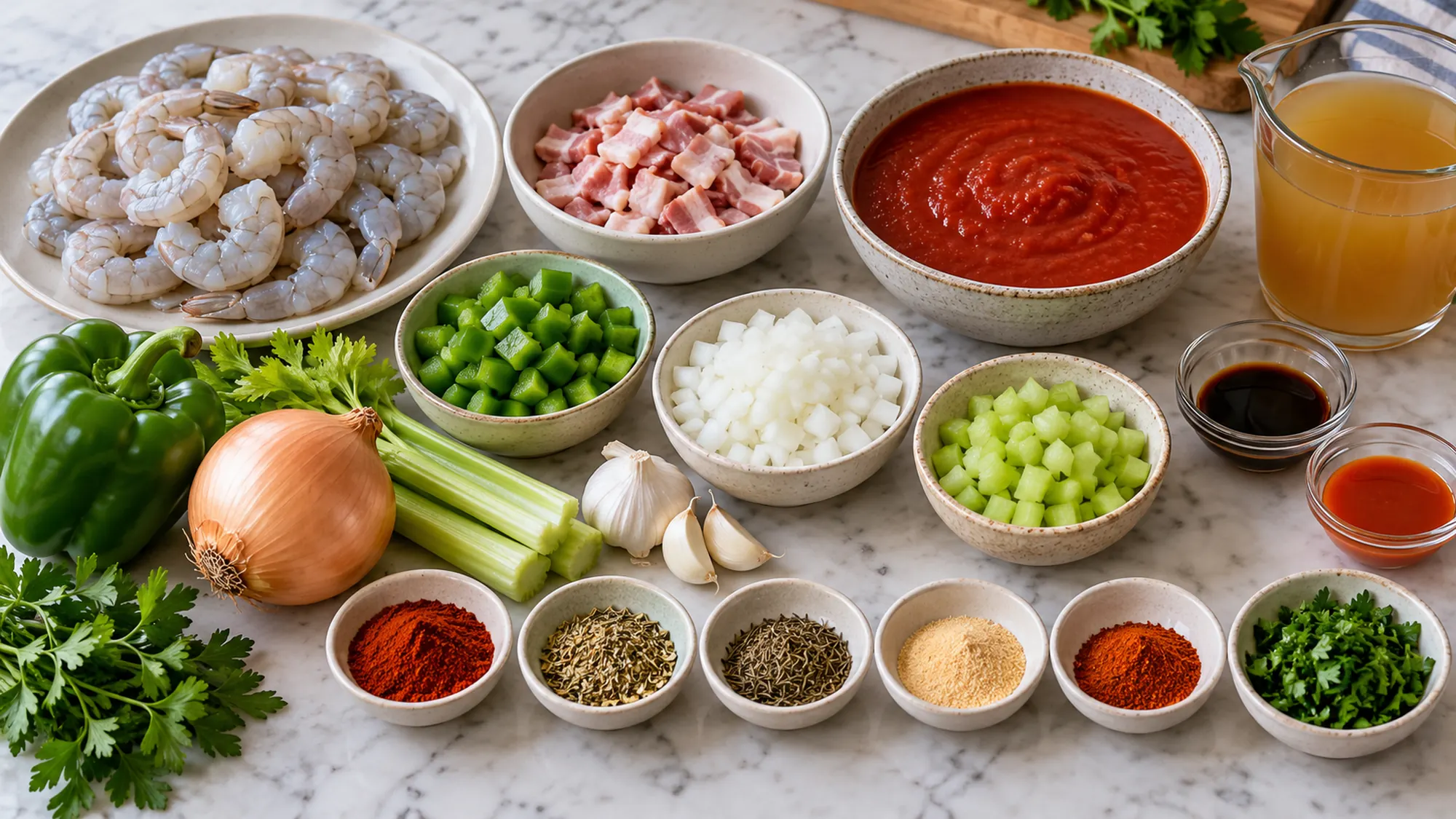
- 680 g raw shrimp peeled and deveined
- 100 g thick-cut bacon diced
- 15 ml olive oil
- 150 g onion diced
- 150 g green bell pepper diced
- 60 g celery diced
- 9 g garlic minced
- 360 g plain tomato passata
- 120 ml unsalted chicken stock
- 10 ml Worcestershire sauce
- 5 ml hot pepper sauce
- 3 g sweet paprika
- 1 g dried oregano
- 1 g dried thyme
- 1 g garlic powder
- 0.5 g ground cayenne
- 3 g fine salt
- 1 g black pepper
- 8 g fresh parsley chopped
- cooked rice optional; excluded from estimates
Equipment
- 1 Large skillet
- 1 Cutting board
- 1 Instant-read thermometer
Instructions
- Mix the paprika, oregano, thyme, garlic powder, cayenne, salt and pepper. Pat the peeled shrimp dry and toss with half the seasoning. Heat the olive oil in a wide skillet over medium-high heat. Cook the shrimp in batches until pearly and opaque, about 1–2 minutes per side depending on size. Transfer to a clean plate.
- Lower the heat and add the diced bacon. Cook until its fat renders and the edges crisp. Remove the bacon with a slotted spoon. Carefully spoon off excess fat, leaving about 2 tablespoons in the skillet.
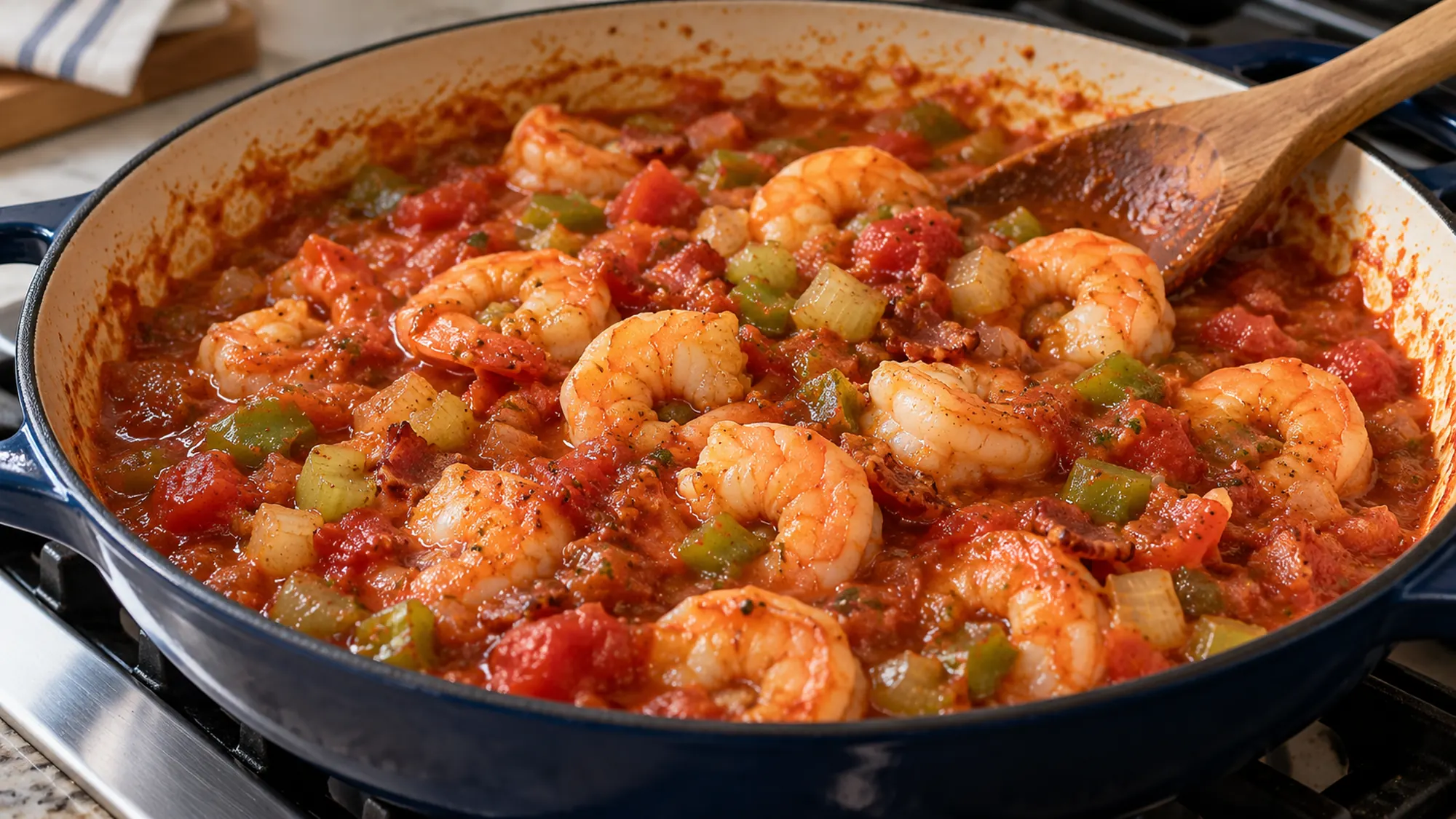
- Add the onion, green pepper and celery. Cook for 5–7 minutes until softened, then add the garlic and stir for 30 seconds. Add passata, stock, Worcestershire, hot sauce and remaining spice mixture. Bring to a simmer, cover and cook gently for about 15 minutes.
- Uncover and simmer a little longer if the sauce is thin. Return the cooked shrimp and bacon, add parsley and warm through briefly. Do not keep boiling once the shrimp are hot. Serve in four portions with optional rice. All measured raw bacon is counted in the nutrition estimate, despite draining some fat.
Nutrition
Video
Notes
Tried this recipe?
Let us know how it turned out!Hi, I’m Laura, the voice behind Tastiva. I’ve always believed that eating well should feel enjoyable, comforting, and realistic—not like another complicated rule to follow. I love creating recipes that fit into everyday life, sharing simple nutrition ideas, and finding small ways to make meals feel a little better without losing the pleasure of good food.