
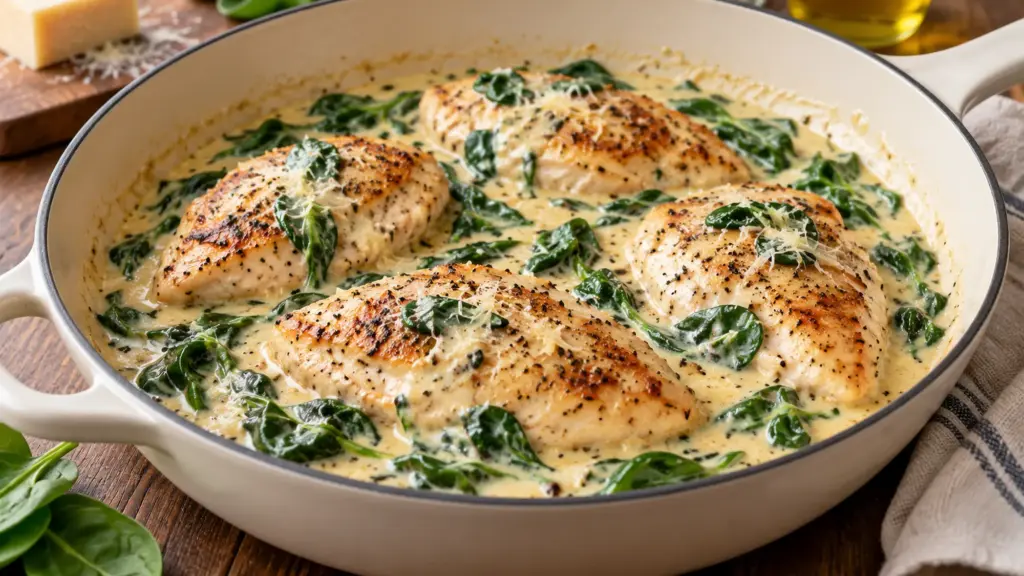
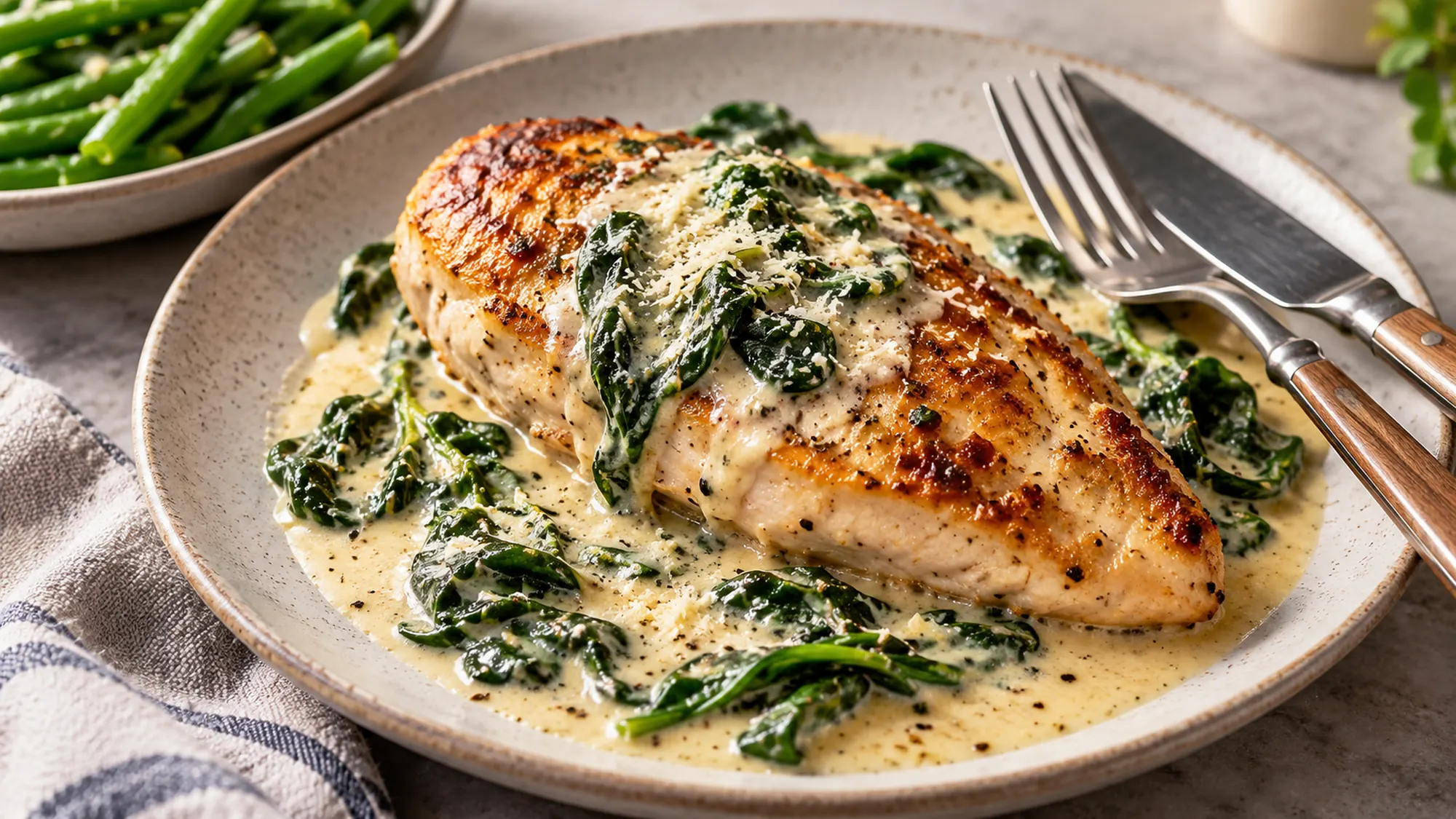
A plain chicken breast becomes more inviting when a spoonful of warm spinach cream sauce reaches the plate beside it. Chicken florentine uses that contrast well: a golden surface, tender meat and a sauce with enough Parmesan to taste savory rather than simply creamy. This version stays on the stovetop and uses stock instead of wine.
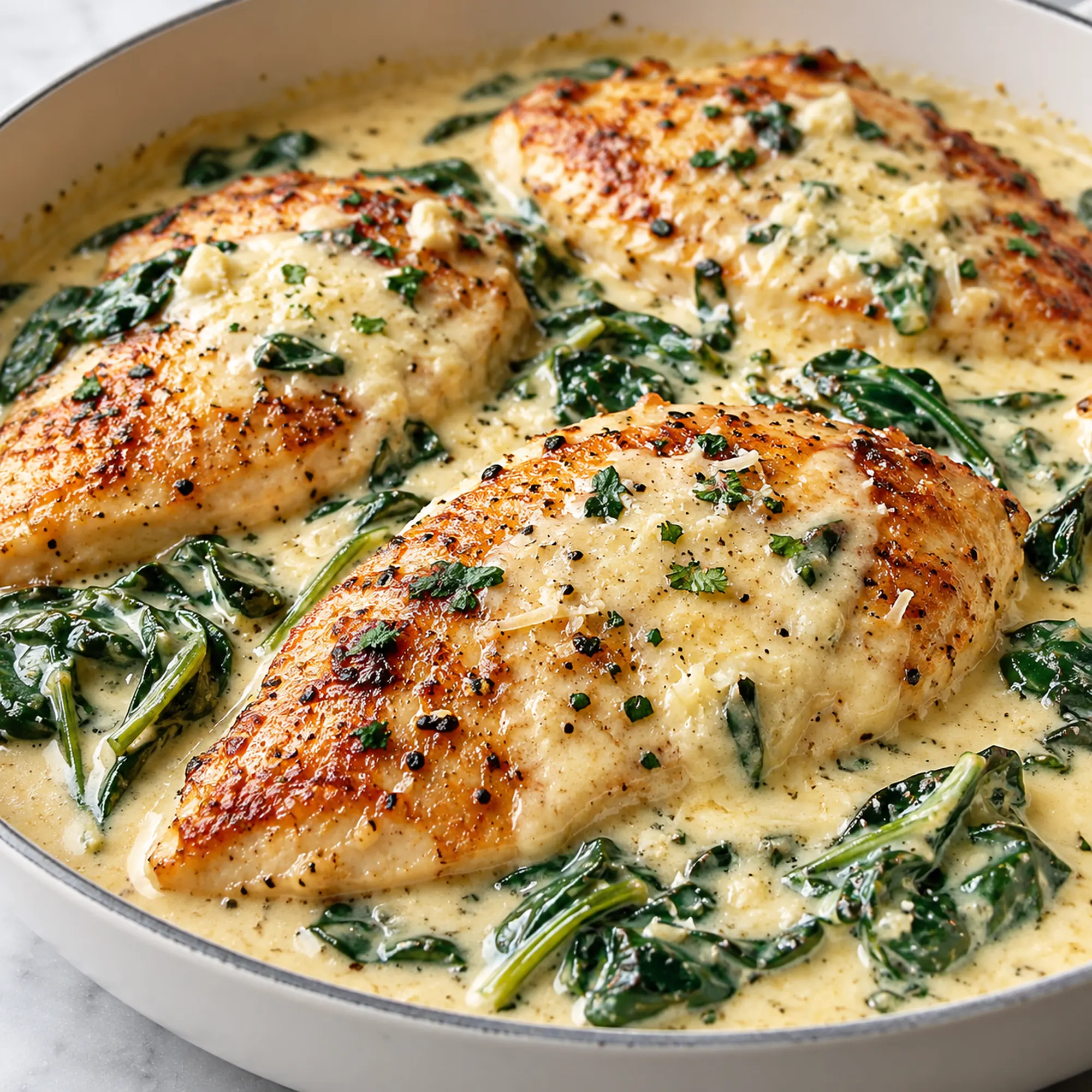
This chicken florentine pairs lightly floured, pan-seared chicken with spinach and Parmesan cream sauce; cook the chicken evenly and finish the sauce gently.
I prefer the sauce spooned partly over the chicken so some of the golden surface remains visible. It makes the plate more appealing and keeps the different textures noticeable. The flour coating is deliberately light, not a thick breaded crust, so shake off excess before the chicken goes into the skillet.
Serving Chicken Florentine
Give each person one breast with a share of the spinach sauce. A modest portion of pasta, rice or potatoes can catch what remains on the plate. The chicken and sauce are already substantial, so the side does not need another layer of cream or cheese.
Tastiva’s garlic-and-lemon green beans offer a bright, firmer contrast. If choosing potatoes, the mashed potato guide helps with texture, but keep the portion and added butter in mind alongside this rich sauce.
- Use a warm plate to keep the sauce fluid while everyone sits down.
- Keep pasta or rice separate until serving so you can control how much sauce each portion receives.
- Add a crisp salad when a second cooked side would make dinner unnecessarily complicated.
| Side | Best feature |
|---|---|
| Plain rice | Catches the creamy sauce |
| Green beans | Firm bite and brightness |
| Small pasta portion | Turns sauce into a coating |
A plain starch and a crisp vegetable are enough; the skillet already supplies the richness.
Chicken Florentine Variations
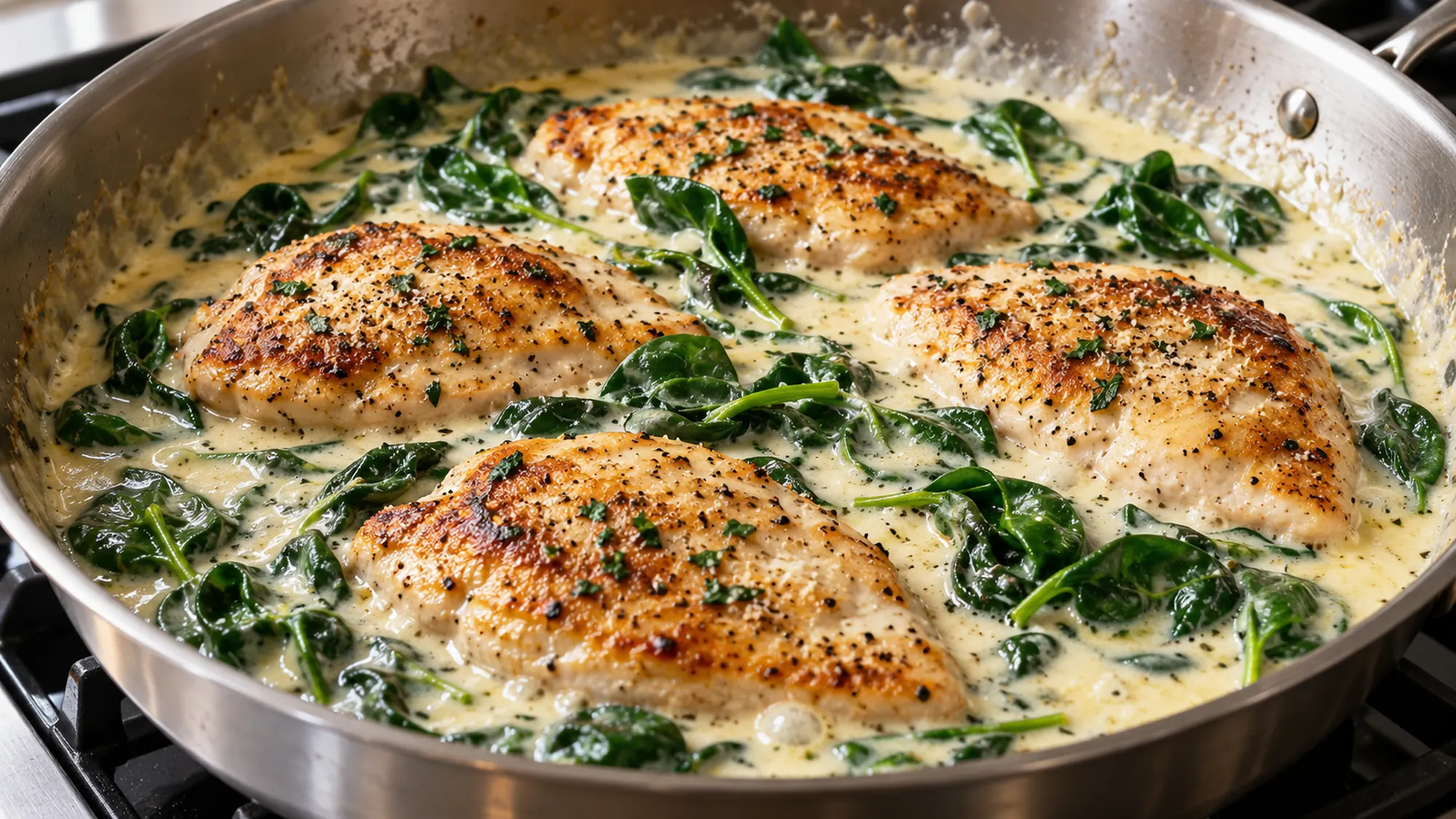
This dish follows the skillet method in Preppy Kitchen’s chicken florentine, despite the older wording in that page’s address. The accompanying video shows seared chicken, spinach and a creamy cheese sauce. Unsalted stock replaces its wine here, an option the source allows.
I would grate the Parmesan finely so it melts readily into the warm liquid. Reduce the heat before adding it, and avoid boiling the sauce aggressively afterward. A little water can loosen an overly thick sauce; adding another large pour of cream is not the only solution.
- Pound the chicken to an even thickness rather than leaving one thick end and one thin tail.
- Fresh spinach wilts quickly. Frozen spinach would need thawing and thorough draining, and the quantity would not be a simple cup-for-cup swap.
- Stock gives a milder result than wine. The substitution changes acidity as well as removing the wine.
- The recipe uses Parmesan, not cream cheese. Swapping cheeses changes the flavor and how the sauce thickens.
Even chicken thickness and gentle cheese melting matter more than adding extra richness.
Nutrition and Safe Cooking
Chicken supplies protein, while spinach adds a small amount of vegetables to the sauce. The estimated portion contains about 56 grams of protein, but cream, butter, oil and Parmesan also make this a rich main dish. A handful of spinach does not turn the entire skillet into a vegetable serving.
Nutrition is calculated for one breast and one-quarter of the sauce, with all the measured flour and cooking fat included. Some flour may remain in the coating dish, so the estimate is conservative. Optional sides are separate, and different chicken weights will change the portion.
- Cook chicken to 165°F (74°C) at its thickest point. Check before moving it to the clean resting plate.
- Do not use the plate or tongs that held raw chicken for the finished dish without washing them.
- Refrigerate leftovers promptly. Reheat covered with a small splash of water if needed, stirring the sauce and checking the chicken heats thoroughly.
Keep the portion clear and add vegetables alongside rather than relying on the spinach in the sauce alone.
Bottom Line
Chicken florentine is a useful reminder that one well-made sauce can carry dinner. Give the breasts an even thickness, develop a golden surface and let the Parmesan melt without a hard boil. Serve it with something simple enough to leave room for the spinach sauce, and there is little reason to complicate the rest of the meal.
Golden chicken and a gently finished spinach sauce are the details worth getting right.
Chicken Florentine Recipe

Ingredients
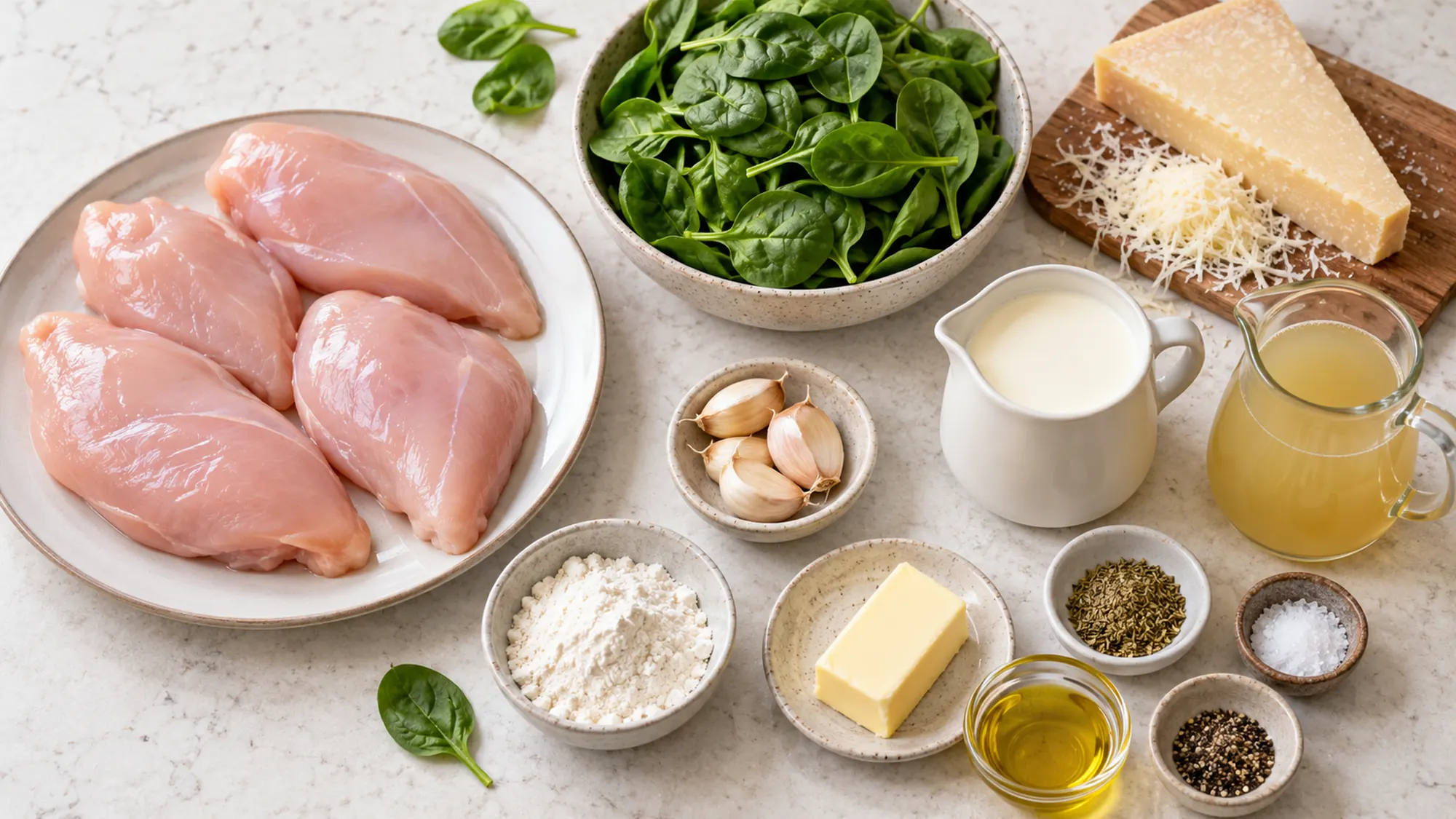
- 800 g boneless skinless chicken breasts 4 pieces, pounded to an even 3/4 inch
- 40 g all-purpose flour for dredging
- 30 ml olive oil
- 56 g unsalted butter divided
- 15 g garlic minced
- 180 ml unsalted chicken stock
- 1 g dried oregano
- 240 ml whipping cream 30% fat
- 90 g baby spinach
- 60 g Parmesan finely grated
- 6 g fine salt
- 1 g black pepper
Equipment
- 1 wide skillet
- 1 Meat mallet
- 1 Instant-read thermometer
Instructions
- Pound the chicken breasts to an even thickness of about 3/4 inch. Pat dry and season with the salt and pepper. Place the flour in a shallow dish, lightly coat each breast and shake off loose excess.
- Heat the olive oil and half the butter in a wide skillet over medium heat. Cook the chicken in batches if necessary, roughly 5–7 minutes per side, until golden and 165°F (74°C) in the thickest part. Move to a clean plate.
- Lower the heat and add the remaining butter and garlic. Stir for about 30 seconds without browning the garlic. Add the stock and oregano, scraping up the browned bits. Simmer for 2–3 minutes.
- Add the cream and bring to a gentle simmer. Stir in the Parmesan until melted, then add the spinach and cook until wilted. If the sauce becomes too thick, loosen it with a small splash of water.
- Return the chicken and any collected juices to the skillet. Spoon the sauce over the breasts and warm gently. Serve one breast with one-quarter of the sauce per portion. The stock replaces the wine in the accompanying demonstration.
Nutrition
Video
Notes
Tried this recipe?
Let us know how it turned out!Hi, I’m Laura, the voice behind Tastiva. I’ve always believed that eating well should feel enjoyable, comforting, and realistic—not like another complicated rule to follow. I love creating recipes that fit into everyday life, sharing simple nutrition ideas, and finding small ways to make meals feel a little better without losing the pleasure of good food.