
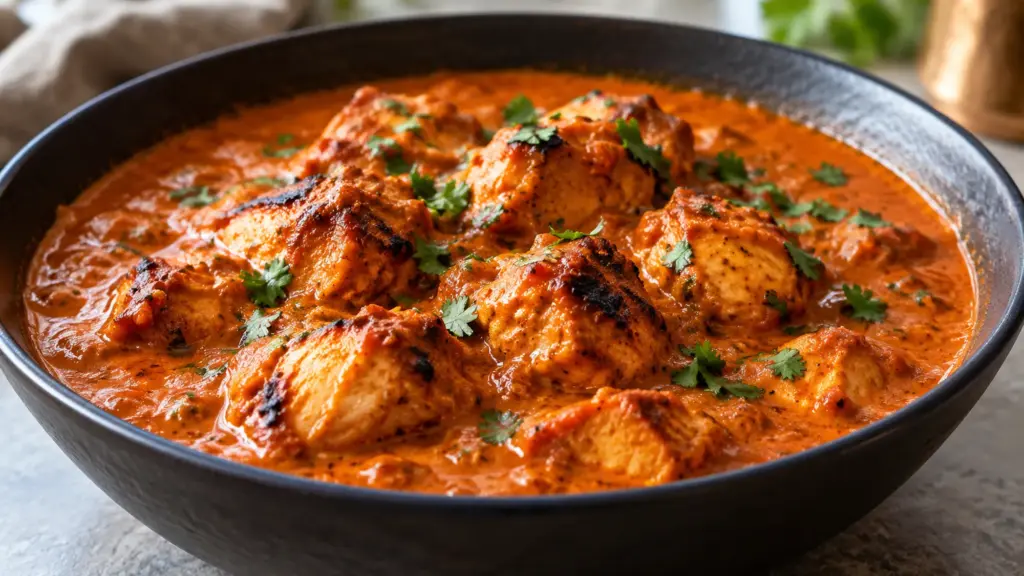
The browned edges on the chicken and the smooth sauce do different jobs in chicken tikka masala. One brings roasted flavor; the other carries the tomato, ginger and warm spices through the dish. Giving each part its own attention is more useful than trying to rush everything into a single pan at once.
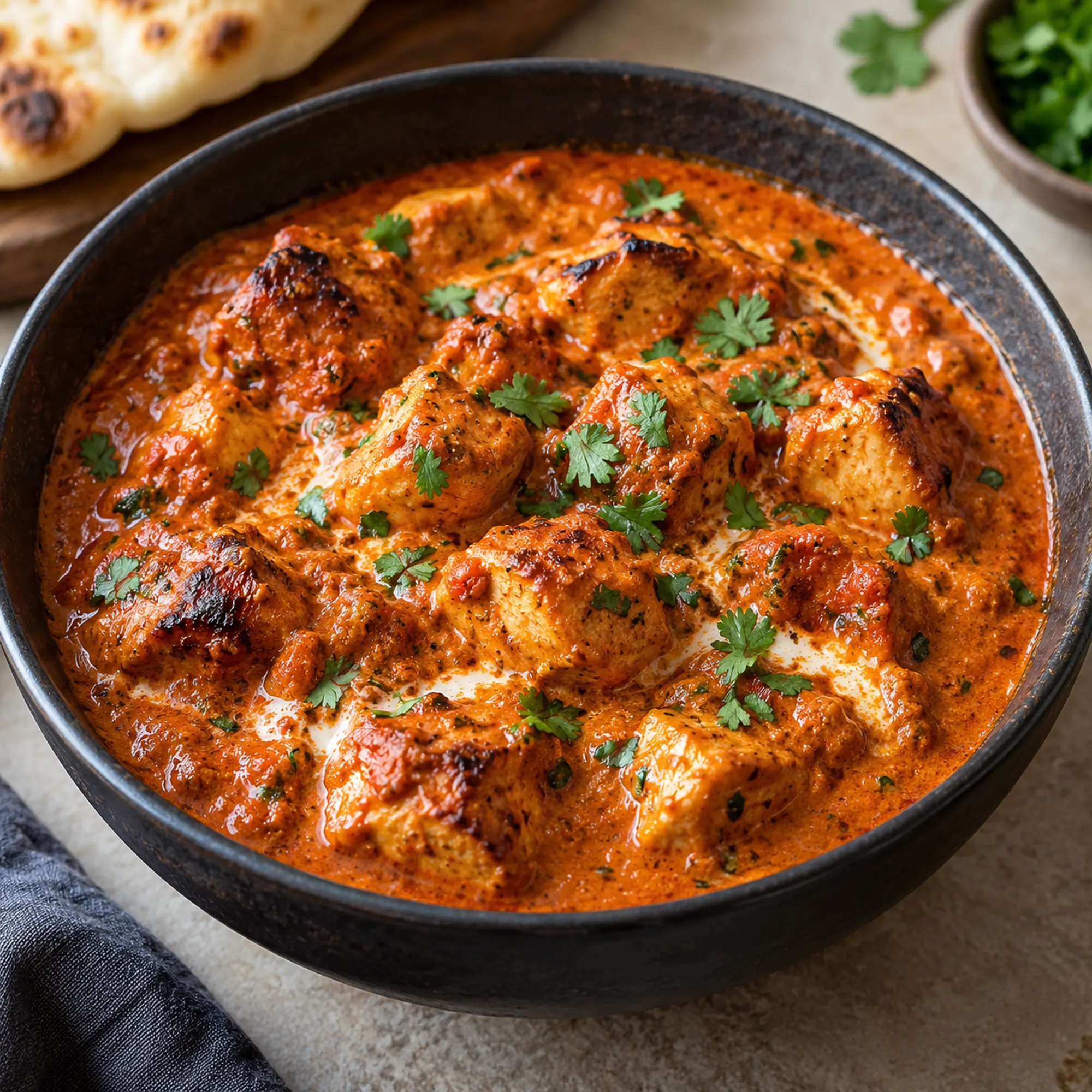
Chicken tikka masala starts with yogurt-marinated thigh pieces, briefly browned in batches, then finishes in a blended tomato-spice sauce enriched with cream and butter.
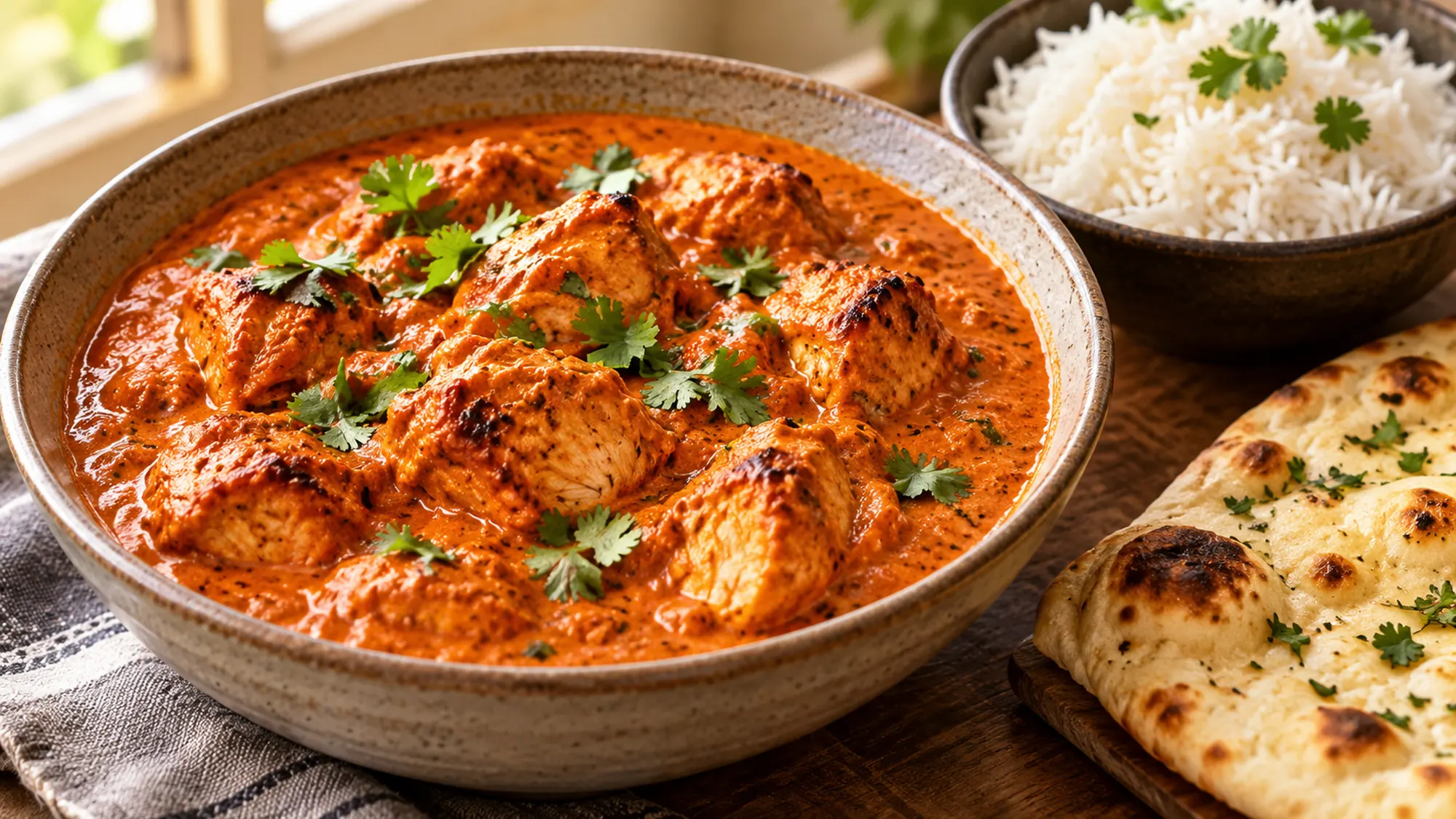
I like keeping the rice plain when the main dish has this much going on. A spoonful of sauce can season several bites without needing another layer of spices underneath. The sauce should be smooth enough to coat the chicken, but the meat still needs recognizable pieces rather than disappearing into the gravy.
Serving Chicken Tikka Masala
Divide the curry into five portions and serve rice or naan separately. Those accompaniments are not included in the recipe’s nutrition estimate, so add what suits your meal. Tastiva’s rice cooking guide is useful if you want a neutral base without another complicated preparation.
Cucumber slices or a simply dressed salad offer a cool contrast. Keep extra cilantro optional, especially when serving people whose preferences you do not know. A squeeze of lemon at the table is also a personal choice; taste the sauce first rather than assuming it needs more acidity.
- Use a deep serving bowl so the sauce stays with the chicken.
- Set rice and bread beside the curry rather than letting them soak up all the sauce before serving.
- Save a little room on the plate for vegetables or a fresh salad.
| Accompaniment | Why it works |
|---|---|
| Plain rice | Carries the sauce |
| Naan | Useful for scooping |
| Cucumber | Cool, crisp contrast |
Choose one or two easy sides and give the curry space to be the main attraction.
Chicken Tikka Masala Variations
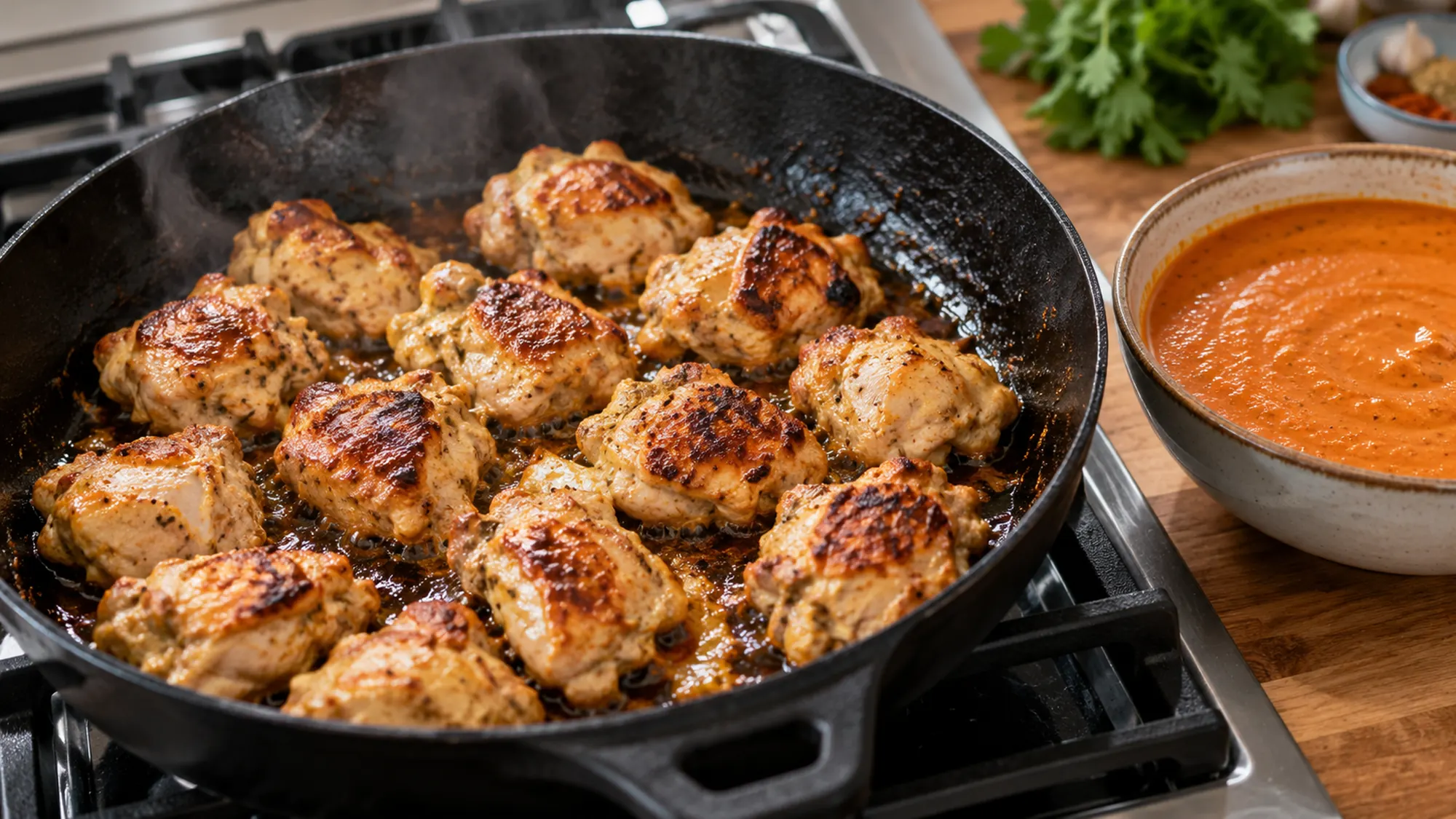
The method is adapted from RecipeTin Eats’ chicken tikka masala, with measured quantities clarified in the card. The chicken marinates before browning, while the sauce is cooked and blended separately. A heavy, well-seasoned skillet is suitable for the searing stage; overheating a nonstick pan is not necessary.
I would rather brown the chicken in two batches than crowd the skillet and lose the contrast between the pieces and sauce. The first sear is not the final safety check. The chicken returns to the sauce to finish cooking, and a thermometer is more dependable than judging the color of the marinade.
- Use boneless thigh pieces of similar size so they finish at roughly the same time.
- Adjust the cayenne for heat, but keep the aromatic spices that give the sauce its character.
- Blend with the pan off the heat and the immersion-blender head fully submerged to limit splashing.
- The card specifies measured oil amounts; do not add extra oil simply because the spice mixture looks thick.
- Replacing cream or butter changes the richness and nutrition, so treat a lighter version as an adaptation rather than the same result.
Brown in batches and blend the sauce carefully; neither step benefits from being rushed.
Nutrition and Safe Cooking
This is a rich main dish containing oil, butter and cream as well as protein from the chicken. A smaller portion alongside rice and vegetables may suit some meals better than a large bowl of curry alone. There is no need to describe a creamy sauce as light in order to enjoy it thoughtfully.
The estimate includes all measured marinade and sauce ingredients, divided into five portions. It uses the stated yogurt and cream composition; different brands and fat percentages will change the numbers. Rice, naan and optional cilantro are excluded, and the spice-blend estimate is an approximation rather than a laboratory analysis.
- Keep the chicken covered in the refrigerator during its marinating time.
- Check the finished chicken reaches 165°F (74°C) in the center.
- Avoid tasting marinade that has been in contact with raw poultry.
- Cool leftovers promptly in shallow containers and reheat thoroughly before serving.
A rich sauce can fit a meal; accurate portions and safe handling are more useful than a health halo.
Bottom Line
Chicken tikka masala becomes more manageable when its stages stay distinct: marinate, brown, build the sauce and finish the chicken. Prepare a simple side while the sauce simmers, blend carefully and stop cooking when the meat is ready. The reward is a bowl with both browned chicken flavor and a smooth, generously spiced sauce.
Give the chicken and sauce their separate attention, then bring them together for the final simmer.
Chicken Tikka Masala Recipe

Ingredients
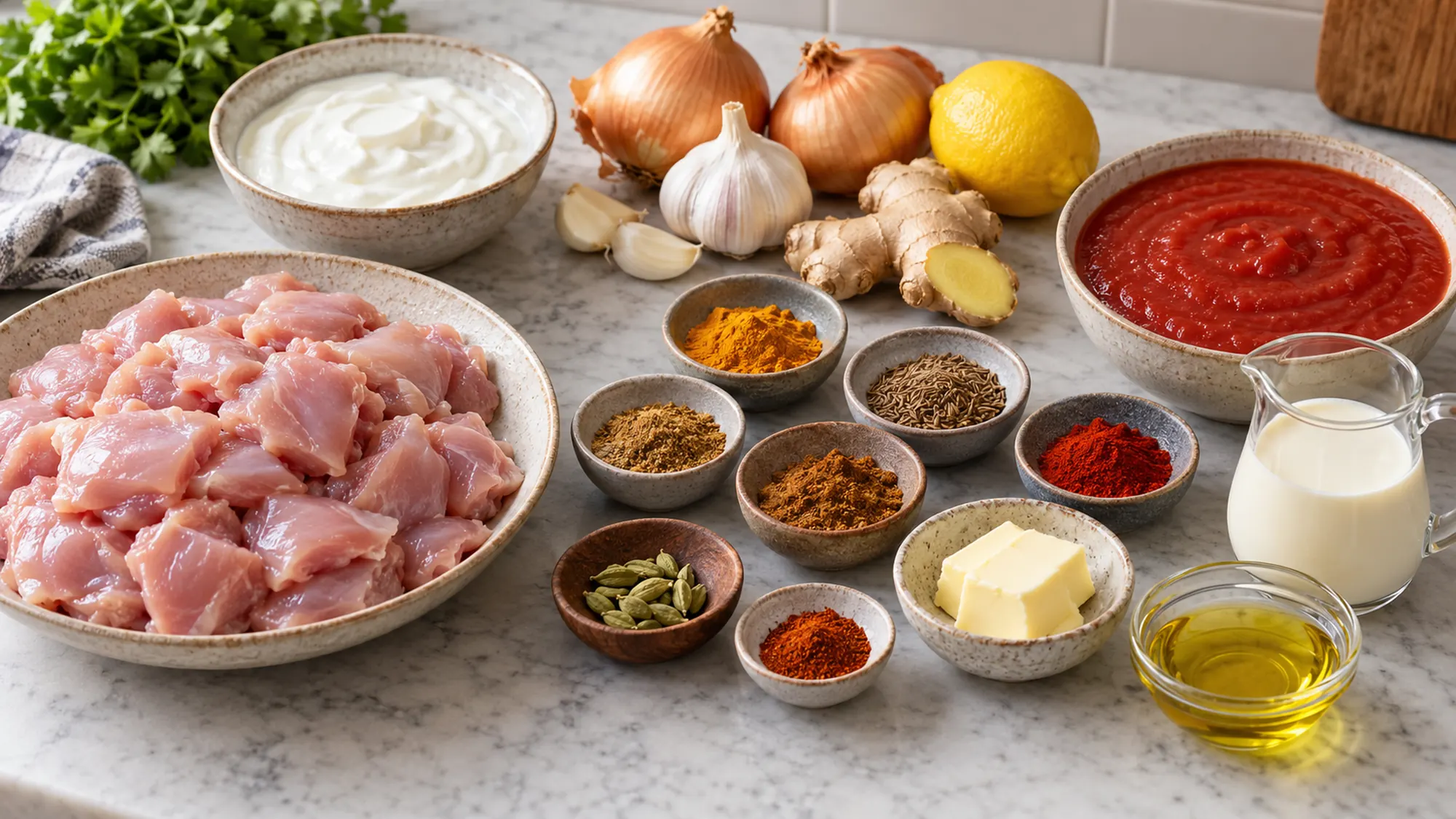
- 600 g boneless skinless chicken thighs cut into 3 cm pieces
- 120 g full-fat Greek yogurt about 8% fat
- 36 g garlic 18 g marinade, 18 g sauce
- 30 g fresh ginger 10 g marinade, 20 g sauce
- 8 g garam masala 2 g marinade, 6 g sauce
- 12 g fine salt 6 g marinade, 6 g sauce
- 4 g ground cumin 2 g marinade, 2 g sauce
- 6 g ground coriander 2 g marinade, 4 g sauce
- 8 g sweet paprika 2 g marinade, 6 g sauce
- 90 ml sunflower oil 15 ml marinade, 30 ml searing, 45 ml sauce
- 0.25 g black pepper
- 10 ml lemon juice
- 4 g ground turmeric
- 0.25 g ground cardamom
- 0.25 g ground cayenne
- 80 g unsalted butter 30 g sauce base, 50 g finish
- 150 g onion finely chopped
- 400 g plain tomato passata
- 400 ml water
- 100 ml whipping cream 30% fat
- 4 g granulated sugar
- cilantro, cooked rice or naan optional serving additions, excluded from estimates
Equipment
- 1 Heavy skillet
- 1 Deep saucepan
- 1 immersion blender
- 1 Instant-read thermometer
Instructions
- Mix the yogurt with 18 g garlic, 10 g ginger, 2 g garam masala, 6 g salt, 2 g cumin, 2 g coriander, 2 g paprika, 15 ml oil, black pepper and lemon juice. Coat the chicken, cover and refrigerate for at least 3 hours.
- Heat a well-seasoned heavy skillet over medium-high heat with part of the 30 ml searing oil. Brown the chicken in two batches, about 2 minutes per side, using the remaining searing oil as needed. It need not be cooked through yet. Set aside. Remove any blackened debris without discarding the browned coating on the chicken.
- In a deep saucepan, heat the remaining 45 ml oil and 30 g butter. Cook the onion, remaining ginger and salt for 5–7 minutes. Lower the heat, add the remaining garlic and paprika, and stir for about 1 minute. Add turmeric, remaining garam masala, coriander and cumin, cardamom and cayenne; stir briefly without scorching.
- Add passata and water, cover and simmer gently for 15 minutes. Remove from the heat and carefully blend smooth with an immersion blender in the deep saucepan, keeping the blade submerged to avoid splashes.
- Return to low heat. Stir in cream, sugar and remaining 50 g butter. Add the chicken and accumulated juices, then simmer until several of the largest pieces reach 165°F (74°C), about 5–10 minutes depending on size. Loosen with a little water if needed.
- Serve in five portions with optional cilantro, rice or naan. The oil is explicitly measured as 15 ml marinade, 30 ml searing and 45 ml sauce. The recipe uses 30% cream and Greek yogurt; all measured marinade and fat are included in the estimates.
Nutrition
Video
Notes
Tried this recipe?
Let us know how it turned out!Hi, I’m Laura, the voice behind Tastiva. I’ve always believed that eating well should feel enjoyable, comforting, and realistic—not like another complicated rule to follow. I love creating recipes that fit into everyday life, sharing simple nutrition ideas, and finding small ways to make meals feel a little better without losing the pleasure of good food.