
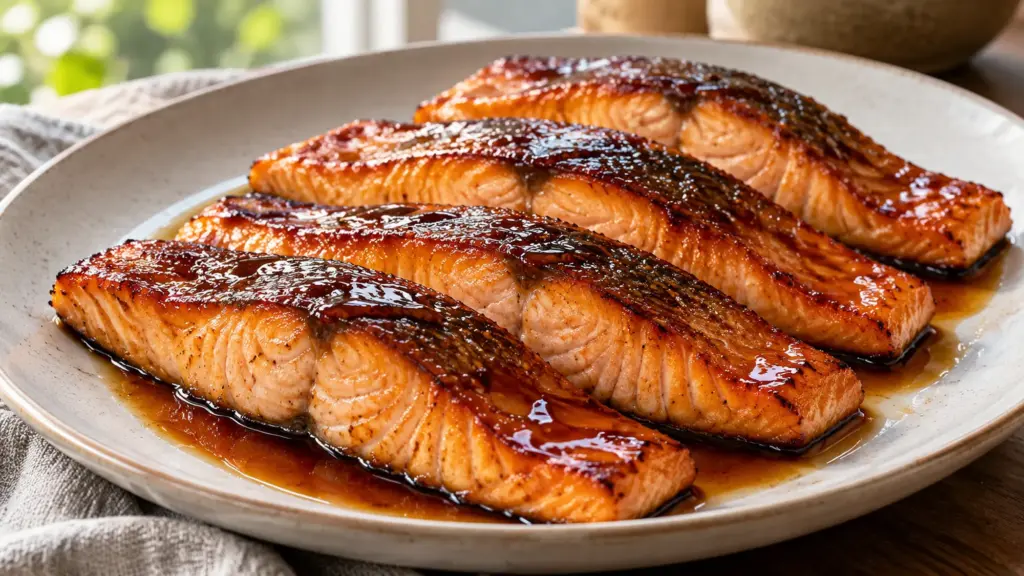
A shiny teriyaki glaze can turn from pleasantly sticky to overly reduced in a short time. Salmon teriyaki is easier to manage when the fish and the sauce are treated as two things that may finish at different moments. Thin fillets cook quickly, while the pan sauce needs just enough reduction to cling.
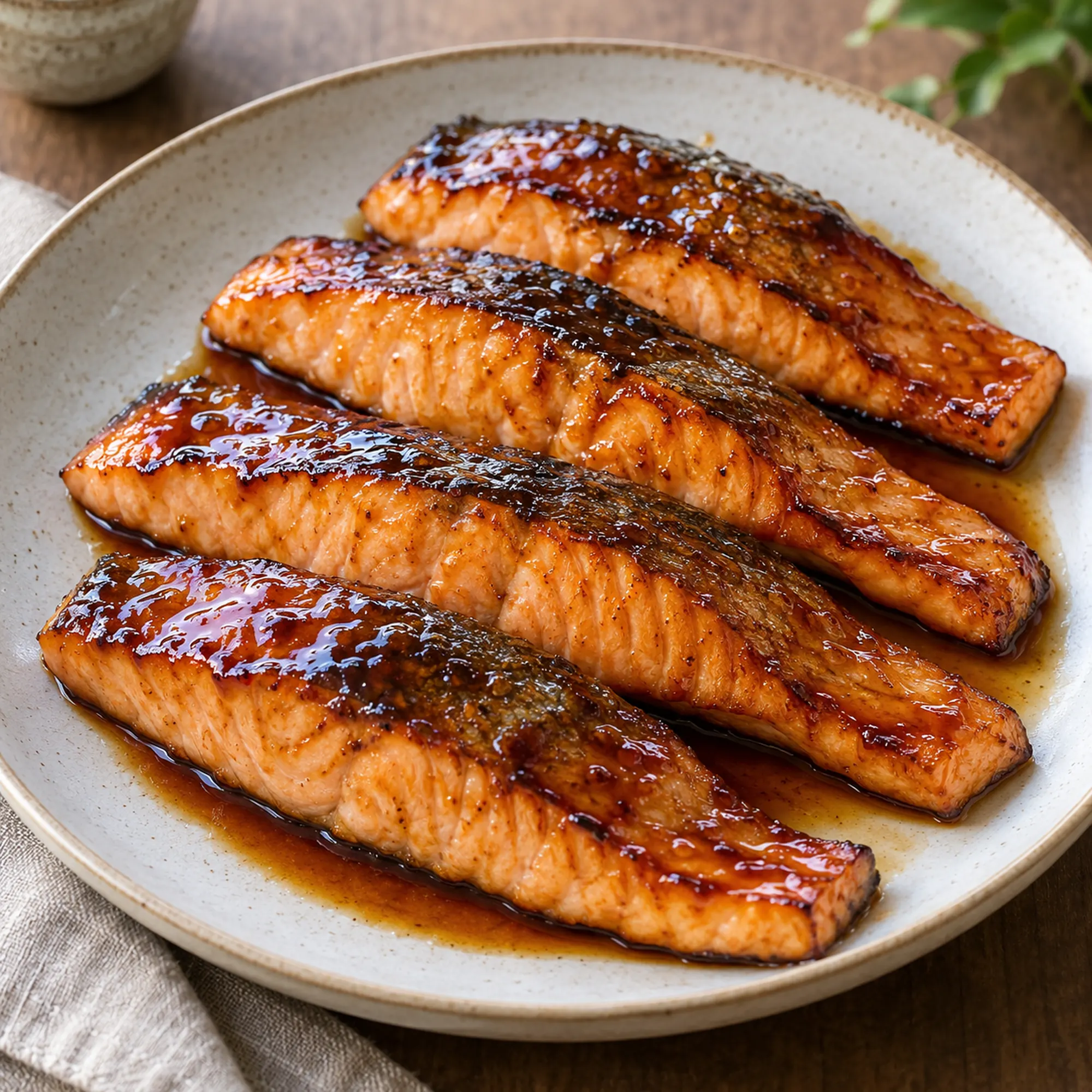
For salmon teriyaki, pan-cook lightly floured fillets, briefly steam with sake, then reduce the sauce and return the salmon only long enough to coat it and finish cooking.
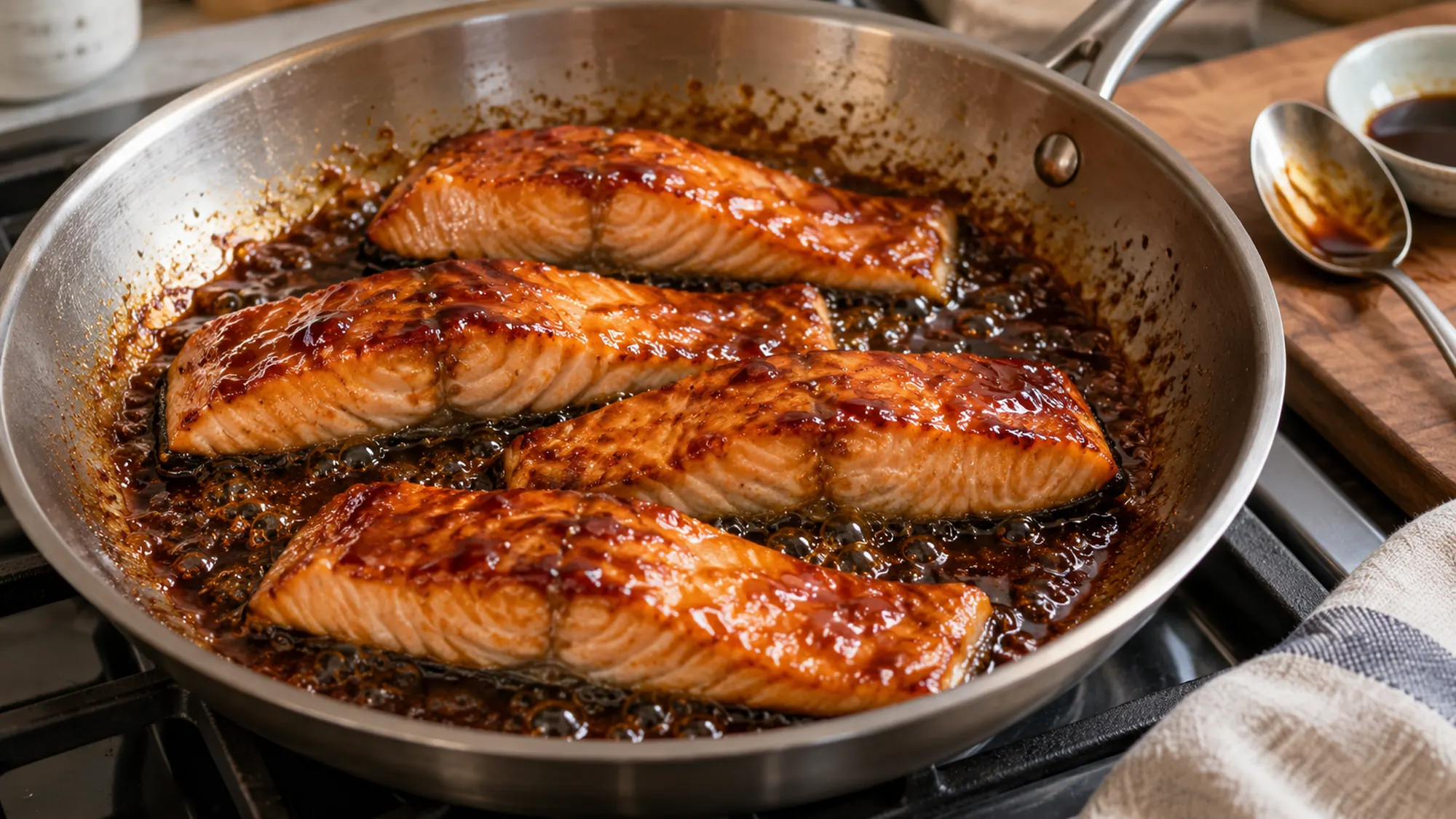
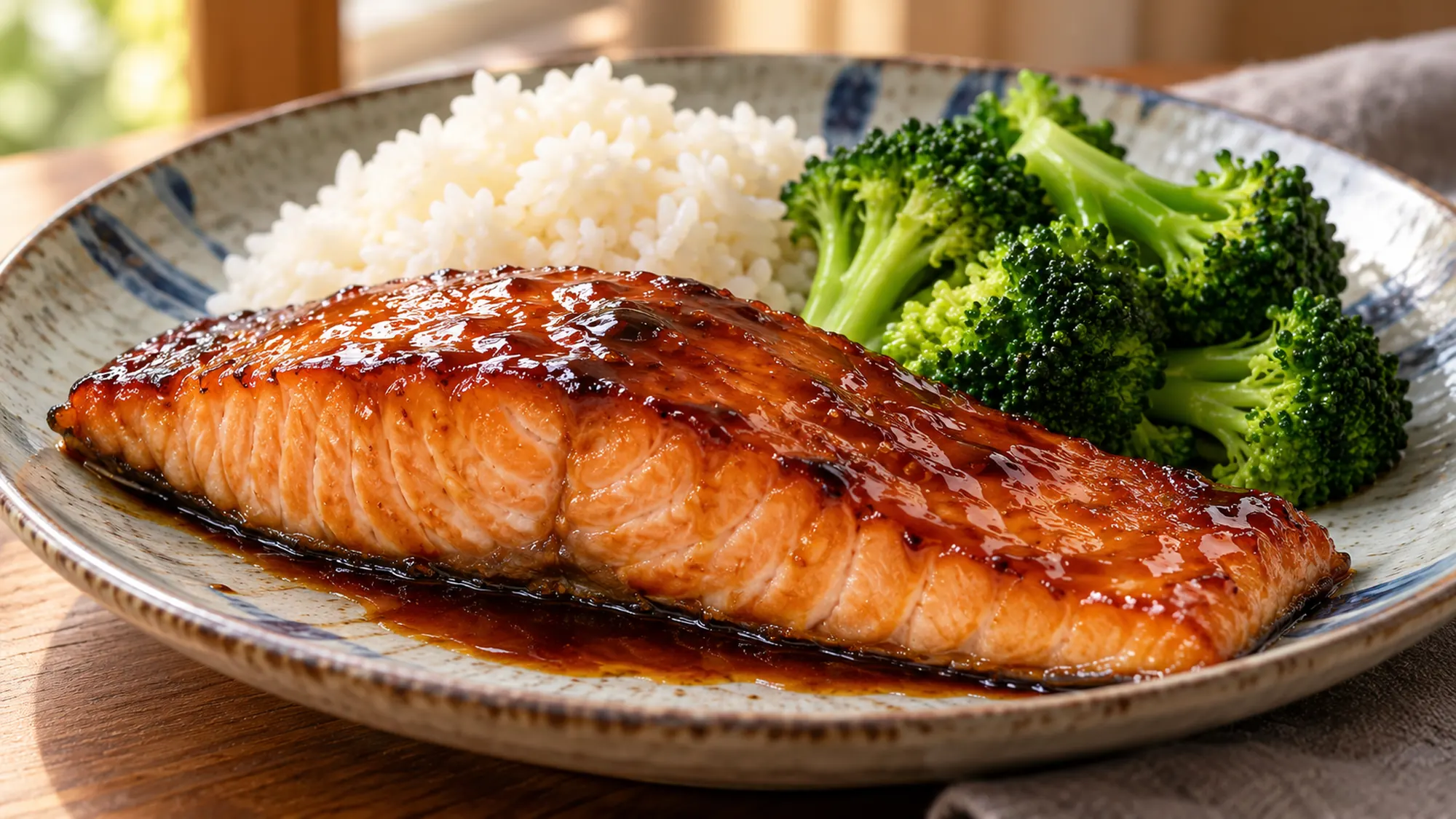
I prefer a thin glaze that follows the shape of the fish rather than a thick pool covering the plate. The salmon should still be visible, with its browned surface showing through. Keeping the sauce moving around the pan makes its changing texture easier to see before it becomes too salty or sticky.
Serving Salmon Teriyaki
Serve one fillet per person, with the sauce spooned over rather than poured indiscriminately. Plain rice is a natural partner because it balances the concentrated seasoning. Tastiva’s rice cooking guide can help you time that part of dinner before the fish reaches the skillet.
Steamed broccoli, bok choy or green beans provide a simple vegetable side. Keep their seasoning modest at first, then taste a bite with the salmon. The glaze already contains soy sauce and sugar, so another strongly seasoned sauce is usually unnecessary for a satisfying plate.
- Warm the plates before serving if the vegetables and rice are already ready.
- Use a fish spatula or another broad, thin turner to support each fillet.
- Spoon on a little glaze first and offer any remaining sauce separately.
| Element | What to watch |
|---|---|
| Salmon | Check the thickest part |
| Pan glaze | Coats without becoming syrupy |
| Rice and vegetables | Serve alongside, not in the estimate |
Finish the sides first so the salmon can go straight from the skillet to the table.
Salmon Teriyaki Variations
This version is adapted from Just One Cookbook’s pan-grilled teriyaki salmon. The flour coating, sake and pan reduction follow that approach. The final temperature here follows the U.S. food-safety recommendation rather than the lower doneness temperature discussed in the source recipe.
I would choose fillets of similar thickness before worrying about making their weights perfectly identical. A narrow tail piece and a thick center piece will not finish together. If your pieces differ, remove each as it is ready and let the remaining fish continue cooking without forcing a single timer on all of them.
- The card uses sweet seasoned aji-mirin, not unsweetened sake or a generic rice vinegar substitute.
- Reduced-sodium soy sauce is specified; a different soy sauce changes the strength of the glaze.
- Skinless fillets can be used, but handle them gently because they have less structural support.
- Avoid adding sesame seeds automatically if you want the simple finish shown here.
- A splash of water can loosen sauce that has reduced too far, but add it cautiously to the hot pan.
Match the fillet thickness and watch the glaze; those details matter more than an exact minute count.
Nutrition and Safe Cooking
Salmon contributes protein and fat, while the glaze adds sodium and sugar. Reduced-sodium soy sauce does not make the finished dish sodium-free. Serving some sauce separately lets each person choose how much to add without pretending the seasoning has disappeared during cooking.
The estimate uses raw farmed Atlantic salmon and includes all measured oil, butter, sugar and sauce. It conservatively counts the sake and mirin as added; cooking does not guarantee that all alcohol evaporates. Rice and vegetables are excluded, and brands of seasoned mirin can differ noticeably in sugar and sodium.
- Check the thickest part of the salmon reaches 145°F (63°C).
- Use a clean plate after the fish is fully cooked, not one that held raw fillets.
- For anyone who avoids alcohol completely, choose a separately formulated alcohol-free recipe rather than assuming a brief simmer removes it all.
- Refrigerate leftovers promptly and reheat gently but thoroughly to avoid drying out the fish.
The glossy surface is not a temperature check, and a cooked sauce is not automatically alcohol-free.
Bottom Line
Salmon teriyaki is a short cooking project that rewards attention during the final minutes. Have the rice ready, use evenly thick fillets and let the sauce reduce without trapping the fish in the pan longer than necessary. A light coating of glaze is enough to bring the sweet-savory flavor to every bite while leaving the salmon at the center of the meal.
Cook the fish carefully, reduce the glaze separately when needed and serve without delay.
Salmon Teriyaki Recipe

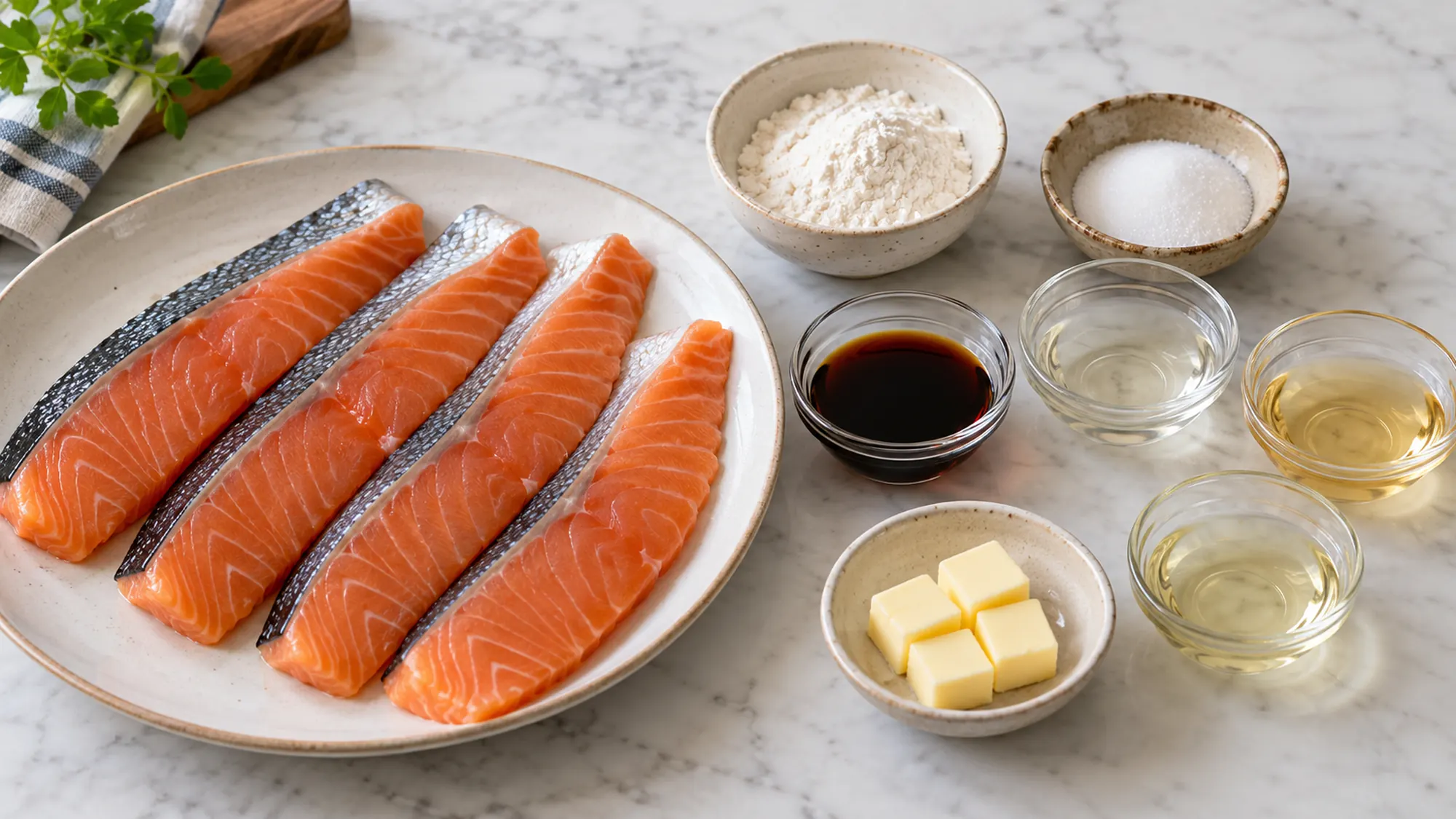
Ingredients
- 680 g skin-on farmed Atlantic salmon 4 fillets, about 2 cm thick
- 1.5 g fine salt
- 0.5 g black pepper
- 16 g all-purpose flour
- 15 ml sunflower oil
- 28 g unsalted butter
- 60 ml sake 30 ml sauce, 30 ml steaming
- 30 ml aji-mirin
- 60 ml reduced-sodium soy sauce
- 24 g granulated sugar
- rice and vegetables optional sides, excluded from estimates
Equipment
- 1 Large skillet with lid
- 1 Fish spatula
- 1 Instant-read thermometer
Instructions
- Mix 30 ml sake with the aji-mirin, soy sauce and sugar until the sugar mostly dissolves. Pat the salmon dry, check for pin bones, season with salt and pepper, and coat lightly with flour.
- Heat the oil and butter in a wide skillet over medium heat. Add the salmon skin side down without crowding, working in batches if necessary. Cook for about 3 minutes until the underside is golden, then turn carefully.
- Add the remaining 30 ml sake, cover and lower the heat. Cook for about 3–5 minutes, or longer as needed for thickness. Transfer to a plate once nearly cooked while you finish the glaze.
- Add the sauce mixture to the pan and simmer until slightly syrupy. Return the salmon, spoon the glaze over it and finish cooking until its thickest part reaches 145°F (63°C). Add a small splash of water if the sauce thickens before the fish is ready.
- Serve one fillet per portion, with optional rice and vegetables. This version uses reduced-sodium soy and seasoned aji-mirin; the final temperature follows U.S. food-safety guidance rather than the lower temperature in the demonstration. Do not assume all alcohol evaporates.
Nutrition
Video
Notes
Tried this recipe?
Let us know how it turned out!Hi, I’m Laura, the voice behind Tastiva. I’ve always believed that eating well should feel enjoyable, comforting, and realistic—not like another complicated rule to follow. I love creating recipes that fit into everyday life, sharing simple nutrition ideas, and finding small ways to make meals feel a little better without losing the pleasure of good food.