
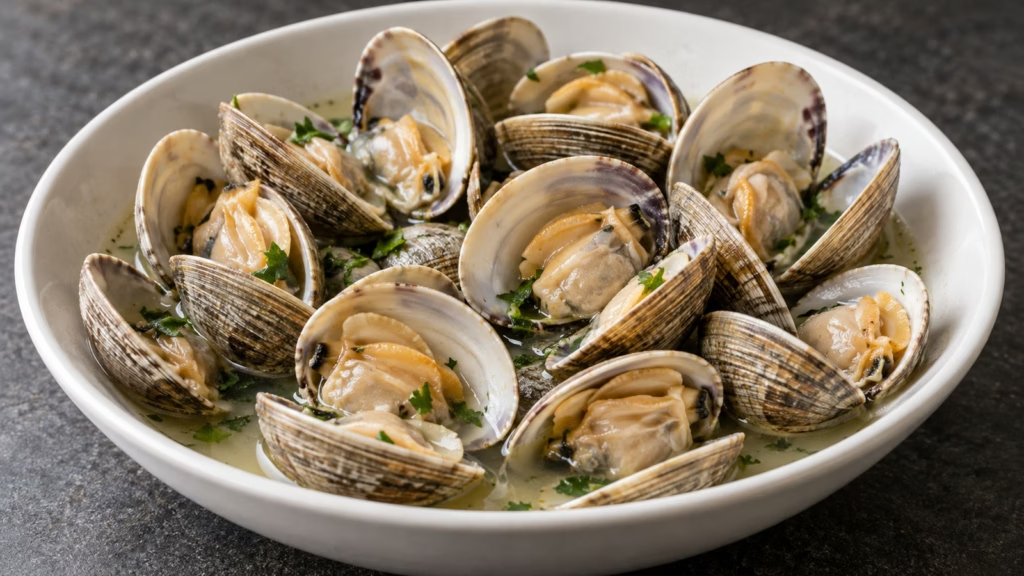
A bag of clams changes the dinner plan in a way a can usually doesn’t: suddenly there are shells to check, refrigerator space to clear, and a cooking method to choose. Clams are bivalve shellfish sold live in their shells, shucked, frozen, or canned. The useful first decision is which form your dish actually needs.
Choose the clams for the dish, then handle the package you bought. Live shells and canned clam meat need different care.
I’d start with that distinction rather than a long list of seafood-counter names. Small shell-on clams make sense when the shells belong in the bowl; chopped clam meat is often the more practical choice when every spoonful needs a little clam.
Choose the form before the size name
“Clams” covers more than one species. On the U.S. East Coast, littleneck, cherrystone, and chowder clam commonly describe different market sizes of the northern quahog, a hard-shell clam. The names and size boundaries can vary by market, so ask the seller what is available and how the clams are usually prepared.
- Small live hard-shell clams: A good starting point for shell-on pasta or a bowl of cooked clams. Their size makes them easier to arrange around noodles than large chowder clams.
- Larger hard-shell clams: Useful when the meat will be chopped or a recipe specifically calls for that size. Don’t assume a larger shell is a straight swap in a quick small-clam preparation.
- Shucked, frozen, or canned clam meat: Consider these for chowder, stuffing, or sauces. Check whether the product is raw or cooked and follow its handling directions.
- Soft-shell clams: A different case at the counter. Their protruding siphon prevents a complete shell closure; movement when touched, rather than a tightly closed shell alone, helps indicate that they are alive.
For a pasta dinner, decide whether you want whole shells at the table or an evenly mixed clam sauce. That small choice affects shopping, serving, and how much room you need in the pan. It also keeps an impressive-looking bag of shellfish from becoming the wrong ingredient for the meal.
Buy and refrigerate live clams carefully
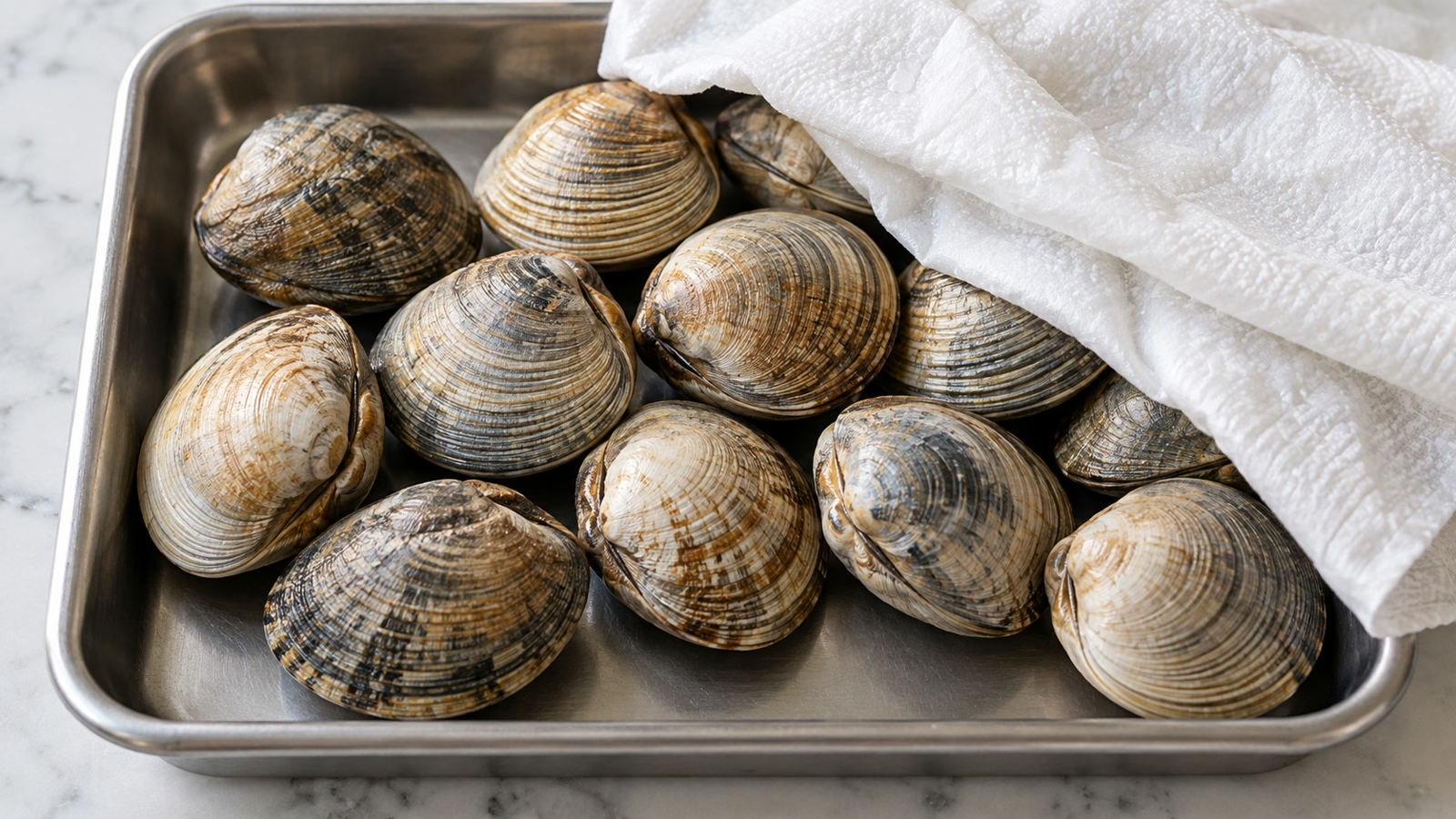
Buy from a reputable seafood seller and look for the identifying tags or labels used for commercially harvested shellfish. The FDA advises rejecting cracked or broken shells. Live hard-shell clams should close when tapped; ones that don’t should not go into your shopping bag. This closure check is not the same for soft-shell clams.
- Shop for seafood near the end of the trip and keep it cold on the way home.
- Store live in-shell clams in a shallow pan in the refrigerator, covered with moistened paper towels, as NOAA recommends. Keep the refrigerator at 40°F (4°C) or below.
- Don’t leave live clams sitting in standing water. Keep their container separate from ready-to-eat food and protect other food from drips.
- Use live clams as soon as possible and follow the seller’s use-by guidance. For packaged meat, follow the label, including instructions after opening or thawing.
I’d make room for the shallow pan before buying the clams, especially when the refrigerator is already crowded. A heavy bag squeezed between leftovers is an awkward place to inspect shells or contain drips. This is one ingredient where the storage plan belongs on the shopping list.
Clean the shells and cook them fully
Scrub and rinse shells under cold running water to remove surface debris. Ask the seller if any additional preparation is needed for that product; don’t substitute a prolonged soak or a cornmeal trick for safe sourcing. This guide is for commercially sold clams, not advice for harvesting shellfish.
- If boiling live shellfish: CDC guidance is to boil until the shells open, then continue boiling for another 3–5 minutes.
- If steaming: CDC advises adding shellfish to a steamer that is already steaming and cooking for 4–9 minutes.
- After cooking: Eat only clams that have opened fully; discard those that remain closed. A shell just beginning to open is not a reason to skip the remaining cooking guidance.
- Keep the work area clean: Wash hands after handling raw shellfish, prevent raw juices from touching cooked food, and use a clean serving dish.
Raw or undercooked shellfish can carry harmful bacteria, including Vibrio. Thorough cooking matters, particularly for people at greater risk of serious illness. Follow the directions for your particular product and method; a photograph of an open shell cannot establish that a clam has been cooked safely.
Match the clam to the bowl
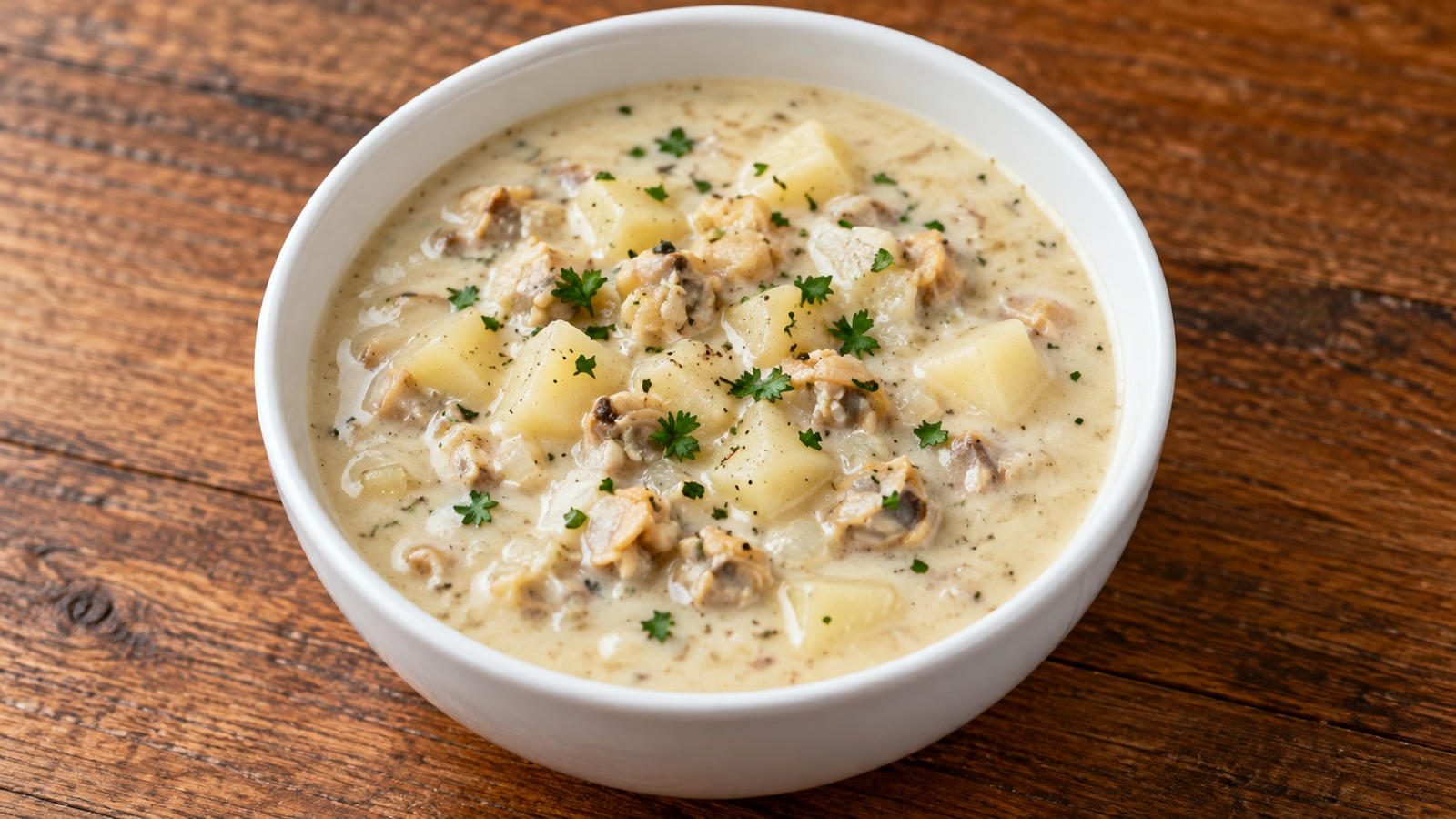
Chowder is a useful example of why convenience can be the right choice. Chopped fresh or canned clams can fit that kind of dish, but their liquid and handling requirements differ. Read the recipe before draining a can or adding its liquid, and taste before adding more salt.
- For shell-on pasta: Leave space for the clams to open and plan a separate bowl for discarded shells at the table.
- For chowder: Choose meat that suits the recipe’s texture, and measure the requested clam liquid rather than pouring in every available drop.
- For another seafood-pasta direction: Tastiva’s squid ink pasta with shrimp and calamari uses different seafood and a different preparation; it isn’t a clam substitution chart.
- For leftovers: Refrigerate cooked seafood promptly, within two hours, or within one hour if the surrounding temperature is above 90°F (32°C).
My preference for planning is simple: buy shell-on clams when the shells are part of the meal, and consider prepared meat when they would only add work. Either can lead to a lovely bowl. The nonnegotiable part is knowing what you bought and keeping its handling instructions close.
The U.S. Food and Drug Administration’s video below covers buying, storing, and serving seafood safely, including the checks that matter before clams reach the stove.
Sources
- FDA: Selecting and Serving Fresh and Frozen Seafood Safely.
- CDC: Preventing Vibrio Infection.
- Interstate Shellfish Sanitation Conference: Clams.
- NOAA Fisheries: How to Store and Handle Seafood.
- NOAA Fisheries: Shellfish and Other Farmed Seafood Tips.
- NOAA Fisheries: Clam Recipes and Preparation Notes.
- Oregon Sea Grant: South Coast Clam Chowder.

Hi, I’m Laura, the voice behind Tastiva. I’ve always believed that eating well should feel enjoyable, comforting, and realistic—not like another complicated rule to follow. I love creating recipes that fit into everyday life, sharing simple nutrition ideas, and finding small ways to make meals feel a little better without losing the pleasure of good food.