
Sweet potatoes can take dinner in a few very different directions: browned cubes beside a main dish, a soft mash under something saucy, or a skillet hearty enough to carry the meal. These five sweet potato recipes make the choice easier by starting with the texture you want and the equipment you have ready.
Choose the finish first: browned edges, a creamy spoonful, or a saucy skillet. The same bag of sweet potatoes can cover all three.
Start with the sweet potato recipes that fit tonight
This is a small collection of linked recipes, including two already here on Tastiva and three from their original creators. Open the individual recipe for exact quantities, oven settings, and instructions; the notes below help you choose between them without turning dinner planning into another project.
- For a browned side: roasted cubes are easy to portion beside chicken, tofu, or beans.
- For a soft, simple base: bake whole sweet potatoes and add toppings at the table.
- For a creamy side: mashed sweet potatoes suit saucy dishes and meals where you want the oven free.
- For a spoonable meal: sweet potato soup brings a smooth texture and a different seasoning direction.
- For a substantial skillet: sweet potatoes and black beans share the pan with enchilada sauce and tortillas.
Most of these choices use orange-fleshed sweet potatoes. Follow each recipe’s ingredient notes rather than assuming that every variety will behave identically. For a mixed-size bag, save the similarly sized roots for whole baking and cut the others into even pieces.
Three ways to make a side dish worth choosing
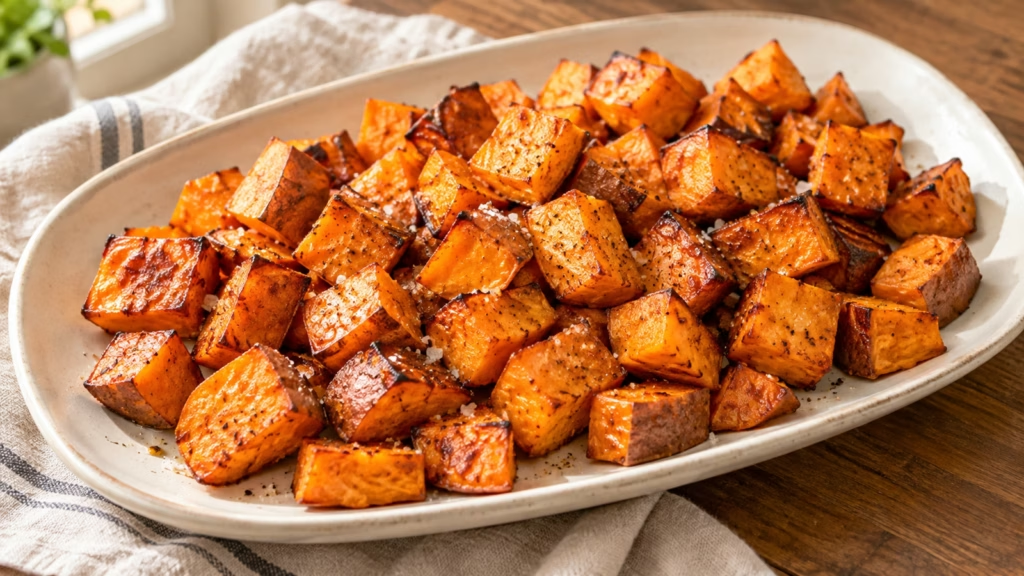
- Roasted sweet potatoes. Love and Lemons’ roasted sweet potatoes keep the seasoning simple with olive oil, salt, and pepper. They’re a useful choice when you want browned edges rather than a fully soft dish. The practical detail is space: spread the cubes out instead of piling them into one crowded corner. Choose this with a main that can share the oven, or use the cooked cubes in a bowl later.
- Whole baked sweet potatoes. Downshiftology’s baked sweet potatoes are the lower-chopping option. Scrub the skins, prick the potatoes as directed, and let tenderness decide when they’re ready. Their size changes the baking time, so treat the recipe’s timing as a guide. A plain baked potato can stay a side, or become a meal base with beans, vegetables, and a spoonful of sauce.
- Mashed sweet potatoes. Tastiva’s mashed sweet potatoes focus on a creamy result without excess water. Drain the cooked pieces thoroughly, then add the warm liquid gradually rather than all at once. This is the choice for a soft, spoonable side that doesn’t compete for oven space. Keep a little texture with a hand masher, or follow the recipe’s guidance for a smoother finish.
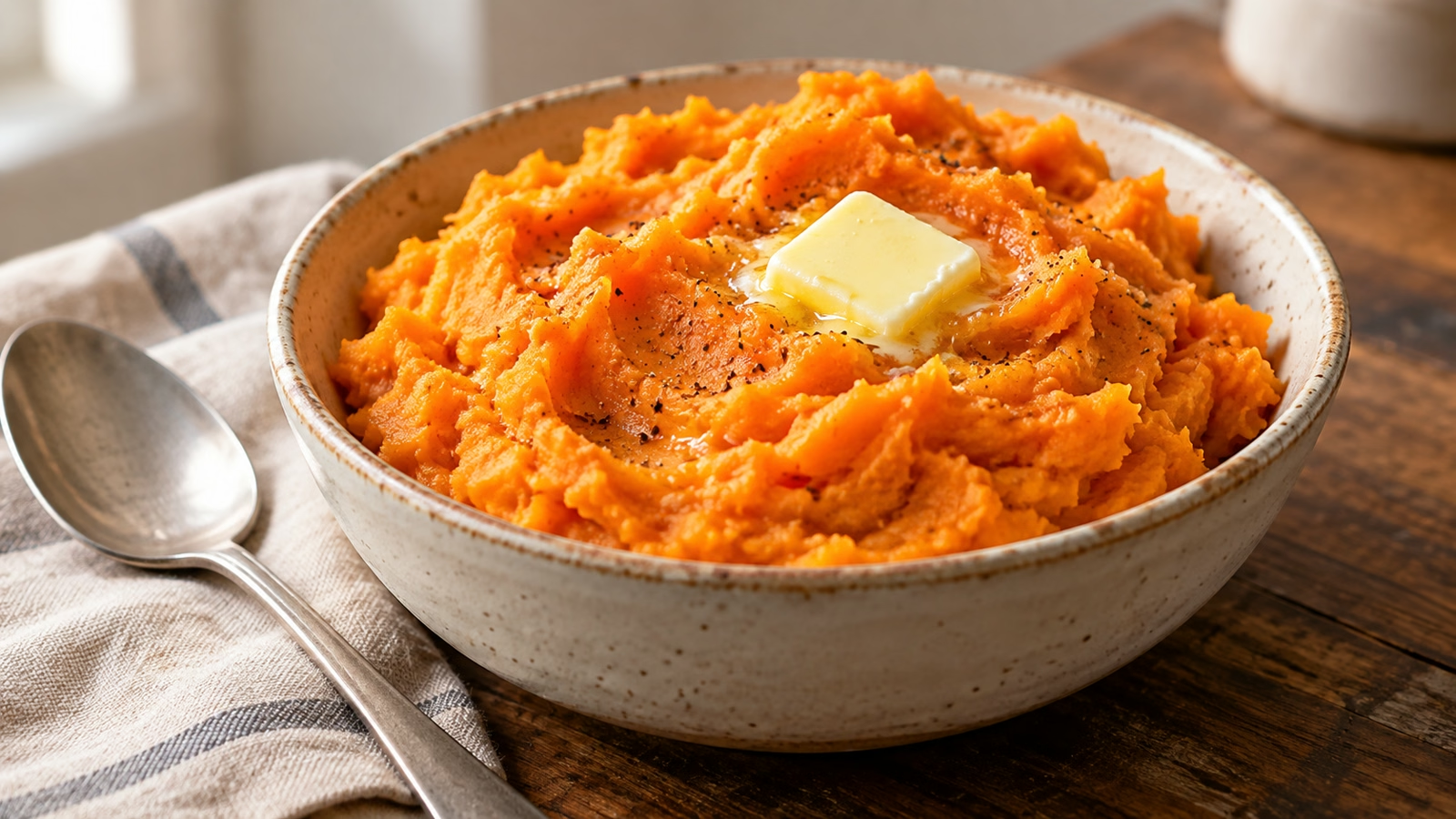
For a plate with several soft foods, roasted cubes bring more contrast than mash. For a crisp main dish, the creamy option can be the better partner. Neither needs a long topping list: start with the recipe as written before deciding what else the plate is missing.
Two sweet potato recipes that can anchor dinner
- Sweet potato soup. Love and Lemons’ sweet potato soup combines the potatoes with apple, coconut milk, ginger, and warm spices. It is a good pick when you want a smooth bowl rather than distinct pieces. The recipe finishes with vinegar for balance; follow its quantities before adjusting. Serve with bread and a side you enjoy, and use your blender only according to its hot-liquid instructions.
- Sweet potato black bean enchilada skillet. Tastiva’s sweet potato and black bean skillet combines orange sweet potatoes, beans, peppers, tortillas, sauce, and melted cheese. The important sequence is getting the potato cubes tender before the sauce and tortilla pieces finish the dish. Choose a deep, lidded skillet with enough room to stir. If you’re planning leftovers, the recipe explains how keeping tortillas separate can help their texture.
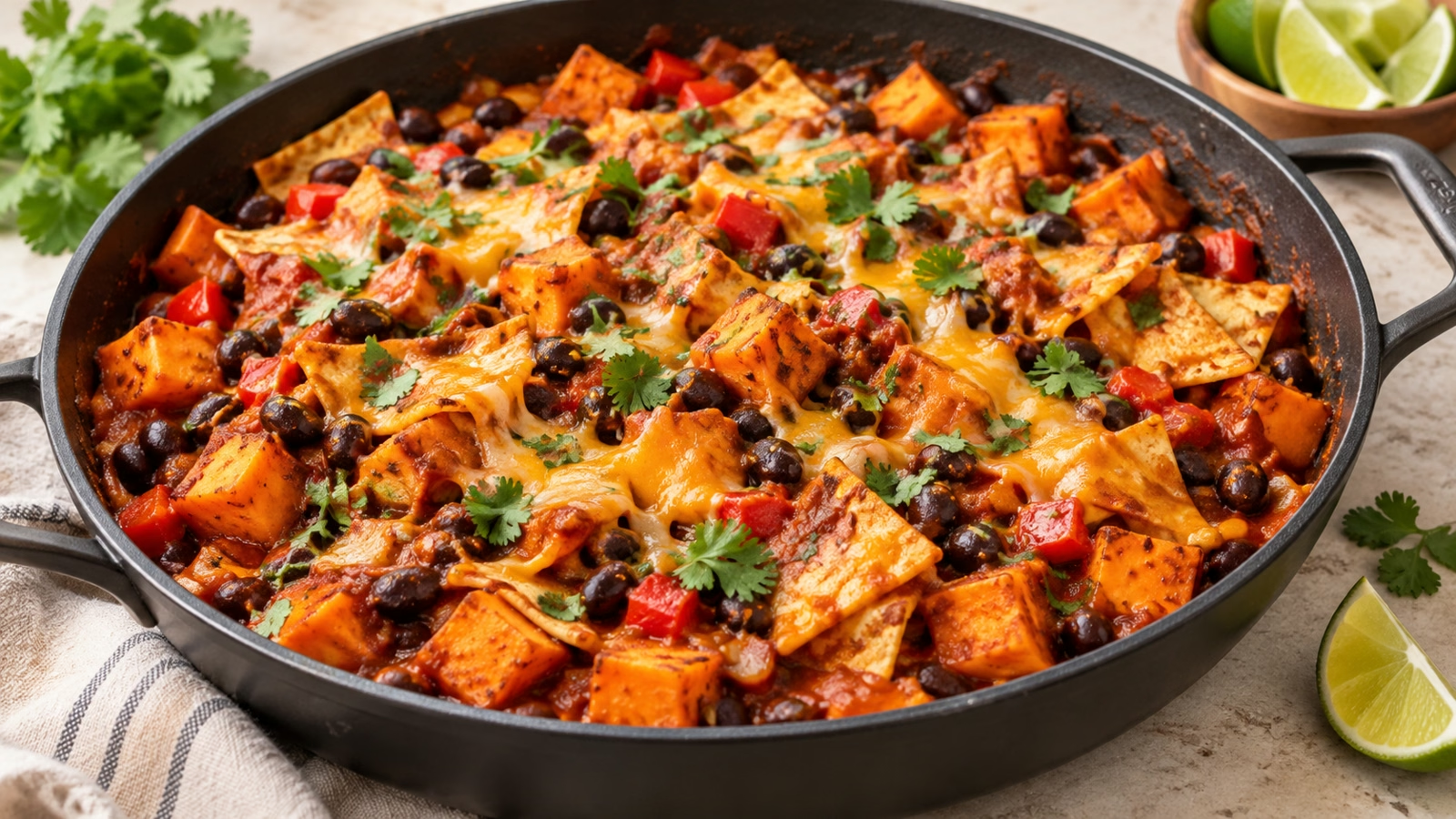
These two meals answer different cravings. Soup is the softer, simpler bowl; the skillet keeps recognizable pieces and a more substantial mix. Both can work alongside something fresh and crisp, but there’s no need to build a second complicated recipe around them.
A few small choices make the cooking easier
Peeling depends on the result you’re after. A smooth mash usually starts with peeled potatoes; whole baked potatoes keep their skins, and the roasted recipe above leaves them on too. The sweet potato skin guide covers cleaning and when the skin fits the dish. Wash and scrub sound roots before cutting, even when you plan to peel them.
- Match the pieces. Similar-size cubes cook more evenly; large chunks need longer than small ones.
- Keep the method intact. Oven temperatures for whole potatoes and small roasted cubes are not interchangeable shortcuts.
- Plan the next serving. Refrigerate cooked food promptly in shallow containers within two hours, or one hour above 90°F. Keep the refrigerator at 40°F or below.
- Use leftovers within three to four days. Freeze sooner if needed, and reheat leftovers to 165°F. Follow any shorter storage advice in the individual recipe.
For a closer look at the whole-baked option, Lisa Bryan of Downshiftology demonstrates it in the video below. It pairs with the linked baked sweet potato recipe and gives you one straightforward method to start with before moving on to the other dishes.
Sources
- Love and Lemons: Roasted Sweet Potatoes
- Downshiftology: Baked Sweet Potato
- Love and Lemons: Sweet Potato Soup
- USDA: Handling Leftovers Safely
- USDA: Safe Reheating Methods
- FoodSafety.gov: Four Steps to Food Safety

Hi, I’m Laura, the voice behind Tastiva. I’ve always believed that eating well should feel enjoyable, comforting, and realistic—not like another complicated rule to follow. I love creating recipes that fit into everyday life, sharing simple nutrition ideas, and finding small ways to make meals feel a little better without losing the pleasure of good food.