

A muffin pan makes breakfast feel portioned before the first plate comes out, but vegetables can leave small egg bites unexpectedly wet. These cottage cheese egg bites use finely chopped pepper, spinach, and scallions cooked first, then blended eggs and cottage cheese. They bake into individual portions without bread, pastry, or a stovetop water bath.

Cook moisture out of the vegetables before the eggs go in, and check the centers before calling breakfast ready.
What belongs in these cottage cheese egg bites
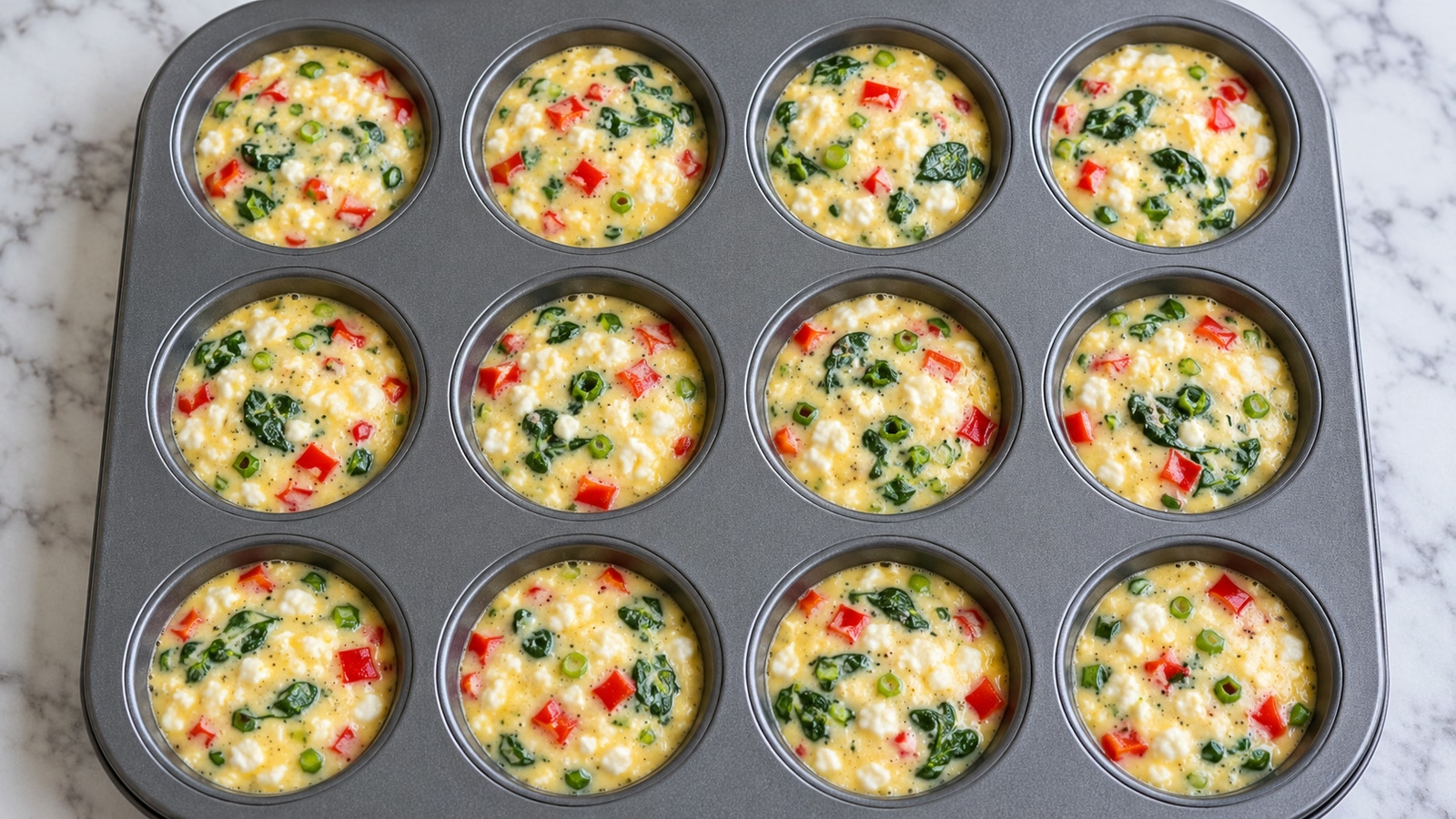
Eggs provide the structure, and plain 2% cottage cheese adds moisture and a mild dairy flavor. Briefly blending the two disperses the curds through the mixture, but it does not turn the bites into a restaurant sous-vide copy. This is a practical oven recipe with its own texture and a regular muffin pan.
- Large eggs: Use the specified size so the balance of liquid and cottage cheese stays consistent. Crack into a separate bowl if you want to catch shell fragments easily.
- Plain cottage cheese: Measure the curds and their normal moisture together. Avoid flavored varieties; unusually watery brands can change the result.
- Bell pepper: Dice it finely so each bite gets small pieces rather than one bulky pocket. Red pepper adds color; yellow or orange works too.
- Spinach and scallions: Chop before cooking. Long spinach leaves can gather in clumps, while broad scallion pieces distribute less evenly.
I’d keep the filling focused on this three-vegetable combination. A little variety is useful; an entire crisper drawer is a different recipe. The base contains egg and milk, and the absence of bread does not establish allergen safety for every packaged ingredient.
Manage moisture and fill the cups evenly
Sautéing the pepper and greens before baking softens their texture and reduces the water they release into the eggs. Let the mixture cool briefly before combining it with raw egg. Blending the eggs separately also keeps the vegetables visible rather than turning the whole batch green.
- Cook until the pan is dry: Wilted spinach alone is not the final cue. Continue briefly until obvious released liquid has evaporated.
- Grease every cup: Coat bottoms and sides, not just the visible rim. A nonstick pan can still need help releasing egg.
- Share the vegetables first: Divide them evenly among the cups before pouring in the blended mixture. This is easier than chasing pepper pieces through the last ladleful.
- Leave headroom: Fill about three-quarters full. The bites may puff as they bake and settle afterward; filling to the brim encourages overflow.
- Use an even rack position: Put the pan on the middle oven rack. Start checking within the suggested range rather than judging only by browned edges.
I prefer a short rest in the pan before loosening the edges with a flexible spatula. Pulling a delicate bite out immediately can leave its bottom behind. If you use silicone, place it on a firm baking sheet and follow its manufacturer’s temperature guidance; material and cup size can change timing.
Check the center and troubleshoot the texture
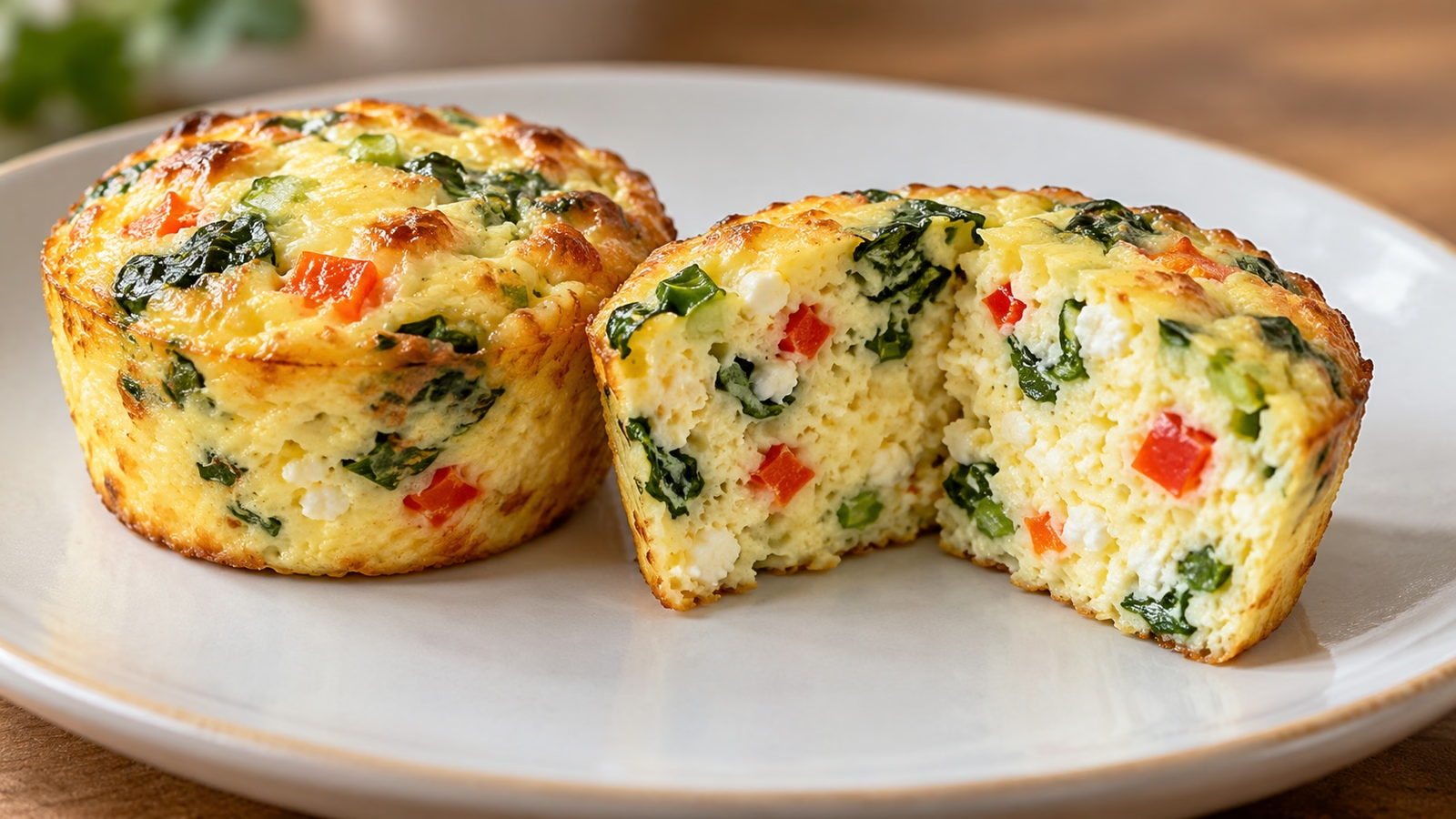
For these meatless individual egg dishes, FoodSafety.gov lists 160°F (71°C) as the minimum internal temperature. Check the center of a bite with an instant-read thermometer without touching the pan. A nicely colored top is useful information about the surface, not proof about the middle.
- Wet centers: Keep baking and check again. For the next batch, verify that the vegetables were cooked dry and the cottage cheese was measured accurately.
- Rubbery edges: Begin checking earlier and remove the pan once centers reach the required temperature. Extra oven time does not make cooked egg more tender.
- Sticking: Give the bites their short rest, then loosen around the sides. Scraping forcefully with metal can damage a nonstick pan.
- Uneven filling: Weigh or spoon the vegetables among all twelve cups first. The last two bites should not have to share every remaining piece of spinach.
Mushrooms or zucchini are not simple raw additions here: they bring their own moisture and need separate cooking decisions. If you want another cheese flavor, use a little at the table rather than quietly changing the egg-to-dairy balance. Optional toppings are not included in the nutrition estimate.
Build breakfast around two bites and store the rest
Two bites make one recipe serving, but what completes breakfast depends on appetite and the rest of the day. Offer toast, fruit, or another side you enjoy. Tastiva’s savory breakfast meal plan gives useful combinations of grains, eggs, and vegetables without requiring every morning to look identical.
- Refrigerate promptly: Transfer cooked portions to shallow containers and refrigerate within 2 hours, or 1 hour above 90°F (32°C).
- Use a short storage window: Keep the refrigerator at 40°F (4°C) or below and use within 3–4 days. Label the container with the cooking date.
- Freeze portions early: Package once chilled if you will not finish them in the refrigerator window. Freezing may change the texture; it does not repair unsafe handling.
- Reheat safely: Heat leftovers to 165°F (74°C). In a microwave, cover loosely and check more than one bite for even heating.
The federal cold-storage chart gives a 3–4-day refrigerated window for baked egg casseroles, used here as a conservative plan for baked egg portions. I would pack only the amount needed and keep it cold during transport. A container at the bottom of a warm work bag is not refrigerated storage, however tidy the breakfast looks.
Cottage Cheese Egg Bites Recipe

Ingredients
- 8 large eggs about 400 g without shells
- 1 cup plain 2% cottage cheese 225 g
- 2 teaspoons olive oil 9 g; divided between vegetables and pan
- 1 medium red bell pepper 150 g prepared; finely diced
- 2 cups fresh spinach 60 g; finely chopped
- 3 scallions 30 g; finely sliced
- 1/4 teaspoon fine salt 1.5 g
- 1/4 teaspoon black pepper
Equipment
- 12-cup standard muffin pan
- Blender
- Skillet
- flexible spatula
- Instant-read thermometer
Instructions
- Heat the oven to 325°F (163°C). Use 1 teaspoon olive oil to thoroughly coat the bottoms and sides of all twelve standard muffin cups.
- Heat the remaining teaspoon oil in a skillet over medium heat. Cook diced pepper for 5–6 minutes until softened. Add spinach and scallions and cook 2–3 minutes more, stirring, until spinach wilts and visible liquid evaporates. Remove from heat and cool for 5 minutes.
- Briefly blend eggs, cottage cheese, salt, and pepper until evenly combined and mostly smooth; a few small cottage cheese curds are fine. Divide the cooked vegetables evenly among the twelve cups.
- Pour the egg mixture evenly over the vegetables, filling each cup about three-quarters full. Bake on the middle rack for 20–25 minutes, beginning checks at 20 minutes, until centers reach 160°F (71°C) on an instant-read thermometer and no liquid egg remains. Add time as needed; pan material and cup dimensions vary.
- Rest in the pan for 5 minutes. Loosen edges with a flexible spatula and lift out gently. Serve two bites per portion.
Nutrition
Video
Video: Dani Spies of Clean & Delicious demonstrates blending eggs with cottage cheese and baking them in a muffin tin. Her version adds feta and oregano and uses a pan of water in the oven; this recipe sautés its vegetables first and bakes at 325°F without a water pan. Follow the recipe above for its ingredients, quantities and oven method.
Notes
Tried this recipe?
Let us know how it turned out!Sources
- FoodSafety.gov: 4 Steps to Food Safety
- FoodSafety.gov: Safe Minimum Internal Temperatures
- FoodSafety.gov: Cold Food Storage Chart
- USDA FoodData Central: nutrient-data source
Hi, I’m Laura, the voice behind Tastiva. I’ve always believed that eating well should feel enjoyable, comforting, and realistic—not like another complicated rule to follow. I love creating recipes that fit into everyday life, sharing simple nutrition ideas, and finding small ways to make meals feel a little better without losing the pleasure of good food.