
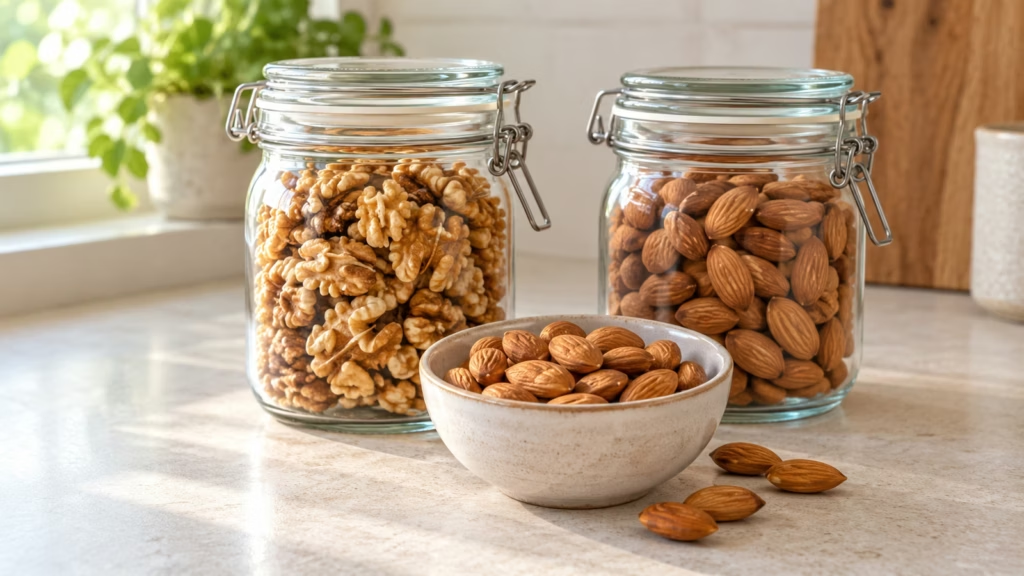
The big bag of walnuts looks economical until half of it is still waiting when you need another bag. How to store nuts comes down to how soon you’ll use them: keep a small, quick-use supply sealed in a cool cupboard when the label permits, refrigerate a slower-moving supply, and freeze the extra. Clean, dry, airtight packaging matters in every location.
Keep the nuts you’re using within reach, and give the extra a colder place to wait.
How to store nuts: match the place to the pace
I’d begin with the amount you use in an ordinary week, rather than the size of the jar you happen to own. A few almonds for oatmeal and a large baking purchase need different plans. Illinois Extension recommends airtight storage and colder temperatures for longer keeping, with the product’s directions taking priority.
- Cool cupboard: A practical option for a small supply you use promptly, if the product allows it. Choose a dry spot away from the stove and sunlight.
- Refrigerator: A useful default for an opened bag that won’t disappear quickly. Keep it tightly closed rather than exposing it to refrigerator air.
- Freezer: Choose this for bulk purchases, baking reserves, and portions that will wait longer. Divide the stash before putting it away.
- Package instructions: Check them before transferring nuts to another container. Flavored products and mixed snacks may have different recommendations.
Walnuts have particularly clear guidance: California Walnuts recommends refrigeration for immediate use and freezing when storing a month or longer. That is a walnut-specific freshness strategy, not a rule that every nut suddenly becomes unsafe at one month. Keep the distinction between a storage plan and an expiration deadline.
Pack the extras before the bag becomes a daily visitor
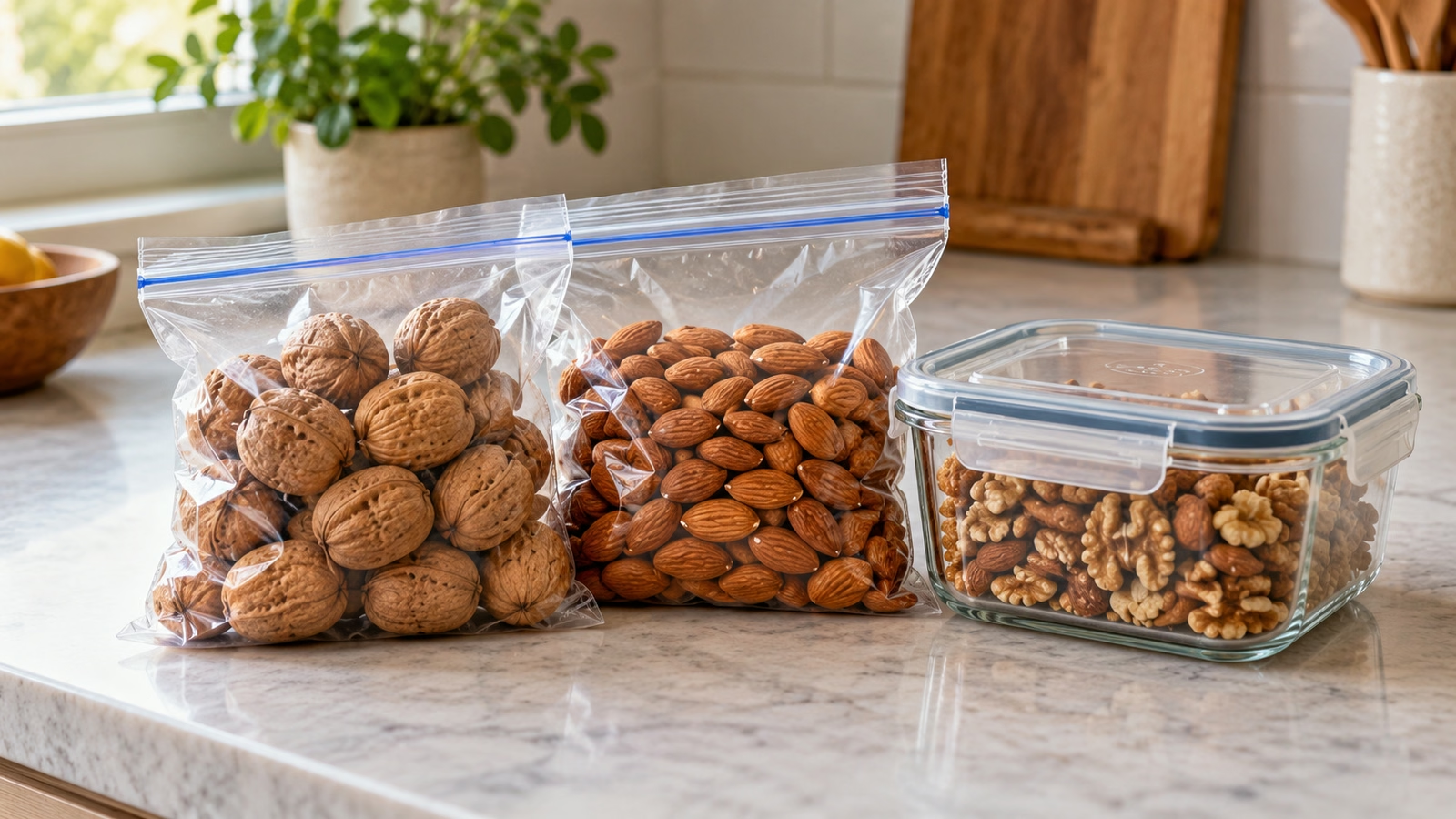
One large bag opened every time you want a snack is convenient, but portioning makes a cold-storage plan easier to follow. I prefer a small working container and several reserve portions: you can retrieve what you need while leaving the rest sealed. You don’t need a matching set of elegant jars; you need containers that close well.
- Use clean, dry containers. Choose food-safe airtight containers or freezer-safe bags for the freezer. Avoid leaving moisture inside a washed jar.
- Keep the label. Record the nut variety, whether it is roasted or flavored, the opening date, and the package’s storage advice. Retain allergen and lot information too.
- Portion for a real use. Set aside a modest snack supply or the amount for a baking project. Avoid opening all your reserve packages at once.
- Protect against other aromas. Keep nuts sealed and away from strongly scented foods. The walnut board specifically cautions against fish, cabbage, and onion odors.
- Use the oldest first. Put the next package where you can find it. A cold-storage plan works better when the food is still part of your meal plan.
For walnuts, the board also recommends waiting to chop or grind them until you’re ready to use them. Whole halves give you flexibility: chop them for oatmeal, leave them intact for snacking, or prepare the amount a sauce needs. Pre-chopped products are still useful; follow their own package directions and buy an amount you can manage.
There isn’t one reliable shelf-life number for every nut
Nut variety, starting freshness, packaging, temperature, and preparation all affect how long quality holds. The University of California’s consumer storage guide explains why room-temperature life is shorter and why a warmer room shortens it further. Its reference windows describe nuts under specified conditions; they aren’t guarantees for a bag that was already old when you opened it.
- Use product guidance first: Keep the best-quality date and storage instructions together. A missing date is a reason to buy a smaller quantity, not invent one.
- Think about your kitchen: A cupboard beside a hot oven is different from a cool, dry storage area. Move a slow-moving supply to colder storage.
- Keep fresh chestnuts separate: They are perishable, high-moisture nuts with different needs. Don’t treat them like a jar of dry almonds; follow chestnut-specific cold-storage instructions.
- Separate wet preparations: Soaked nuts, cashew cream, nut milk, and homemade sauces are different foods. A dry-nut storage window cannot be applied to them.
If you use pine nuts occasionally for pesto, the small quantity deserves a plan too. Tastiva’s pine-kernel and pine-nut guide covers their identity, uses, and storage basics. Nut butter is another separate decision: the peanut-butter refrigeration guide explains why the product label matters.
Check quality without mistaking it for a safety test
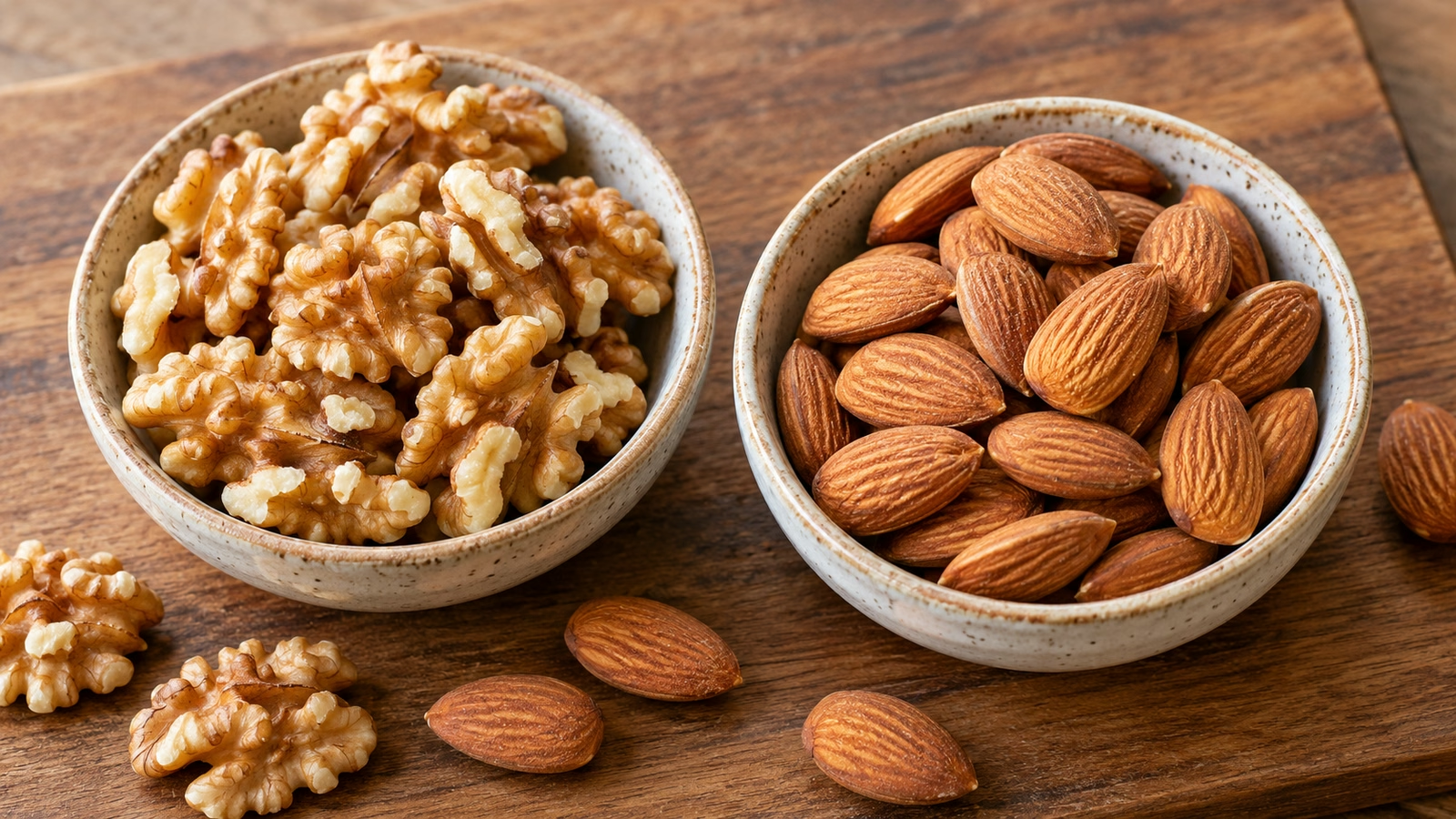
A fresh walnut should have a mild nutty aroma; the walnut board identifies a paint-thinner-like smell as a rancidity cue and recommends discarding the nuts. I’d check the bag before tipping it into a bowl of ingredients. Once an unpleasant flavor is mixed into a batter or dressing, you’ve given yourself a much larger kitchen problem.
- Off odor: Set aside nuts with a sharply stale or paint-like smell; discard them rather than trying to cover the flavor with seasoning.
- Visible mold or damp spoilage: Discard affected food. Don’t taste it to decide whether it belongs in a recipe.
- Normal appearance: Useful for judging quality, but it cannot prove the absence of harmful bacteria.
- Recall or unsafe handling: Follow the recall instructions and discard when required. Putting a recalled product in the freezer does not make it safe.
- Shared kitchens: Keep nuts labeled and closed, and use clean utensils. Cold storage doesn’t change their allergen identity.
University of California guidance emphasizes that refrigeration and freezing do not destroy harmful bacteria in nuts, and you can’t identify those bacteria by smell, sight, or taste. Illinois Extension also cautions that soaking, particularly for long periods or at room temperature, can allow bacterial growth. Keep this article’s routine simple: dry nuts, dry packaging, and the storage conditions suited to that product.
Cookbook author Mollie Katzen shares walnut-storage tips in this California Walnuts video. These examples are specific to walnuts; use your own nut package’s directions for other varieties and flavored products.
Sources
- Illinois Extension: nut storage, preparation, and handling
- California Walnuts: buying, cold storage, odors, and chopping
- University of California ANR: safe nut handling and storage
- FDA: appliance temperatures, mold, and the limits of sensory checks

Hi, I’m Laura, the voice behind Tastiva. I’ve always believed that eating well should feel enjoyable, comforting, and realistic—not like another complicated rule to follow. I love creating recipes that fit into everyday life, sharing simple nutrition ideas, and finding small ways to make meals feel a little better without losing the pleasure of good food.