
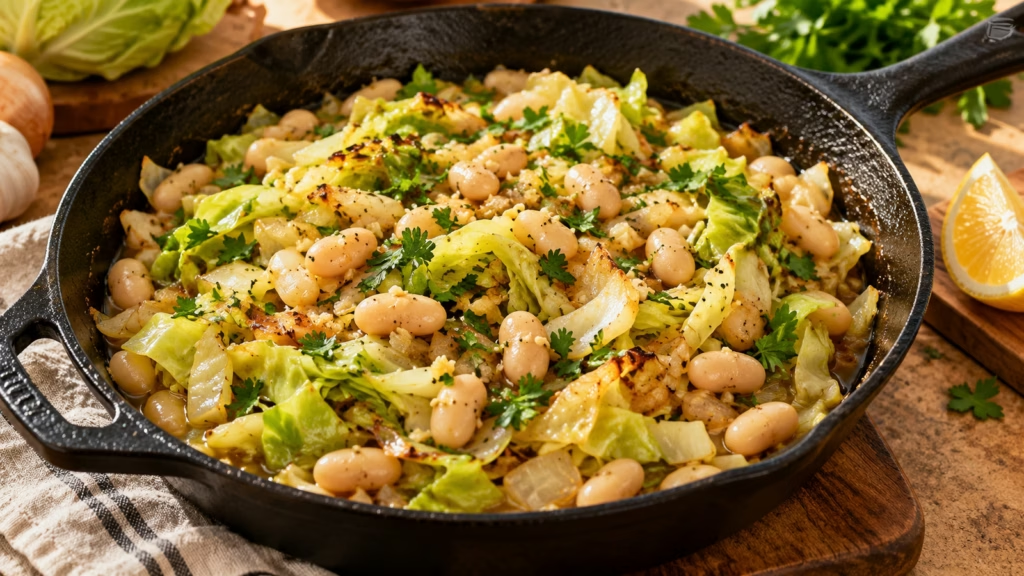
Half a cabbage can take up an impressive amount of refrigerator space for something that seems so modest on the cutting board. This cabbage and white bean skillet gives it a clear job: soften in a wide pan, pick up golden edges, then meet creamy beans, garlic, and lemon. It is a spoonable, meatless dinner with enough broth to coat the vegetables, rather than a pot of soup.
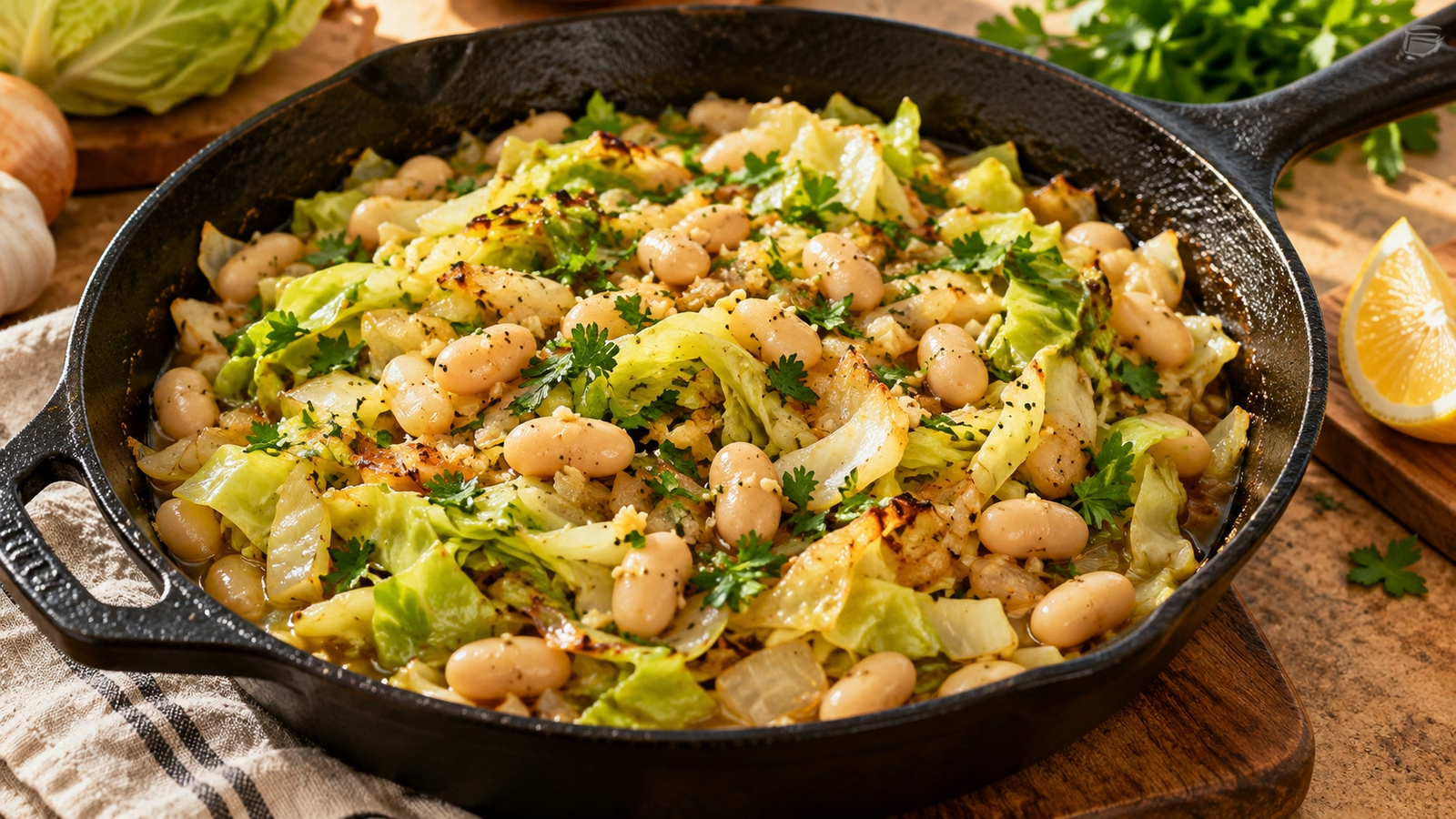
Brown the cabbage first, then let the beans turn those savory pan juices into dinner.
Choose ingredients that keep the skillet balanced
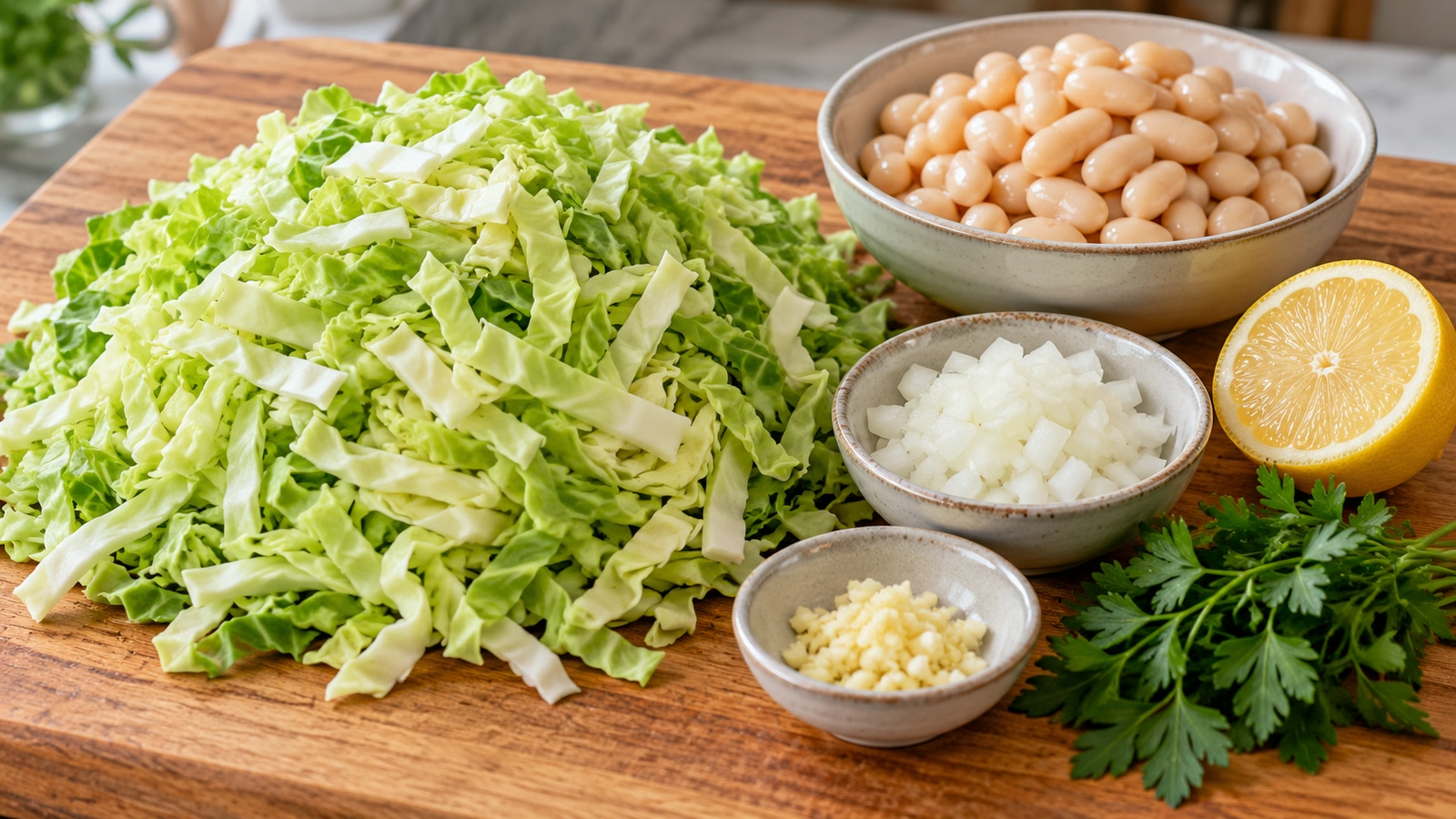
Green cabbage is the starting point here. Cut it into short, roughly ½-inch-wide ribbons, removing the hard core, so a fork can gather cabbage and beans together. I’d spend more attention on that even cut than on finding a particularly handsome cabbage; uneven pieces make tenderness harder to judge.
- White beans: Use fully cooked cannellini beans, drained and rinsed. Their mild flavor leaves room for the cabbage and lemon; dried beans must be cooked separately before they enter this recipe.
- Onion and garlic: Onion softens alongside the cabbage, while garlic joins later so it does not scorch during the longer browning stage.
- Pan liquid: A modest amount of water loosens browned bits. Unsalted vegetable broth can add flavor; that substitution changes the nutrition estimate.
- Lemon and parsley: Juice supplies acidity, zest adds citrus aroma, and parsley finishes the dish without covering the vegetables in another sauce.
If you have homemade broth ready, Tastiva’s vegetable stock guide explains how to build a balanced flavor. There is no need to make a whole stockpot specifically for this skillet; a suitable carton is perfectly practical.
Give the cabbage room before adding beans
A 12-inch skillet with a lid is useful because the cabbage starts bulky and shrinks as it softens. The lid helps it become tender early on; removing the lid afterward lets excess moisture escape. That change matters more than trying to force browning while the leaves are still sitting in liquid.
- Start with a hot pan: Oil should flow easily across the surface, without smoking. Add the onion first, then the cabbage in two additions if necessary.
- Use the lid briefly: Steam helps the ribbons soften enough to stir without launching cabbage over the rim. The pan does not need to remain covered throughout cooking.
- Uncover for color: Stir occasionally rather than constantly. Look for tender leaves with scattered golden edges, not uniformly dark cabbage.
- Add beans gently: Fold them in after the garlic smells fragrant. Repeated hard stirring can break the beans and make the sauce pastier than intended.
I prefer a little visible browning to a completely pale skillet, but I would not chase a dark crust at the expense of tender vegetables. If a few edges catch too quickly, lower the heat. A splash of broth can lift sticky browned bits; burned black bits will not improve with encouragement.
Substitutions and fixes for cabbage and white bean skillet
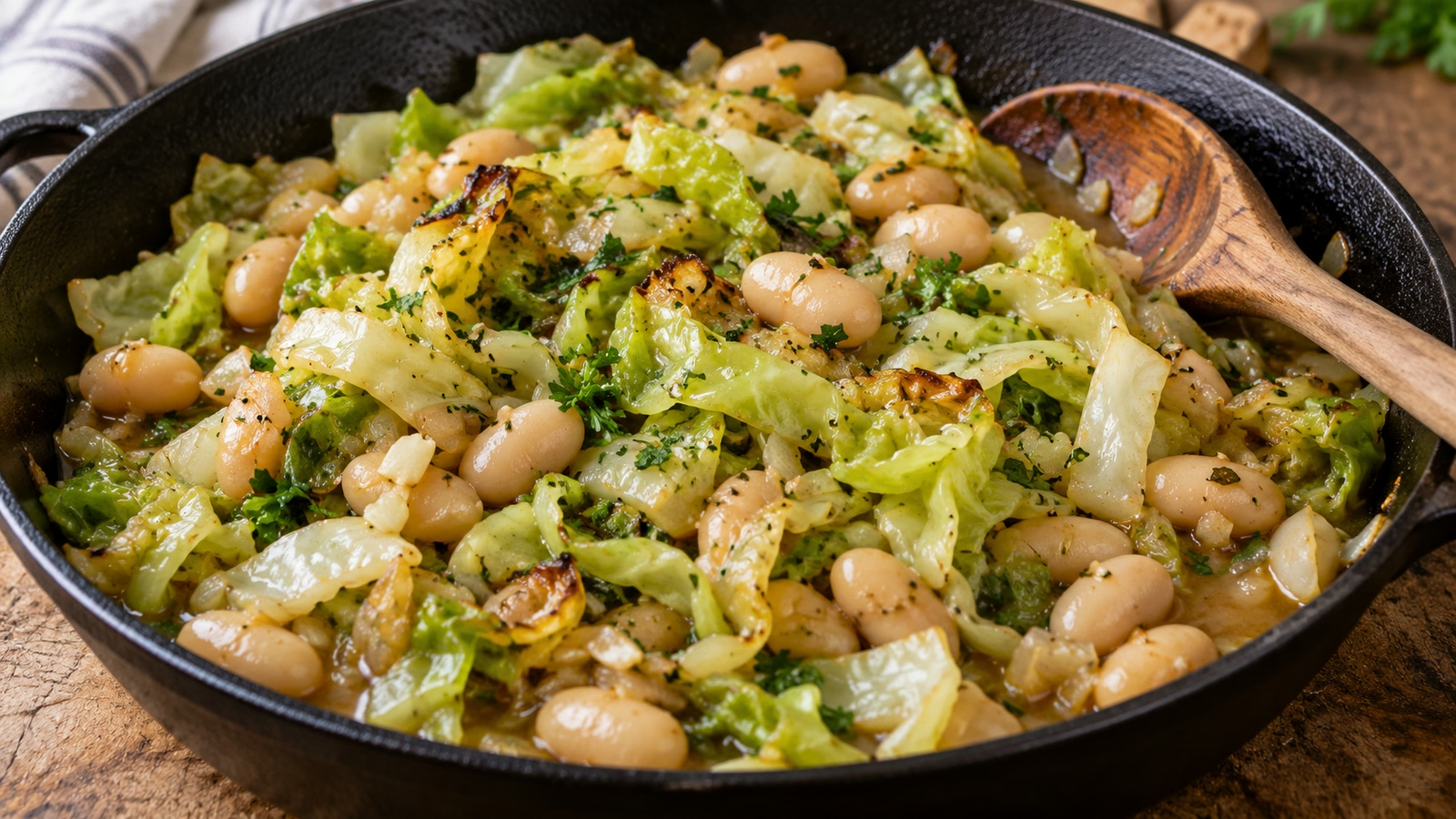
The dish can accommodate a different white bean or a softer cabbage, but those changes deserve a small adjustment. Keep the prepared weights close to the recipe and judge the pan by tenderness and moisture. Adding another can of beans without more seasoning turns the balance toward beans rather than cabbage.
- Great northern beans: Swap by the same drained weight. Fold carefully because softer beans can break more readily.
- Savoy cabbage: Use the same trimmed weight. Its looser leaves may soften sooner, so check before the end of the suggested range.
- Red cabbage: It changes the color and can stay firmer; allow more time and expect the beans to take on some purple color.
- Too wet: Simmer uncovered before the lemon and parsley go in. Stop when liquid coats the food rather than pooling deeply.
- Too dry: Add broth or water a tablespoon at a time. This is meant to be spoonable, with tender beans, rather than a dry stir-fry.
Taste before adding extra salt, especially with canned beans and packaged broth. For a sharper finish, add a small squeeze of lemon to your own portion first. That is easier to control than making the whole pan noticeably sour. Chili flakes can be offered at the table for people who want heat.
Serve now and save a manageable portion
Spoon the skillet into shallow bowls and offer bread for the juices, or serve it beside a cooked grain. I’d choose a crisp cucumber salad if another dish is wanted: the cold crunch makes a useful change from the soft cabbage and beans. Bread, grains, and other additions are outside the nutrition estimate.
- Keep the base dairy-free: The specified ingredients contain no dairy. Parmesan is an optional table addition that changes both allergen information and nutrition.
- Cool promptly: Divide leftovers into shallow containers and refrigerate within 2 hours, or 1 hour when the surrounding temperature exceeds 90°F (32°C).
- Plan a short refrigerated window: Keep at 40°F (4°C) or below and use within 3–4 days. Treat this as cooked leftovers, not shelf-stable beans.
- Reheat thoroughly: Add a small splash of water, cover loosely, and heat to 165°F (74°C), checking the food rather than the pan. Stir to distribute heat.
The federal chilling guidance supports prompt refrigeration in shallow containers. Cabbage becomes softer after chilling and reheating, so leftovers will have a gentler texture than the first serving. Freeze promptly if you cannot use the refrigerated portions in that window, rather than waiting until the last day to decide.
Cabbage and White Bean Skillet Recipe

Ingredients
- 2 tablespoons olive oil 27 g
- 1 medium yellow onion 150 g prepared; thinly sliced
- 600 g green cabbage about 1⅓ lb trimmed; core removed, cut into short ½-inch ribbons
- 4 cloves garlic 12 g; finely chopped
- 500 g cooked no-salt-added white beans about 3 cups drained; canned or separately cooked, rinsed and well drained
- 1/2 cup water 120 ml; unsalted vegetable broth may replace it, but is excluded from nutrition estimate
- 1/2 teaspoon fine salt 3 g; adjust to ingredient saltiness
- 1/4 teaspoon black pepper
- 1 teaspoon finely grated lemon zest
- 3 tablespoons lemon juice 45 g
- 2 tablespoons chopped parsley 8 g
Equipment
- 12-inch skillet with lid
- Knife and cutting board
- Strainer
- Measuring spoons
- Citrus juicer or fork
Instructions
- Heat the olive oil in a 12-inch skillet over medium-high heat. Add the onion and cook, stirring, for 4–5 minutes until softened.
- Add cabbage, salt, and pepper; toss carefully. If it does not fit comfortably, add half, cover for 2 minutes to wilt, then add the rest. Cover and cook for about 5 minutes, stirring once.
- Remove the lid. Cook for 7–10 minutes, stirring occasionally, until cabbage is tender with scattered golden edges. Lower the heat if edges scorch before the thicker pieces soften.
- Add garlic and stir for 30–60 seconds until fragrant. Fold in drained cooked beans and water, scraping up browned bits. Simmer uncovered for 5 minutes until hot and the liquid lightly coats the mixture.
- Remove from heat. Stir in lemon zest, lemon juice, and parsley. Taste and adjust salt if needed. Divide into four portions.
Nutrition
Video
Video: Lizzie Streit of It’s a Veg World After All demonstrates a complementary shredded-cabbage and white-bean skillet technique. Her variation uses apples, butter and cider vinegar. Follow the recipe above for this version’s onion, garlic, olive oil, lemon-parsley flavor, browning sequence and quantities.
Notes
Tried this recipe?
Let us know how it turned out!Sources
- FoodSafety.gov: 4 Steps to Food Safety
- FoodSafety.gov: Safe Minimum Internal Temperatures
- FoodSafety.gov: Cold Food Storage Chart
- USDA FoodData Central: nutrient-data source
Hi, I’m Laura, the voice behind Tastiva. I’ve always believed that eating well should feel enjoyable, comforting, and realistic—not like another complicated rule to follow. I love creating recipes that fit into everyday life, sharing simple nutrition ideas, and finding small ways to make meals feel a little better without losing the pleasure of good food.