
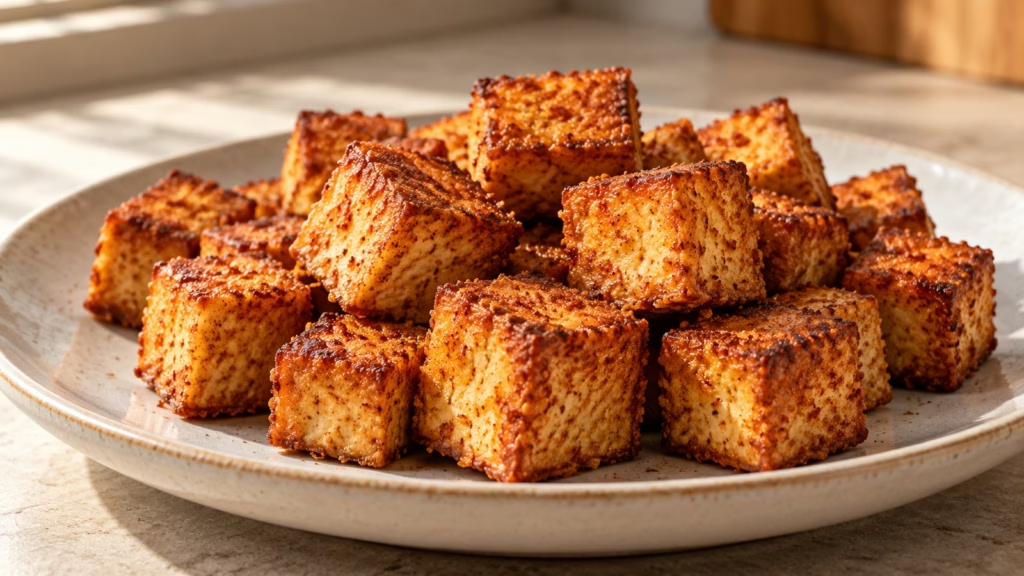
A bowl can have warm rice, crunchy vegetables, and a good sauce, yet still feel unfinished when the tofu is pale and damp. Crispy baked tofu adds golden edges around a tender center, with soy sauce, garlic, and smoked paprika for savory flavor. Start with extra-firm tofu, dry it well, and bake the coated pieces in a roomy single layer.
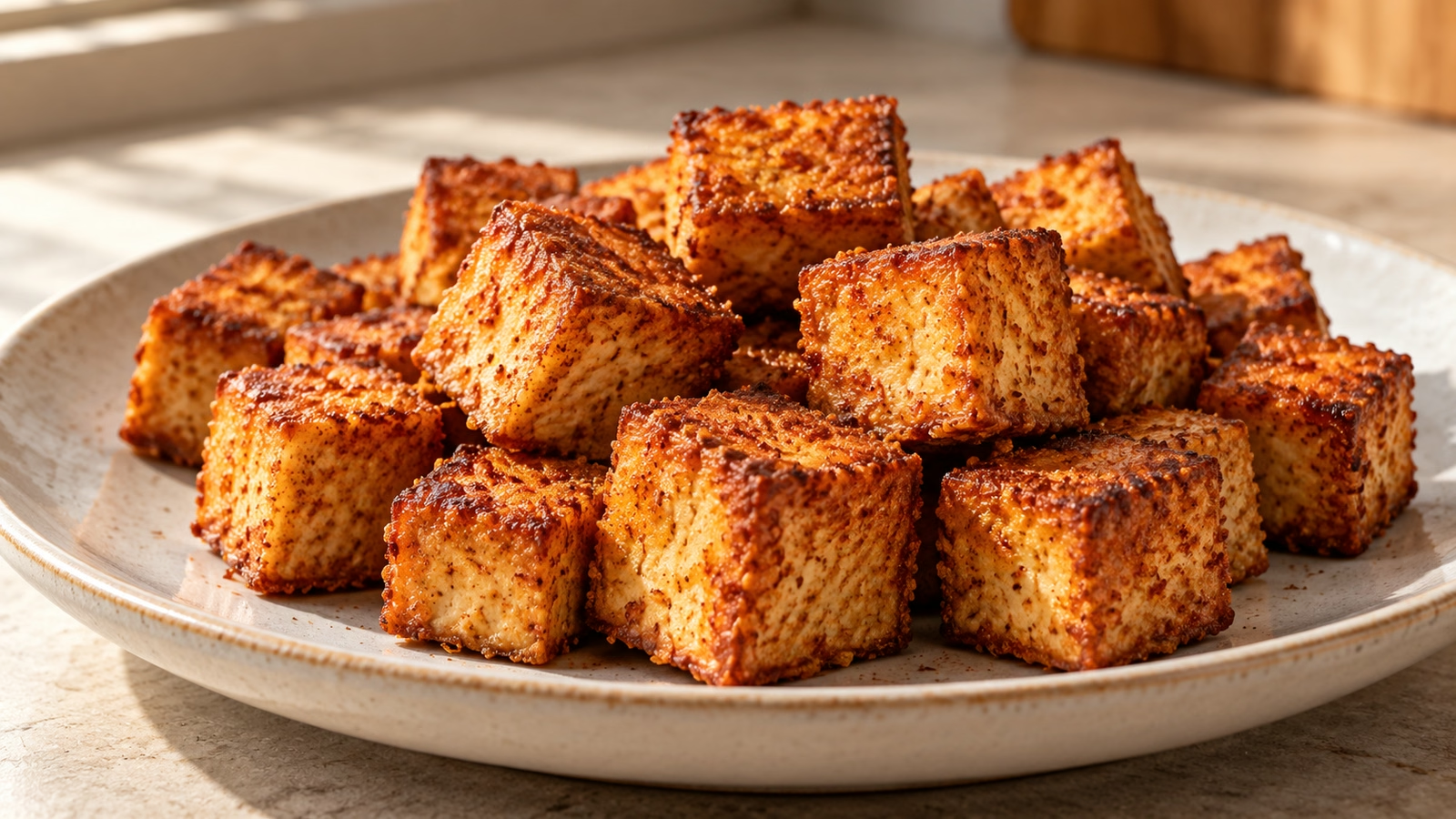
Build the crisp edges in the oven, then add the sauce when you are ready to eat.
Start with extra-firm tofu
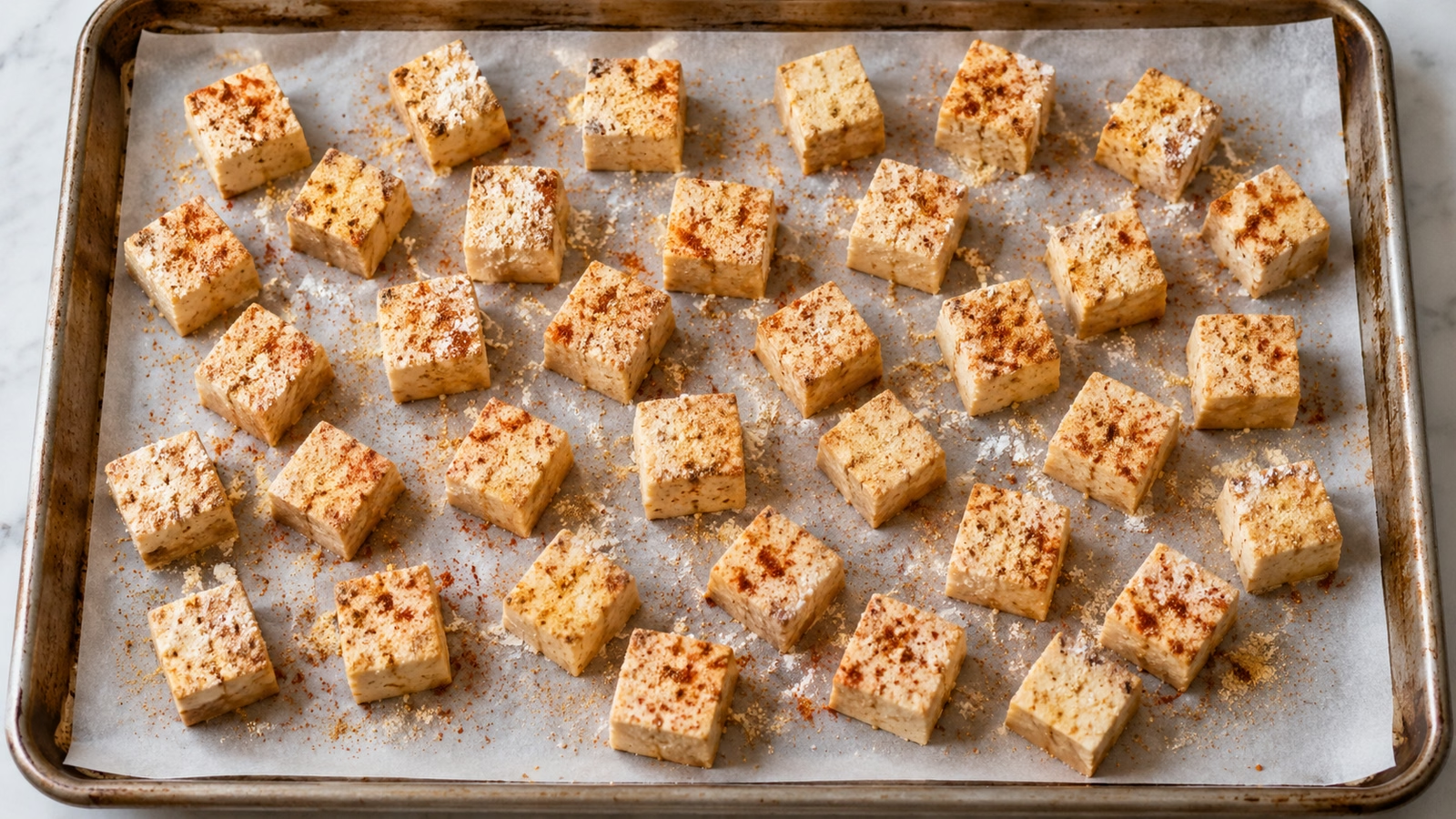
The word firm matters here. Tofu sold in water needs draining and pressing before it can carry a light coating instead of a wet paste. I’d spend attention on that first step before reaching for more seasoning; a flavorful surface still needs the chance to brown.
- Extra-firm, water-packed: This is the recipe’s starting point. Drain it, wrap it in a clean towel, and press gently for about 20 minutes.
- Super-firm, vacuum-packed: Usually needs much less pressing. Blot the surface and watch the oven closely because its denser texture changes the result.
- Firm tofu: Can work, but it is more delicate and may need extra drying. Turn gently and expect a softer center.
- Silken or soft tofu: Save these for another preparation. Their delicate structure is a poor fit for tossing cubes with starch.
- Frozen and thawed tofu: Has a changed, more porous texture. It can be useful for other preparations, but it is not interchangeable with the fresh block used here.
Nasoya’s preparation guidance and Oregon State University’s Food Hero both recommend removing excess water before baking firm tofu. Use a stable weight rather than an enormous one that crushes the block. Pat the cut sides dry after cubing; the newly exposed surfaces can still be damp.
The coating and heat behind crispy baked tofu
Oil helps the seasonings coat the cubes, while cornstarch supplies a thin outer coating. Add the starch last and toss gently until no powdery patches remain. The goal is an even film, not a thick jacket: you want to recognize the tofu beneath it.
- Keep the liquid modest: The soy sauce seasons the tofu, but this recipe does not soak the cubes in a bowl of marinade before coating.
- Cut evenly: Approximately 3/4-inch cubes give you a useful balance of surface and center. Very small pieces dry faster; much larger pieces need more time.
- Heat fully: Let the oven reach 425°F (220°C) before adding the tray. Use parchment rated for that temperature.
- Leave gaps: Pieces touching on all sides have less exposed surface. One 13-by-18-inch rimmed baking sheet is enough for the specified block.
- Turn once: Flip with a thin spatula around the halfway point. Wait for the coating to set before repeatedly stirring it around.
Begin checking near 25 minutes and look for browned corners and a dry, set exterior. Different tofu brands contain different amounts of water, so the endpoint matters more than an exact minute. I prefer a tender center to chasing such a dark crust that every cube becomes chewy all the way through.
Troubleshoot the tray and vary the flavor
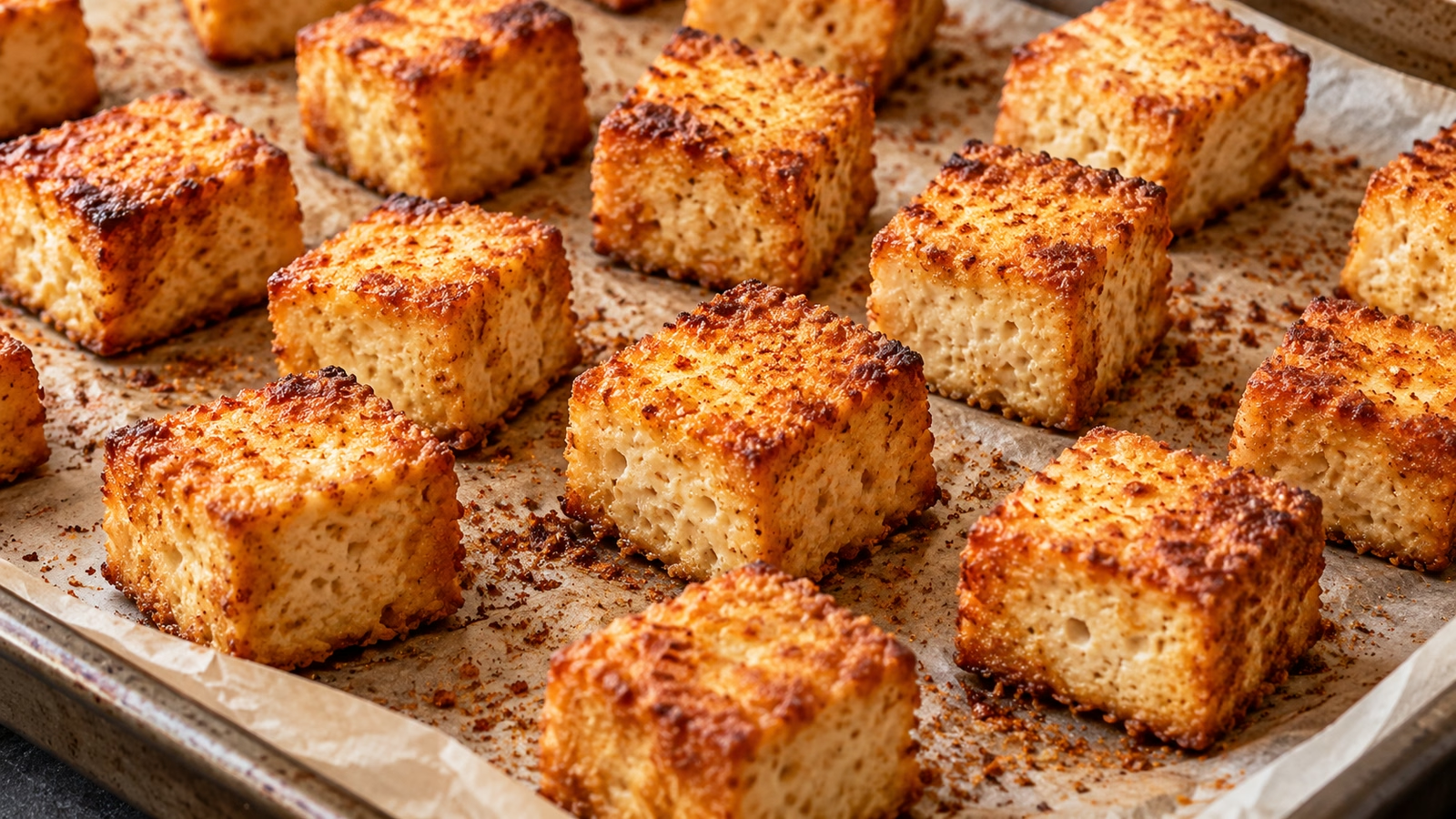
Baked tofu will not have the same thick crust as deep-fried tofu. That is a useful expectation to set before dinner. If the surface stays soft, look at drying, spacing, and the amount of sauce before adding another spoonful of starch.
- White patches after tossing: Sprinkle the starch evenly instead of dumping it into one spot. Gently turn the cubes until the wet seasoning reaches the coating.
- Pale pieces at the end: Give the tray a few more minutes and inspect the undersides. Your pan and oven may brown the bottom before the top.
- Cubes sticking or breaking: Let them roast undisturbed until the coating sets, then slide a spatula underneath. Scraping impatiently is an efficient way to make tofu confetti.
- Too salty: Use reduced-sodium soy sauce in the base recipe, and taste the finished tofu before adding a salty dressing. Brands still vary.
- Different seasoning: Replace smoked paprika with ordinary paprika for less smoke. For a ginger direction, use ground ginger instead, starting with a small pinch.
For a gluten-free version, use soy sauce or tamari specifically labeled gluten-free and check the other ingredients. Regular soy sauce often contains wheat; tamari is not an automatic guarantee. Tofu contains soy, regardless of how carefully you choose the coating.
Build a bowl and save leftovers
Treat the card as the tofu component, not an entire meal. Add cooked brown rice or quinoa, cucumber, shredded carrot, and your preferred sauce to make a bowl. A lemony tahini dressing brings a different finish from a sweet soy-based glaze; spoon either on at serving time rather than drowning the whole batch.
- Serve promptly: Use the tofu while its surface is dry and the edges are at their crispest. Put dressing on the vegetables or alongside the tofu if texture is your priority.
- Store separately: Keep tofu apart from wet vegetables and dressing so the coating does not soak in their liquid.
- Chill safely: Refrigerate in shallow containers within 2 hours, or within 1 hour above 90°F (32°C). Keep the refrigerator at 40°F (4°C) or below.
- Use and reheat: Eat refrigerated leftovers within 3 to 4 days. Reheat to 165°F (74°C); an oven or skillet can dry the surface more than a microwave.
- Plan for softer leftovers: Refrigeration changes the coating. Expect savory tofu for tomorrow’s bowl, not a promise of freshly baked crispness.
Crispy Baked Tofu Recipe

Ingredients
- 14 oz extra-firm tofu one water-packed block, about 397 g before pressing
- 1 tbsp olive oil
- 1 tbsp reduced-sodium soy sauce use labeled gluten-free soy sauce or tamari if needed
- 0.5 tsp garlic powder
- 0.5 tsp smoked paprika
- 0.25 tsp black pepper
- 2 tbsp cornstarch
Equipment
- 13-by-18-inch rimmed baking sheet
- Oven-safe parchment paper
- Clean kitchen towel
- Rimmed plate
- Stable weight or tofu press
- Mixing bowl
- Thin spatula
Instructions
- Drain the tofu. Wrap the block in a clean towel on a rimmed plate, place a stable flat weight on top, and press gently for 20 minutes. Do not crush it.
- Meanwhile heat the oven to 425°F (220°C). Line a 13-by-18-inch rimmed baking sheet with parchment rated for this temperature.
- Cut the tofu into approximately 3/4-inch cubes and pat the cut surfaces dry. Transfer to a mixing bowl.
- Add olive oil, soy sauce, garlic powder, smoked paprika, and black pepper. Toss gently. Sprinkle cornstarch evenly over the cubes, then turn gently until no dry powdery patches remain.
- Arrange the cubes in a single layer with gaps between them. Roast for 25 to 35 minutes, turning carefully halfway through. Begin checking at 25 minutes; look for golden edges and a dry, set coating. Add a few minutes as needed without drying the centers excessively.
- Serve warm as a bowl component. Add any sauce at serving time. Rice, vegetables, and sauces are serving suggestions and are not included in this recipe’s nutrition.
Nutrition
Video
Video: Dani Spies of Clean & Delicious demonstrates pressed, cornstarch-coated baked tofu, followed by optional sauces. Her base uses avocado oil, tamari and a 400°F oven; follow the recipe above for the olive oil, smoked paprika, quantities and 425°F baking instructions.
Notes
Tried this recipe?
Let us know how it turned out!Sources
- Oregon State University Food Hero: baked tofu preparation
- Nasoya: extra-firm tofu and pressing guidance
- FoodSafety.gov: handling and refrigeration
- FoodSafety.gov: leftover storage and reheating
- USDA FoodData Central: nutrition data
Hi, I’m Laura, the voice behind Tastiva. I’ve always believed that eating well should feel enjoyable, comforting, and realistic—not like another complicated rule to follow. I love creating recipes that fit into everyday life, sharing simple nutrition ideas, and finding small ways to make meals feel a little better without losing the pleasure of good food.