
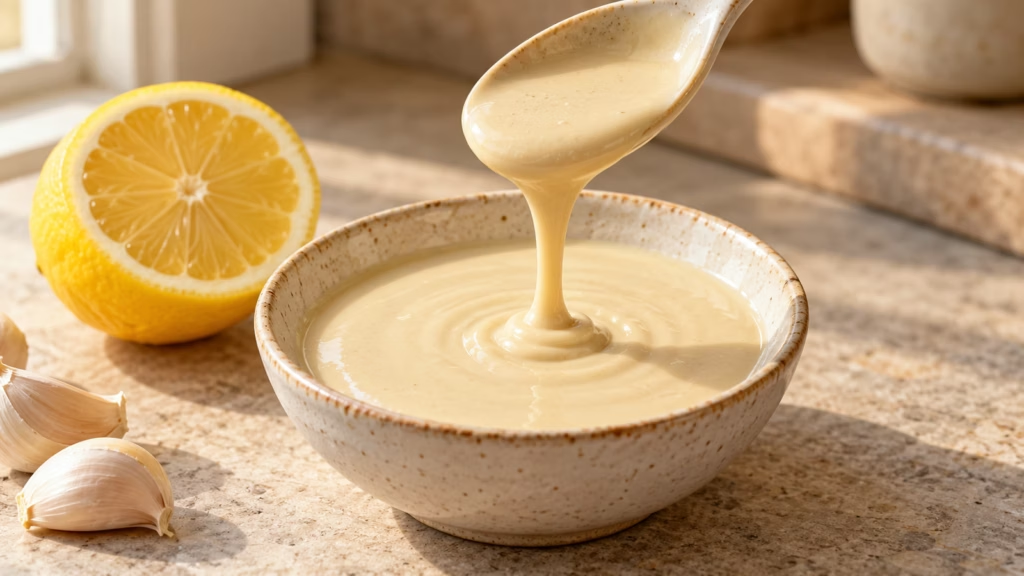
A bowl of lemon tahini sauce can look worryingly thick a moment after the lemon goes in. Keep whisking and add water gradually: that stiff stage can give way to a smooth sauce. This version combines sesame paste, lemon, garlic, and salt, with the final amount of water guided by what you want to put it on.
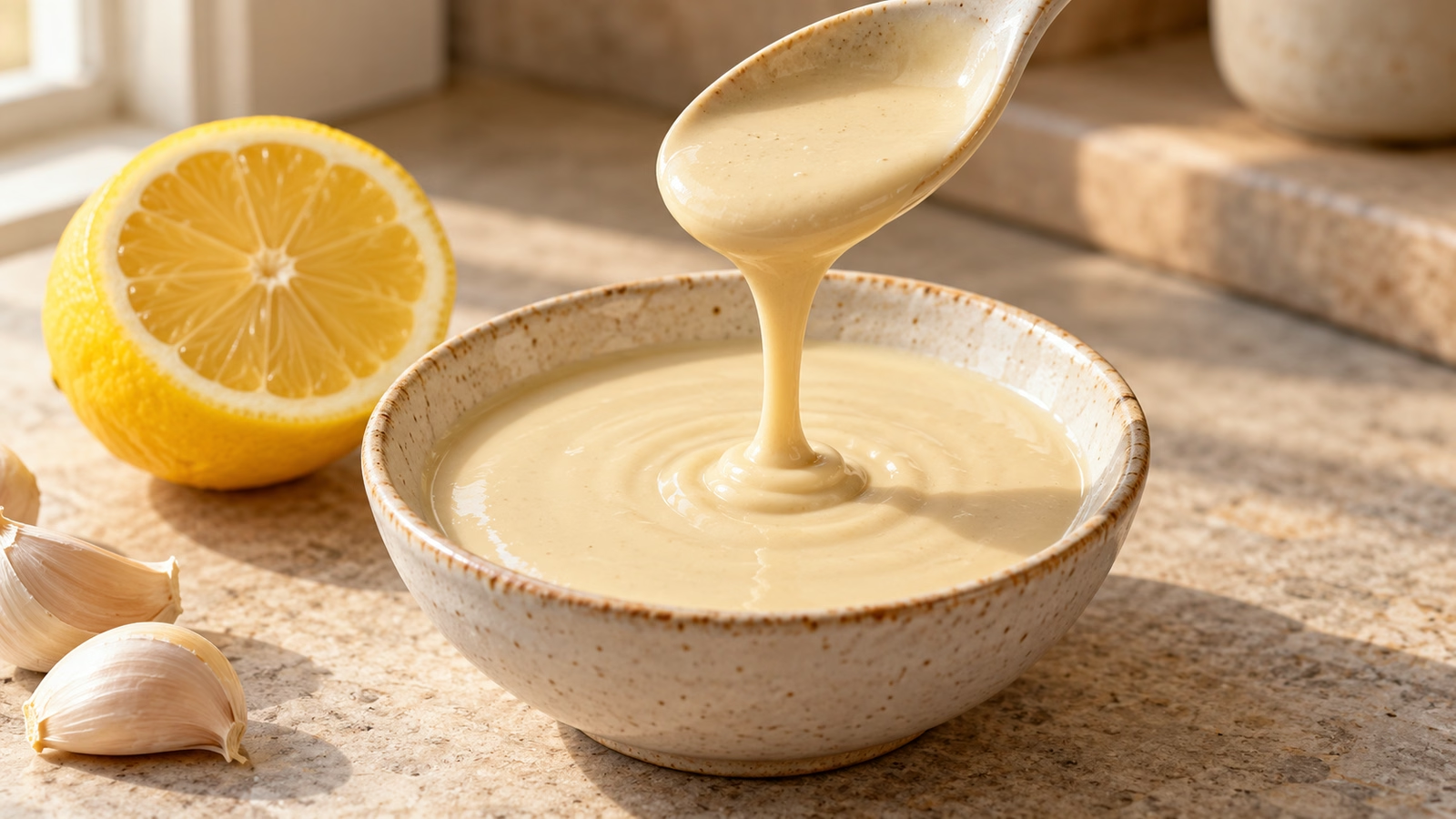
Make the sauce suit the food: spoonable for dipping, flowing for drizzling, and a little thinner for salad.
Start with sesame paste that stirs smoothly
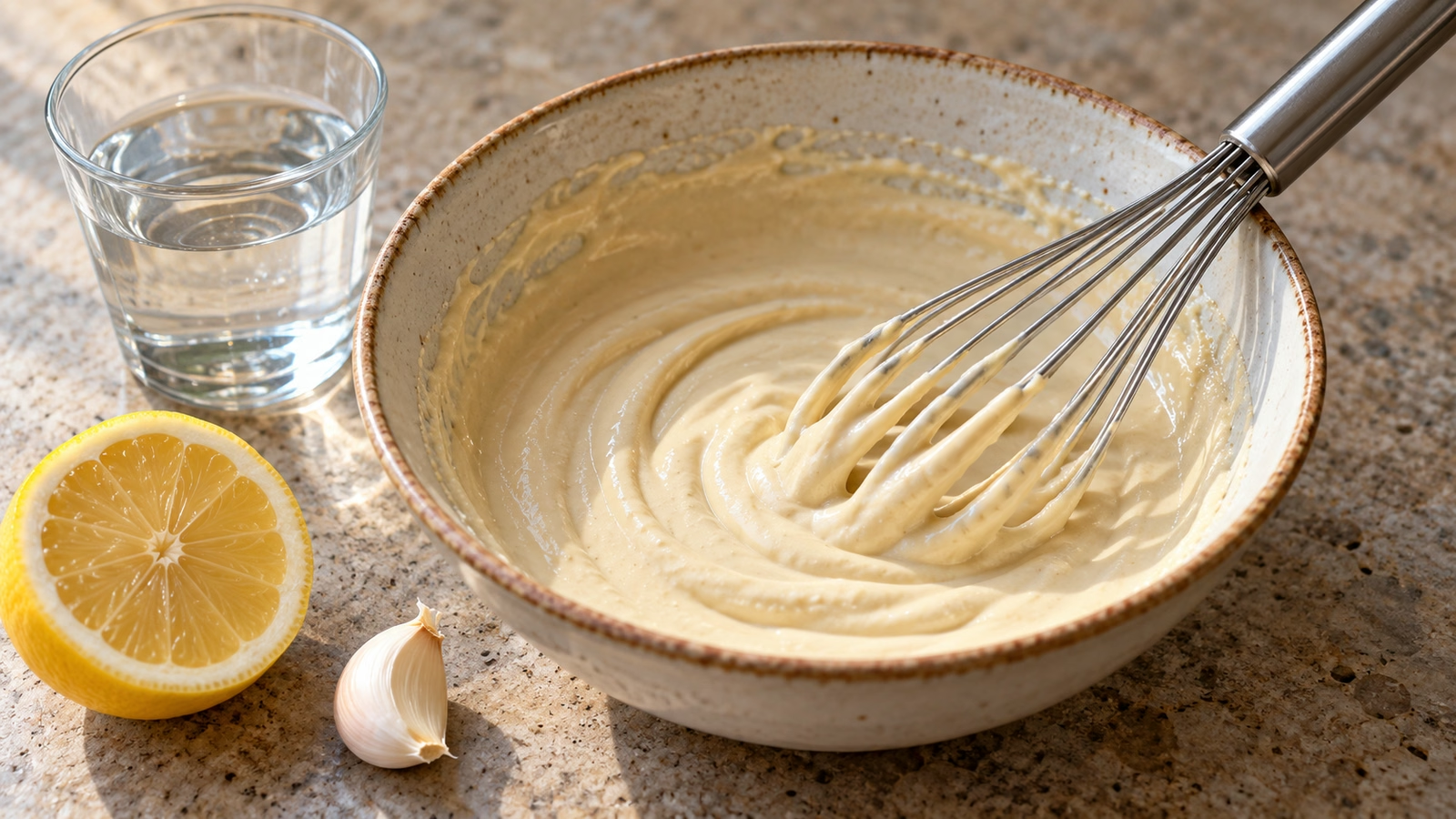
Tahini is ground sesame paste, not a ready-made dressing. Oil can separate in the jar, leaving the bottom much thicker than the top. Stir the entire jar thoroughly before measuring; scooping only the oily surface makes the recipe less consistent and leaves the next batch with a different starting point.
- Read the jar: Choose plain tahini rather than a sweetened sesame spread or bottled sauce. Added flavors change this short ingredient list.
- Check the texture: It should stir into a uniform paste. Very dry paste needs more attention and water; a spoonful of separated oil does not replace mixed tahini.
- Use lemon juice: Freshly squeezed juice gives a clean starting point. Strain seeds before measuring so they do not end up hiding in the sauce.
- Grate garlic finely: A small clove supplies flavor without leaving crunchy chunks. Use less if you want the sesame and lemon to lead.
I’d choose tahini you enjoy before adding anything else. Unpleasant bitterness is difficult to fix; discard a stale or rancid jar. Sesame is an allergen even when a sauce has no dairy.
Thin lemon tahini sauce for the job in front of you
Begin with the measured water in the card, whisk until smooth, then decide on the final consistency. Different jars behave differently, so the extra water is an adjustment range rather than an instruction to pour it all in. I prefer to test the sauce on one spoonful of the actual food before loosening the whole bowl.
- For a dip: Stop while a spoonful holds a soft mound and clings to cucumber or a piece of pita. It should not feel like paste dragged straight from the jar.
- For bowls: Add water a tablespoon at a time until the sauce falls from the spoon in a continuous ribbon. It should spread over vegetables without disappearing into the grains.
- For salad: Loosen slightly further, then toss a small sample. Dry leaves need enough fluid to coat; a watery salad already has moisture of its own.
- After chilling: Stir first, then add water a teaspoon at a time if needed. Cold sauce can feel thicker than it did immediately after mixing.
Do not use extra lemon as the main thinning liquid unless you also want more acidity. Water changes consistency with less impact on the flavor balance. It is the quiet ingredient here, which is fortunate: the garlic has already volunteered to do the talking.
Fix thickness before adjusting flavor
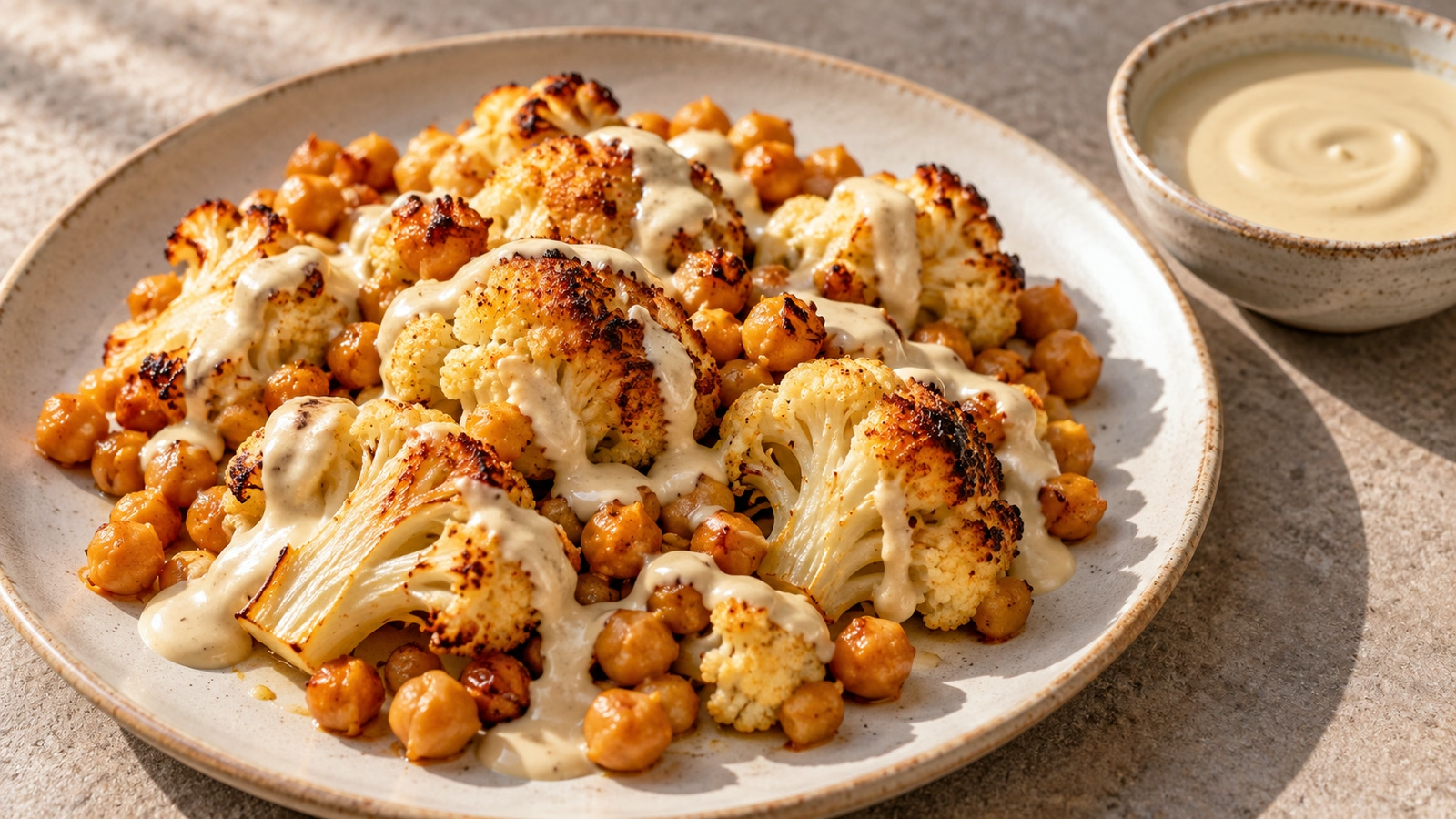
If the bowl becomes stiff or looks uneven when liquid first meets the paste, keep whisking and introduce the remaining measured water gradually. That temporary change is not a reason to throw the sauce out. It is also not a reason to add a large unmeasured splash and hope for the best.
- Still too thick: Add a tablespoon of water, whisk fully, and check again. Repeat only as needed so you can stop at the right texture.
- Too thin: Whisk in a spoonful of thoroughly stirred tahini. You may need a little lemon or salt afterward, since more paste changes the seasoning.
- Too sharp: Add a little more tahini, then water to restore the texture. This changes yield and the original per-serving nutrition estimate.
- Too garlicky: Make an additional portion without garlic and combine them, or use a smaller amount of the sauce. Water alone dilutes sesame and lemon as well.
- Grainy: Check for unstirred dense paste from the jar. A small blender can help incorporate stubborn lumps, but it will not repair a spoiled ingredient.
Taste after the mixture is smooth rather than seasoning each awkward intermediate stage. If the sauce will accompany salty falafel or seasoned roasted vegetables, I’d leave its salt modest. Seasoning a sauce in isolation can make the assembled plate more salty than you intended.
Use it with contrast, then refrigerate promptly
Tastiva’s falafel guide explains why crisp patties work well with cool vegetables and tahini. This sauce also belongs beside roasted carrots, cauliflower, chickpea bowls, or a pita filled with crunchy cucumber. Spoon it on just before eating so a crisp surface does not sit under wet sauce for a long time.
- Store separately: Keep sauce in a clean covered container rather than mixing the whole batch into a salad you intend to save.
- Refrigerate after preparing: Keep at 40°F (4°C) or below. Do not treat the diluted sauce like the unopened jar of sesame paste.
- Make a modest batch: As a conservative home-kitchen plan, use within 3–4 days; this is not a validated shelf-life study for this exact sauce.
- Limit time out: Refrigerate within 2 hours, or 1 hour above 90°F (32°C). Use a clean spoon when serving and return the remaining container promptly.
FoodSafety.gov’s chilling guidance applies to perishable prepared foods. Lemon does not make this homemade sauce shelf-stable, and appearance alone cannot establish safety. The recipe makes eight portions of roughly 2 tablespoons at the initial water amount; extra water increases volume, while sesame remains the main contributor to the nutrition estimate.
Lemon Tahini Sauce Recipe

Ingredients
- 1/2 cup plain tahini 120 g; jar thoroughly stirred
- 1/4 cup lemon juice 60 g
- 1 small clove garlic 3 g; finely grated
- 1/4 teaspoon fine salt 1.5 g
- 6 tablespoons cool water 90 ml, plus up to 4 tablespoons (60 ml) as needed
Equipment
- Mixing bowl
- Whisk
- Measuring cup and spoons
- Fine grater
Instructions
- Stir the tahini jar until its oil and paste are fully combined, then measure 120 g into a mixing bowl.
- Add lemon juice, grated garlic, and salt. Whisk; the mixture may thicken temporarily.
- Whisk in the initial 6 tablespoons of water in two additions until the sauce is smooth. Scrape the bowl to incorporate any dense paste.
- For a thinner sauce, add extra water 1 tablespoon at a time, whisking after each addition, until it falls from a spoon at your preferred rate. Stop earlier for dipping and later for drizzling.
- Taste the smooth sauce and adjust salt only if needed. Serve or transfer to a covered container and refrigerate promptly.
Nutrition
Video
Video: The Mediterranean Dish demonstrates tahini sauce with a food processor, lime or lemon, and optional parsley. Follow the recipe above for this hand-whisked lemon version and its quantities.
Notes
Tried this recipe?
Let us know how it turned out!Sources
- FoodSafety.gov: 4 Steps to Food Safety
- FoodSafety.gov: Safe Minimum Internal Temperatures
- FoodSafety.gov: Cold Food Storage Chart
- USDA FoodData Central: nutrient-data source
Hi, I’m Laura, the voice behind Tastiva. I’ve always believed that eating well should feel enjoyable, comforting, and realistic—not like another complicated rule to follow. I love creating recipes that fit into everyday life, sharing simple nutrition ideas, and finding small ways to make meals feel a little better without losing the pleasure of good food.