
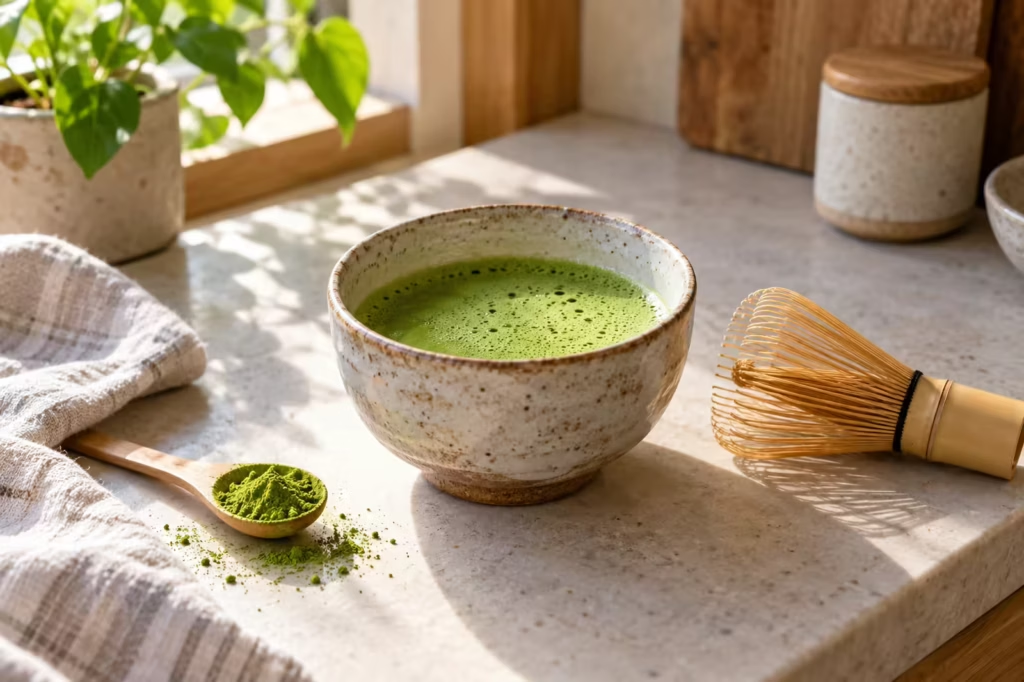
A bowl of matcha can look wonderfully calm: bright green, softly foamy, and whisked with a little care. But does matcha have caffeine? Yes. Matcha is made from powdered green tea leaves, so every serving naturally contains caffeine. A typical cup may provide roughly 20 to 90 milligrams, depending mostly on how much powder you use and the product itself.
Matcha may feel softer than coffee for some people, but it is still a caffeinated drink—and the scoop in your bowl matters more than the color of your cup.
How much caffeine is in matcha?
Research measuring matcha has found about 18.9 to 44.4 milligrams of caffeine per gram of powder. If you prepare a light cup with one gram, that range stays fairly modest. A stronger two-gram serving could contain roughly 38 to 89 milligrams. Those figures are useful estimates, not a guarantee for every brand.
The serving directions on the package are the best starting point because teaspoons are not perfectly consistent. A level spoon, a rounded scoop, and the traditional bamboo scoop can all hold different amounts. Café drinks may be stronger still, especially when they use several scoops or add an espresso shot.
Water temperature changes flavor more than caffeine. Cooler water may soften bitterness, but it does not make a standard scoop caffeine-free. “Ceremonial” and “culinary” describe quality and intended use rather than a dependable caffeine level, so those words cannot replace a measured serving or a brand’s own testing.
- 1 gram of matcha: roughly 19 to 44 milligrams of caffeine
- 2 grams of matcha: roughly 38 to 89 milligrams
- A café matcha latte: varies with the number of scoops and any added coffee
- Decaffeinated matcha: uncommon and not always completely caffeine-free
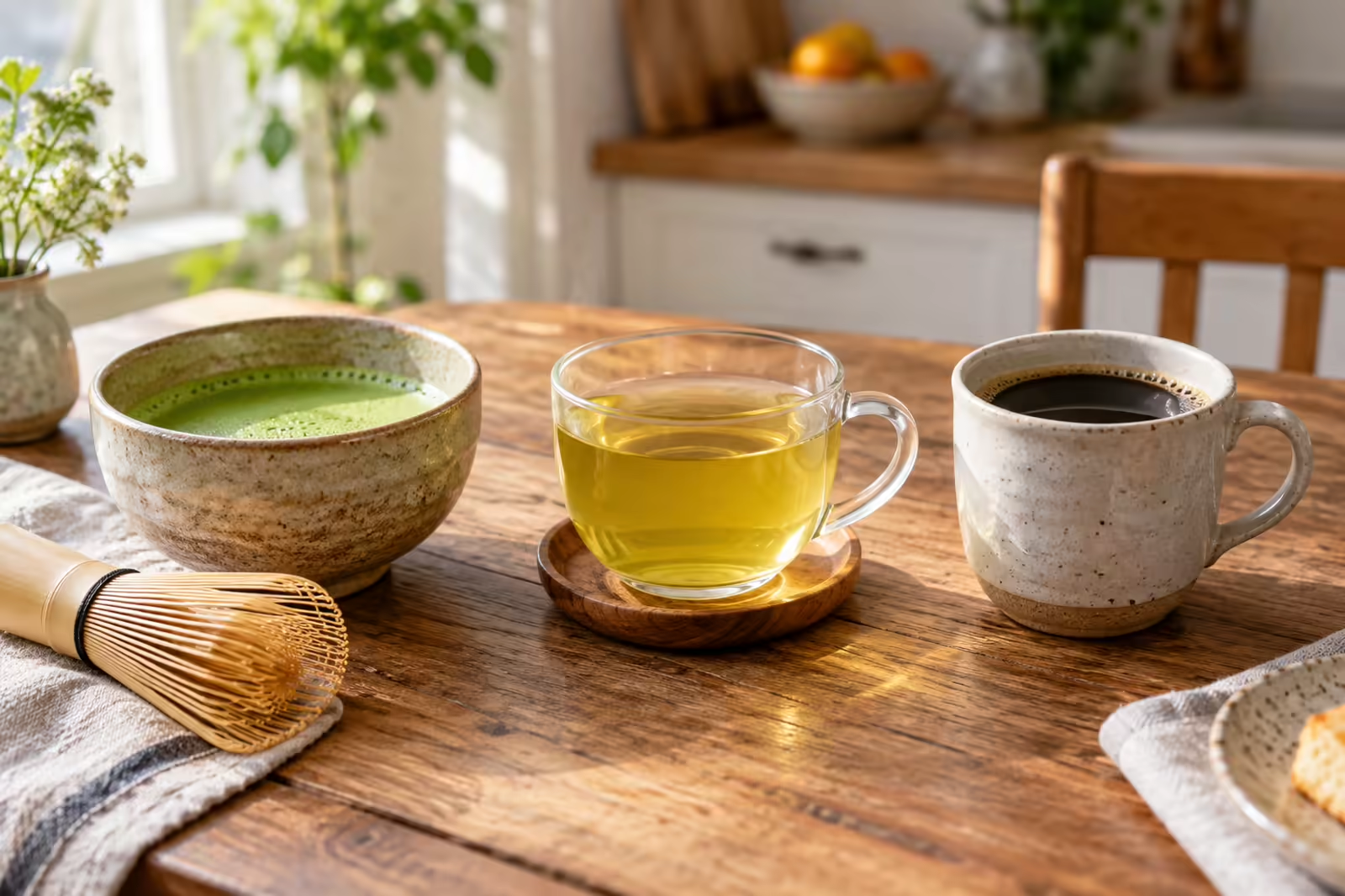
Matcha vs. green tea and coffee
Matcha and brewed green tea come from the same tea plant, but we consume them differently. Regular green tea is steeped and the leaves are removed. With matcha, the powdered leaf is whisked into the drink, which is one reason a serving can contain more caffeine than a cup of gently steeped green tea.
Coffee is harder to compare by name alone because roast, brewing method, cup size, and concentration all matter. The U.S. Food and Drug Administration lists 113 to 247 milligrams for a 12-ounce brewed coffee. A typical matcha is often lower, but a large or heavily scooped drink can overlap with lighter coffee servings.
I find the simplest comparison is the label and the real portion in front of you. “One cup” tells us very little if one cup is eight ounces and the other is a sweet 20-ounce café drink.
Why matcha can feel different from coffee
Matcha naturally contains L-theanine, an amino acid found in tea. Research has explored how caffeine and L-theanine may work together in attention and alertness. That combination may help explain why some people describe matcha as steadier or less edgy than coffee, although the feeling is personal and L-theanine does not cancel the caffeine.
Your response can change with sleep, food, medicines, pregnancy, anxiety, and how often you use caffeine. Matcha on an empty stomach may also feel uncomfortable for some people. If you become shaky, nauseated, anxious, or notice a racing heartbeat, a smaller serving is a sensible signal rather than a failure of willpower.
Matcha also contains tea polyphenols, including catechins, but that does not turn every matcha latte into a health tonic. Research specific to matcha is still developing, and a drink made with a large amount of added sugar should be viewed as the whole drink it is.
How to make matcha work for your day
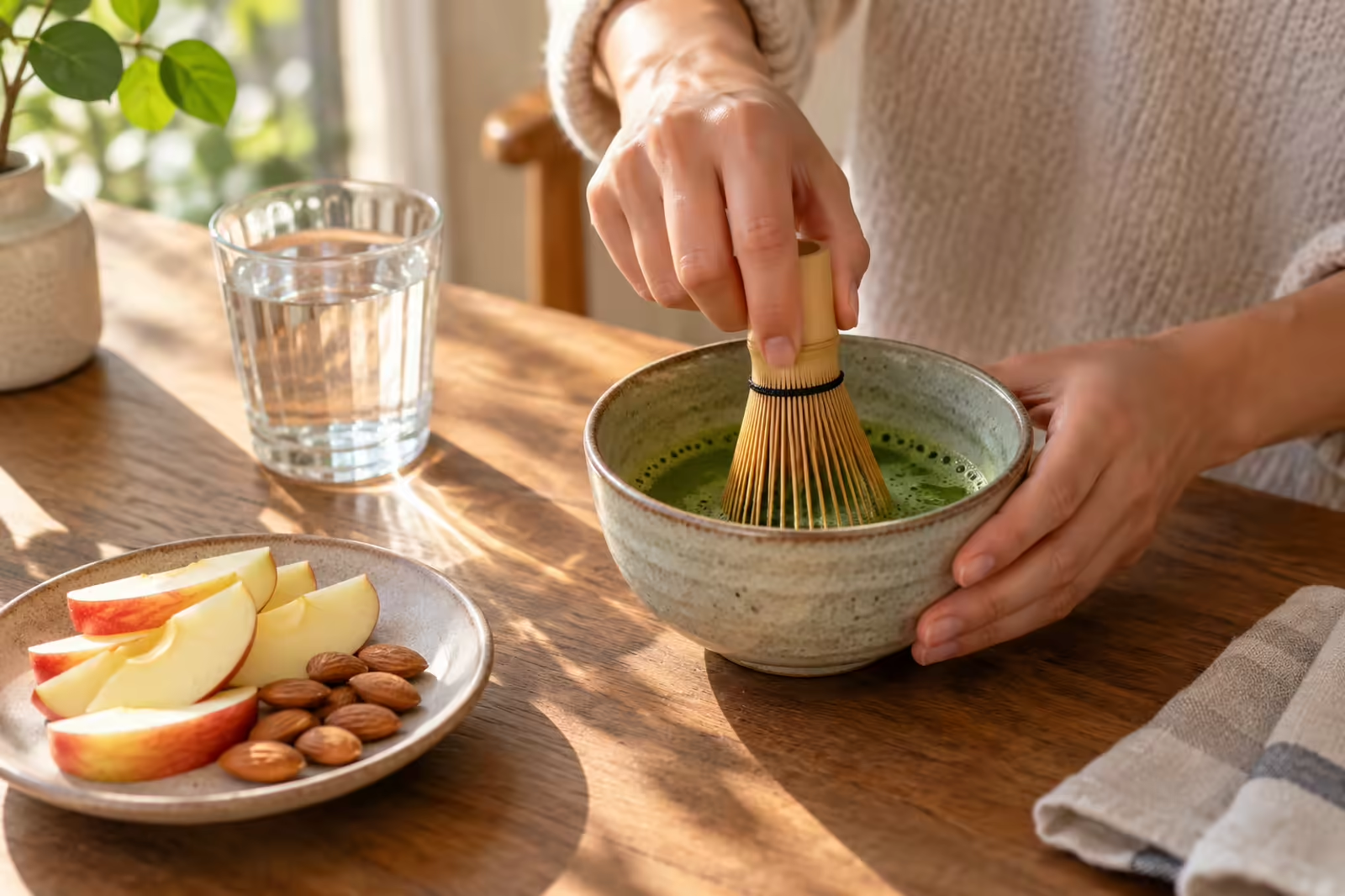
Begin with one measured gram or follow the package serving, then pay attention to sleep and comfort. If matcha keeps you awake, move it earlier rather than assuming the green color makes it gentler at night. Half a serving can preserve the ritual when you want less caffeine.
- Measure the powder instead of guessing with a heaped spoon.
- Check café menus for serving size, added espresso, and sweeteners.
- Have matcha with food if it bothers your stomach.
- Choose an earlier time if caffeine affects your sleep.
- Count matcha alongside coffee, tea, energy drinks, and supplements in your daily total.
The FDA says up to 400 milligrams of caffeine per day is not generally associated with negative effects for most adults, but sensitivity varies. During pregnancy, the American College of Obstetricians and Gynecologists advises staying below 200 milligrams daily. For a broader comparison, see our guide to whether coffee is bad for you.
So yes, matcha has caffeine. The most useful habit is wonderfully simple: know your scoop, notice your body, and let the timing support the rest of your day.
Sources
- National Library of Medicine: Health Benefits and Chemical Composition of Matcha Green Tea—A Review
- National Center for Complementary and Integrative Health: Green Tea—Usefulness and Safety
- U.S. Food and Drug Administration: Spilling the Beans—How Much Caffeine Is Too Much?
- American College of Obstetricians and Gynecologists: Caffeine and Pregnancy

Hi, I’m Laura, the voice behind Tastiva. I’ve always believed that eating well should feel enjoyable, comforting, and realistic—not like another complicated rule to follow. I love creating recipes that fit into everyday life, sharing simple nutrition ideas, and finding small ways to make meals feel a little better without losing the pleasure of good food.