
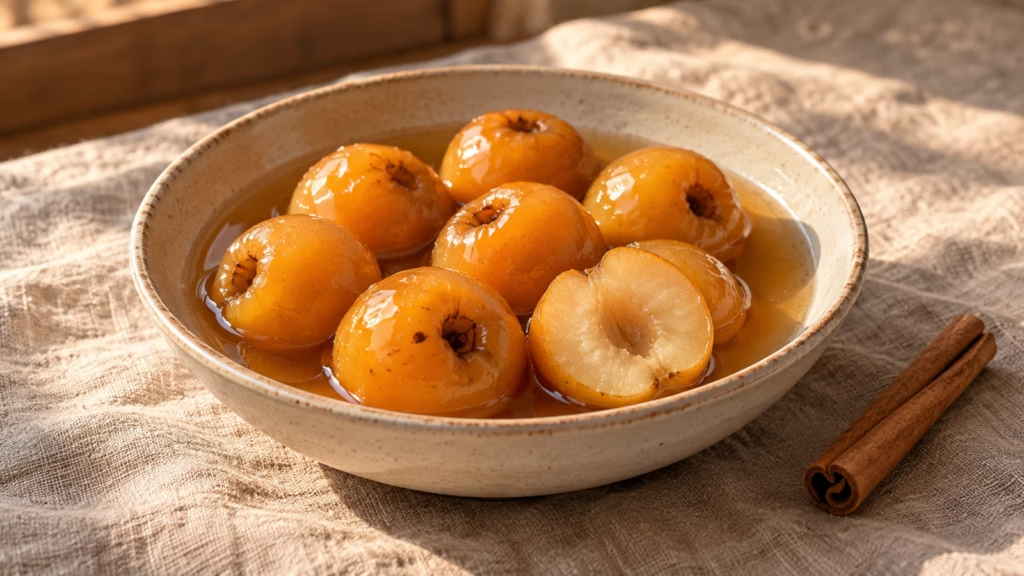
A bowl of small yellow tejocotes can look ready to tumble straight into a pot, but their skins and hard seeds deserve a little attention first. Dulce de tejocote turns the prepared fruit into a tender, spoonable dessert in cinnamon syrup. The goal here is fruit that keeps some shape, with syrup you can pour, so the peeling stage and a gentle final simmer matter more than a dramatic reduction.
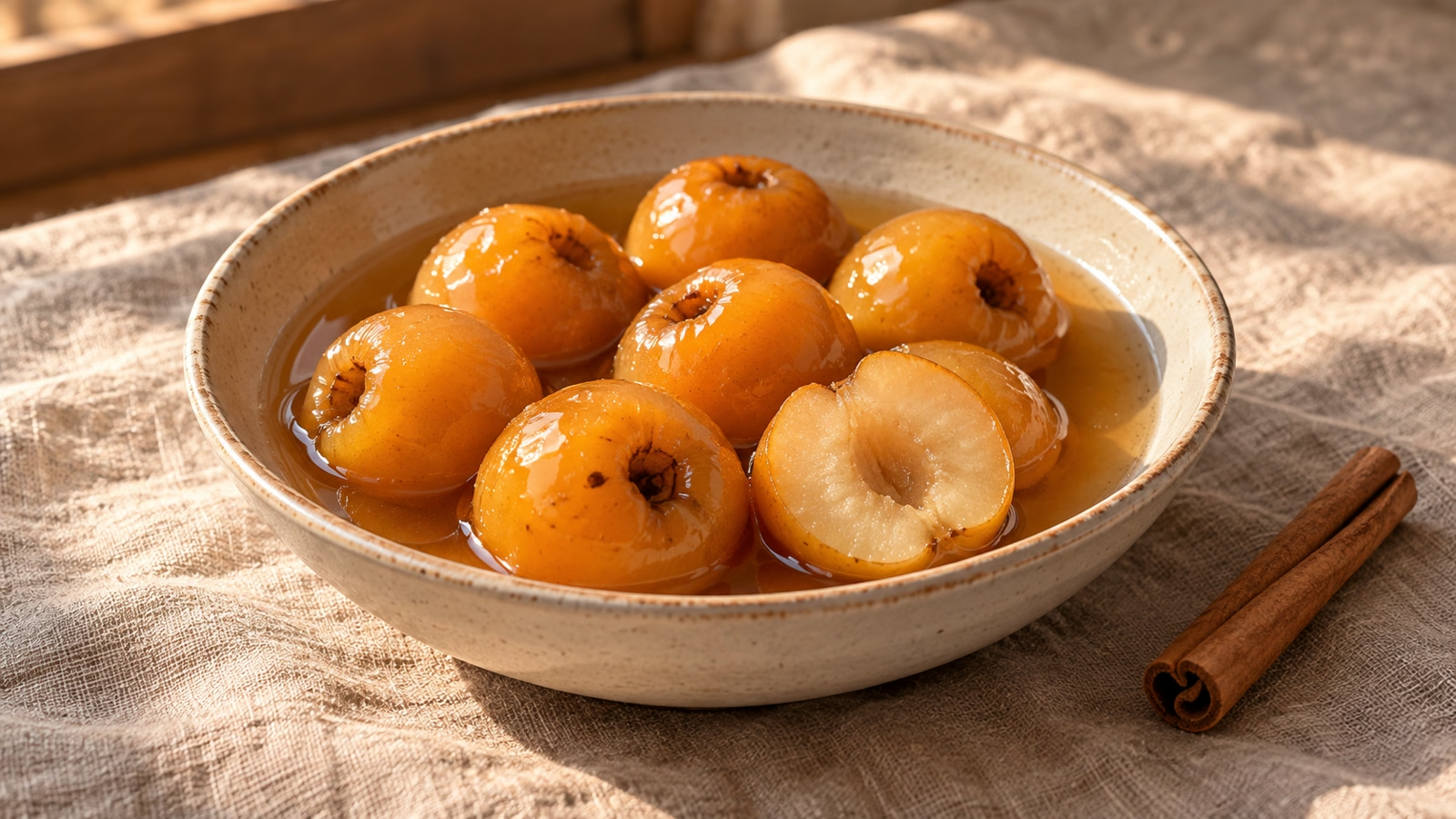
Remove the hard seeds before serving, and let the fruit’s tenderness decide when the simmer is finished.
What to expect from dulce de tejocote
Tejocote is Mexican hawthorn fruit, and this dessert gives its firm flesh time to soften in sweet liquid. Mexico’s agriculture ministry shares a traditional preparation from a Matlatzinca recipe collection. This version uses a lighter sugar-and-water mixture and a small home-kitchen batch rather than reproducing that formula unchanged.
- The fruit remains the center. Expect tender pieces in syrup, not jam or a smooth fruit paste. Some pieces may split naturally as they soften.
- Cinnamon seasons the liquid. A short stick adds aroma without needing ground spice scattered through every spoonful. Remove it before portioning.
- White sugar keeps the syrup straightforward. Piloncillo would bring a different color and flavor. The recipe and nutrition estimate below are specifically for granulated sugar.
- This is a refrigerated dessert. Sugar in a saucepan does not establish a safe shelf-stable preserve. The directions are for cooking and chilling, not canning.
I’d keep the first serving simple: fruit, a little syrup and a spoon. That makes it easier to decide whether you want more cinnamon or a different sweetness level in a future batch.
Buy enough fruit for the trimmed weight
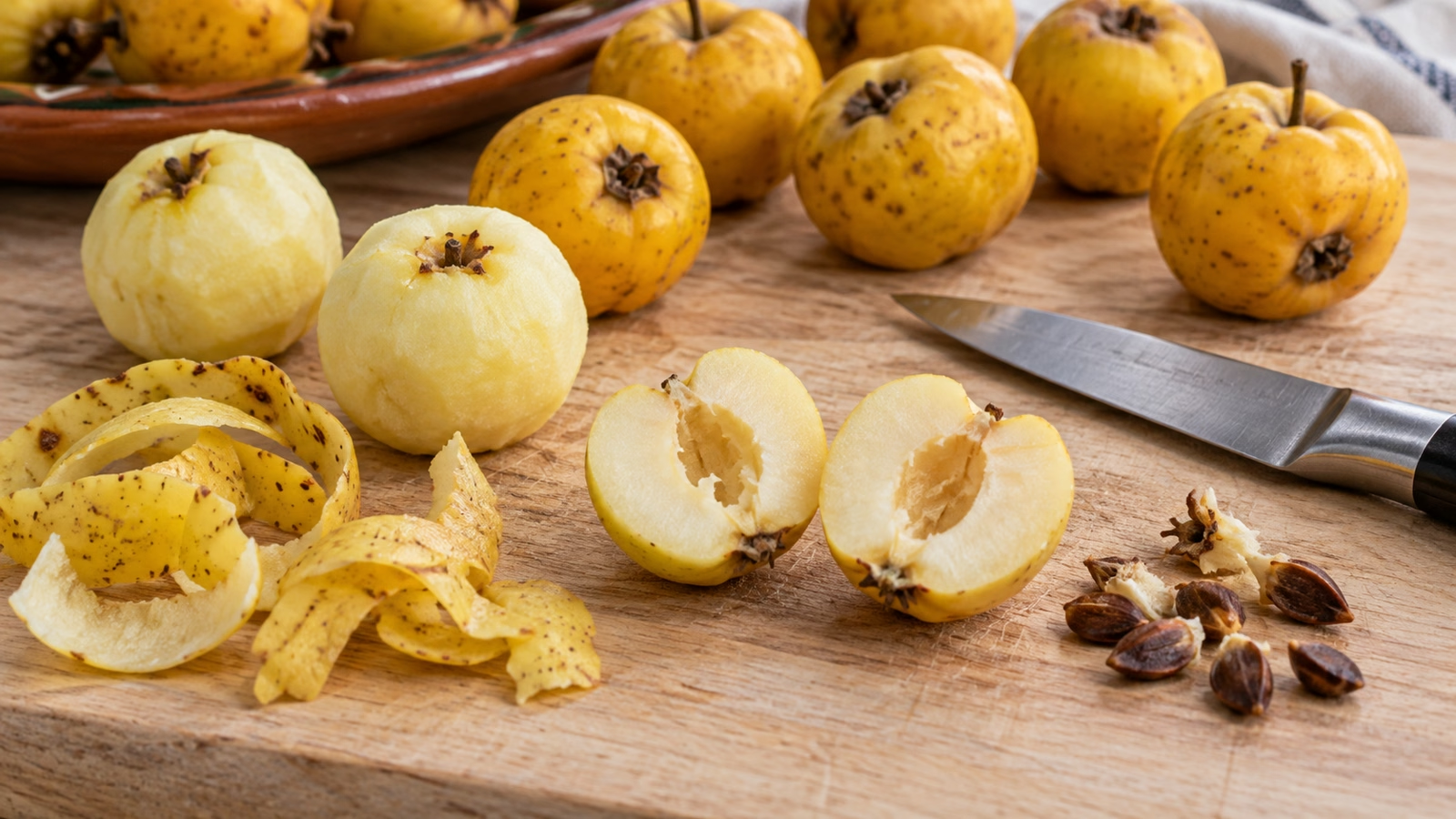
The recipe needs 800 grams of edible tejocote after peeling and removing the seeds. Start with approximately 1 kilogram, a little over 2 pounds, of whole fruit, but remember that trimming losses vary. A kitchen scale makes this much clearer than counting fruits of different sizes.
- Choose sound fruit. Skip moldy, badly damaged or deteriorating pieces. Wash the whole fruit before handling it on the cutting board.
- Check the package if buying frozen. Follow its thawing and cooking directions, and check whether the fruit is already peeled or seeded. Adjust preparation to its actual condition.
- Do not substitute canned fruit in syrup directly. It is already cooked and sweetened, so the sugar level and simmering time would need a different starting point.
- Prefer halves when removing seeds is awkward. An attractive whole shape is optional. Easily finding and removing every hard seed is more useful than preserving a perfect little sphere.
For cinnamon, our guide to Ceylon cinnamon and other types explains what the label can tell you. Whichever stick you use, keep the amount modest so it complements the fruit.
Peel first, then watch the simmer
Briefly cooking whole tejocotes in water helps loosen the skin. Start checking a piece rather than assuming the entire batch needs the same time. Once cool enough to handle, peel and seed them, then weigh the prepared fruit before moving on to the syrup.
- Work with manageable fruit. Let it cool enough to hold safely. Pull away the loosened skin, remove the stems and open the fruit as needed to reach the hard seeds.
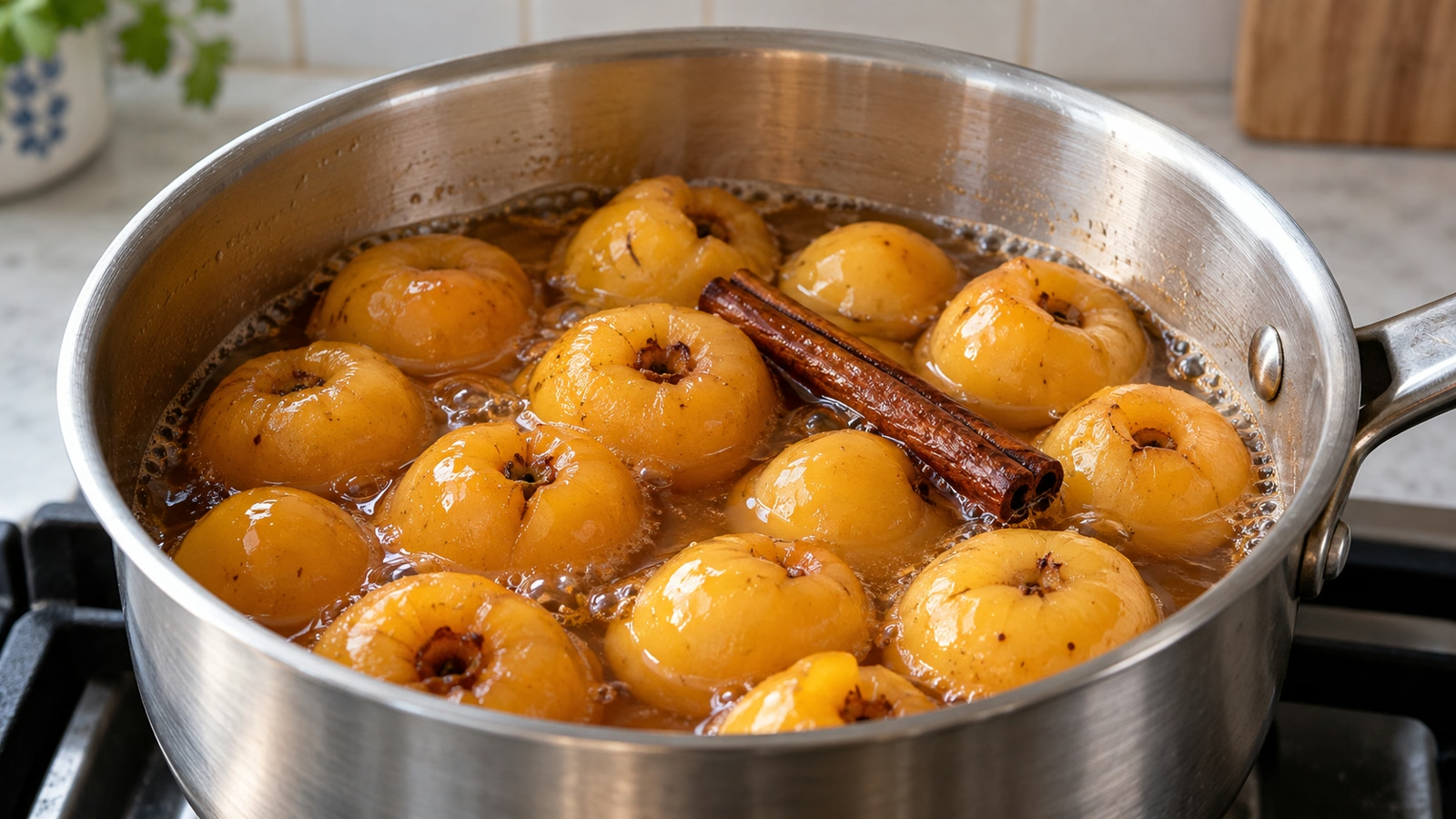
- Dissolve the sugar before adding fruit. Stir the syrup while it heats, then reduce to a gentle simmer. You want steady cooking rather than fruit bouncing around the pan.
- Test the largest piece. It should yield when pierced but still hold together. Smaller or riper fruit may finish sooner; lift it out if necessary.
- Reduce syrup separately if desired. Once the fruit is tender, remove it with a slotted spoon before concentrating the liquid. Return it afterward, off the vigorous heat.
I’d rather serve a slightly lighter syrup than sacrifice the fruit to get it thicker. If the pan becomes dry while the flesh is still firm, add a little hot water and keep the heat gentle.
Dulce de Tejocote Recipe

Ingredients
- 800 g prepared tejocotes peeled and seeded weight; start with about 1 kg or 2.2 lb whole fruit
- 200 g granulated sugar about 1 cup
- 500 ml water for syrup, plus more for blanching
- 1 stick cinnamon about 2 inches or 5 cm; remove before serving
Equipment
- 1 Saucepan
- 1 Paring knife
- 1 Slotted spoon
- 1 Kitchen scale
Instructions
- Wash the whole tejocotes. Cover with water in a saucepan, bring to a gentle boil and cook for approximately 5 to 8 minutes, until the skins loosen. Test a piece; ripeness and size affect timing.
- Drain and cool until safe to handle. Peel, remove the stems and all hard seeds, opening the fruit into halves or using a side cut as needed. Weigh 800 g of prepared fruit.
- Heat the 500 ml water, sugar and cinnamon in a saucepan, stirring until the sugar dissolves. Simmer gently for about 5 minutes.
- Add the prepared fruit and simmer gently for approximately 5 to 10 minutes, until easily pierced but not falling apart. Swirl the pan instead of stirring roughly. Add a little hot water if necessary.
- If the fruit is tender before the syrup reaches the desired consistency, lift it out with a slotted spoon and briefly reduce the liquid separately. Return the fruit, switch off the heat and remove the cinnamon. Divide fruit and syrup among eight servings.
Nutrition
Notes
Tried this recipe?
Let us know how it turned out!Portion, chill and enjoy
Divide the fruit and syrup among eight small bowls. Serve warm, after the heat has eased, or refrigerate for a chilled dessert. A spoonful of plain yogurt can add a tangy contrast, but it is an optional addition rather than part of the recipe or nutrition calculation.
- For an even serving: share the fruit first, then spoon syrup across the bowls. This is easier than trying to judge portions by the number of fruits.
- For the refrigerator: transfer leftovers to shallow covered containers and refrigerate within two hours, or one hour if the surroundings exceed 90°F (32°C). Keep at 40°F (4°C) or colder.
- For planning: use refrigerated leftovers within three to four days under USDA guidance. Label the container with the cooking date so a sweet smell does not become your storage test.
- For nutrition: the estimate includes all the syrup. Reliable values are not available for every nutrient in the matched tejocote data, so absent fields should not be read as zero.
Sources
- Agricultura: traditional dulce de tejocote
- INCMNSZ: food composition tables
- USDA: handling leftovers safely
Hi, I’m Laura, the voice behind Tastiva. I’ve always believed that eating well should feel enjoyable, comforting, and realistic—not like another complicated rule to follow. I love creating recipes that fit into everyday life, sharing simple nutrition ideas, and finding small ways to make meals feel a little better without losing the pleasure of good food.