
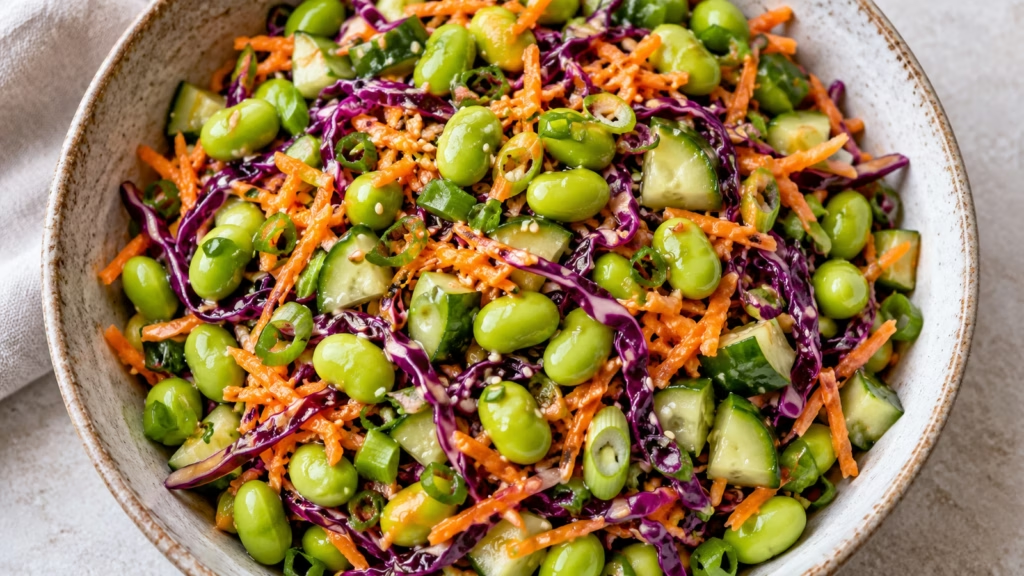
A chopped salad can look crisp on the cutting board and turn surprisingly wet in its lunch container. This edamame crunch salad starts with cooked, cooled shelled edamame, thin cabbage ribbons, carrot, and cucumber, then adds a light sesame-ginger dressing. Drain and dry the ingredients before dressing them, especially when lunch is meant for later.
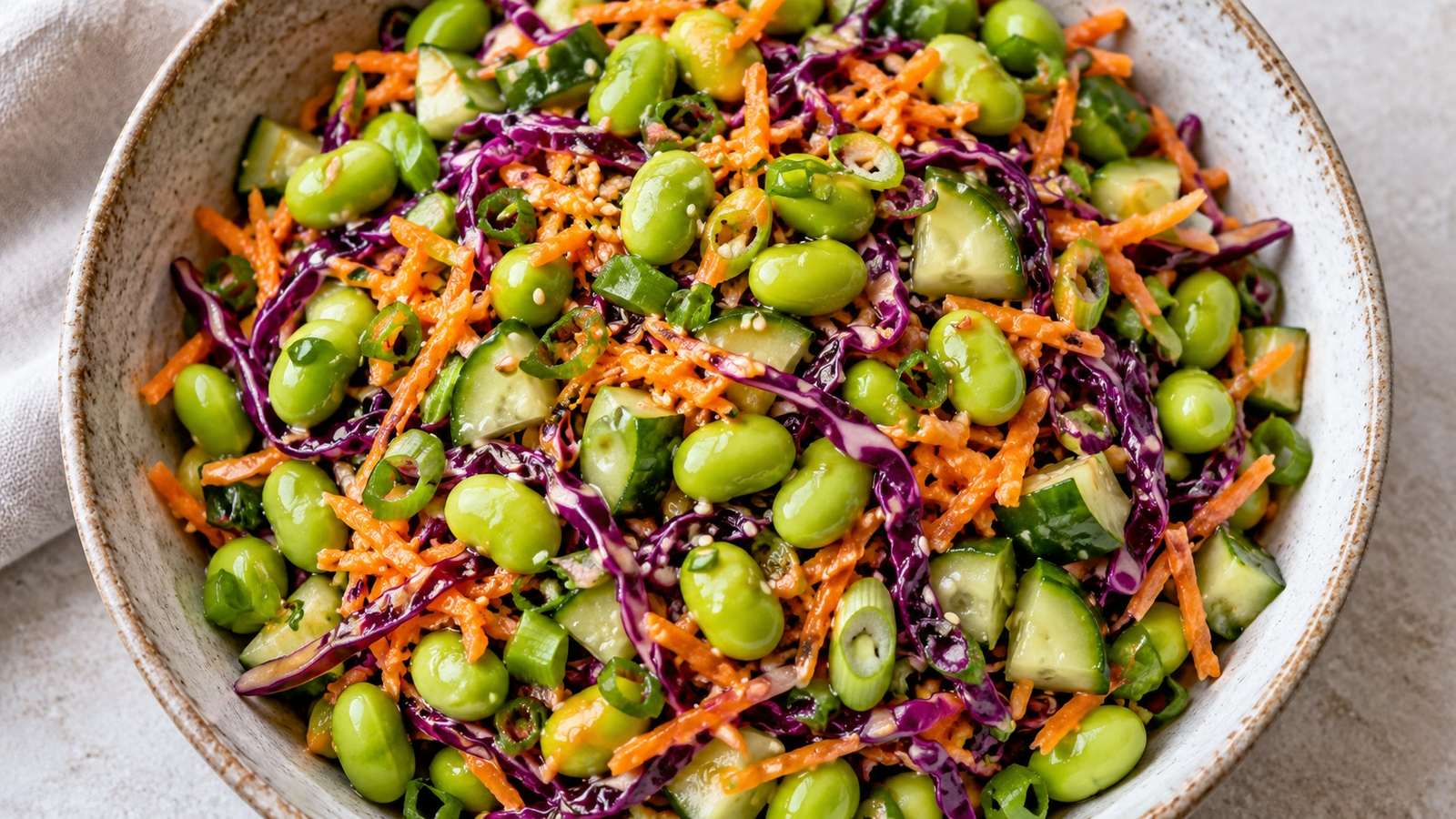
Build the crunch before adding the dressing: cool the beans, dry the vegetables, and make the pieces easy to gather on a fork.
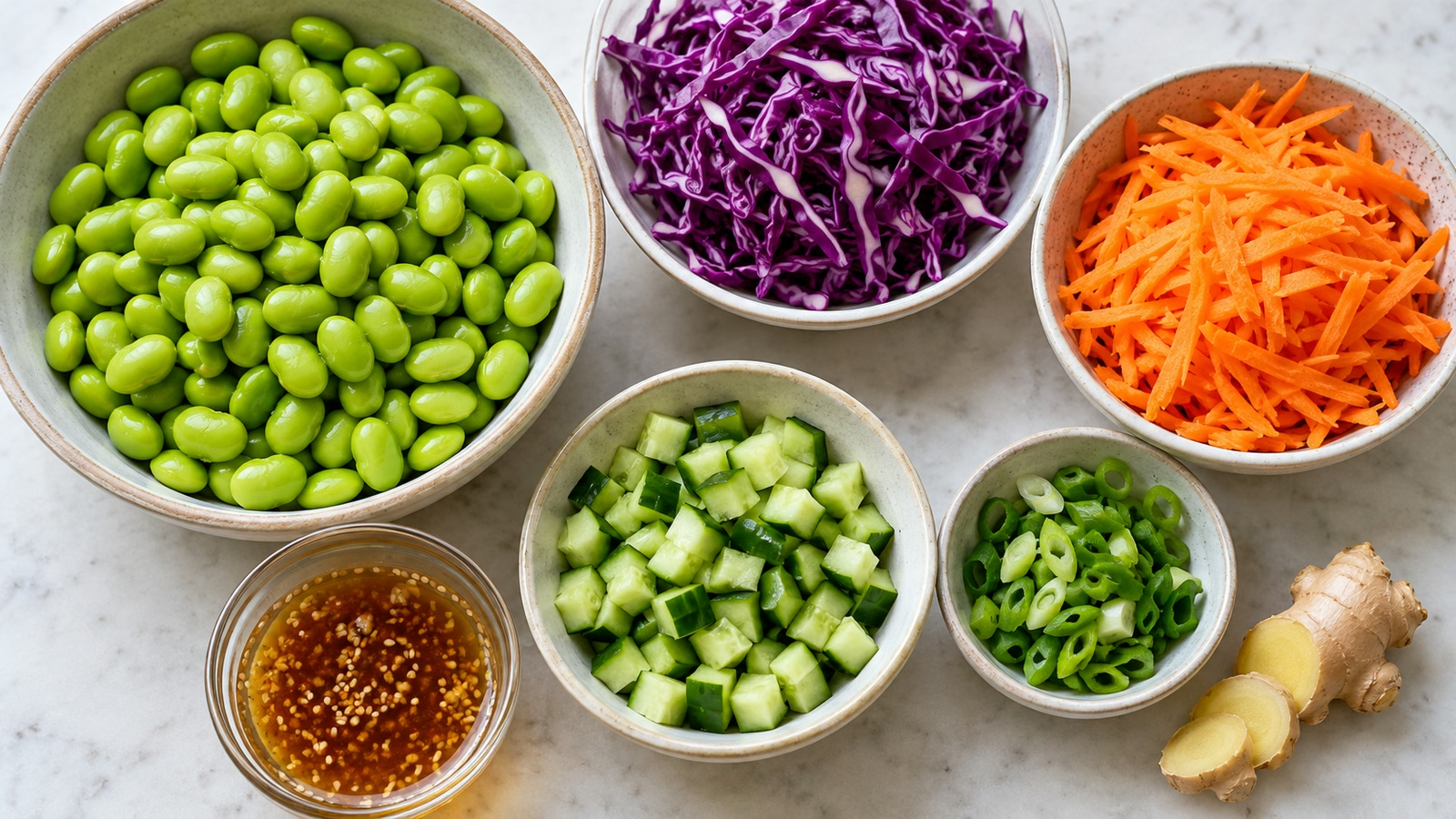
Start with shelled edamame and a manageable cut
Edamame are young green soybeans. Look for shelled beans in the freezer section; a bag of pods includes parts you will discard, so it is not the same amount of edible food. Follow the package’s cooking instructions rather than assuming frozen beans are ready to eat after thawing.
- Edamame: Cook without added salt when possible, drain, and cool promptly. The recipe uses 300 grams of cooked, shelled beans.
- Cabbage: Slice thinly and shorten long ribbons. A forkful should gather beans and vegetables together instead of dragging half the bowl along.
- Carrot: Coarsely grate or cut into fine matchsticks. Thick coins are harder to mix through this salad.
- Cucumber: Scoop out a watery seed center when needed, cut into small pieces, and pat dry. Dressing will not hide extra water.
I would spend prep time on consistent pieces rather than decorative slicing. Tastiva’s soybean guide explains how edamame differs from mature beans and tofu. Here, whole green beans supply a tender contrast to the raw cabbage; they do not need to be crisp themselves.
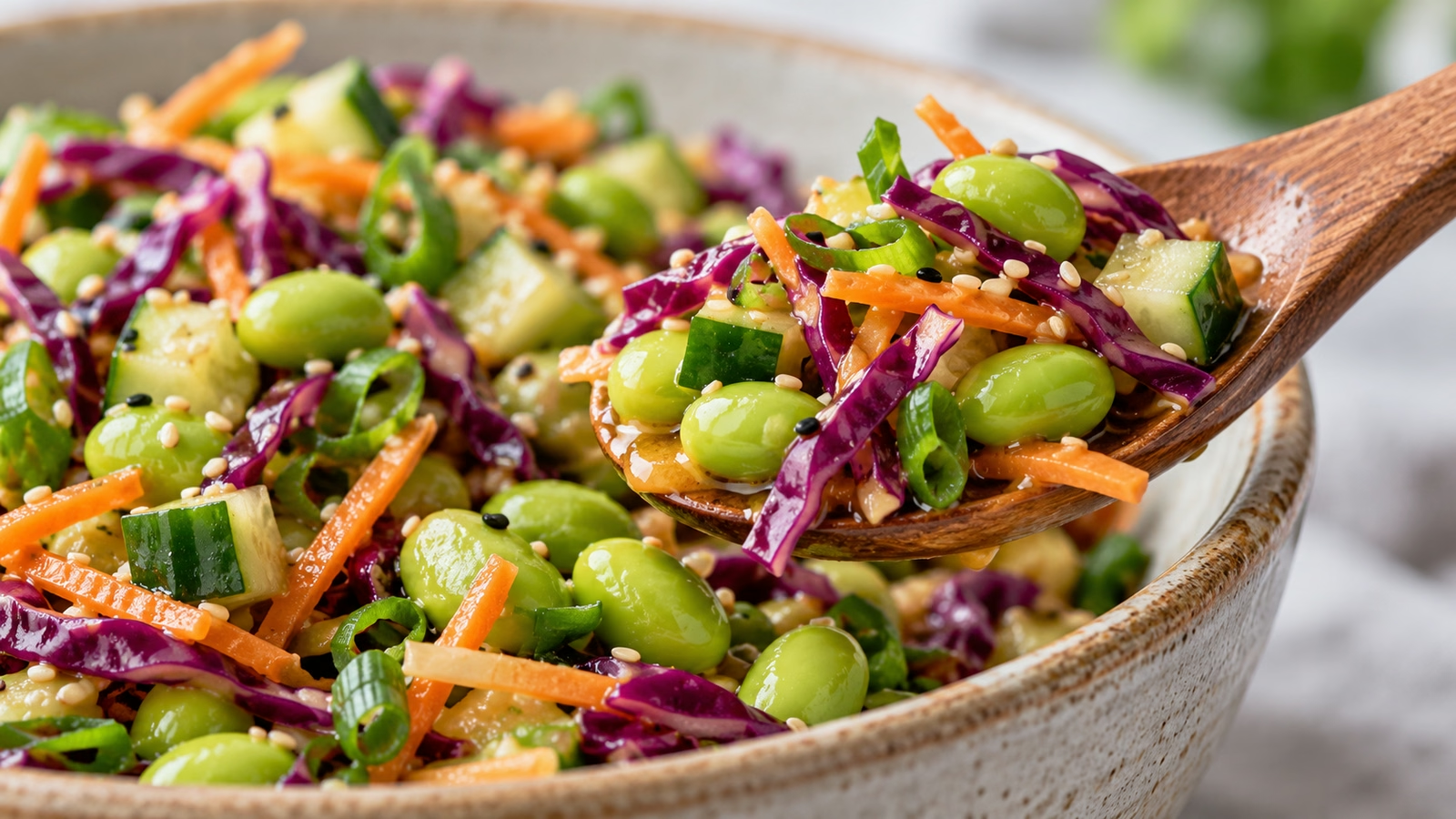
Dress edamame crunch salad with a light hand
Rice vinegar brings acidity, reduced-sodium soy sauce adds savory saltiness, and fresh ginger gives the dressing bite. Toasted sesame oil has concentrated flavor, so a small measured amount shares the work with neutral oil. This thin dressing coats chopped vegetables rather than forming a creamy tahini sauce.
- Choose unseasoned vinegar. Seasoned rice vinegar often contains sugar and salt, changing the balance and nutrition estimate.
- Grate ginger finely. Large fibrous pieces are distracting. Scrape the grated ginger and its juice into the bowl.
- Whisk before adding. Oil and vinegar separate as they stand; a quick whisk redistributes them.
- Taste a dressed forkful. Dressing alone can seem sharper than it does with beans and vegetables. Adjust after a small sample is combined.
I prefer enough dressing to reach the cabbage without leaving a lake beneath it. If cucumber releases liquid after standing, use a slotted spoon rather than pouring everything into the lunch container. The vegetables have not requested a swimming lesson.
Make substitutions by texture and ingredient role
The recipe contains soy and sesame; conventional soy sauce usually also contains wheat. Establish those facts before serving someone with an allergy. A gluten-free version requires verified gluten-free soy sauce or tamari, labels checked for every ingredient, and appropriate cross-contact precautions.
- Green cabbage: Use the same trimmed weight instead of red. The color changes, while fine-cut crunch still suits the salad.
- Packaged slaw mix: Plain cabbage-and-carrot mix can replace those vegetables by combined weight. Avoid a kit already containing dressing; its proportions differ.
- No cucumber: Small bell pepper pieces supply crunch with less watery flesh. Flavor and nutrition will change.
- Sesame-free variation: Omit sesame oil and seeds and use additional neutral oil. This changes the flavor and does not address a soy allergy.
- Extra ingredients: Cooked grains or noodles make a larger, more substantial bowl and need their own cooling and storage plan.
Do not replace shelled edamame with dried mature soybeans and follow the same timing; they need different preparation. Canned chickpeas offer another variation, but their firmer bite and different nutrient profile make the result a different salad.
Pack the parts to keep lunch lively
Serve four side portions, or pair a portion with a grain or another dish for lunch. I would pack dressing separately and combine it close to eating. Undressed vegetables usually retain clearer crunch, although freshly cut cucumber can still release water.
- Cool safely: Spread cooked edamame in a shallow container and refrigerate promptly. Do not wait on the counter until the beans seem completely cold.
- Keep it cold: Store at 40°F (4°C) or below. Use an insulated bag with cold packs when no refrigerator is available.
- Keep the window short: Use within 3–4 days as a conservative leftover plan. Vegetables may soften sooner; texture is separate from safety.
- Time at the table: Refrigerate within 2 hours, or 1 hour above 90°F (32°C).
- Avoid freezing the finished salad: Raw cucumber is likely to lose its intended texture when frozen and thawed.
The federal chilling guidance applies even when a dish is served cold. Vinegar is not proof of shelf stability. Pack the portion you need and keep the remainder covered and refrigerated, rather than repeatedly warming the whole batch.
Edamame Crunch Salad Recipe

Ingredients
- 2 cups cooked shelled edamame 300 g; start with frozen shelled beans and follow package cooking instructions
- 3 cups thinly sliced red cabbage 210 g trimmed
- 1 cup grated carrot 100 g
- 1 cup diced cucumber 150 g; watery seed center removed if needed
- 2 scallions 30 g, thinly sliced
- 1 teaspoon sesame seeds 3 g
- 2 tablespoons unseasoned rice vinegar 30 ml; Kikkoman plain rice vinegar models the nutrition estimate; an equivalent unseasoned rice vinegar may be used
- 1 tablespoon reduced-sodium soy sauce 16 g
- 1 tablespoon canola oil 14 g
- 2 teaspoons toasted sesame oil 9 g
- 1 teaspoon pure maple syrup 7 g
- 2 teaspoons finely grated fresh ginger 4 g
Equipment
- Saucepan
- Colander
- Cutting board and knife
- Box grater or fine grater
- large mixing bowl
- Small bowl and whisk
- Kitchen scale
Instructions
- Cook frozen shelled edamame according to its package directions, without added salt when possible. The cook-time estimate is 5 minutes; use the actual package time. Drain thoroughly.
- Spread the cooked beans in a shallow container and refrigerate promptly to cool. Allow about 10 minutes of additional cooling time as a planning estimate; larger or warmer batches may need longer. Measure 300 g cooked beans for the salad.
- While the beans cool, wash and dry the raw vegetables. Thinly slice and shorten the cabbage ribbons, grate the carrot, dice cucumber, and slice scallions. Pat wet cucumber dry.
- Whisk rice vinegar, reduced-sodium soy sauce, canola oil, toasted sesame oil, maple syrup, and grated ginger in a small bowl.
- Combine cooled edamame, cabbage, carrot, cucumber, and scallions in a large bowl. Whisk the dressing again, add it, and toss until coated. Sprinkle in sesame seeds and mix gently.
- Divide into 4 equal side servings and serve, or refrigerate promptly. For advance packing, keep the dressing separate and combine close to eating.
Nutrition
Notes
Tried this recipe?
Let us know how it turned out!Sources
- FoodSafety.gov: Four Steps to Food Safety
- FoodSafety.gov: Cold Food Storage Chart
- FDA: Food Allergies
- USDA FoodData Central: ingredient nutrient data
Hi, I’m Laura, the voice behind Tastiva. I’ve always believed that eating well should feel enjoyable, comforting, and realistic—not like another complicated rule to follow. I love creating recipes that fit into everyday life, sharing simple nutrition ideas, and finding small ways to make meals feel a little better without losing the pleasure of good food.