
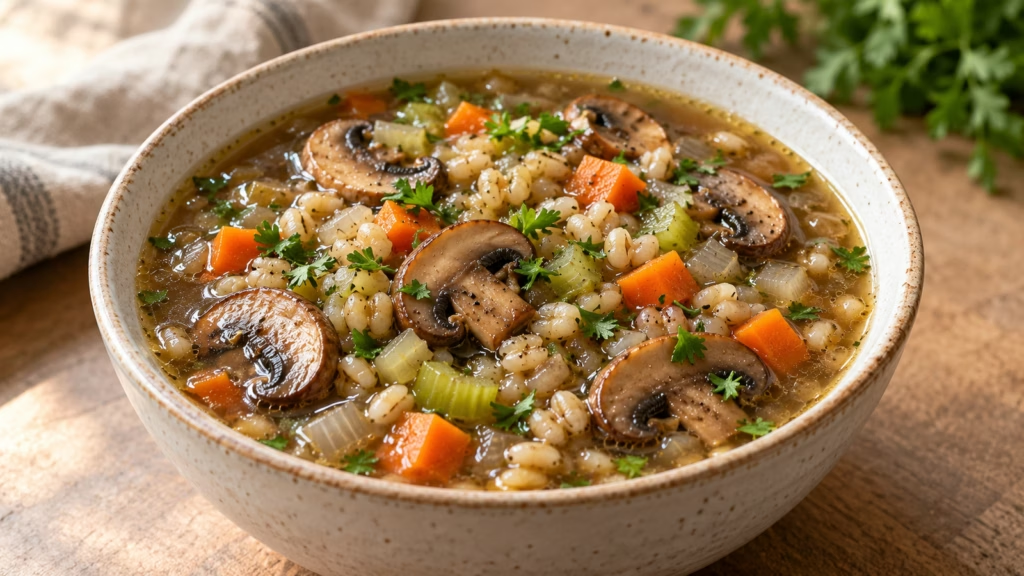
Mushrooms can fill a soup pot with liquid before they develop much color; for this mushroom barley soup, give them the pan first: brown them in manageable batches, then add the vegetables, pearl barley, and broth. You get a meatless, dairy-free bowl with distinct mushroom slices and chewy grains, rather than a pot that depends on cream for its body.
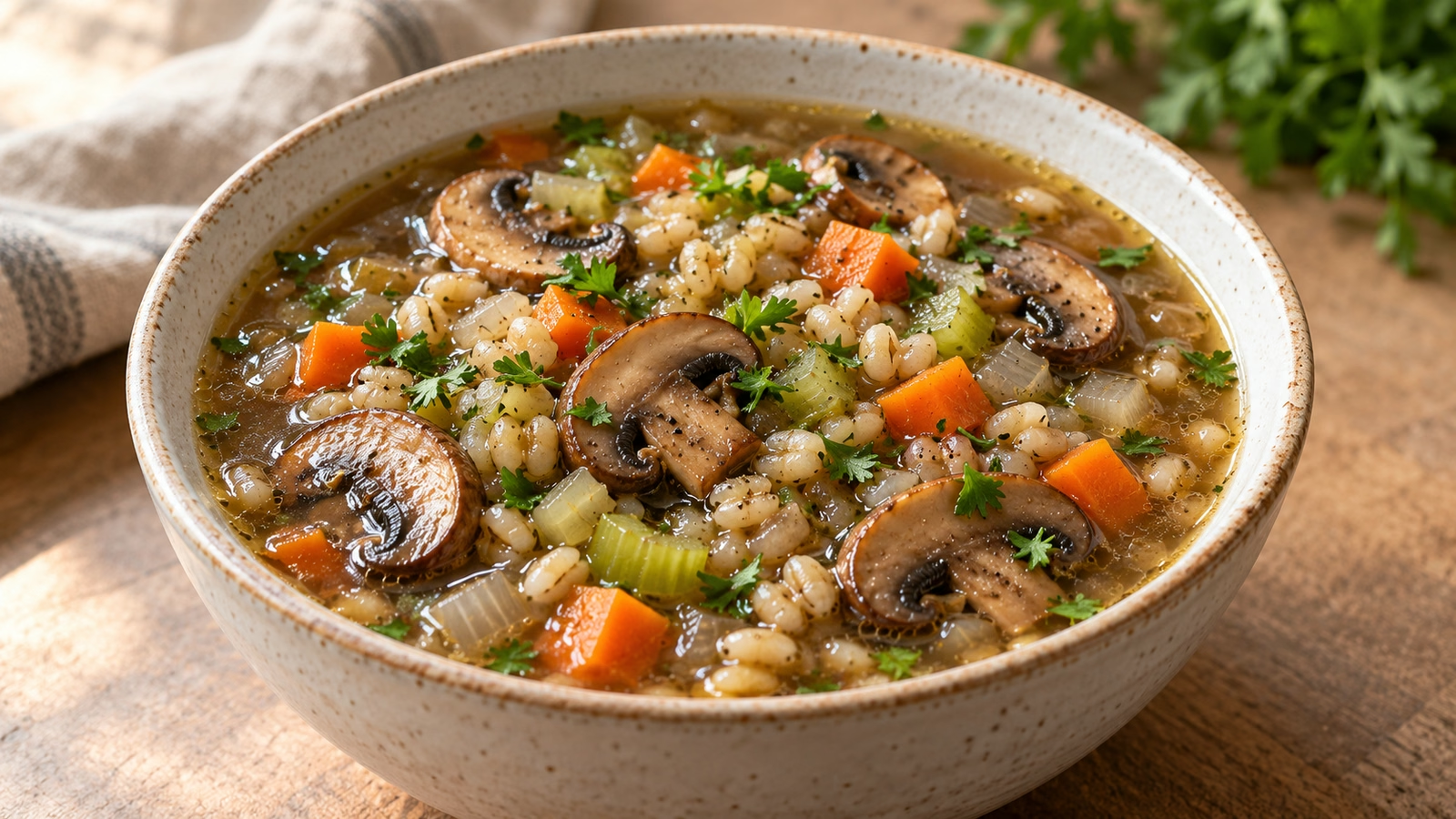
Give the mushrooms room to brown, and give the barley enough broth to stay a soup.
Choose the barley and mushrooms deliberately
Regular pearl barley is the starting point here, not quick barley and not hulled barley. The Whole Grains Council explains that pearling removes some or all of the bran and speeds cooking. Pearl barley is not a whole grain, although it still contains fiber. I’d choose it for this soup because the vegetables and grain can share a practical simmer.
- Mushrooms: Cremini give the bowl a brown, earthy base. White button mushrooms also work; their flavor is milder. Slice them evenly, keeping tender stems and trimming dry ends.
- Aromatics: Onion, carrot, and celery bring a sweet, savory background. Small pieces soften while the barley cooks.
- Broth: Choose a vegetable broth you like and read its sodium label. A deeply salted broth can make later seasoning difficult to control.
- Finish: Thyme and a little parsley keep the seasoning familiar; lemon juice goes in at the end, after the broth has concentrated.
Use cultivated mushrooms from a reliable food source. If cleaning feels like the slow part, Tastiva’s guide to cleaning mushrooms before cooking covers rinsing, wiping, and drying. The aim is clean, dry surfaces before they reach the pot.
Brown first, then build the broth
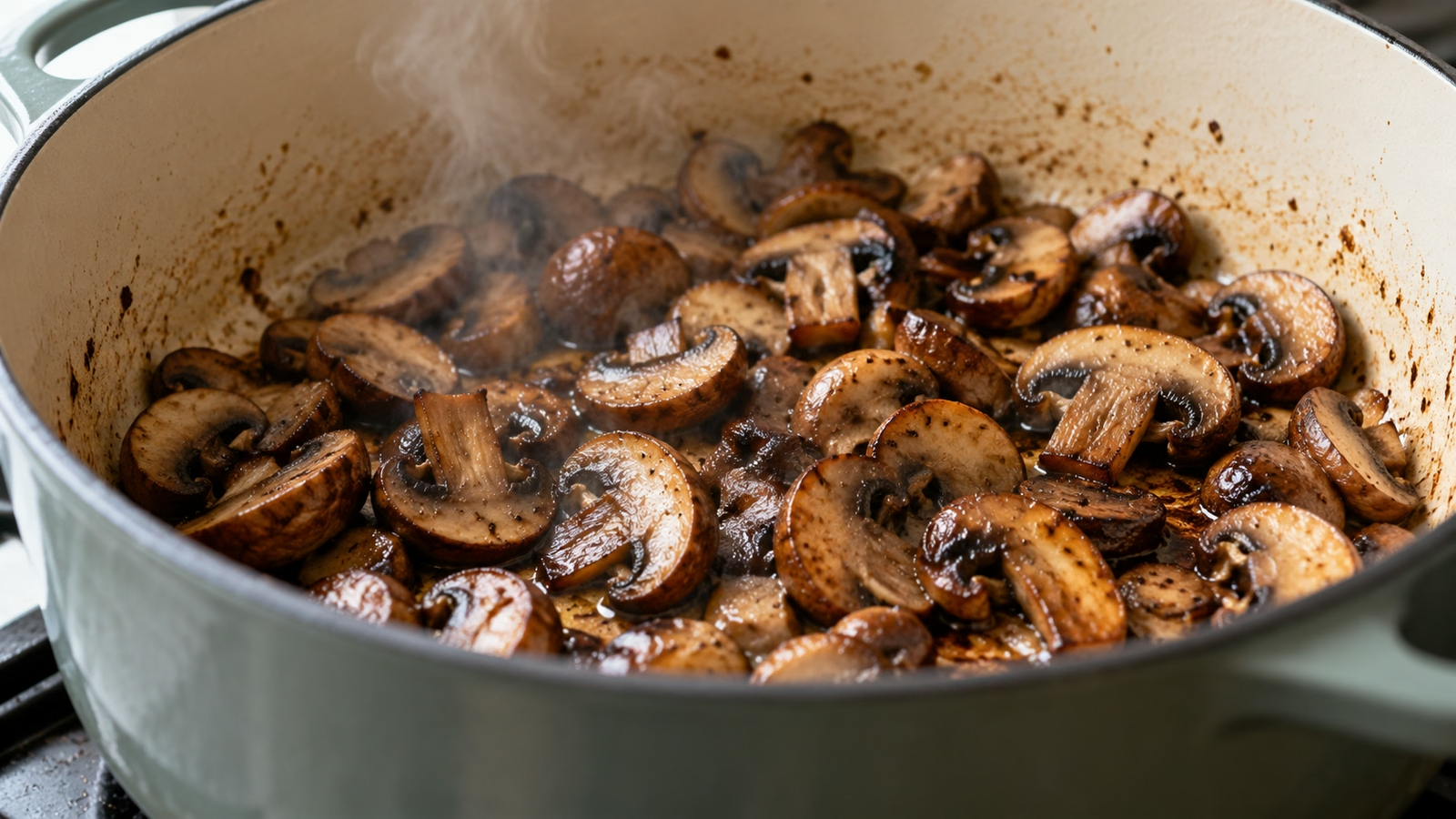
A wide, heavy pot makes this stage easier. Mushrooms release moisture as they heat; let that liquid evaporate, then watch for scattered brown surfaces. Stirring constantly or crowding every slice into one wet pile works against that goal. I’d spend a few extra minutes here before asking the broth to do all the flavor work.
- Work in batches: Divide the mushrooms so the bottom layer has room. The second batch can wait in a bowl while the first cooks.
- Adjust the heat: Use medium-high heat for browning, but lower it if the pot’s browned bits start turning black. Brown residue adds flavor; burnt residue makes the soup bitter.
- Delay the garlic: Add it after the diced vegetables soften. A brief stir is enough before liquid goes in.
- Loosen the bottom: Pour in a little of the measured broth and scrape gently with a wooden spoon. Add the rest once the browned bits release.
The mushroom stage has visual cues as well as a clock: less pooled liquid, smaller slices, and brown edges. If your pot is narrower or the mushrooms are especially wet, it may take longer. The simmer can be quiet; this is soup, not a pot that needs to impersonate a geyser.
Keep the grains tender and the soup spoonable
Start checking the barley near the early end of the simmer range. A cooked grain should be tender through the center with some chew, not a hard chalky bite. Package directions vary, so use the texture as the final decision. Add a splash of hot water if the liquid gets low before the grain is ready.
- Too thick: Add hot water or broth a little at a time. Barley continues absorbing liquid while the soup stands.
- Still firm: Keep simmering gently and check again; turning up the heat does not make the center instantly tender.
- Flat flavor: Taste for salt first, then add the measured lemon juice. Adjust with small additions rather than pouring in more acid immediately.
- A different barley: Cook hulled barley separately according to its package, then fold cooked grains into the finished soup. Do not assume the pearl-barley timing applies.
- Planning several lunches: For the most control over texture, cook the barley separately and add it to individual portions. That changes the one-pot method but keeps the stored broth looser.
Serve it now and handle leftovers promptly
Serve the soup as a generous first course or a lighter meal with a sandwich or a side of beans. Mushrooms and barley contribute texture, but this bowl is not meant to stand in for every protein-rich meal. Bread, cheese, and other additions change the nutrition estimate and the meal’s character.
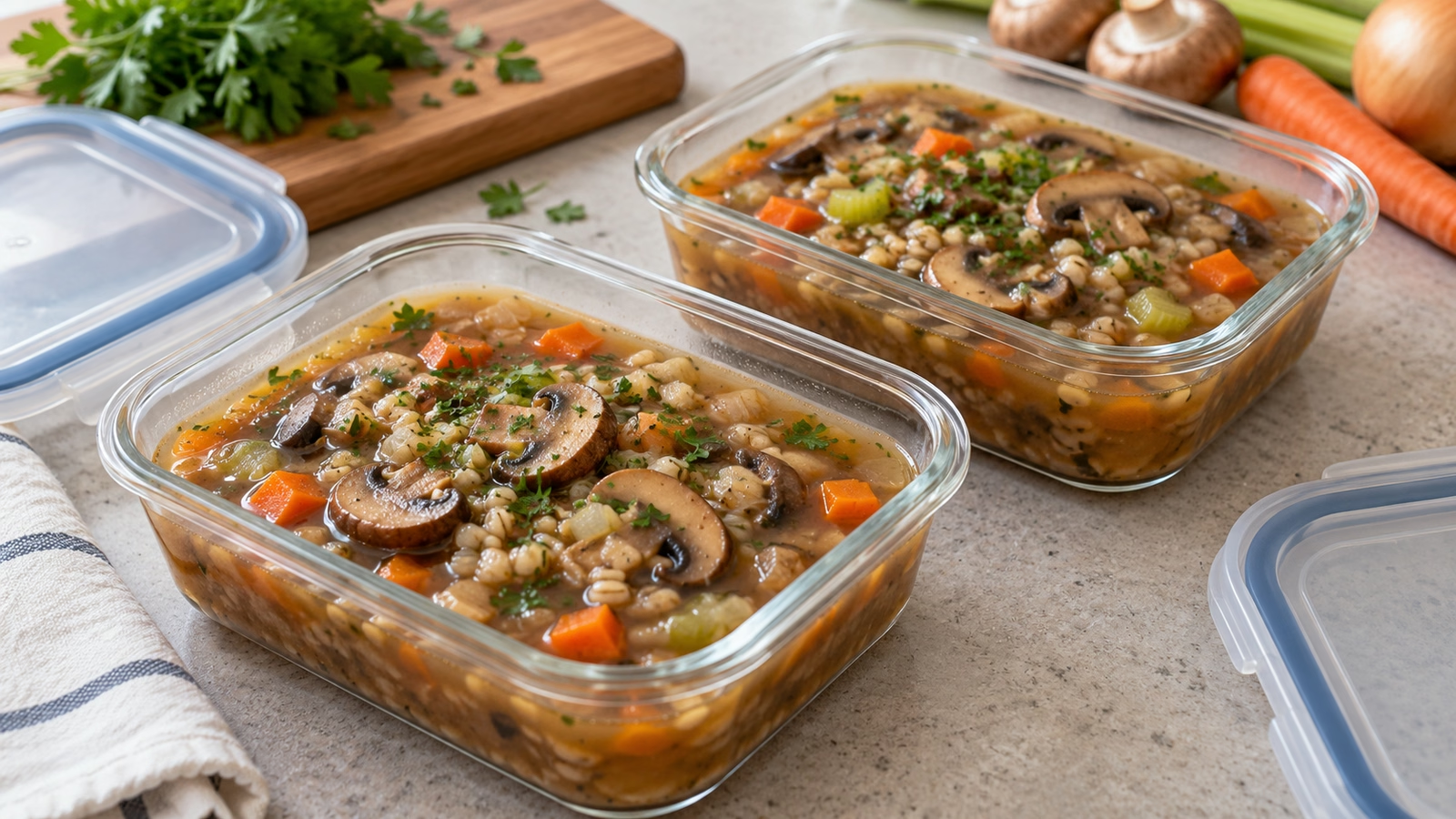
- Cool promptly: Divide leftovers into shallow containers and refrigerate within two hours, or within one hour when the air temperature exceeds 90°F (32°C). FoodSafety.gov explains the cooling and temperature limits.
- Refrigerate safely: Keep the refrigerator at 40°F (4°C) or below and use soup leftovers within 3–4 days, following the federal storage chart. These are handling limits, not a guarantee for soup left on the counter.
- Reheat: Heat leftovers to 165°F (74°C), stirring to distribute heat and adding water as needed. Use a food thermometer rather than assuming a warm edge means the middle is hot.
- Freeze: Portion promptly cooled soup into freezer containers with expansion room. Expect softer grains after thawing; freeze a portion while fresh rather than waiting until the end of its refrigerated life.
Barley contains gluten, including pearled barley. This recipe is therefore unsuitable for a gluten-free diet; rinsing does not change that. For a future meal with frozen mushrooms, the separate mushroom freezing guide explains why cooking them first helps preserve quality.
Mushroom Barley Soup Recipe

Ingredients
- 2 tablespoons olive oil 27 g
- 1 pound cremini mushrooms 454 g; cleaned, dried and sliced
- 1 medium yellow onion 150 g; diced
- 2 medium carrots 150 g; small dice
- 2 stalks celery 100 g; small dice
- 3 cloves garlic 9 g; minced
- 3/4 cup regular pearl barley 150 g; rinsed; not quick or hulled barley
- 6 cups vegetable broth 1.44 liters; generic ready-to-serve broth used for nutrition; brand sodium varies
- 1 teaspoon dried thyme 1 g
- 1/4 teaspoon black pepper 0.6 g
- 1 tablespoon lemon juice 15 g
- 2 tablespoons chopped parsley 8 g
Equipment
- Wide 5-quart heavy pot with lid
- Knife and cutting board
- wooden spoon
- fine-mesh strainer
- Measuring cups and spoons
- Food thermometer For reheating leftovers
Instructions
- Heat 1 tablespoon of the olive oil in a wide 5-quart heavy pot over medium-high heat. Add half the sliced mushrooms in a loose layer. Cook, stirring occasionally, for 6–8 minutes, allowing released liquid to evaporate and brown surfaces to develop. Transfer to a bowl. Repeat with the remaining tablespoon of oil and mushrooms.
- Lower the heat to medium. Add the onion, carrots, and celery to the pot. Cook for 6–8 minutes, stirring, until the onion softens. Add garlic, thyme, and pepper; stir for 30–60 seconds until fragrant. Lower the heat if the pot begins to scorch.
- Pour in about 1/2 cup of the measured broth and gently scrape the browned bits from the bottom. Add the remaining broth, rinsed regular pearl barley, and browned mushrooms.
- Bring to a boil, then reduce to a gentle simmer and partly cover. Cook for 35–45 minutes, stirring occasionally, until barley is tender through the center with a little chew. Follow the package if its barley needs longer. Add hot water a little at a time if liquid gets low.
- Remove from heat. Stir in the lemon juice and parsley. Taste before adding any optional extra salt. Divide the pot into six equal portions; add hot water if you prefer a thinner soup.
Nutrition
Notes
Tried this recipe?
Let us know how it turned out!Sources
- Whole Grains Council: types of barley and pearling
- FoodSafety.gov: prompt cooling and safe temperatures
- FoodSafety.gov: soup refrigerator and freezer storage
- USDA FoodData Central: ingredient nutrient data
Hi, I’m Laura, the voice behind Tastiva. I’ve always believed that eating well should feel enjoyable, comforting, and realistic—not like another complicated rule to follow. I love creating recipes that fit into everyday life, sharing simple nutrition ideas, and finding small ways to make meals feel a little better without losing the pleasure of good food.