
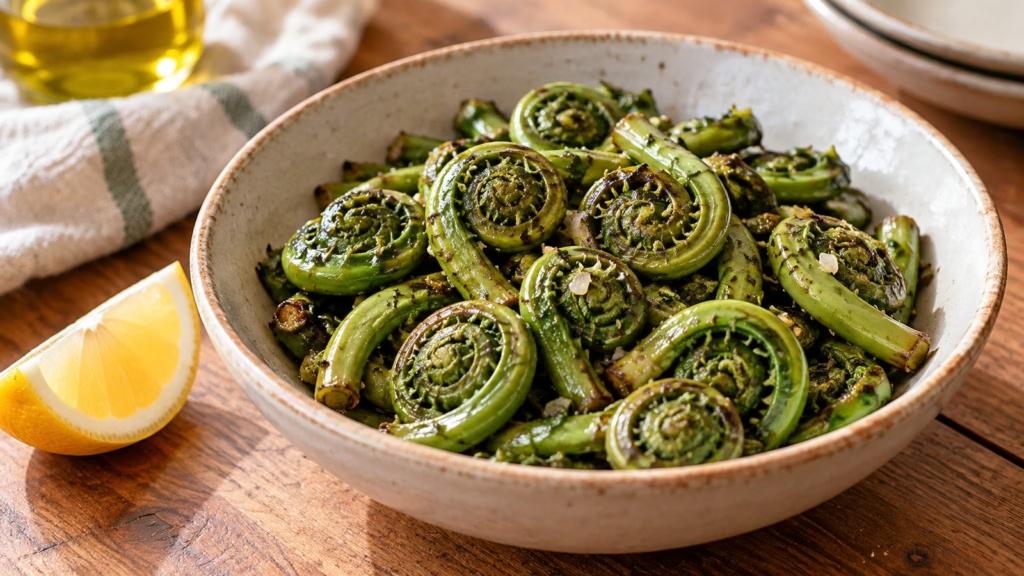
Those small green spirals in the spring produce display are easy to notice and less easy to place. In this guide, fiddlehead fern means the young, coiled shoots of the edible ostrich fern. They need more care than an ordinary salad green: raw or undercooked fiddleheads have caused foodborne illness. Clean them thoroughly, then boil for 15 minutes or steam for 10–12 minutes before eating or adding them to another dish.
The important step comes before the garlic, butter, or lemon: give fiddleheads their full boiling or steaming time. A quick toss in a skillet is not a substitute.
Start with a food source you can trust
“Fiddlehead” describes a young fern’s curled shape; it does not mean every fern with a spiral tip is edible. This article is a kitchen guide, not a wild-plant identification guide. Buy correctly identified ostrich fern fiddleheads from a knowledgeable food seller. If you want to forage, get hands-on help from a qualified local expert. Do not identify wild food from the photographs here, an image-search match, or a phone app.
- Expect a short fresh season. In Maine, it falls in spring and varies with location and weather; frozen fiddleheads may be available at other times.
- Ask before buying. A seller should be able to tell you what the product is and whether it is fresh, frozen, or already cooked. “Blanched” does not necessarily mean ready to eat.
- Plan the meal before the purchase. Set aside time for cleaning and a separate boiling or steaming stage, even if the final dish is a quick pasta or sauté.
Their flavor is often compared with asparagus, according to University of Maine Extension. That is a useful starting point for choosing accompaniments, rather than a promise that they taste exactly alike. I would keep the first serving simple so the vegetable is easy to appreciate: cooked fiddleheads, a little seasoning, and an ordinary dinner alongside.
Clean the coils and keep them cold
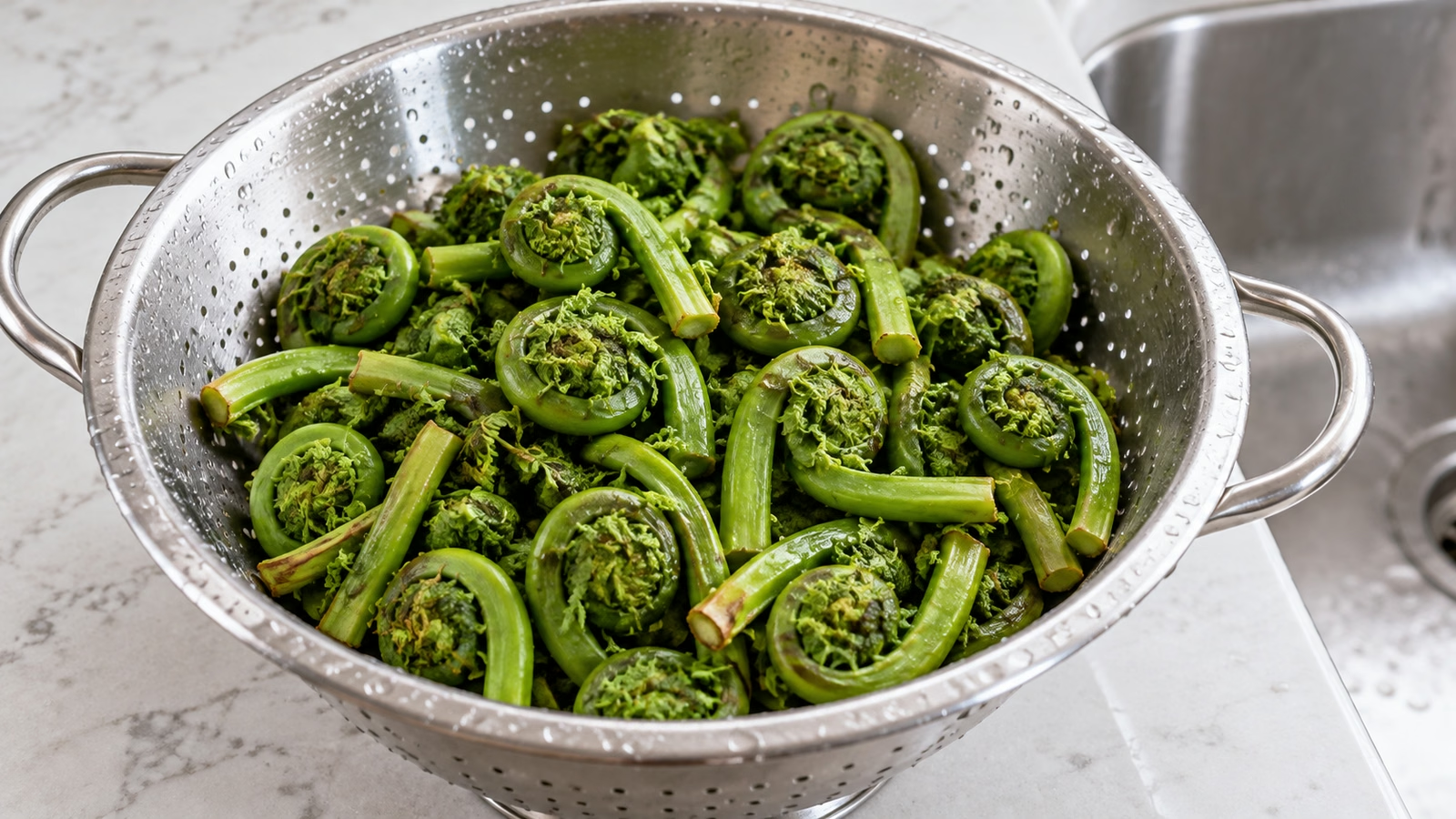
Remove the loose brown papery covering, then rinse and wash the fiddleheads in several changes of clean, cold drinking water. Work in a bowl or colander where you can see what is coming away. Clean-looking water is helpful for checking dirt removal, but washing alone does not make fiddleheads ready to eat. Keep the cleaning stage separate from the full cooking stage.
- Use clean equipment and drinking water. Water from a stream is not suitable for rinsing a food you intend to eat.
- Refrigerate promptly. University of Maine Extension recommends using or preserving refrigerated fiddleheads within a week or less for best quality. Buying a small amount for a planned meal is easier than racing through a large bag.
- Make room on the counter. Have a colander ready for draining and a clean serving dish nearby, so the cooked vegetable does not go back into the container that held it raw.
The images show kitchen preparation and serving contexts only; they should not be used to identify a fern species. That distinction matters even when a photographed coil looks familiar. If the identity of a batch is uncertain, do not cook it in the hope that heat will make an unknown plant suitable to eat.
Boil or steam before the final dish
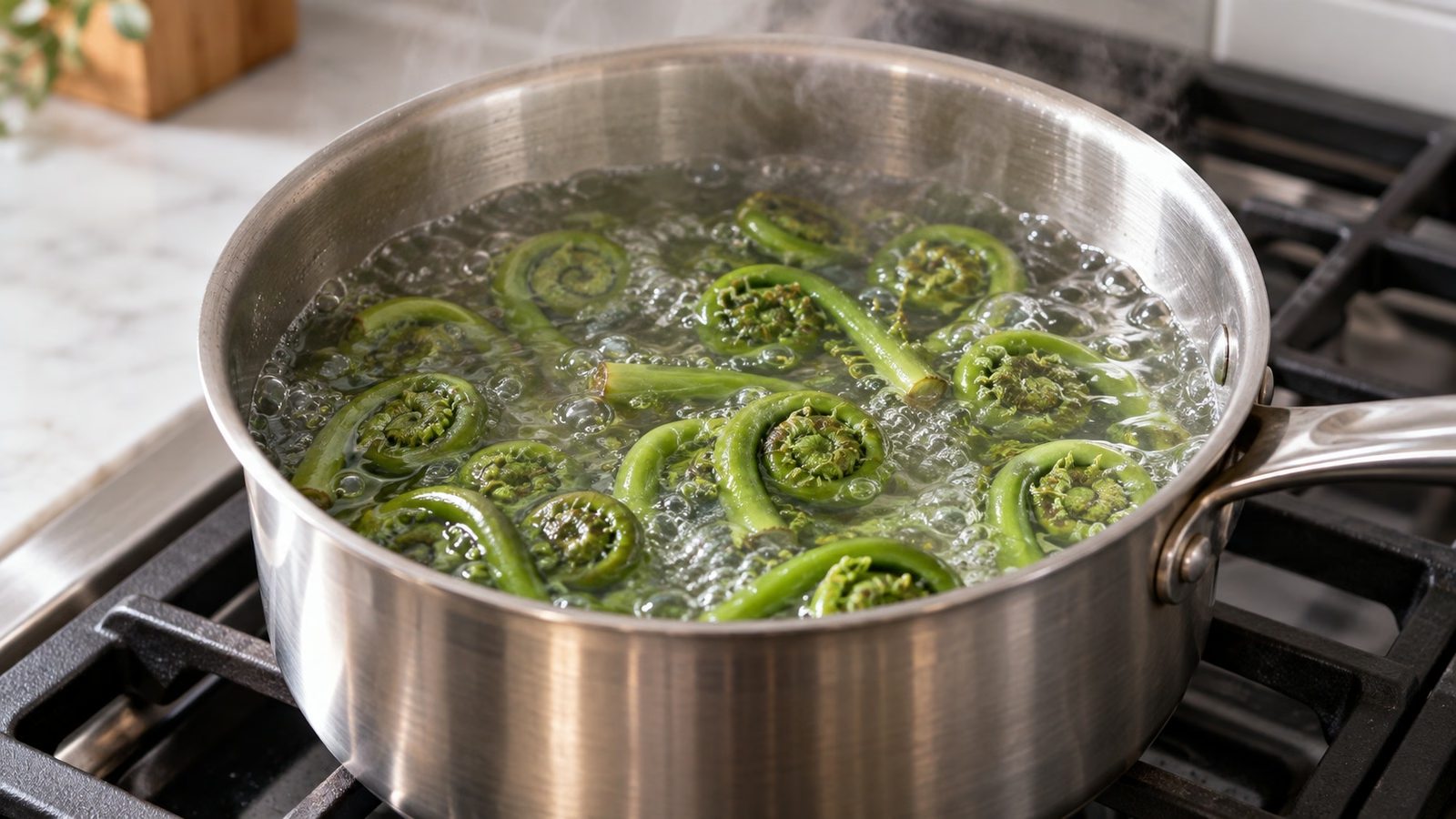
Follow the cooking method, not just the color or tenderness. University of Maine Extension advises small batches so water or steam can circulate. A densely packed pot may look efficient, but it makes thorough cooking harder. Set a timer rather than estimating how long the fiddleheads have been on the stove.
- Boil: bring enough water to cover the cleaned fiddleheads to a rolling boil. Add them, allow the water to return to a steady boil, then cook for 15 minutes.
- Steam: place cleaned fiddleheads in a steamer over boiling water, cover, and steam for 10–12 minutes. Keep enough space for steam to circulate.
- Drain: discard the boiling or steaming water, as Health Canada advises. Do not save it for stock or use it as the liquid for a sauce.
- Finish afterward: only after the full boil or steam should fiddleheads go into a skillet, baked dish, soup, or other preparation.
For a straightforward side, season the fully cooked fiddleheads with lemon, olive oil, or butter. For a larger meal, fold them into cooked pasta or serve beside rice and your usual protein. If a recipe jumps directly from raw fiddleheads to a brief sauté, stop and add the recommended preliminary cooking stage. Tenderness from a short fry is not evidence that the food-safety step is complete.
Freezing is useful, but blanching is not the final cook
If you have more than you will use fresh, follow the University of Maine’s freezing instructions: clean the fiddleheads, blanch in boiling water for two minutes, cool in an ice bath, drain, and pack in labeled freezer-safe containers. That brief blanch is a preservation step. The frozen fiddleheads still need the full boiling or steaming treatment before serving.
- Label the cooking status. Along with the date, write “blanched; must be fully cooked” so a future meal does not depend on remembering what happened months earlier.
- Do not improvise canning. Safe home pressure-canning process times have not been established for fiddleheads. For pickling, use a tested Extension recipe and follow its complete directions.
- Take symptoms seriously. If you develop vomiting, diarrhea, or abdominal cramps after eating fiddleheads, seek advice from a healthcare professional and tell them what you ate.
The goal is a small seasonal addition to dinner, not an elaborate project. Keep the sequence clear: known edible source, thorough cleaning, full cooking, then whatever simple finish you enjoy. If that does not fit tonight’s schedule, refrigerate a fresh batch promptly and choose another vegetable for the immediate meal.
For a visual demonstration, University of Maine Cooperative Extension educator Kathy Savoie covers safe cooking, freezing, and pickling in the video below. Use the linked Extension instructions alongside any preservation demonstration.
Sources
- Health Canada: Food safety tips for fiddleheads.
- University of Maine Extension: Facts on Fiddleheads — cooking, storage, and illness guidance.
- University of Maine Extension: Ostrich Fern Fiddleheads — species, season, and safe sourcing context.
- University of Maine Extension: How to Prepare and Preserve Fiddleheads.
- University of Maine Extension: Cooking and preserving video.

Hi, I’m Laura, the voice behind Tastiva. I’ve always believed that eating well should feel enjoyable, comforting, and realistic—not like another complicated rule to follow. I love creating recipes that fit into everyday life, sharing simple nutrition ideas, and finding small ways to make meals feel a little better without losing the pleasure of good food.