
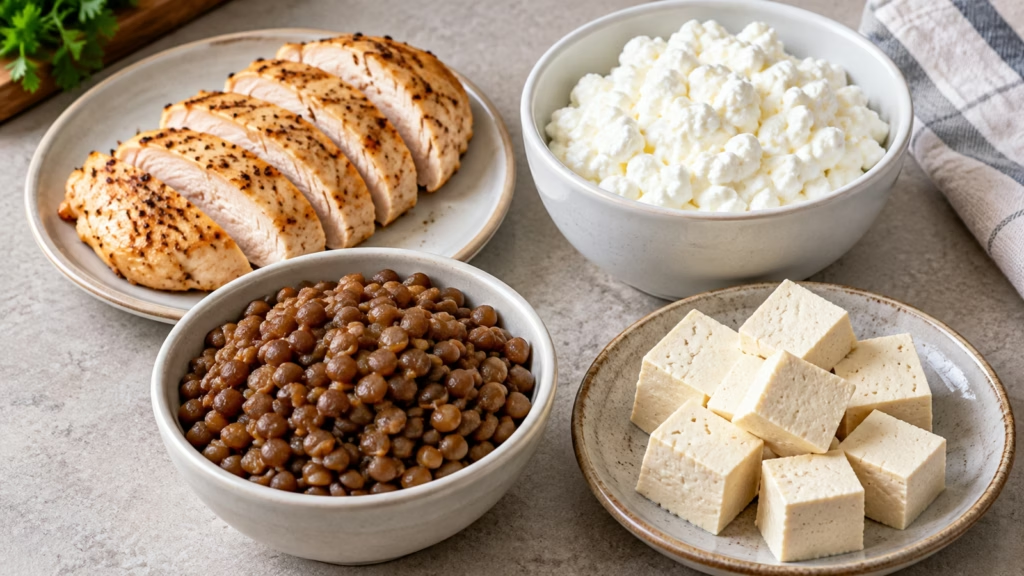
A spoonful of peanut butter, a bowl of lentils, and a chicken breast can all contribute protein, but they don’t do the same job on a plate. High protein foods include poultry, fish, eggs, dairy, soy foods, beans, lentils, nuts, and seeds. The useful question is how much protein your actual portion supplies, alongside the food’s calories, fiber, fat, cost, and convenience.
I’d start with a protein food you enjoy eating, then build a meal around it. The largest number on a package doesn’t have to decide dinner.
Compare the same amount before comparing the numbers
The table below puts seven familiar options on the same 100-gram edible-weight basis, about 3½ ounces. That makes the comparison fairer than putting a spoonful beside a whole bowl. It does not mean 100 grams is the right serving of every food. That amount of peanut butter, for example, is far more than a light spread on toast.
| Food, ready-to-eat form | Protein per 100 g | Calories per 100 g |
|---|---|---|
| Chicken breast, roasted, skin removed | 33.3 g | 159 |
| Light tuna, canned in water, drained | 25.3 g | 116 |
| Cottage cheese, 1% milk fat | 12.6 g | 72 |
| Tofu, regular firm/extra-firm | 14 g | 126 |
| Mature soybeans, boiled | 16.5 g | 173 |
| Lentils, boiled | 8.9 g | 116 |
| Natural peanut butter | 22.6 g | 594 |
These are approximate calculations from Health Canada’s 2008 generic food tables: each published nutrient amount divided by its listed food weight, then multiplied by 100. Protein is rounded to one decimal and calories to whole numbers. The lentils, soybeans, and tuna entries include salt; no extra oil or sauce is included here. This older reference illustrates differences between food forms, rather than promising the contents of a current brand. Use your package label for the product in your kitchen.
Preparation matters. Cooked chicken weighs less than the raw piece because it loses water; dried lentils gain water during cooking. A dry-weight number beside a cooked-weight number can therefore look impressively different without telling you what is on either plate. Drain canned foods when the entry says drained, and keep cooking oils and dressings separate when estimating a meal.
Which choices offer more protein for fewer calories?
If you are comparing high protein, lower calorie foods, skinless chicken, water-packed tuna, and lower-fat cottage cheese are useful examples. The table shows why peanut butter is a different kind of choice: it supplies protein, but a substantial share of its energy comes from fat. That makes it a flavorful addition, not a spoon-for-spoon stand-in for chicken or cottage cheese.
- For a cold lunch: use drained canned fish or cottage cheese alongside vegetables, bread, or another food you enjoy. Compare sodium on the labels if that matters for your eating plan.
- For a warm dinner: choose a lean poultry portion or tofu and add vegetables and a grain. Breading, frying, and generous sauces change the meal’s energy far more than the food name suggests.
- For breakfast: eggs, plain yogurt, milk, or a suitable soy beverage can contribute. Check the actual serving size; strained yogurts and plant-based drinks differ considerably between products.
Lower calorie does not automatically mean more useful. Nuts, seeds, and oily fish can fit a varied diet even when they are more energy-dense. Likewise, lentils bring fiber as well as protein. I would use the numbers to understand a choice, rather than turn them into a list of foods you are allowed to eat.
Plant protein deserves more than a garnish
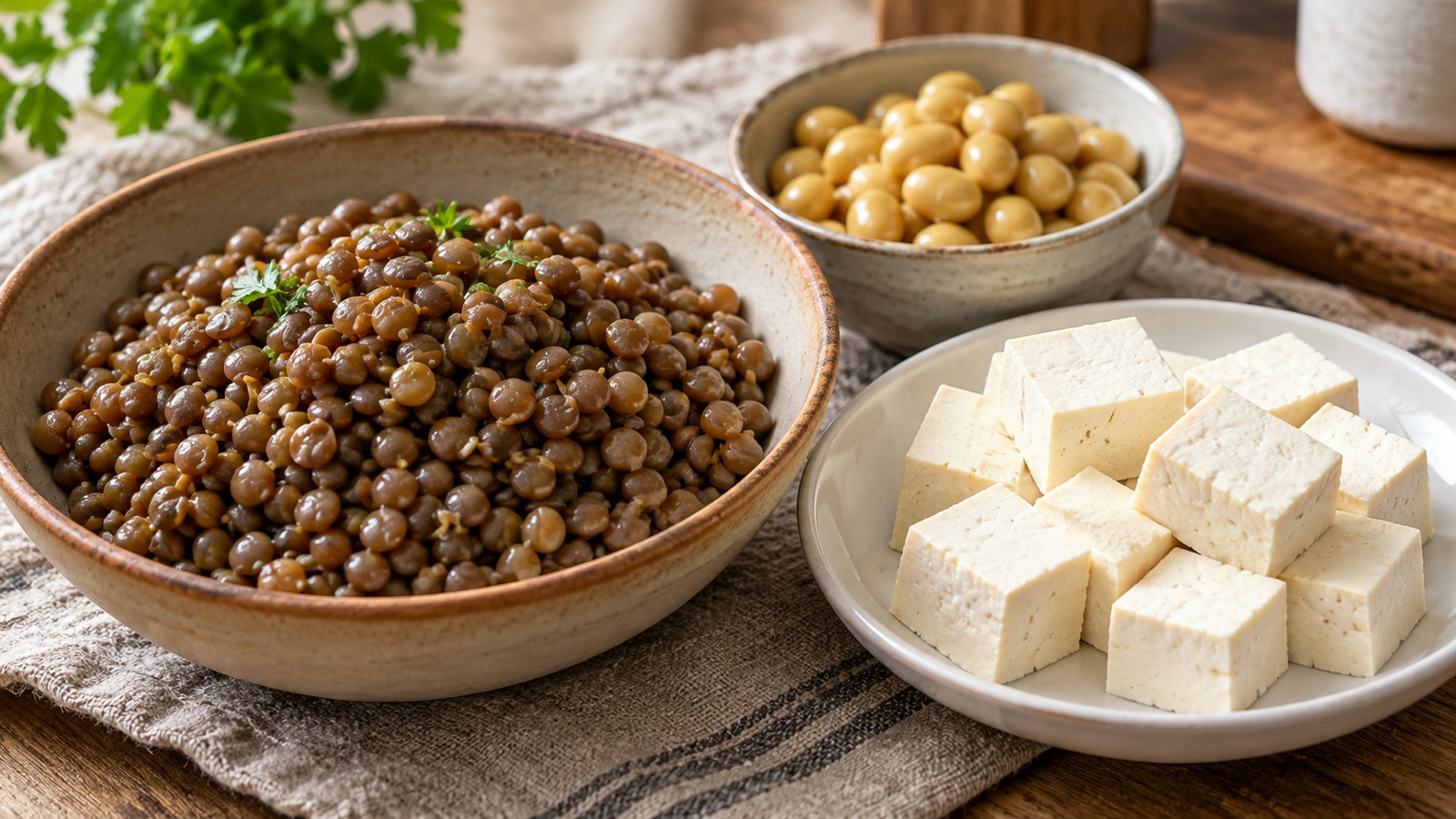
A few beans scattered over a large salad contribute less than a proper scoop of beans in a grain bowl. Give the plant protein an intentional place in the meal: lentils in a tomato sauce, tofu in a vegetable skillet, or cooked soybeans in a lunch bowl. The table’s mature soybeans are not the same food entry as green edamame, so use an edamame label rather than borrowing that number.
- Lentils and beans: keep cooked or canned versions available for soups, wraps, and bowls. Their softer texture works well with crisp vegetables or toasted bread.
- Firm tofu: pat the surface dry for browning, then season it with the rest of the dish. Extra-firm, regular firm, and silken products can have very different amounts of water and protein.
- Nuts and nut butter: use them where their flavor and texture help, such as a sauce, topping, or toast spread. They don’t need to carry the entire meal’s protein.
Protein is made of amino acids. Soy and animal proteins supply all essential amino acids in adequate proportions; eating varied plant foods across the day can also meet amino-acid needs. You do not need to make every bean-and-grain meal into a precise pairing exercise. Variety is more practical than relying on one favorite food for everything.
Turn the list into meals you will actually make
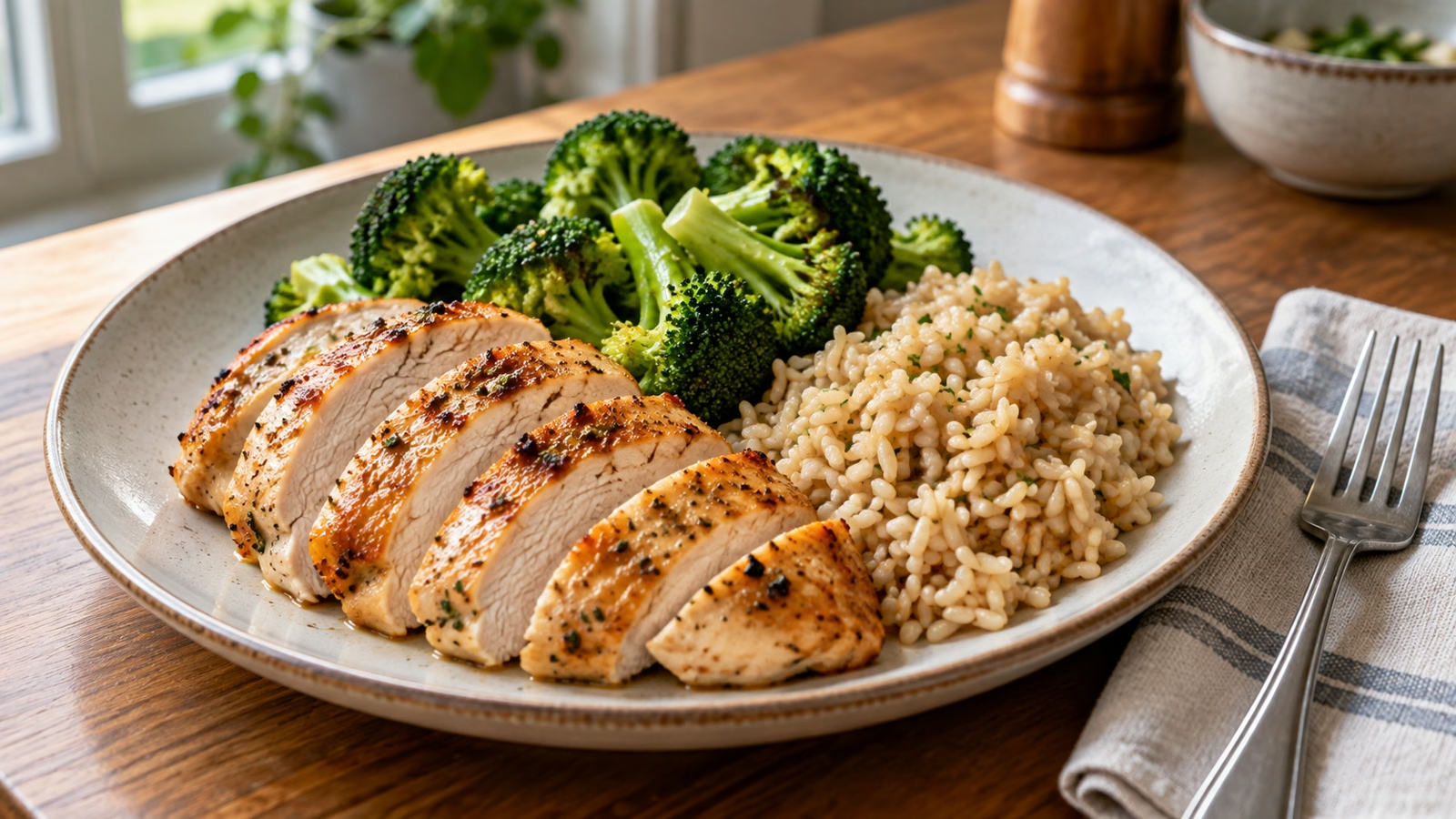
Choose one protein food, then add the other parts of lunch or dinner. Chicken with broccoli and rice, tofu with noodles and cabbage, or lentils with vegetables and bread are ordinary meals, not special “protein meals.” Keep two convenient options in the kitchen so an empty fridge does not make the decision for you: perhaps canned beans and fish, or tofu and plain yogurt.
- Compare labels on the same basis. If one tub lists a smaller serving, adjust before deciding it has less protein.
- Count the portion you eat. A food can have an impressive amount per 100 grams while contributing much less in your usual spoonful.
- Keep the rest of the plate. Protein does not replace vegetables, fruit, whole grains, or dietary fat.
- Separate food choices from daily targets. Our guide to how much protein you need a day explains the different reference ranges and when individual advice matters.
This list is a shopping and meal-building guide, not a prescription to increase your intake. If you have kidney disease or a prescribed protein limit, follow your care team’s advice before making a high-protein diet change. Otherwise, a useful first step is simply choosing a few different sources you like and can afford.
For a short visual introduction, registered dietitian Lauren Kennedy explains protein-food variety in Protein Foods Finding Balance, created by Peterborough Public Health using Canada’s Food Guide.
Sources
- Health Canada: Nutrient Value of Some Common Foods, 2008 — generic dairy, poultry, fish, legume, and nut values used for the comparison.
- FDA: Protein and the Nutrition Facts label — food sources, amino acids, and label interpretation.
- Mayo Clinic: High-protein diets — varied food choices and kidney-disease cautions.
- Peterborough Public Health: Protein Foods Finding Balance transcript.

Hi, I’m Laura, the voice behind Tastiva. I’ve always believed that eating well should feel enjoyable, comforting, and realistic—not like another complicated rule to follow. I love creating recipes that fit into everyday life, sharing simple nutrition ideas, and finding small ways to make meals feel a little better without losing the pleasure of good food.