
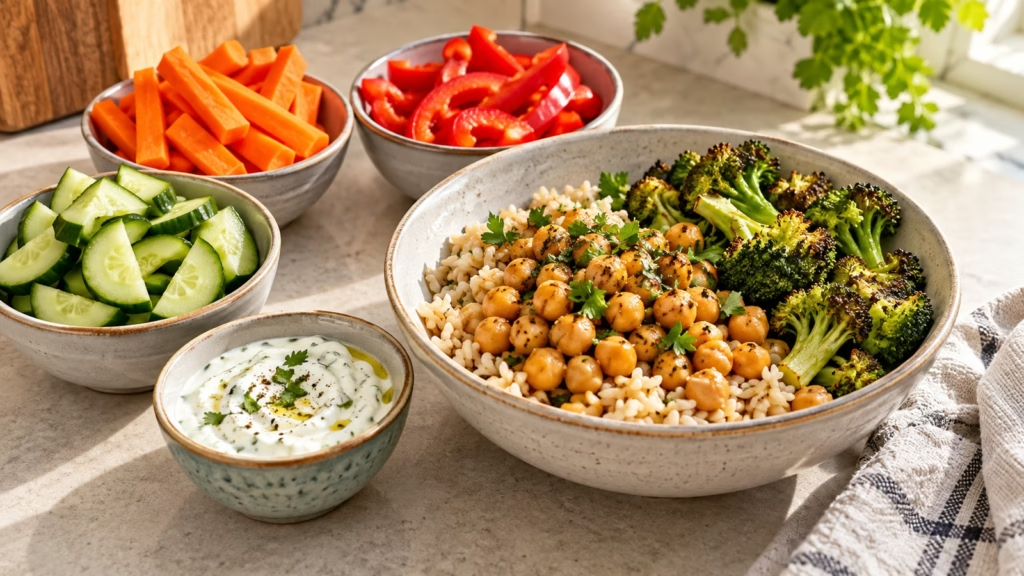
The broccoli is in the fridge, dinner is already late, and washing another pan suddenly feels like a serious commitment. The most useful easy ways to eat vegetables begin with that moment: choose convenient forms, attach a vegetable to a meal you already make, and give it a texture and flavor you actually enjoy. A bigger grocery haul is not always the answer.
I’d rather see one vegetable make it onto Tuesday’s plate than five ambitious purchases wait in the crisper. Start where the work feels smallest.
Buy vegetables with a job in mind
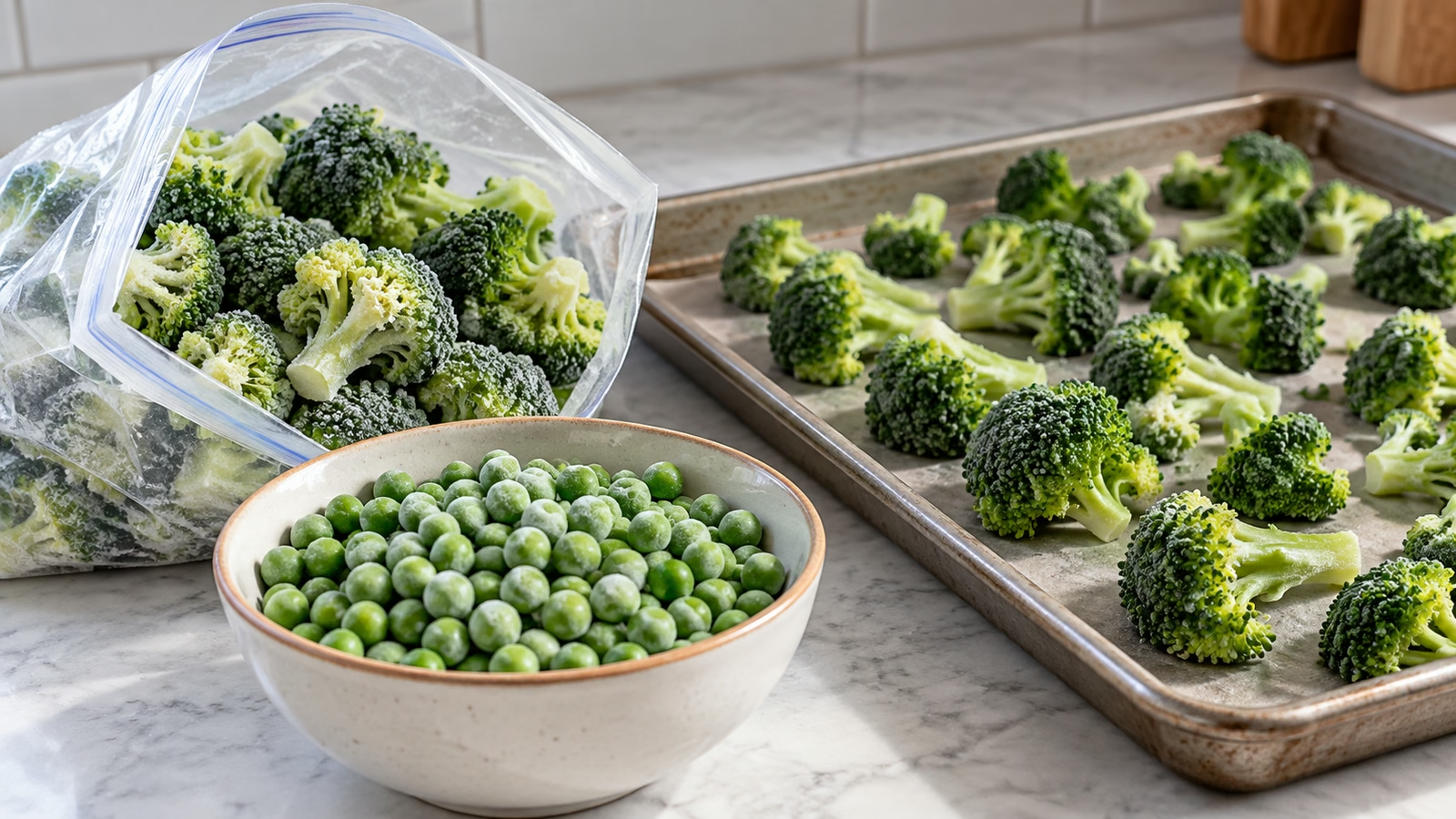
Before shopping, choose one raw option, one cooking option, and one backup. That might mean cucumber for sandwiches, cabbage for a skillet, and frozen broccoli for the night plans change. “Vegetable” is a broad kitchen category: leafy greens, roots, stems, and familiar savory produce such as peppers and tomatoes all give you different ways to build a meal. You do not have to buy one of everything.
- Use the freezer as part of the plan. Plain frozen vegetables let you take out the amount you need. Follow their package cooking instructions; frozen does not automatically mean ready to eat straight from the bag.
- Let canned vegetables help. Tomatoes can start a soup or sauce, and canned corn can go into a bowl. Compare labels when sodium matters, and choose the size you are likely to use.
- Pay for useful convenience when it fits your budget. Pre-cut squash or a bag of ready-to-eat greens may be more realistic than a whole vegetable that needs work you cannot manage that day.
Fresh, frozen, and canned options can all have a place. The practical comparison includes what you will eat and what you will throw away, not just the shelf price. For frozen broccoli or cauliflower that you want browned rather than watery, our guide to roasting frozen vegetables explains how pan space and moisture affect the result.
Add vegetables to meals that already happen
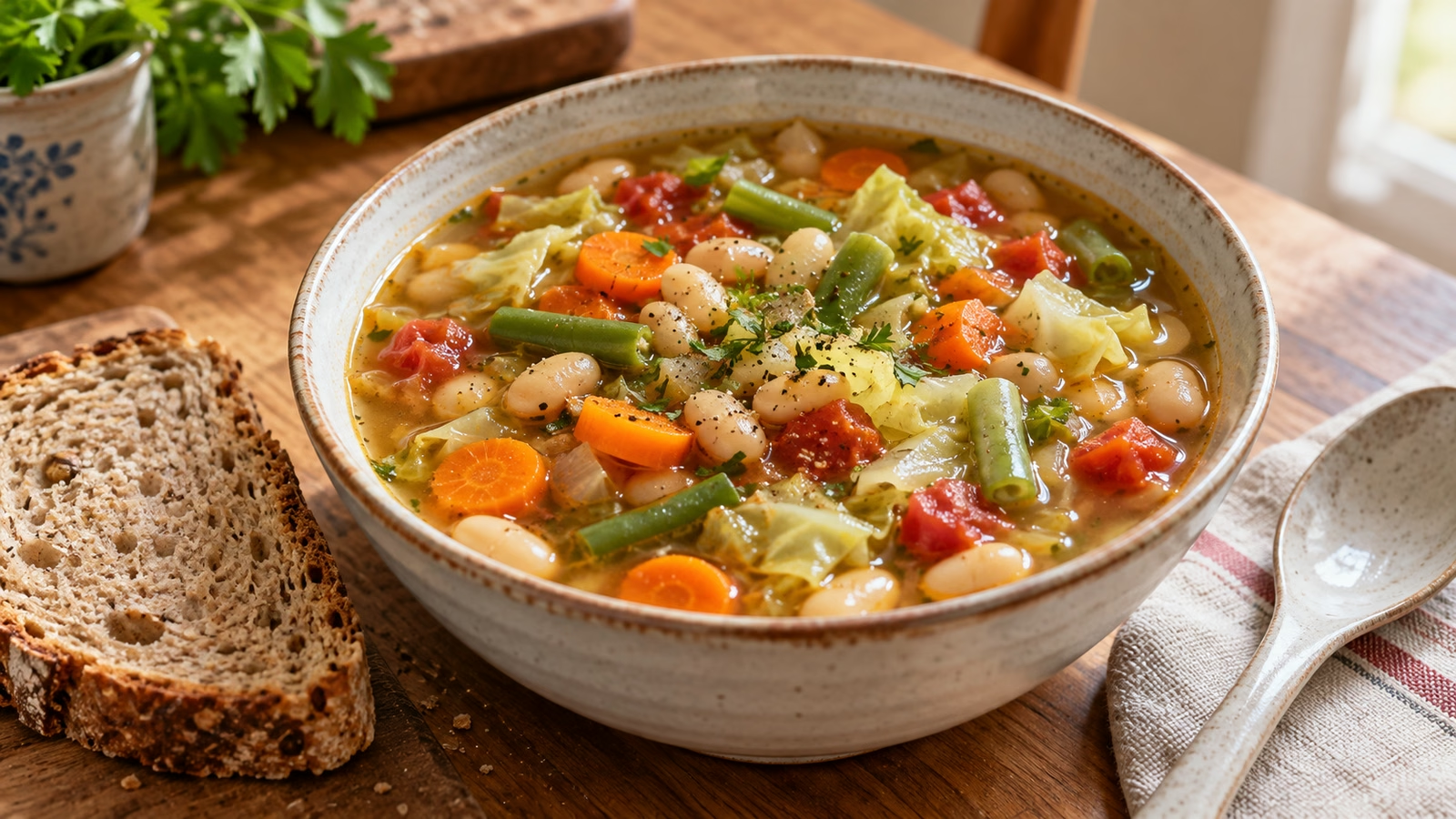
An extra recipe can become an extra obstacle. Instead, look for a point in your usual cooking where a vegetable already makes sense. The CDC suggests vegetables in eggs, sandwiches, wraps, and soups. You can keep the meal recognizable while making room for more produce, without turning every lunch into a large salad.
- Eggs: cook chopped mushrooms, peppers, or spinach before adding eggs so excess vegetable moisture does not flood the pan. Use a small amount at first if texture is the main barrier.
- Sandwiches and wraps: add cucumber, shredded cabbage, grated carrot, or ready-to-eat greens. Pack very wet ingredients separately when the sandwich needs to travel.
- Soup: add vegetables that suit its cooking time. Firm carrot pieces need longer than tender greens, so they should not all go in at the last minute.
- Pasta and grain bowls: add cooked broccoli, peas, peppers, or roasted leftovers, keeping the pasta or grain you enjoy. The vegetables do not have to replace every other ingredient.
Think in components rather than disguises. A soup with visible carrots and cabbage, a rice bowl with a spoonful of peas, or a sandwich with crisp cucumber makes vegetables part of the food rather than a separate assignment. If a blended vegetable sauce suits your preferences, that is useful too, but you do not need to pretend it is something else.
Change the texture before giving up on the vegetable
Someone who dislikes soft boiled carrots may enjoy crisp raw sticks or browned roasted pieces. Someone who finds raw broccoli difficult may prefer it tender and warm. Try changing the preparation, cut size, or seasoning before deciding that every version of a vegetable is off the menu. There is no prize for choosing the least enjoyable method.
- For crunch: try thin cabbage ribbons, cucumber slices, or pepper strips with a dip. A smaller cut can make a strong or firm vegetable easier to mix into a meal.
- For tenderness: steam or microwave appropriate everyday vegetables. Oregon State Extension recommends a microwave-safe dish, a little water, and a cover that lets some steam escape; timing depends on the vegetable, amount, and appliance.
- For browned edges: roast in a single layer rather than piling a tray high. Crowding creates a different result, even if the seasoning is the same.
- For flavor: use lemon, herbs, spices, a little oil, or a sauce you like. Our lemon tahini sauce can be kept thicker for dipping or loosened for drizzling.
Seasoning is part of cooking vegetables, not evidence that you have failed to like them properly. Taste a small cooked portion, then adjust. If a topping is salty, add it before deciding whether the vegetables need more salt. If a sauce contains an allergen, such as sesame in tahini, choose an option that works for the people eating.
Make the next serving easier without over-prepping
Choose one meal to improve this week and repeat the same useful change. Put cucumber into the lunch you already pack, keep frozen vegetables beside the food you cook most often, or plan a vegetable-rich soup for a busy evening. The routine should fit your energy and kitchen space. A small reliable habit does more practical work than a complicated Sunday plan you dread.
- Prep a manageable amount. Wash fresh produce under running water before cutting or eating; do not use soap. Dry it with a clean towel or paper towel. Produce labeled pre-washed or ready-to-eat does not need another wash.
- Keep it safe and visible. Refrigerate cut produce and perishable vegetables at 40°F (4°C) or below. Use clean containers, and keep ready-to-eat vegetables away from raw meat and its utensils.
- Use a short shopping note. Write “cucumber for lunches” rather than just “more vegetables.” That small detail gives the purchase somewhere to go.
- Keep a fallback. If the planned roast feels like too much work, a microwave-cooked vegetable or a ready-to-eat salad can still accompany dinner.
Vegetables contribute fiber, vitamins, and minerals, but no single variety needs to carry your whole diet. Keep room for other foods and work with any individualized dietary advice you have. Tonight’s useful question is modest: which vegetable would make this meal better, and what is the easiest way to get it onto the plate?
In this 2017 Mayo Clinic Minute, dietitian Angie Murad explains why plain frozen produce can be a practical backup and how to read past added sauces.
Sources
- CDC: Tips for increasing vegetables and fruits.
- FDA: Selecting and serving produce safely.
- Oregon State University Extension: Microwave fresh vegetables.
- Mayo Clinic: The 411 on frozen fruits and vegetables.

Hi, I’m Laura, the voice behind Tastiva. I’ve always believed that eating well should feel enjoyable, comforting, and realistic—not like another complicated rule to follow. I love creating recipes that fit into everyday life, sharing simple nutrition ideas, and finding small ways to make meals feel a little better without losing the pleasure of good food.