
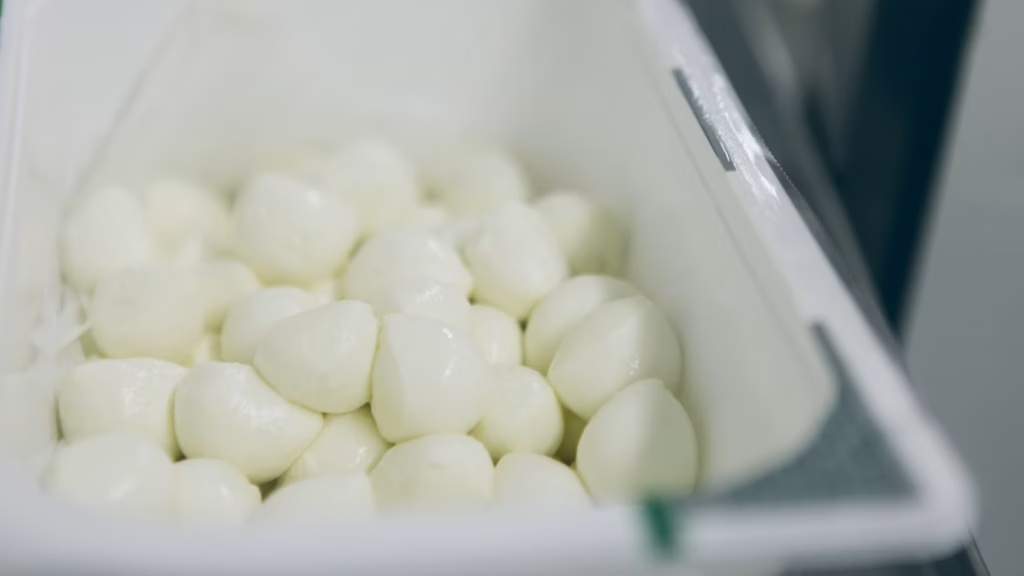
Fior di latte is one of those lovely Italian phrases that becomes confusing the moment it crosses a menu. At a cheese counter, it usually means fresh cow’s-milk mozzarella. At a gelateria, it means a pale, pure milk flavor. Same words, completely different snack.
On a pizza menu, expect mozzarella; in a gelato case, expect sweet milk—not a scoop of cheese.
What does fior di latte mean?
The phrase translates literally as “flower of milk,” with the sense of milk’s finest or freshest part. You may also see it written as fiordilatte. In modern food use, it most often identifies either cow’s-milk mozzarella or milk-flavored gelato.
Context does almost all the work. A ball packed in liquid, a pizza topping, or a caprese salad points to cheese. A white tub beside pistachio and chocolate points to gelato. Thankfully, nobody expects you to spread the second one over a pizza—although the internet has probably tried.
Fior di latte cheese vs. buffalo mozzarella
Fior di latte cheese is a fresh, stretched-curd mozzarella made with cow’s milk. Mozzarella di Bufala Campana PDO is made specifically with water-buffalo milk in its protected region and process. The European Commission describes the PDO cheese as porcelain white with a creamy texture and notes that its packing liquid helps protect its flavor and texture.
Cow’s-milk fior di latte is generally milder, a little less tangy, and often firmer than buffalo mozzarella. Buffalo milk has more solids and fat, which can give its mozzarella a lush, juicy center. Neither is automatically “better.” A delicate tomato may benefit from the calmer cow’s-milk cheese, while buffalo mozzarella can be the star of a very simple plate.

Why pizza makers use it
Fresh cow’s-milk mozzarella melts into soft white patches and brings gentle dairy flavor without overwhelming tomato or basil. Its moisture is the important part. Cheese straight from its liquid can release enough whey to make a home-oven pizza soggy.
Drain it, tear or slice it, then let it sit on clean towels for 20 to 30 minutes before topping the dough. Use modest pieces rather than carpeting the entire pizza. A very hot professional oven can handle wetter cheese quickly; a home oven needs a little help.
Low-moisture mozzarella is not the same product. It is drier, usually aged a little longer, and gives the even stretch and browning familiar on many American pizzas. Fior di latte gives a fresher, milkier result with distinct pools of cheese. Choose the effect you want rather than treating one as an upgrade to the other.
What fior di latte gelato tastes like
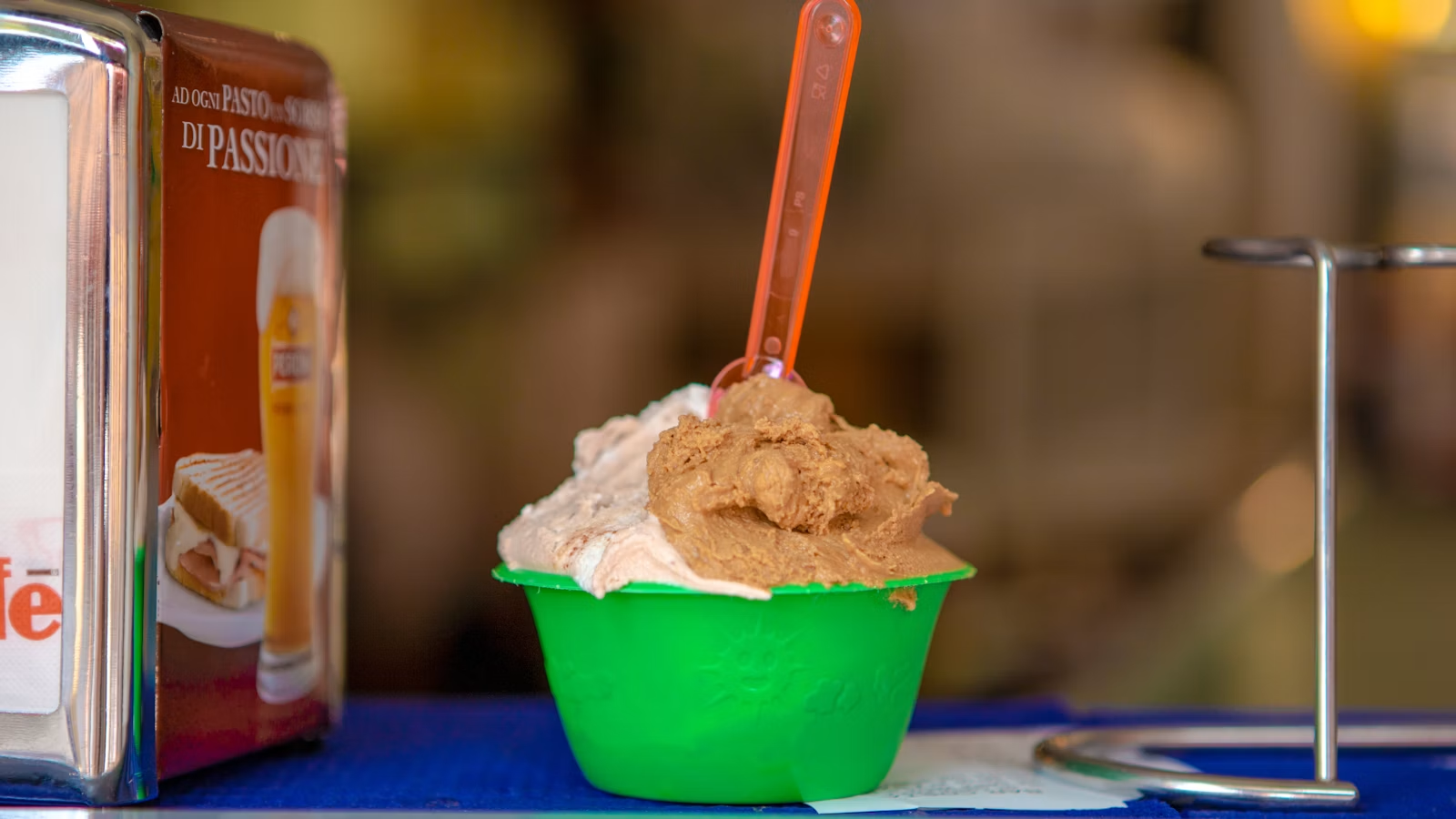
Fior di latte gelato is milk flavor in the most literal sense: usually milk, cream, sugar, and whatever stabilizing ingredients the maker uses. Traditional versions do not rely on vanilla or egg yolks. It looks plain, but that is the point. With no chocolate, fruit, or nuts to hide behind, the dairy quality and sugar balance are easy to taste.
It is not mozzarella gelato. The cheese and the frozen dessert simply share a name that celebrates milk. Good fior di latte gelato tastes clean, gently sweet, and creamy rather than strongly flavored. I think of it as the white T-shirt of a gelato case: simple enough to expose every flaw, useful enough to pair with almost anything.
How to buy fresh fior di latte
- Read the milk line: cow’s milk confirms the common cheese meaning; buffalo milk should be identified separately.
- Look for moisture: a fresh ball is usually packed in liquid and should look smooth, plump, and white.
- Check the date: this is a high-moisture fresh cheese, not a patient wedge of Parmesan.
- Choose pasteurized dairy when needed: the FDA warns that raw milk can carry harmful germs. Pregnant people, older adults, young children, and anyone with a weakened immune system should follow their clinician’s advice and select pasteurized products.
- Buy for the job: very juicy cheese is beautiful for serving fresh; a slightly drier ball is easier on pizza.
Storage and serving
Keep packaged cheese refrigerated at 40°F (4°C) or below and follow the use-by date and manufacturer’s directions. Once opened, keep it covered in its liquid in a clean container and use it promptly. Fresh mozzarella has far less room for procrastination than an aged cheese.
For a caprese salad, let the cheese lose its refrigerator chill for a short time before serving, but do not leave it out for hours. Slice it with ripe tomatoes, basil, olive oil, and salt. For baked dishes, drain it well. For sandwiches, tear it so the irregular edges catch dressing and tomato juices.
Easy substitutions
Fresh cow’s-milk mozzarella is the direct substitute when a recipe calls for fior di latte cheese. Buffalo mozzarella works when you welcome more moisture and a richer flavor, though it may need extra draining. Low-moisture mozzarella works for pizza and casseroles when reliable browning matters more than a fresh, milky texture.
For the gelato meaning, sweet-cream ice cream is the closest U.S. reference. Vanilla is pleasant but not identical because vanilla becomes the main aroma. If you are ordering in Italy, the two meanings are rarely confusing for long: one is in brine, the other is behind glass with a tiny spoon waiting nearby.
Massimo Nocerino compares mozzarella and fior di latte in the video below. It focuses on the cheese meaning; the milk-flavored gelato discussed above is a separate use of the name.
Sources
- European Commission: Mozzarella di Bufala Campana PDO
- U.S. FDA: Refrigerator Thermometers and Food Safety
- U.S. FDA: Dangers of Raw Milk
- Carpigiani Gelato University: Milk-Based Gelato

Hi, I’m Laura, the voice behind Tastiva. I’ve always believed that eating well should feel enjoyable, comforting, and realistic—not like another complicated rule to follow. I love creating recipes that fit into everyday life, sharing simple nutrition ideas, and finding small ways to make meals feel a little better without losing the pleasure of good food.