
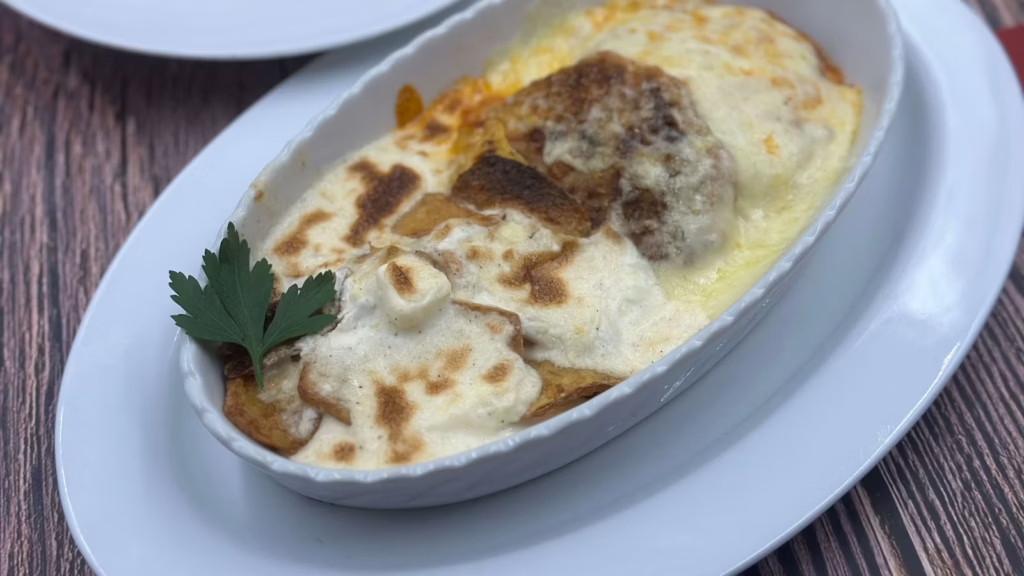
This moussaka is the sort of dinner that makes a kitchen smell generous: roasted eggplant, a quietly spiced beef sauce, and a thick cap of béchamel turning bronze in the oven. It takes time, yes, but none of the individual jobs is difficult.
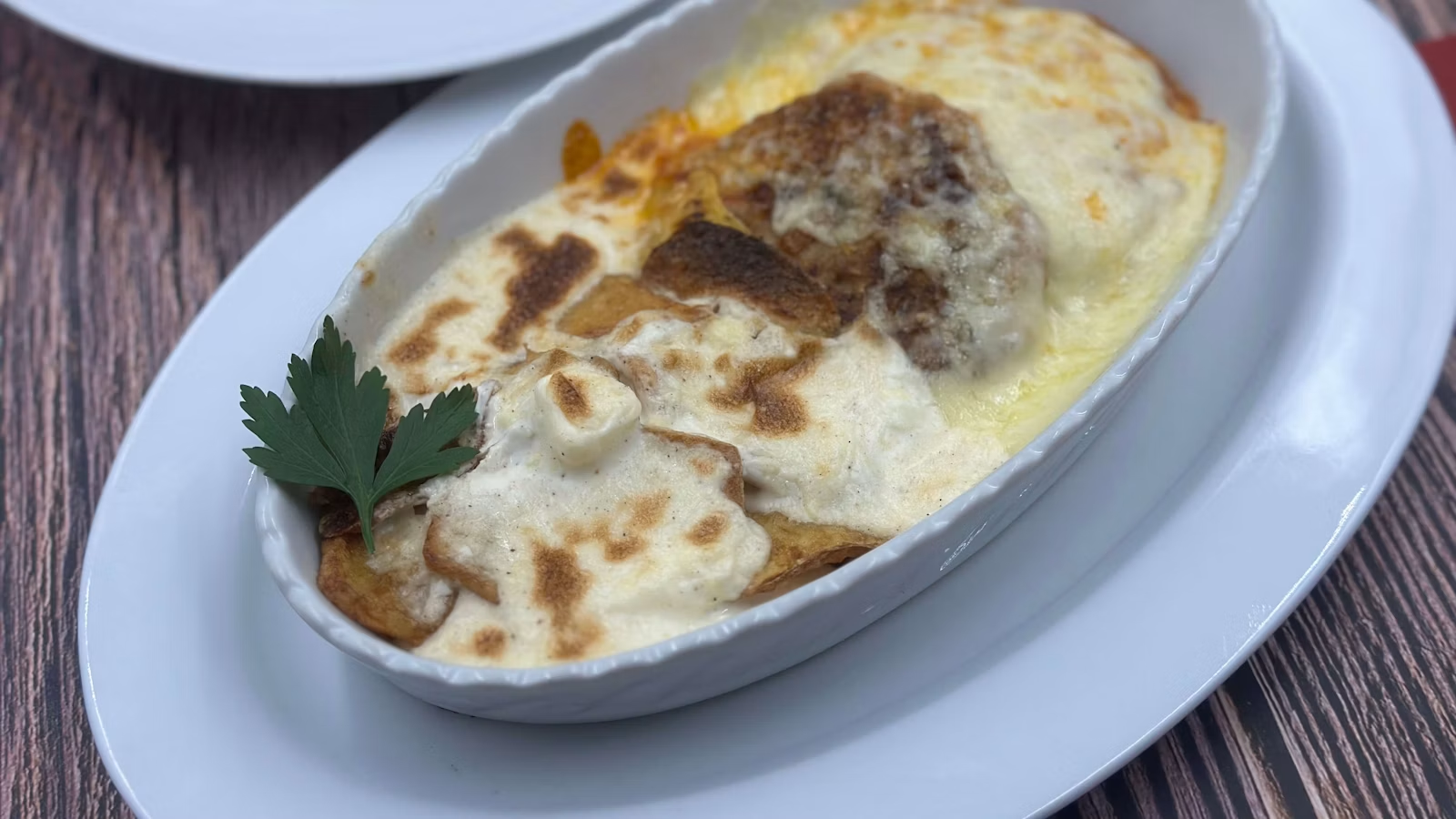
The secret to sliceable moussaka is wonderfully unromantic: dry vegetables, thick sauces, and a proper rest.
Why this moussaka recipe works
Classic Greek moussaka cooks several components separately, then brings them together for a final bake. That sounds elaborate until you realize why it works. The eggplant becomes tender without flooding the casserole, the meat sauce reduces until spoonable, and the béchamel stays distinct instead of disappearing into the layers.
I roast the eggplant and potatoes instead of frying them. You still get browned edges, but the vegetables absorb less oil and the kitchen stays calmer. The potatoes are not mandatory in every version, but I like the sturdy base they give each slice.
Three layers, three texture cues
The vegetables should be tender and lightly browned before they reach the baking dish. The meat sauce should hold a trail when you drag a spoon through the skillet. The béchamel should be thick enough to mound briefly on the whisk. If any one of those is watery, the finished moussaka will taste good but slump on the plate.
Cinnamon and allspice give the beef a warm fragrance without turning the sauce sweet. Start with the measured amounts before adding more; moussaka is not supposed to taste like a holiday candle. Lamb can replace the beef by weight if you prefer its richer flavor.
Do you have to salt eggplant?
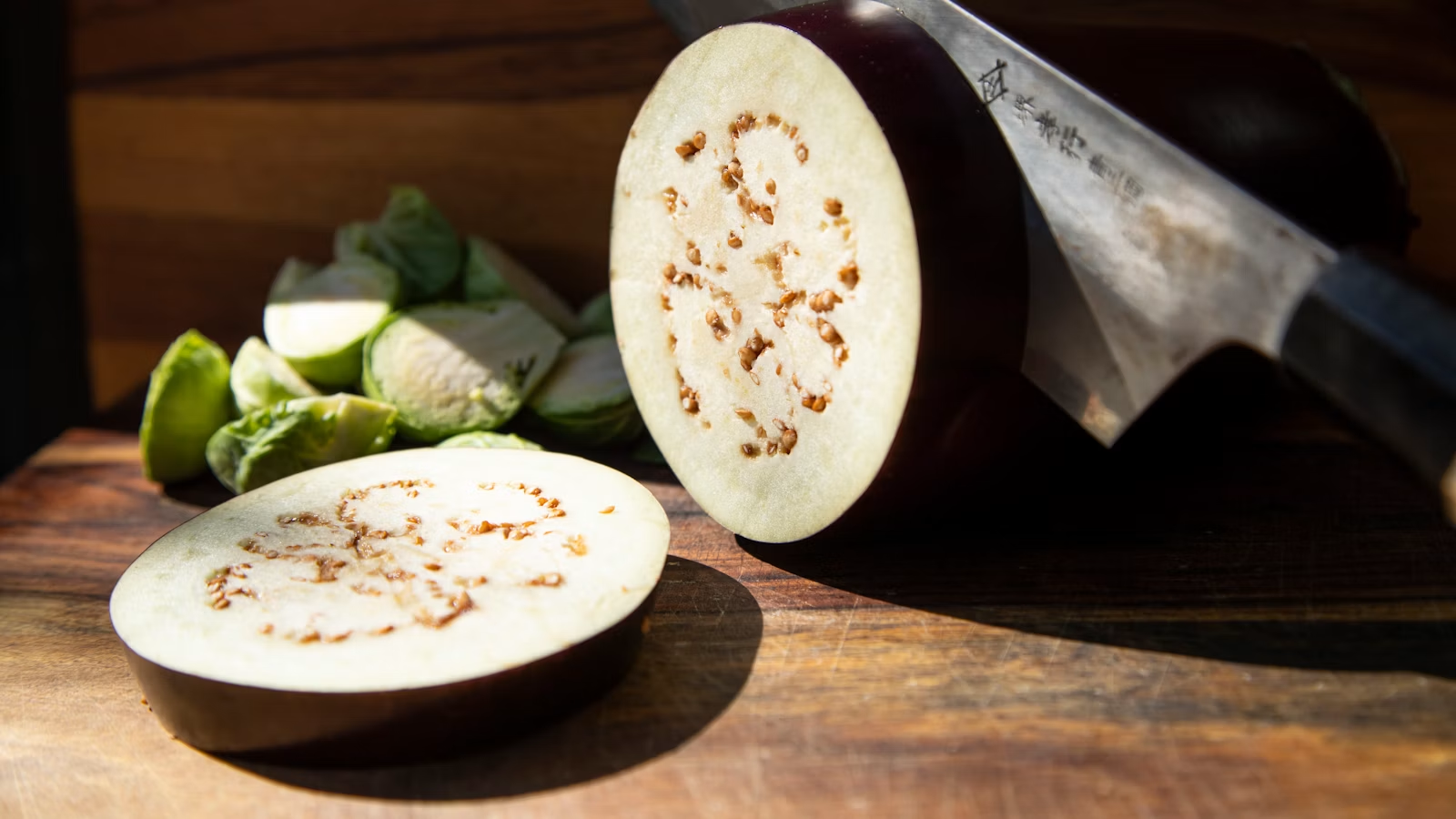
Modern eggplants are not always bitter, so salting is less about removing bitterness and more about managing moisture. A brief salt, rest, and thorough pat-dry help the slices brown. If you are short on time, you can skip it, but roast the slices until they look dry at the edges rather than merely softened.
Cut the slices evenly so they finish together. One-third inch is thick enough to keep some structure and thin enough to become silky. Eggplant has a heroic ability to drink oil, so brush it lightly instead of pouring.
The béchamel deserves your attention
Warm milk blends into the butter-flour roux more smoothly than refrigerator-cold milk. Add it gradually, whisking the corners of the saucepan, and let the sauce bubble gently once it thickens so the flour loses its raw taste.
The eggs make this topping set more firmly than an everyday white sauce. Temper them with a cup of hot béchamel before whisking them into the pan; dumping cold eggs straight into very hot sauce is how you accidentally invent scrambled béchamel. Take the pan off the heat first and the whole step becomes much less dramatic.
How to assemble clean layers
Start with potatoes in a lightly oiled baking dish, overlap the first eggplant layer, then spread on every bit of the thick meat sauce. Add the remaining eggplant and finish with béchamel all the way to the corners. That full top layer acts like a lid and browns more evenly than scattered spoonfuls.
Once baked, let the casserole rest for at least 25 minutes. This is the hardest instruction because the top looks ready and everyone is hungry. It is also the step that turns the layers from lava into slices.
Make-ahead, storage, and safety
You can roast the vegetables and cook the meat sauce a day ahead. Refrigerate them separately, then make the béchamel and assemble before baking. You can also assemble the entire casserole, cover, and refrigerate overnight; allow extra baking time because the center begins cold.
The USDA safe minimum for ground beef and ground lamb is 160°F (71°C), measured with a food thermometer. Brown the meat fully while making the sauce, and make sure a chilled, assembled casserole is hot through the center after baking. Refrigerate leftovers within two hours and use them within three to four days.
What to serve with moussaka
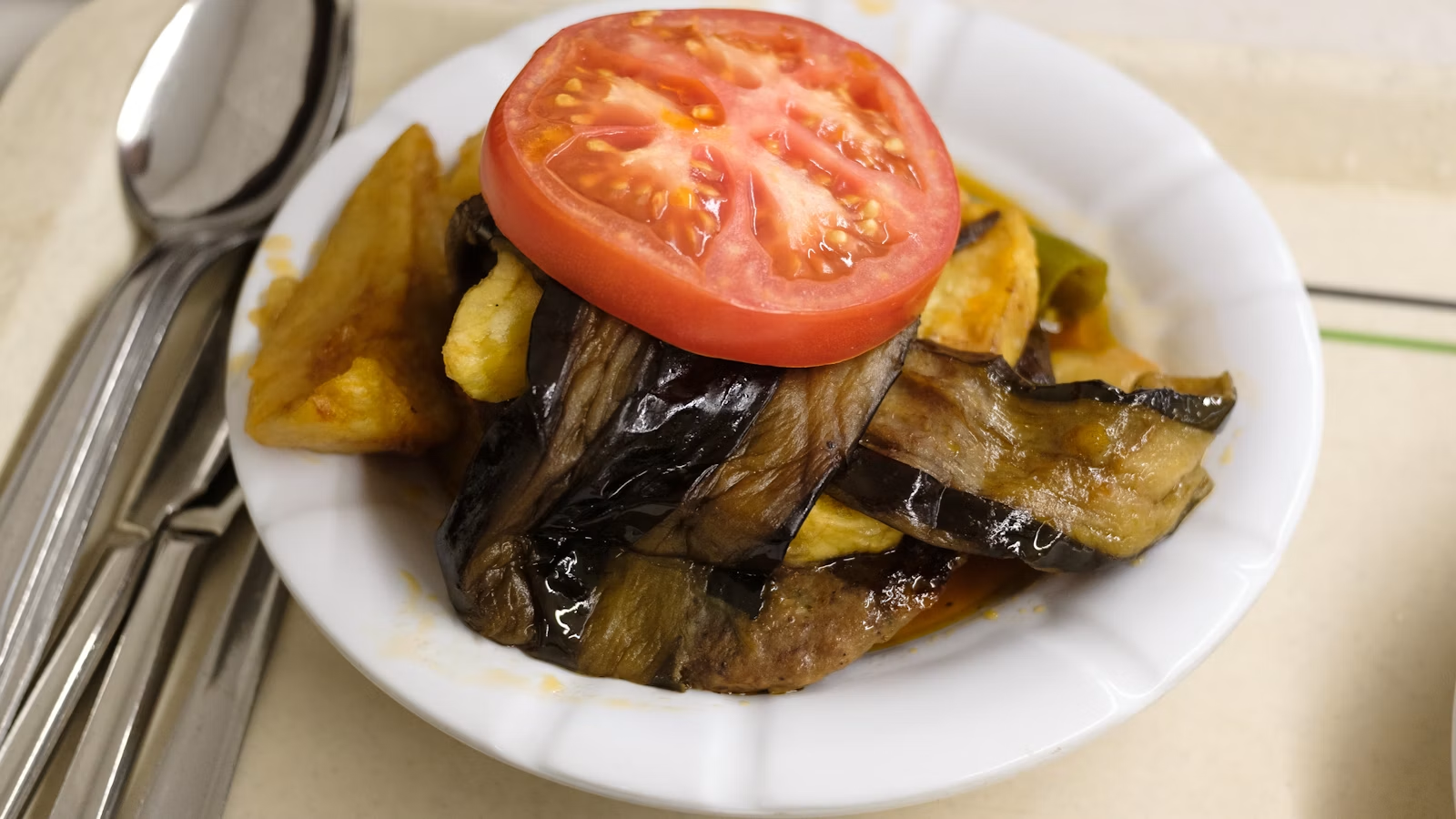
Moussaka is rich enough to be the whole event. I serve it with a lemony green salad, sliced tomatoes, or steamed green beans—something crisp and acidic, not another creamy side. Eight servings are generous; for a larger table with several sides, you may stretch the pan to ten.
Classic moussaka recipe
Moussaka Recipe

Ingredients
- 3 large eggplants about 3 pounds, sliced lengthwise 1/3 inch thick
- 1 1/2 pounds Yukon Gold potatoes peeled and sliced 1/4 inch thick
- 4 tablespoons extra-virgin olive oil divided
- 1 1/2 teaspoons fine salt divided, plus more to taste
- 1 large yellow onion finely diced
- 3 cloves garlic minced
- 1 1/2 pounds lean ground beef or ground lamb
- 2 tablespoons tomato paste
- 1/2 cup dry red wine or beef stock
- 1 can crushed tomatoes 28 ounces
- 1 teaspoon dried oregano
- 1/2 teaspoon ground cinnamon
- 1/4 teaspoon ground allspice
- 1/2 teaspoon freshly ground black pepper
- 8 tablespoons unsalted butter
- 3/4 cup all-purpose flour
- 4 cups whole milk warmed
- 1/4 teaspoon ground nutmeg
- 2 large eggs lightly beaten
- 1 cup finely grated Parmesan or kefalotyri divided
Equipment
- 2 large rimmed baking sheets
- 1 9 x 13-inch baking dish
- 1 Large skillet
- 1 medium saucepan
- 1 Whisk
Instructions
- Arrange the eggplant slices on the baking sheets, sprinkle both sides with 1 teaspoon salt, and let stand for 20 minutes. Pat very dry with clean towels.
- Heat the oven to 425°F. Brush the eggplant and potato slices with 3 tablespoons olive oil. Roast in a single layer, flipping once, until tender and lightly browned, 25 to 35 minutes. Reduce the oven to 375°F.
- Heat the remaining 1 tablespoon olive oil in a large skillet over medium heat. Cook the onion for 6 minutes until soft. Add the garlic and cook for 30 seconds.
- Add the ground beef, breaking it into small pieces. Cook until no pink remains and the meat reaches 160°F, about 8 minutes. Spoon off excess fat if needed.
- Stir in the tomato paste for 1 minute. Add the wine and simmer for 2 minutes. Add the tomatoes, oregano, cinnamon, allspice, pepper, and remaining 1/2 teaspoon salt. Simmer uncovered until thick rather than watery, 20 to 25 minutes. Taste and adjust seasoning.
- Melt the butter in a medium saucepan over medium heat. Whisk in the flour and cook for 2 minutes. Gradually whisk in the warm milk. Cook, whisking, until very thick and bubbling, 7 to 10 minutes. Season with nutmeg and a pinch of salt.
- Remove the béchamel from the heat. Whisk 1 cup of the hot sauce slowly into the beaten eggs, then whisk the egg mixture back into the saucepan. Stir in 3/4 cup cheese.
- Lightly oil a 9 x 13-inch baking dish. Layer in the potatoes, half the eggplant, all the meat sauce, and the remaining eggplant. Spread the béchamel evenly over the top and sprinkle with the remaining 1/4 cup cheese.
- Bake at 375°F until the top is deeply golden and the center is hot, 40 to 45 minutes.
- Let the moussaka rest for at least 25 minutes. This is not optional theater—the layers set as they cool, giving you tidy slices instead of a delicious landslide.
Nutrition
Video
Notes
- Roasting the vegetables uses less oil than frying and keeps the casserole from feeling heavy.
- The meat sauce must be thick before layering; watery sauce makes loose slices.
- For a lamb version, replace the beef by weight and cook ground lamb to 160°F.
- Assemble up to one day ahead, refrigerate, and add about 10 minutes to the bake time. Verify the center is hot.
- Refrigerate leftovers within 2 hours and use within 3 to 4 days.
- Nutrition is an estimate and varies with meat, cheese, and how much oil the eggplant absorbs.
Tried this recipe?
Let us know how it turned out!Sources
Hi, I’m Laura, the voice behind Tastiva. I’ve always believed that eating well should feel enjoyable, comforting, and realistic—not like another complicated rule to follow. I love creating recipes that fit into everyday life, sharing simple nutrition ideas, and finding small ways to make meals feel a little better without losing the pleasure of good food.