
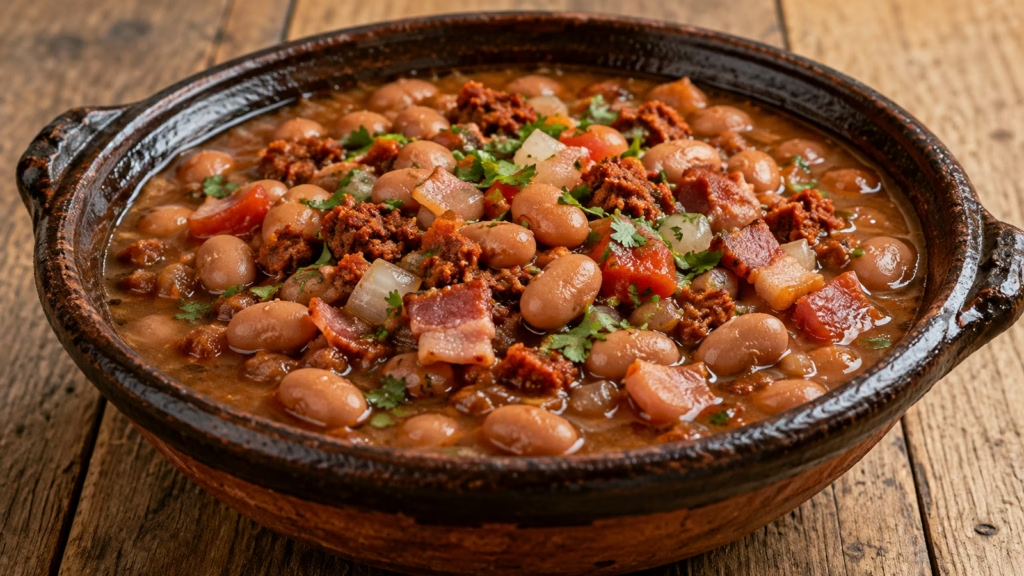
A spoonful of beans can look generous and still need one thing: enough broth to bring everything together. Frijoles charros are whole beans served with a savory, seasoned liquid, and this version uses bacon, fresh chorizo, tomato and cilantro. Starting with cooked pinto beans keeps the work focused on building that broth rather than watching a pot of dry beans all afternoon.
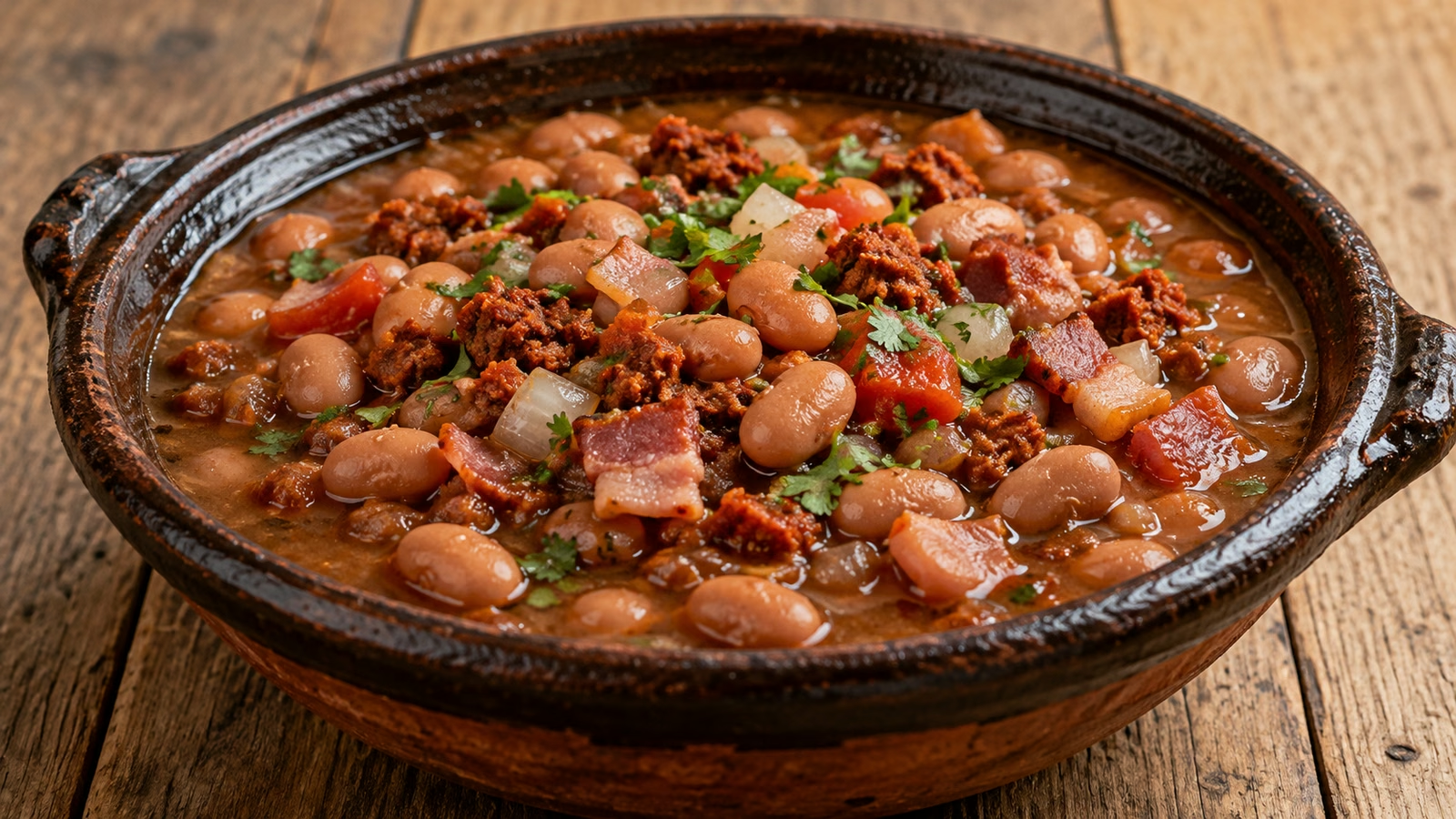
Begin with tender beans, build the flavor in the same pot, and leave enough liquid for a proper spoonful of broth.
What belongs in these frijoles charros
There are many versions of charro beans, with different combinations of meat and chiles. This one keeps the list focused: bacon for savory richness, fresh pork chorizo for seasoning, and tomato, onion and serrano to round out the pot. The beans still occupy most of the spoon.
- Pinto beans: measure them after cooking and draining. They should be tender all the way through, with most skins still intact.
- Fresh Mexican-style chorizo: remove any casing and crumble it during cooking. Firm, cured Spanish chorizo behaves differently and is not a direct substitute in this method.
- Bacon: chop it into small pieces so it spreads through the beans. Its rendered fat also cooks the vegetables, so no extra oil is needed.
- Serrano and cilantro: the chile goes in with the onion; cilantro finishes the pot. Reduce the chile for a gentler result rather than changing all the seasoning.
I prefer a shorter meat list here. It gives you a better chance of tasting the beans, and it makes the salt level easier to manage than a pot with several different cured meats.
Start with cooked beans, homemade or canned
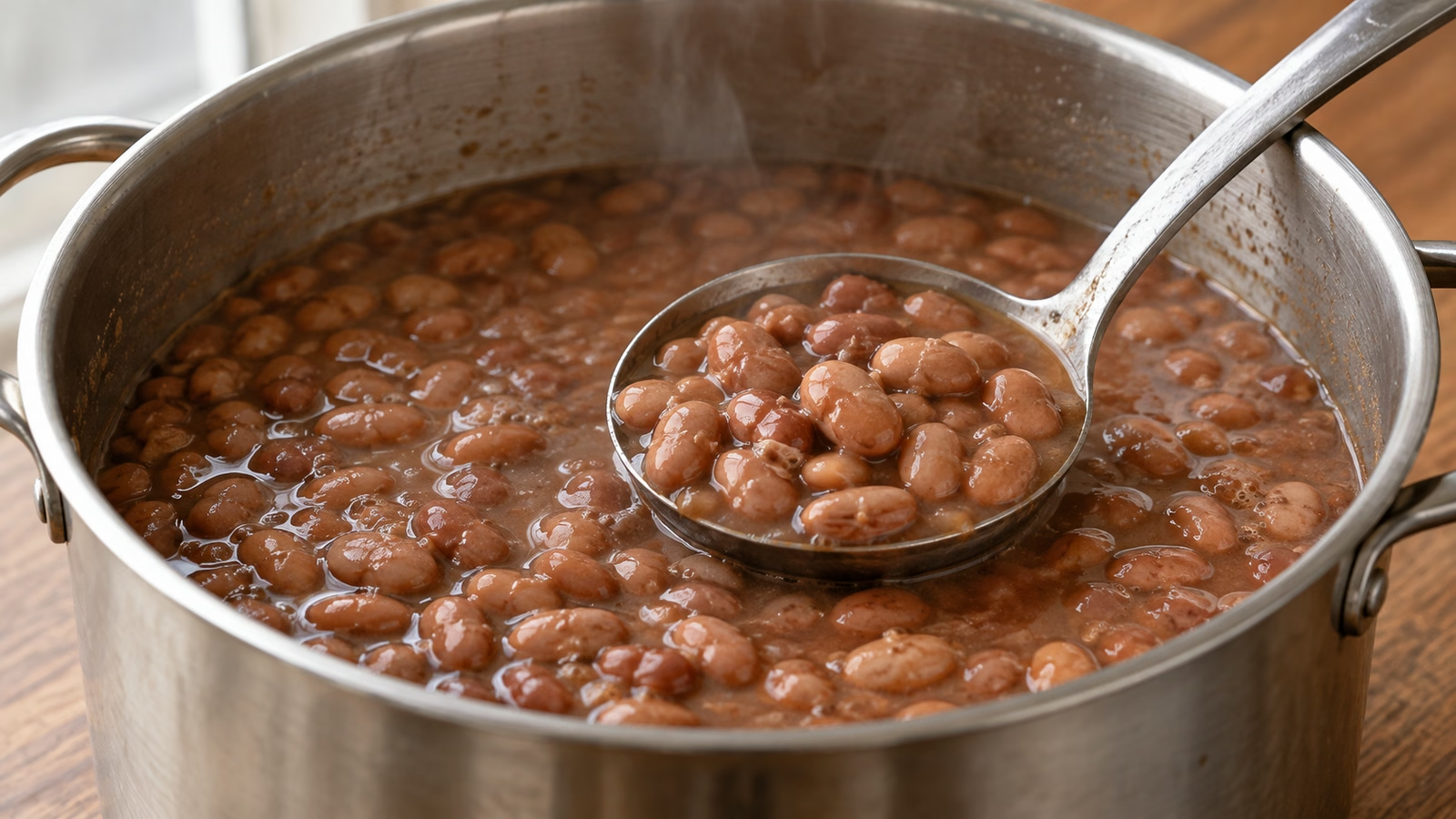
The card’s 50-minute estimate begins with beans that are already cooked. Dry beans need their own preparation first; adding them directly to this short method will not get dinner to the table on that schedule. A batch cooked earlier or canned beans can both fit the plan.
- Homemade: weigh 900 g of drained, cooked beans. Keep some cooking liquid if you would like to use it instead of the measured water.
- Canned: drain and rinse, then measure the actual beans rather than relying on the can’s total weight. Use enough cans to reach the required drained amount.
- Seasoned cooking liquid: taste it before using it. Bean broth, canned liquid and plain water do not bring the same amount of salt.
- Very soft beans: handle gently and shorten the final simmer if needed. They are there to heat through and mingle with the broth, not to become a mash.
For US kitchens, the weight is particularly helpful because can sizes and drained yields vary. The recipe’s nutrition estimate uses unsalted cooked pintos and water, so canned products or a salted bean broth will change the result.
Build flavor, then protect the texture
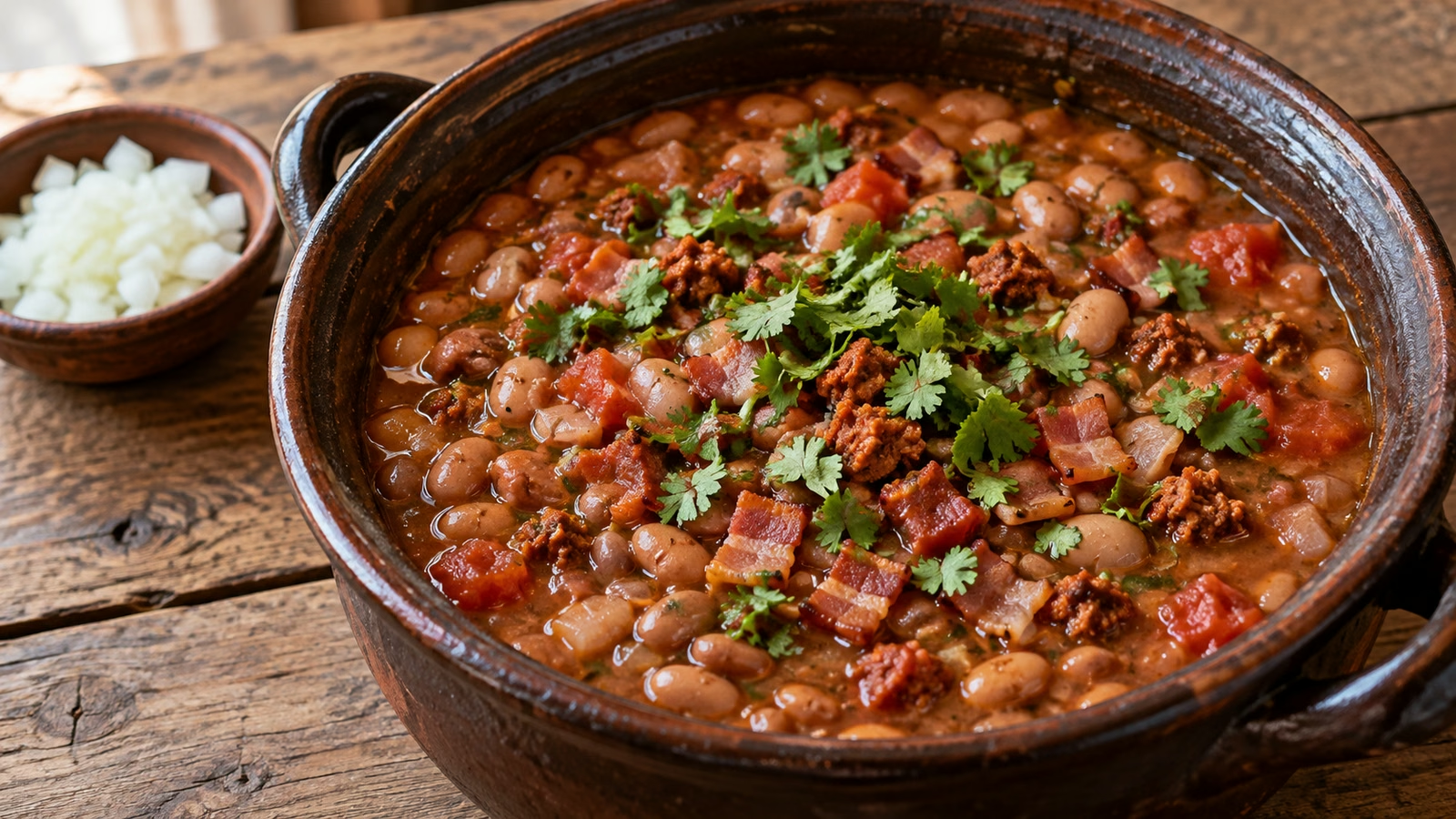
A heavy pot and moderate heat make the first steps less fussy. Let the bacon release fat, cook the chorizo completely, and soften the vegetables before adding the beans. Once everything is together, the pot needs a gentle simmer rather than vigorous stirring.
- Watch the bottom as the meats cook. Browned bits can enrich the broth; blackened bits give you a bitter starting point. Lower the heat if the chorizo catches.
- Break up the fresh chorizo while it cooks, then verify it reaches 160°F (71°C). Color alone is unreliable because the seasoning is already red.
- Cook the tomato until it softens before adding the beans and water. This gives the vegetables time without subjecting tender beans to unnecessary handling.
- Stir with a broad spoon in slow sweeps, reaching the bottom of the pot. Stop when the mixture is evenly combined rather than stirring continuously.
The finished beans should settle into their broth rather than stand in a dry mound. If the pot tightens up as it simmers, add a little hot water. The spoon should not have to excavate dinner.
Season at the end and plan for leftovers
Taste after the bacon, chorizo and beans have simmered together. The measured salt is a limit to work toward only if needed, not a command to ignore a well-seasoned pot. I would serve these in small bowls beside grilled meat or vegetables, or make them the center of a meal with warm tortillas or a few crisp quesadilla wedges.
- For serving: stir in the cilantro near the end. Ladle from the bottom so each portion gets beans, meat and enough liquid.
- For holding briefly: keep the pot from reducing uncovered for too long. Add water as needed and taste again before adding more salt.
- For cooling: transfer leftovers into shallow containers and refrigerate within 2 hours, or within 1 hour above 90°F (32°C). Do not leave the full pot on the counter to cool completely.
- For reheating: keep refrigerated at 40°F (4°C) or below, use within 3 to 4 days, and reheat to 165°F (74°C). Add a splash of water if the beans have absorbed broth.
The estimate includes all the cooking fat and divides the recipe into six portions. Bacon and chorizo labels vary considerably, so use your packages if you need numbers tailored to the exact products in your kitchen.
Frijoles Charros Recipe

Ingredients
- 900 g cooked pinto beans drained weight, about 5 1/4 cups; nutrition uses unsalted beans
- 80 g bacon chopped, about 3 oz
- 100 g fresh Mexican-style pork chorizo about 3 1/2 oz, casing removed
- 300 g ripe tomatoes chopped, about 10 1/2 oz
- 150 g white onion chopped
- 9 g garlic about 3 cloves, minced
- 15 g serrano chile about 1, finely chopped; reduce to taste
- 650 ml water about 2 3/4 cups, plus a little as needed
- 15 g fresh cilantro washed and chopped
- 2 g table salt about 1/3 teaspoon, only as needed
Equipment
- Heavy-bottomed pot
- Knife and cutting board
- wooden spoon
- Food thermometer
Instructions
- Place the bacon in a heavy pot over medium heat. Cook, stirring, for 5 to 7 minutes until it releases fat and begins to brown.
- Add the chorizo and break it into small crumbles. Cook for about 6 to 8 minutes, until fully cooked and at least 160°F (71°C). Leave the rendered fat in the pot.
- Add onion and serrano and cook for 3 minutes. Stir in garlic for 30 seconds, then add tomatoes. Cook about 5 minutes until the tomato softens.
- Fold in the cooked, drained beans and water. Bring to a gentle simmer and cook uncovered for 8 to 10 minutes. Add a little hot water if the mixture stops looking brothy; stir gently to avoid breaking the beans.
- Stir in cilantro. Taste before adding the measured salt, since the meats vary in saltiness. Serve hot in six bowls or as a generous side.
Nutrition
Notes
Tried this recipe?
Let us know how it turned out!Sources
- Cocineros Mexicanos: frijoles charros preparation
- FoodSafety.gov: sausage cooking temperatures
- USDA: handling leftovers safely
- USDA FoodData Central: ingredient composition data
Hi, I’m Laura, the voice behind Tastiva. I’ve always believed that eating well should feel enjoyable, comforting, and realistic—not like another complicated rule to follow. I love creating recipes that fit into everyday life, sharing simple nutrition ideas, and finding small ways to make meals feel a little better without losing the pleasure of good food.