
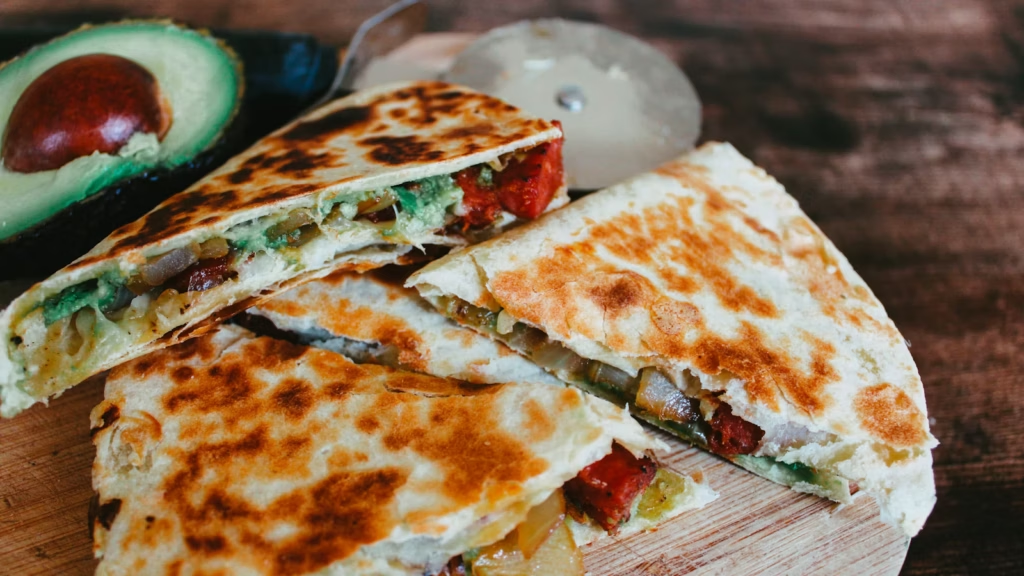
This quesadilla recipe gives you the useful middle ground between a plain cheese fold and an overstuffed restaurant version. Melting cheese holds black beans, poblano, scallions, and cilantro together, while a lightly oiled skillet turns the tortilla crisp without making it greasy. The result is fast enough for lunch and substantial enough for dinner. Just as important, the method is flexible: you can use flour tortillas for easy folding or warmed corn tortillas for a deeper corn flavor.
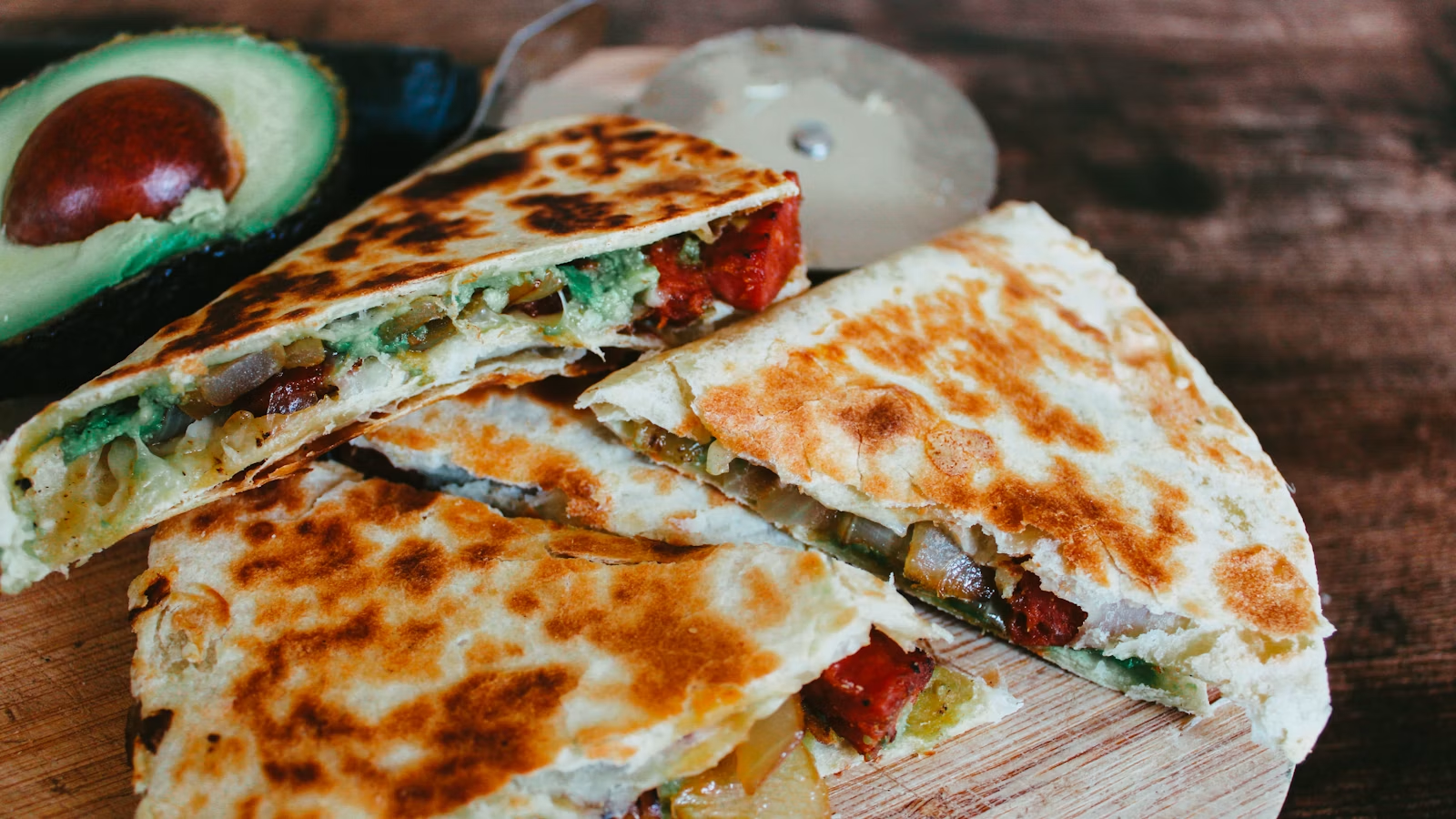
The best quesadilla is not the fullest one; it is the one that stays crisp while every bite holds together.
Why this quesadilla recipe works
A folded tortilla is easier to flip than a two-tortilla stack, and it keeps the filling in a thin, even layer. That matters because the tortilla and cheese need to finish at the same time. Mixing the beans and vegetables through the grated cheese, instead of piling them in separate bands, creates a cohesive filling. Every wedge gets a little smoke from the poblano, freshness from the scallions and cilantro, and enough cheese to bind everything.
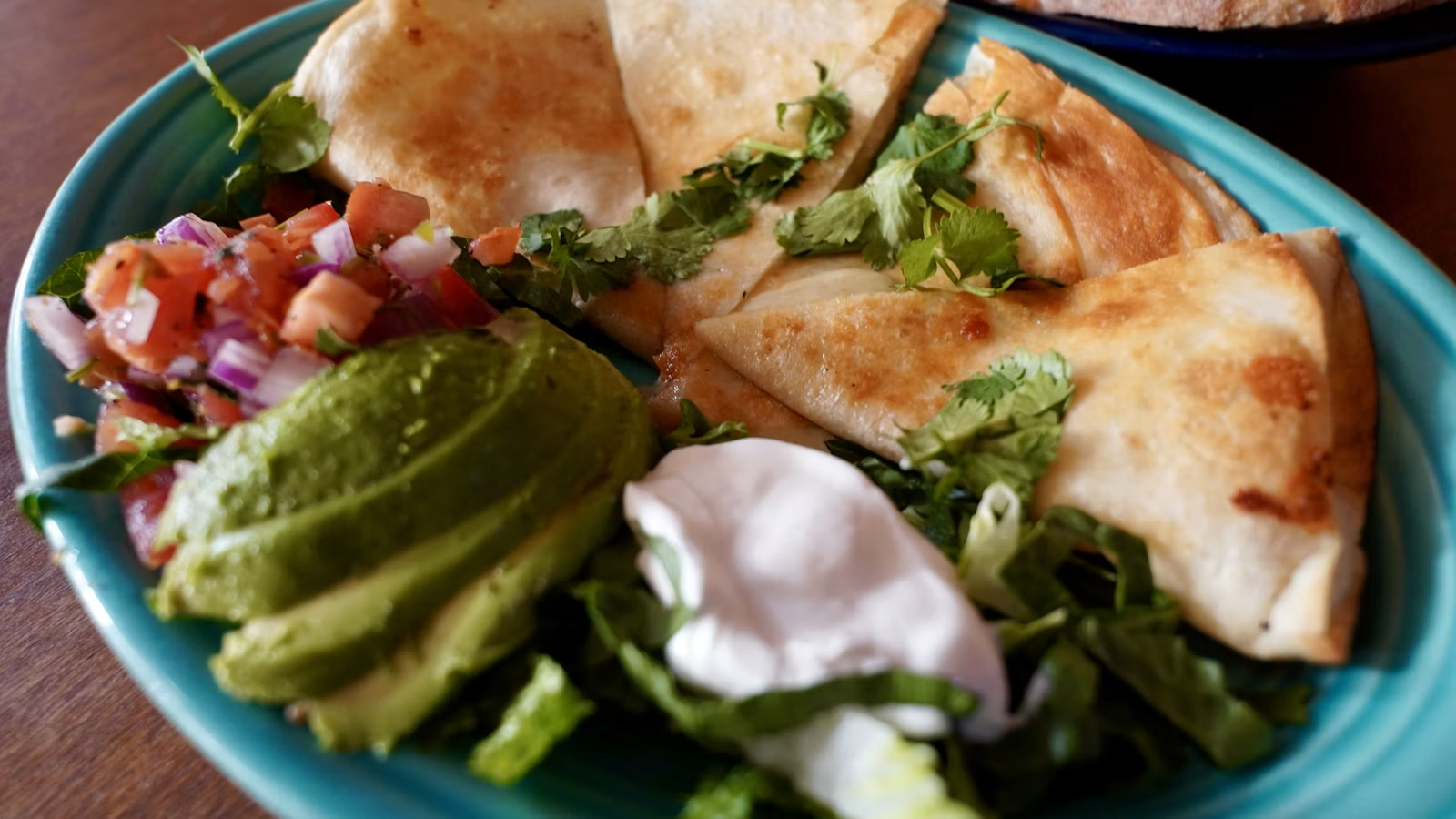
Choose cheese and tortilla for the texture
Oaxaca and Chihuahua cheeses melt beautifully and taste at home in a quesadilla; Monterey Jack is an accessible substitute. Grate a block yourself when possible. Pre-shredded cheese can contain starches that limit smooth melting, a useful distinction in this guide to shredded cheese. Flour tortillas are sturdy and flexible, while corn tortillas bring stronger flavor but should be warmed briefly so they fold without cracking.
In Mexico, quesadillas vary widely by region and may contain cheese, mushrooms, potato, squash blossom, stews, or other fillings. The Academia Mexicana de la Lengua describes the familiar form as a folded tortilla that is browned while its cheese melts. This version keeps that recognizable structure but adds a practical bean-and-poblano filling for a complete meal.
Keep the filling dry and balanced
Moisture is the enemy of a crisp tortilla. Drain and rinse canned beans, then pat them dry. Cook the diced poblano before it goes into the filling so its water evaporates and its flavor concentrates. Salsa, sour cream, and guacamole belong beside the finished quesadilla rather than inside it. Leave a half-inch border around the tortilla, and resist the urge to add one more handful: an overfilled quesadilla steams, leaks, and becomes difficult to turn.
How to cook a crisp quesadilla
Use medium-low heat once the filled tortilla reaches the pan. High heat can spot-burn the outside before the center melts; gentler heat gives the cheese time to soften as the tortilla browns. A thin film of neutral oil helps the surface crisp, but you do not need to shallow-fry it. Press lightly with a spatula, flip when the underside is evenly golden, and cook the second side. Rest each quesadilla for two minutes before cutting so the filling settles instead of spilling out.
Quesadilla Recipe

Ingredients
- 8 ounces Oaxaca, Chihuahua, or Monterey Jack cheese freshly grated
- 1 cup cooked black beans drained, rinsed, and patted dry
- 1 medium poblano pepper seeded and finely diced
- 3 scallions thinly sliced
- 1/4 cup fresh cilantro chopped
- 1 jalapeño seeded and minced, optional
- 1/2 teaspoon ground cumin
- 1/2 teaspoon fine salt divided
- 4 8-inch flour tortillas or pliable corn tortillas
- 2 teaspoons neutral oil divided
- 1 lime cut into wedges, for serving
Equipment
- 1 large cast-iron or heavy skillet
- 1 box grater
Instructions
- Heat 1 teaspoon oil in a large skillet over medium-high heat. Add the poblano and a pinch of the salt; cook for 4 to 5 minutes until tender and lightly blistered. Transfer to a bowl and wipe the skillet clean.
- Add the cheese, black beans, scallions, cilantro, jalapeño, cumin, and remaining salt to the poblano. Toss until the vegetables and beans are evenly threaded through the cheese.
- Place one quarter of the filling over half of each tortilla, leaving a 1/2-inch border. Fold the bare half over the filling and press gently. Do not overpack.
- Heat the skillet over medium-low and brush with a little of the remaining oil. Cook two quesadillas at a time for 3 to 4 minutes per side, pressing lightly, until the tortillas are crisp and the cheese is fully melted.
- Rest the quesadillas for 2 minutes so the cheese sets slightly. Cut each into three wedges and serve hot with lime, salsa, or guacamole.
Nutrition
Video
Notes
Tried this recipe?
Let us know how it turned out!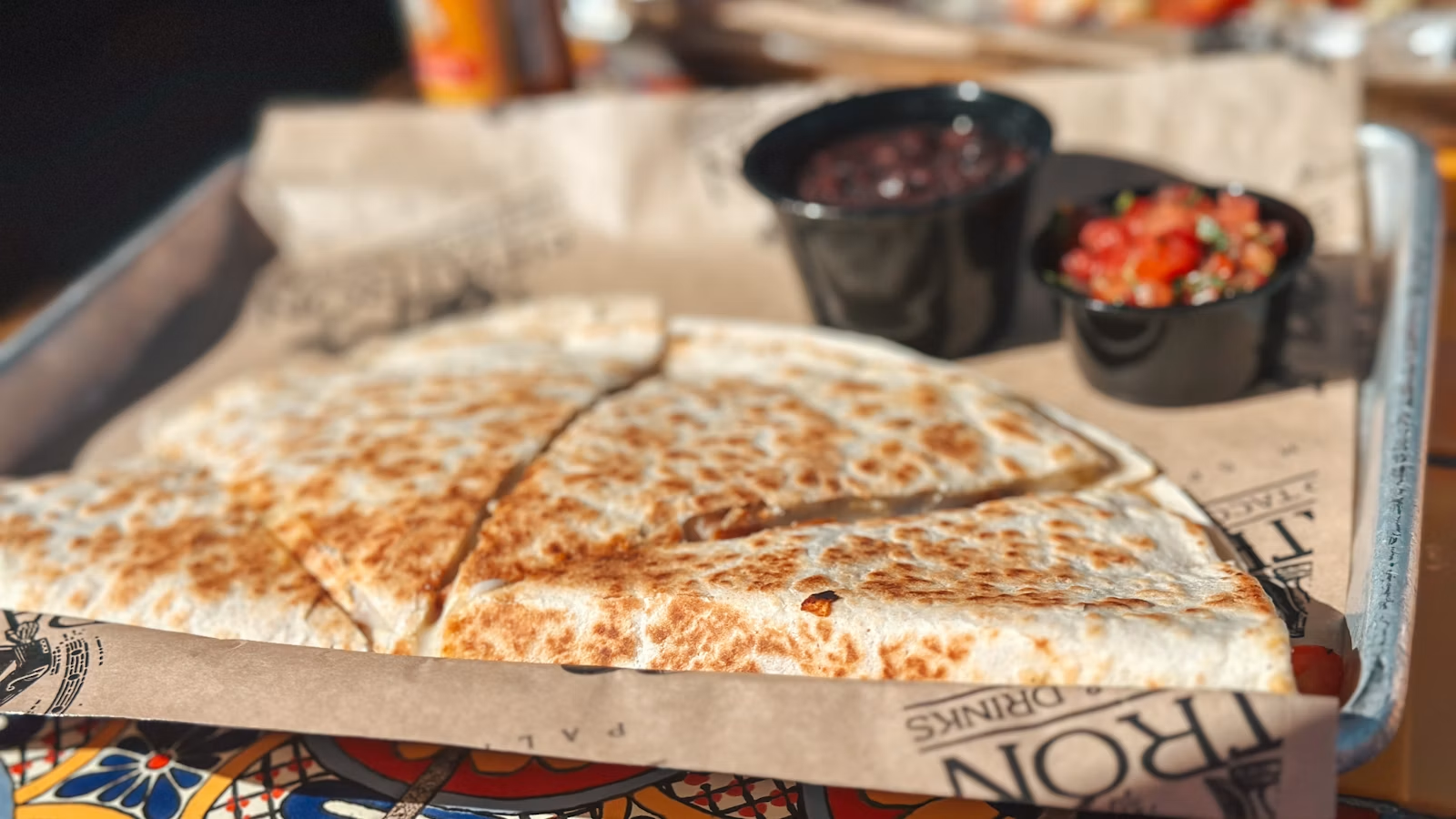
Serving, swaps, and storage
Serve the wedges immediately with lime and a bright salsa. For a hotter filling, keep the jalapeño seeds; for a milder one, omit it. Cooked corn, sautéed mushrooms, or shredded leftover chicken can replace the beans, provided the filling stays dry. If you have extra cheese, use it within a few days or follow this guide to freezing cheese.
Refrigerate leftover quesadillas within two hours in a shallow, covered container. Reheat them in a dry skillet or a 375°F oven until hot and crisp; a microwave softens the tortilla. They are best within three days. Assemble only what you plan to cook, because a filled tortilla will absorb moisture as it sits.
For meal prep, mix the filling up to one day ahead and refrigerate it separately from the tortillas. Let the mixture lose its refrigerator chill for 10 minutes before cooking, which helps the cheese melt before the tortilla overbrowns. A heavy skillet gives the most even crust, but any broad nonstick pan works. Cook in batches rather than crowding the pan, wipe away escaped cheese between batches, and refresh the surface with only a few drops of oil. These small controls make the last quesadilla as crisp as the first.
Sources
- Mexico’s Federal Consumer Protection Agency: Quesadilla traditions and fillings
- Academia Mexicana de la Lengua: Quesadilla definition and preparation
- Serious Eats: Quesadilla filling and folding techniques
- USDA FSIS: Leftovers and food safety
Hi, I’m Laura, the voice behind Tastiva. I’ve always believed that eating well should feel enjoyable, comforting, and realistic—not like another complicated rule to follow. I love creating recipes that fit into everyday life, sharing simple nutrition ideas, and finding small ways to make meals feel a little better without losing the pleasure of good food.