
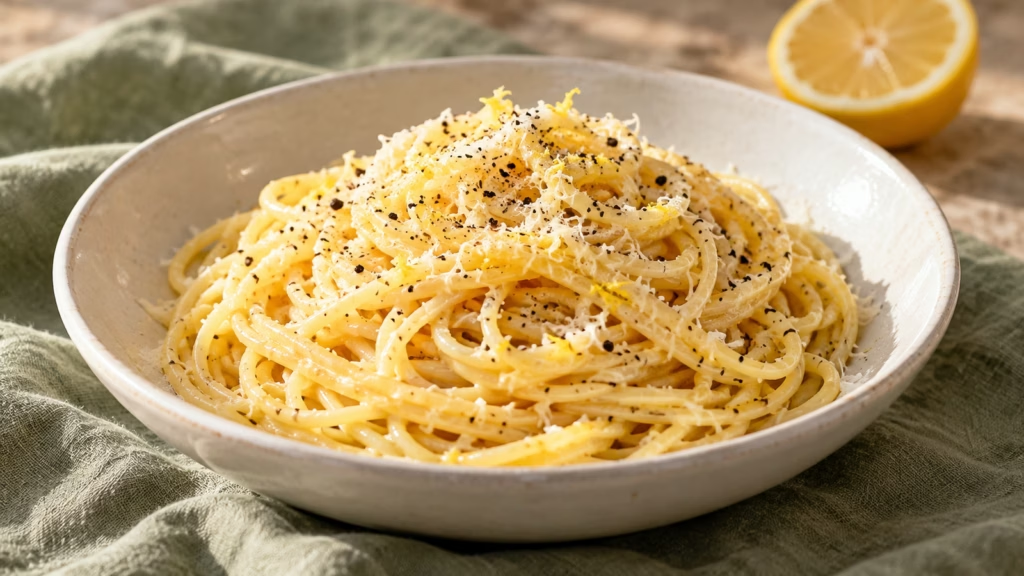
The lemon is frozen; dinner is still hot. Frozen lemon pasta uses finely grated frozen fruit in a butter-and-Parmesan sauce, bringing some flesh and pith along with the fragrant yellow peel. Start with less than you think you need, taste the dressed pasta, and add more only if the balance suits you.
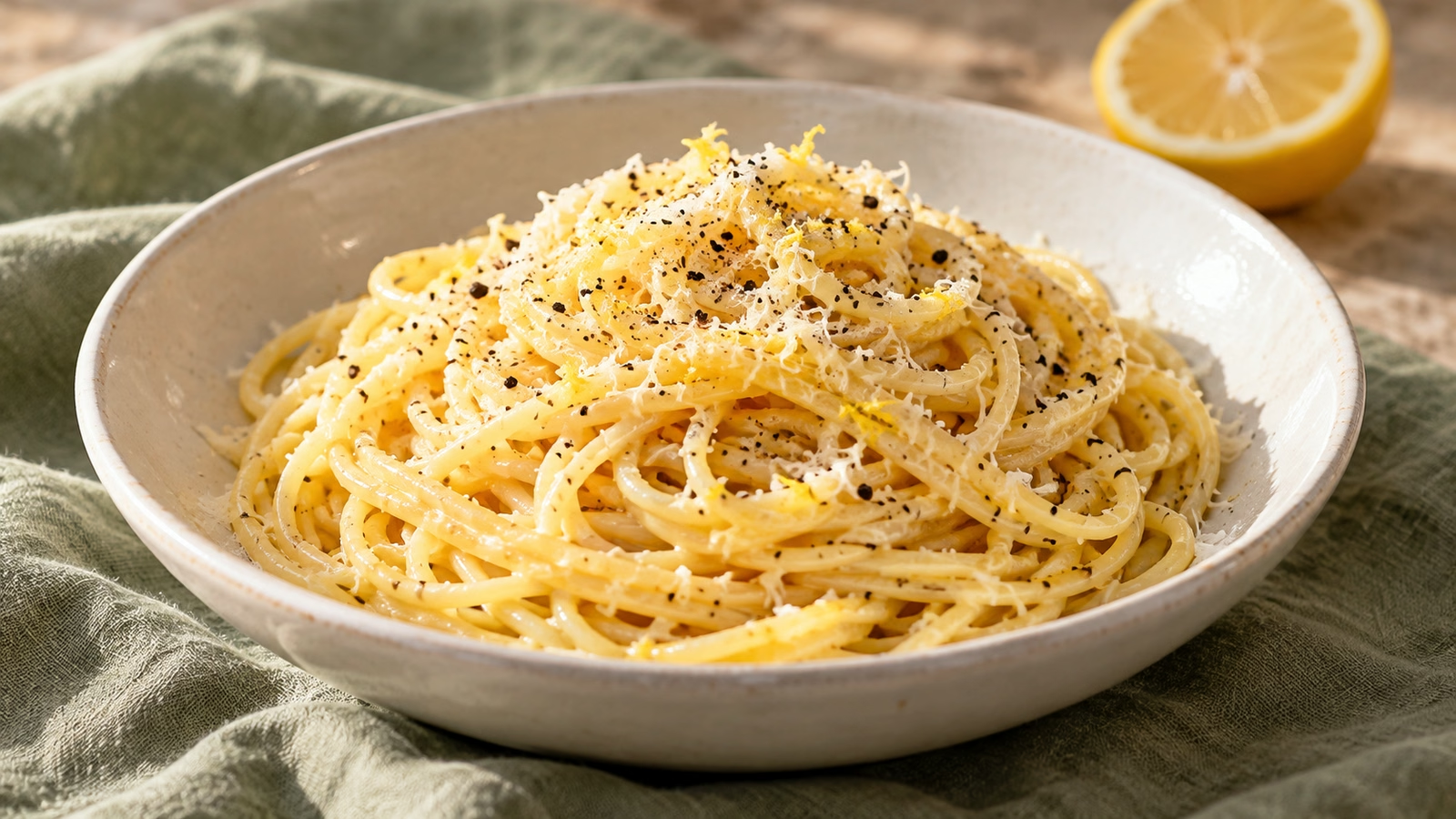
Treat the frozen lemon as a seasoning you can adjust. A little pith brings a different citrus character, while too much can dominate a sauce that has only a few ingredients.
Freeze the lemon ahead and choose the skin carefully
A thin-skinned lemon is a useful starting point because the white pith is part of this technique. Choose sound fruit suitable for using the peel, wash it under running water and dry it before freezing. A whole lemon needs an overnight head start, so this is quick dinner only when that part is already done.
- Clean before freezing: gently rub the fruit under plain running water. The FDA does not recommend soap or produce wash.
- Freeze whole: place the dry lemon in a freezer-safe container or bag overnight, until solid.
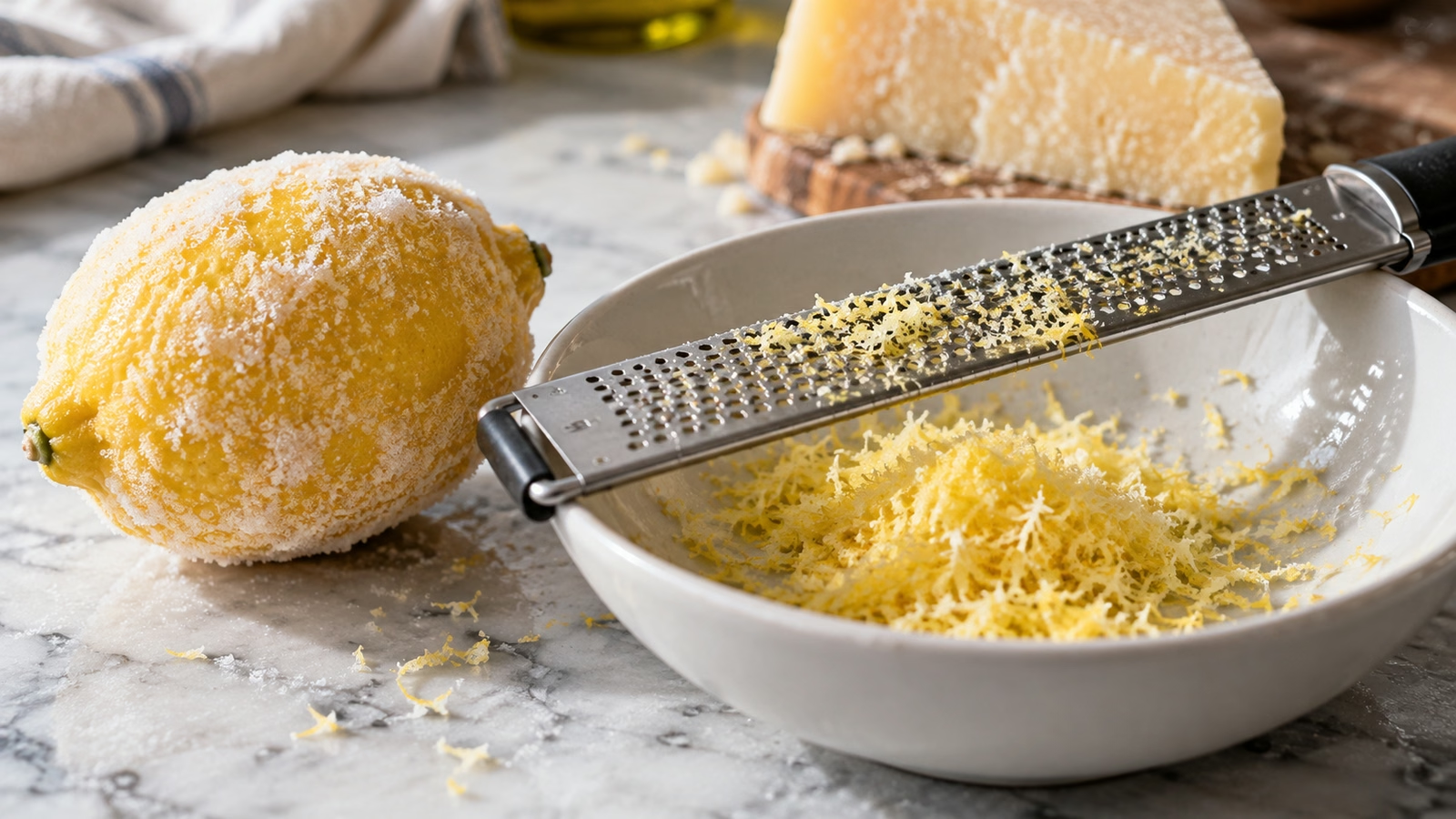
- Grate with care: use a fine rasp over a bowl and keep your fingers well clear. Stop before the remaining piece becomes difficult to hold.
- Avoid seeds: remove any exposed seeds as you work. Do not keep grating through a seed or the hard stem end.
- Measure the shavings: begin with 15 g, then have up to another 15 g ready for the finished pasta. Lemon size is a poor guide to flavor intensity.
I prefer a modest first addition because lemons vary and the pith is less forgiving than juice. Freezing does not remove bitterness. It gives you a different way to introduce more of the fruit into the dish.
Get the pasta water ready before you drain
Cook 300 g spaghetti until al dente according to its package, reserving a cup of the starchy water before draining. The sauce uses butter, finely grated Parmesan and that water to coat the strands. There is no cream here, so the tossing step needs enough moisture to bring the ingredients together.
- Butter: cut 42 g unsalted butter into small pieces so it melts readily against the hot pasta.
- Parmesan: grate 50 g finely. Large shreds take longer to disperse and encourage you to keep heating the pan.
- Water: reserve about 240 ml, but start the sauce with only 60 ml. Add more in small splashes as needed.
- Pepper: a small measured amount brings contrast. Taste before adding more, since the lemon already makes the finish lively.
- Salt: the card seasons the finished sauce with 1 g and cooks the pasta in unsalted water for a clear baseline. Adjust to your ingredients if preferred.
Add the cheese off the heat and taste for balance
Return the drained pasta to the warm pot with the butter and initial pasta water, then take it off the heat. Toss in the first lemon shavings and add the Parmesan gradually. Use tongs to turn the strands until they wear a light coating rather than sit in a pool.
- Dry or sticky strands: add a tablespoon of the reserved water and toss again. Repeat only until the pasta moves freely.
- Cheese forming clumps: stop heating and keep tossing with a small splash of warm pasta water. Fierce heat makes control harder.
- Too lemony: hold back the remaining lemon. Additional pasta or another portion of the plain sauce is more effective than trying to mask excess pith.
- Not bright enough: add some of the reserved lemon shavings, toss thoroughly and taste a strand again.
- Ready to serve: look for a light sheen and a sauce that clings. Portion promptly because pasta keeps absorbing liquid.
Parade’s July 2026 review identified frozen lemon pasta as a viral social-media variation and noted the potential for bitterness. I’d take that as a reason to measure and taste, rather than a reason to grate most of a lemon into every pan.
Keep the serving simple and the leftovers realistic
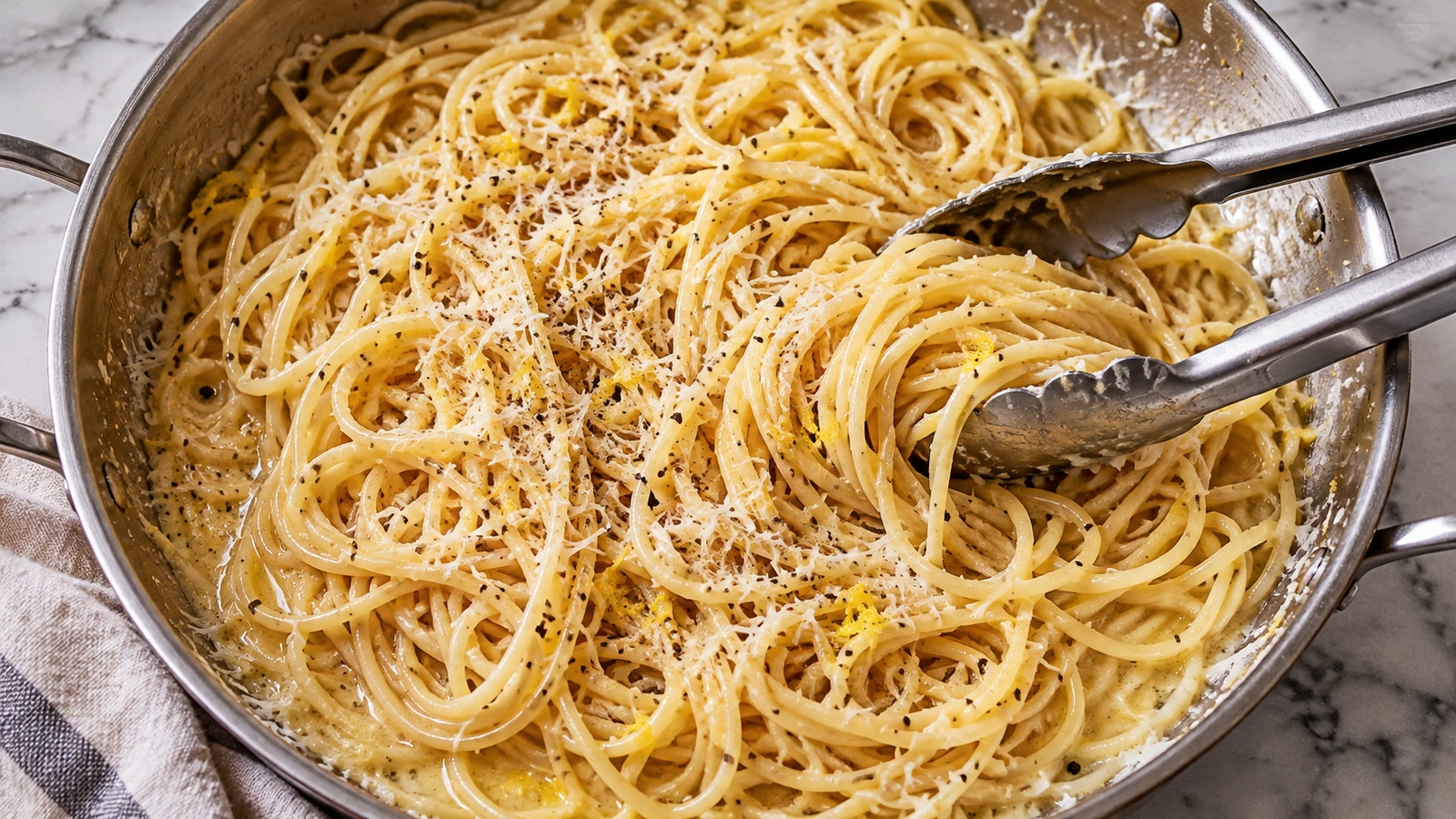
This is at its best just after tossing, when the sauce is fluid and the citrus aroma is fresh. A crisp salad or cooked vegetables can make the plate more varied. Keep extra Parmesan optional; adding it automatically can push a well-balanced sauce toward saltiness.
- For another lemon-forward option: Tastiva’s lemon tahini sauce gives vegetables and grain bowls a different creamy finish.
- For dietary needs: ordinary spaghetti contains wheat and this sauce contains milk. Use appropriate products if adapting, and expect texture changes.
- For remaining lemon: return the unused frozen fruit promptly to a freezer-safe container. Keep it clean as you grate rather than leaving it on the counter throughout dinner.
- For pasta leftovers: refrigerate promptly in a shallow covered container and use within three to four days.
- To reheat: add a little water and heat gently to 165°F (74°C), stirring frequently. The sauce may be less smooth than when freshly made.
Refrigerate within two hours, or one hour above 90°F (32°C). Nutrition estimates one-quarter of the recipe with 30 g grated lemon; your actual amount, peel-to-flesh balance and added cooking-water salt change the result.
Frozen Lemon Pasta Recipe

Ingredients
- 10.6 ounces dry spaghetti 300 g
- 3 tablespoons unsalted butter 42 g, cut into small pieces
- 1/2 cup finely grated Parmesan 50 g, using weight for accuracy
- 15–30 g finely grated frozen lemon from one washed, dried, thin-skinned whole lemon frozen overnight; avoid seeds and stem
- 1/4 teaspoon black pepper 0.5 g
- 1 g table salt about a scant 1/4 teaspoon, plus optional extra to taste
- 1 cup reserved pasta cooking water 240 ml reserved; begin with 60 ml and add only as needed
Equipment
- 1 freezer-safe container
- 1 large pasta pot
- 1 fine rasp grater
- 1 Tongs
- 1 heatproof measuring cup
- 1 Kitchen scale
Instructions
- The night before, rub the lemon under plain running water, dry it and freeze it in a freezer-safe container until solid, about 8 hours or overnight. Do not use soap on produce.
- Bring a large pot of water to a boil. Cook the spaghetti according to its package until al dente. For the nutrition baseline, use unsalted cooking water. Before draining, reserve about 1 cup (240 ml) of the starchy water.
- While the pasta cooks, finely grate the frozen lemon into a bowl, keeping your fingers clear and removing exposed seeds. Measure 15 g to start and reserve up to another 15 g for adjustment. Stop before the remaining fruit is difficult to hold.
- Return the hot drained spaghetti to the warm pot with the butter and 1/4 cup (60 ml) pasta water. Take the pot off the heat and toss until the butter melts.
- Add the first 15 g lemon shavings, pepper and measured salt. Sprinkle in Parmesan gradually while tossing. Add reserved water 1 tablespoon at a time until the sauce lightly coats the strands.
- Taste and add some or all of the reserved lemon only if wanted. Serve immediately. Return unused frozen lemon promptly to its freezer-safe container.
Nutrition
Notes
Tried this recipe?
Let us know how it turned out!Sources
- Parade: frozen lemon pasta trend and review, July 2026
- FDA: cleaning fruits and vegetables
- USDA: handling leftovers safely
- USDA: reheating leftovers to 165°F
- USDA FoodData Central: ingredient nutrition data
Hi, I’m Laura, the voice behind Tastiva. I’ve always believed that eating well should feel enjoyable, comforting, and realistic—not like another complicated rule to follow. I love creating recipes that fit into everyday life, sharing simple nutrition ideas, and finding small ways to make meals feel a little better without losing the pleasure of good food.