
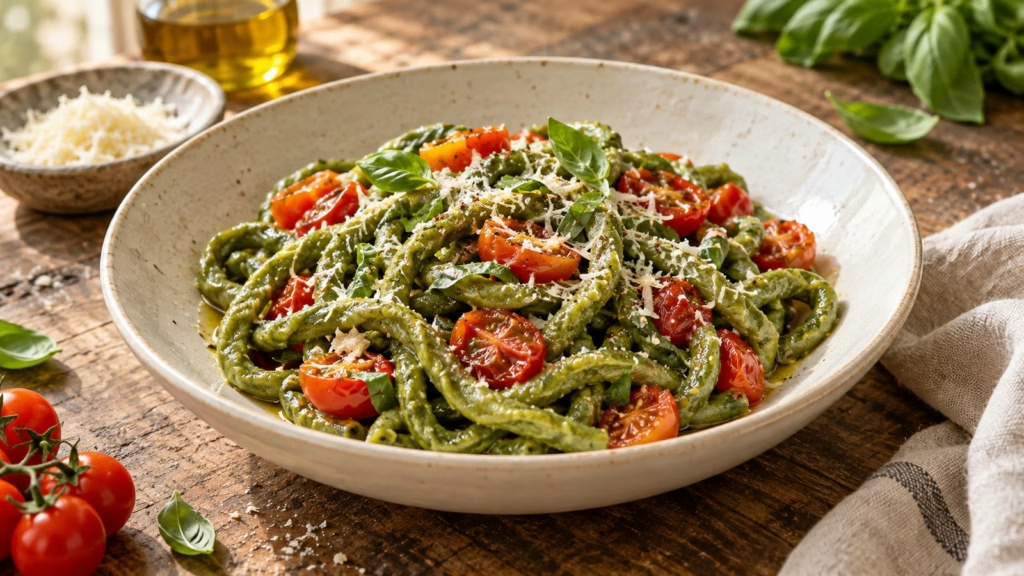
A green dough ball on the counter can look more like a craft project than dinner. Spinach pici pasta turns it into something useful: thick, hand-rolled noodles that need a food processor and your palms, rather than a pasta machine. Fresh spinach supplies the color and moisture; a quick cherry tomato sauce keeps the finished bowl simple.
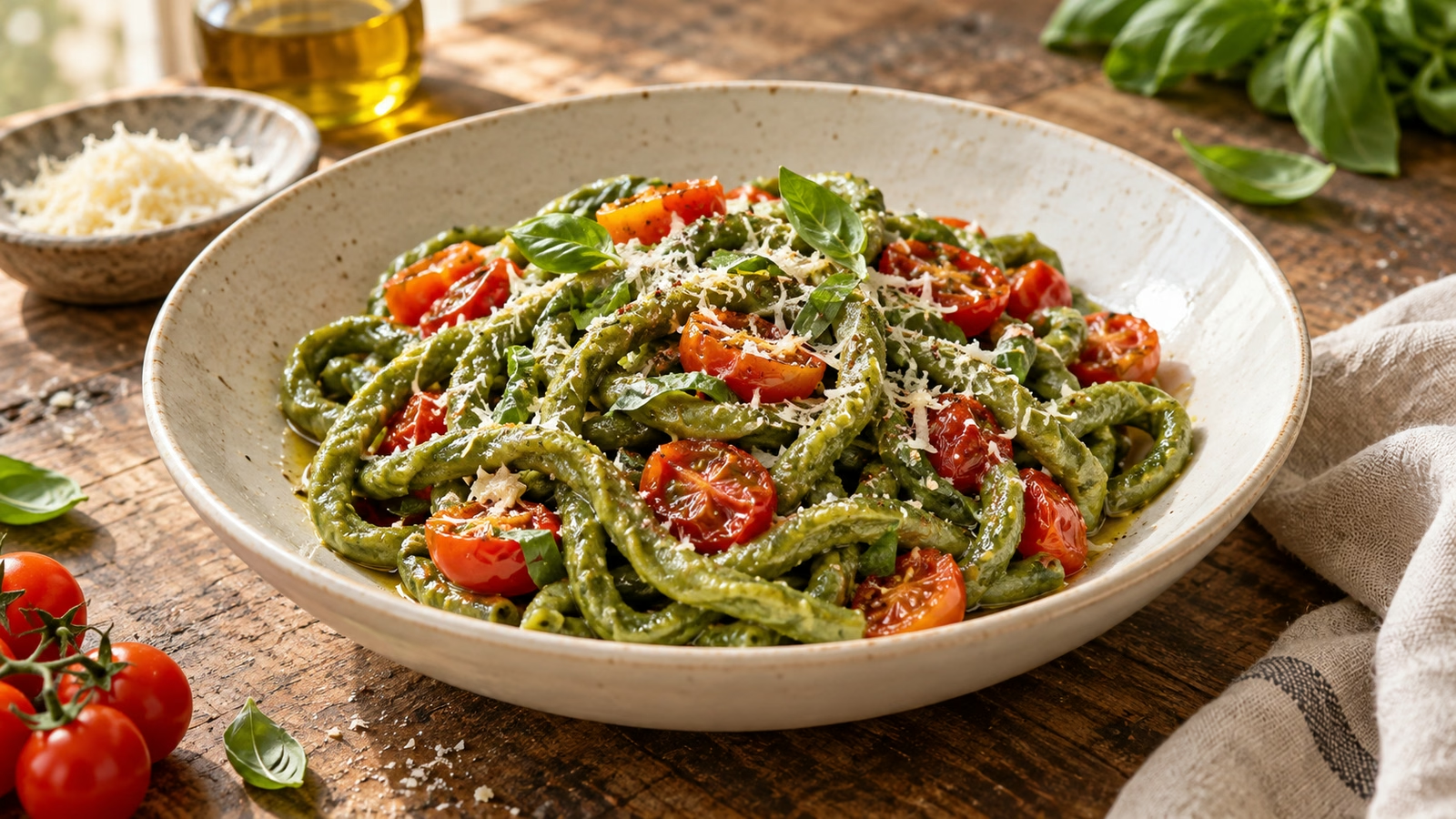
Aim for noodles of similar thickness, and let their slightly uneven lengths be part of the charm.
What spinach pici pasta should feel like
Pici are rustic pasta ropes, and this spinach version has a pleasantly substantial bite. The goal is tender pasta with a little chew, not soft vegetable purée shaped like noodles. Flour still forms the dough, so its green color does not make it a flour-free dish.
This is an established social-media favorite, included in Parade’s July 2026 viral-recipe roundup. I would choose it for an unhurried dinner when shaping the pasta is part of the pleasure. The sauce is quick; rolling an entire batch is the step worth leaving time for.
- Expect a rustic shape. Slight curves and different lengths are welcome. Large differences in thickness make even cooking harder.
- Keep the sauce light. Tomatoes, garlic and olive oil let the green noodles remain recognizable instead of burying them under a heavy coating.
- Plan for four portions. The batch uses 300 grams of flour, with cheese and vegetables included. Divide it by appetite rather than by the number of individual strands.
Build a dough that rolls instead of smears
Start with fresh baby spinach that has been washed and dried well, unless its label says it is ready to use. Water clinging to leaves makes the flour balance unpredictable. A scale is especially useful here: loosely packed cups of spinach vary considerably, and scooped flour can be compacted.
Jamie Oliver’s spinach pici method uses the leaves and flour together in a processor. Here, the same basic technique leads into a simpler tomato-and-basil finish. Stop the machine before checking the dough or scraping the bowl.
- Too sticky: work in flour a teaspoon at a time. Stop when the dough holds together without leaving a wet layer on your fingers.
- Too crumbly: squeeze a small handful before adding water. If it still falls apart, add water one teaspoon at a time and pulse again.
- Springing back: cover the dough for its short rest, then try rolling again. Keep the unused portion covered as you work.
- Frozen spinach: its drained moisture varies. I would save that adjustment for another batch rather than assume a gram-for-gram swap.
Roll evenly and check the center
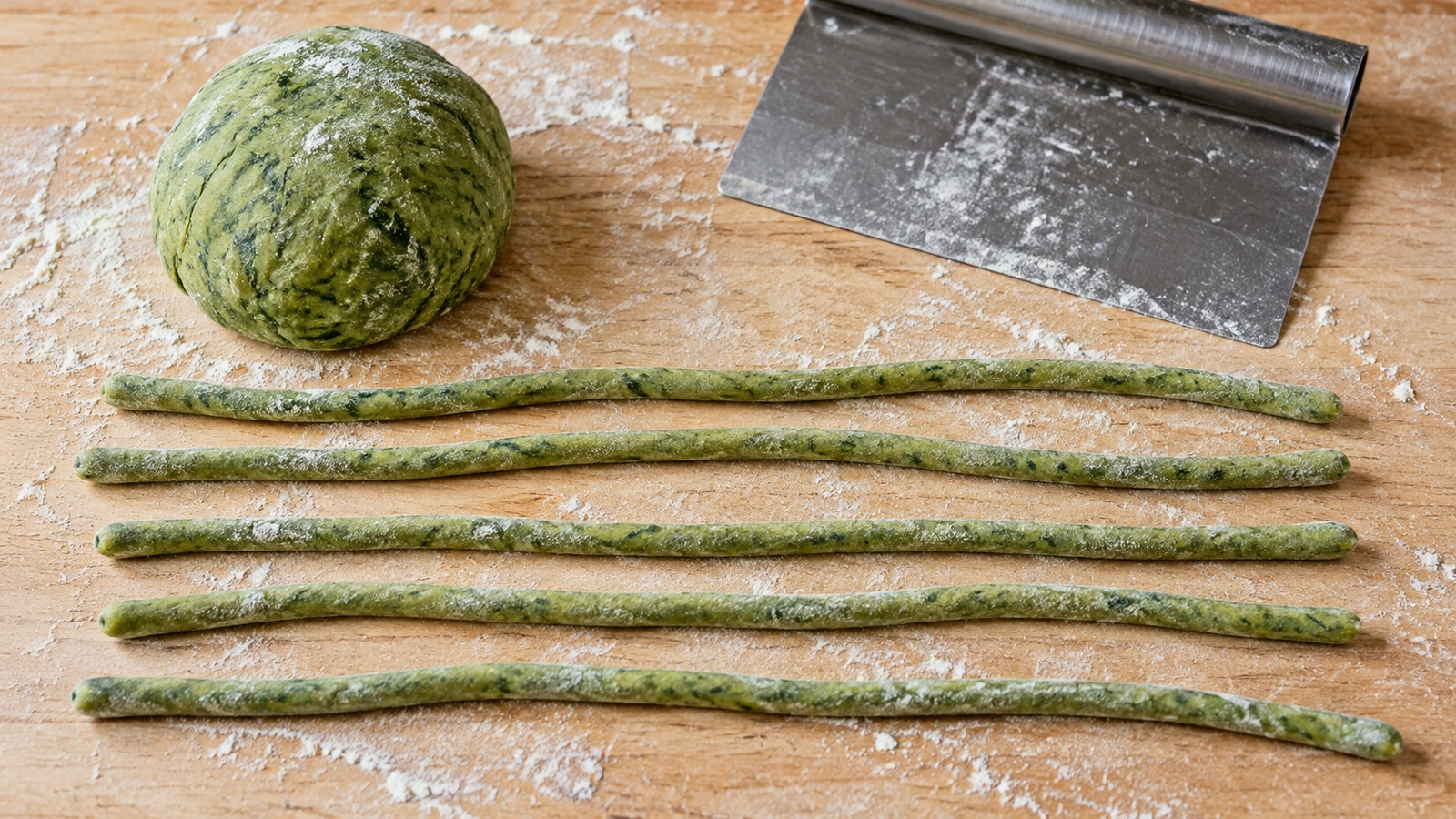
Use only a light dusting of flour on the board. A heavily floured surface lets the dough skid when your palms need a little traction. Start at the middle of each small piece and roll outward, keeping the pressure gentle and even. Long strands can be shortened to fit your board and pot.
Floating is a useful observation, but it does not prove a thick noodle is cooked through. Lift out one of the thickest pieces after about five minutes and cut or taste it once cooked enough to assess. A dense, chalky center needs more time; aim for a tender bite with no raw-flour core.
- Uneven ropes: roll thick sections a little more before cooking, instead of trying to solve the difference in the pot.
- Noodles sticking together: place them in a loose single layer, then stir gently after they enter the boiling water.
- Sauce looking dry: loosen it gradually with reserved cooking water. Keep some water back until after the pasta is mixed in.
- Food handling: do not taste uncooked dough. The FDA treats flour as a raw food, even when the dough contains no egg.
Finish the bowl and plan for leftovers
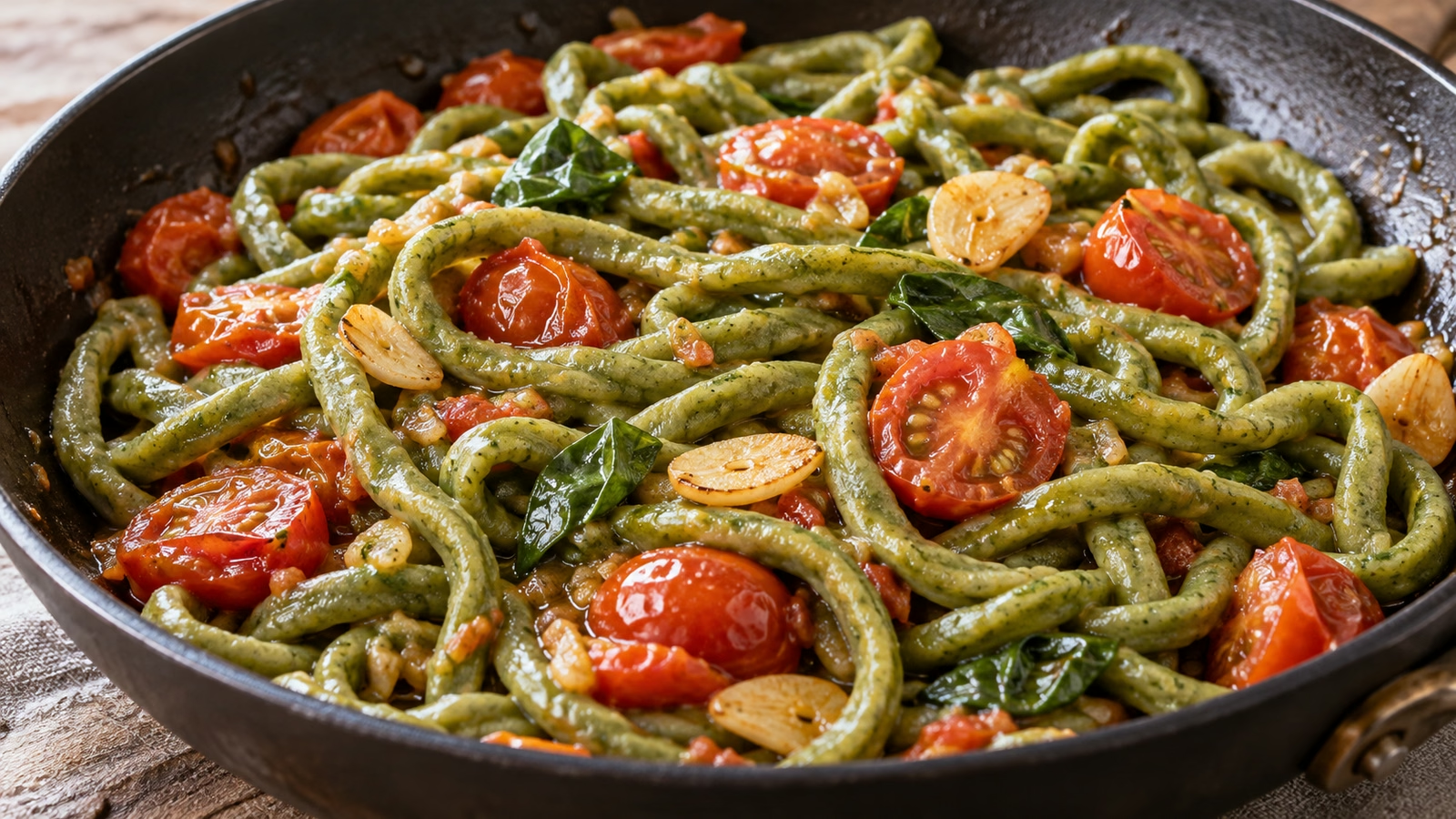
Turn the cooked pici through the tomato sauce gently, then add basil and Parmesan off the heat. I prefer grated cheese in a modest amount here, because the spinach and tomatoes already give the bowl a clear direction. If you would rather use a different sauce, our basil pesto guide explains texture adjustments and ingredient choices.
The nutrition estimate covers one-quarter of this batch with all the sauce and cheese. It excludes extra dusting flour and optional salt; it is an ingredient calculation, not a laboratory analysis. Parmesan contains milk, and a vegetarian version requires cheese made with suitable enzymes.
- Serve promptly in shallow bowls so the sauce stays easy to distribute.
- Refrigerate cooked leftovers within two hours, or one hour above 90°F (32°C), in a shallow covered container.
- Use refrigerated leftovers within three to four days and reheat to 165°F (74°C), adding a little water if needed.
- For the first attempt, cook the freshly rolled batch rather than adding an untested drying or freezing schedule.
Spinach Pici Pasta Recipe

Ingredients
- 200 g fresh baby spinach washed and dried well
- 300 g all-purpose flour about 2 1/2 cups, spooned and leveled; plus a little for dusting
- 2 tablespoons olive oil 27 g
- 4 cloves garlic 12 g, thinly sliced
- 400 g cherry tomatoes about 2 2/3 cups, halved
- 1/3 cup finely grated Parmesan cheese 30 g; choose suitable enzymes for vegetarian needs
- 1/2 cup fresh basil leaves 10 g, loosely packed and torn
Equipment
- 1 Food processor
- 1 Kitchen scale
- 1 Large pot
- 1 Large skillet
- 1 Slotted spoon
Instructions
- Pulse the dry spinach and flour in a food processor until finely combined and a dough begins to gather. Stop and squeeze a handful. If dry and crumbly, add water a teaspoon at a time; if sticky, add flour a teaspoon at a time. Knead briefly until cohesive, cover and rest for 15 minutes.
- Pinch off small pieces and roll with your palms into ropes about 1/8 to 3/16 inch (3–5 mm) thick. Keep thickness even and shorten ropes as needed. Arrange loosely in one layer on a lightly floured board.
- Bring a large pot of water to a boil. Meanwhile warm the oil in a skillet over medium-low heat. Add garlic and stir for about 30 seconds, without browning. Add tomatoes and cook for 6–8 minutes, stirring, until softened and juicy.
- Boil the fresh pici, stirring gently to separate them. Start checking after 5 minutes; thicker pieces may need 1–3 minutes longer. Check the thickest noodle for a tender center without raw flour. Reserve 1 cup of cooking water before draining.
- Transfer pici to the sauce and toss gently. Add reserved water a tablespoon at a time until lightly coated. Remove from heat and fold in Parmesan and basil. Divide into four portions and serve.
Nutrition
Notes
Tried this recipe?
Let us know how it turned out!Sources
- Jamie Oliver: spinach-and-flour pici technique
- Parade: established viral recipes, July 2026
- FDA: safe handling of flour
- USDA FSIS: food handling and cooked leftovers
- USDA FoodData Central: SR Legacy ingredient data
Hi, I’m Laura, the voice behind Tastiva. I’ve always believed that eating well should feel enjoyable, comforting, and realistic—not like another complicated rule to follow. I love creating recipes that fit into everyday life, sharing simple nutrition ideas, and finding small ways to make meals feel a little better without losing the pleasure of good food.