
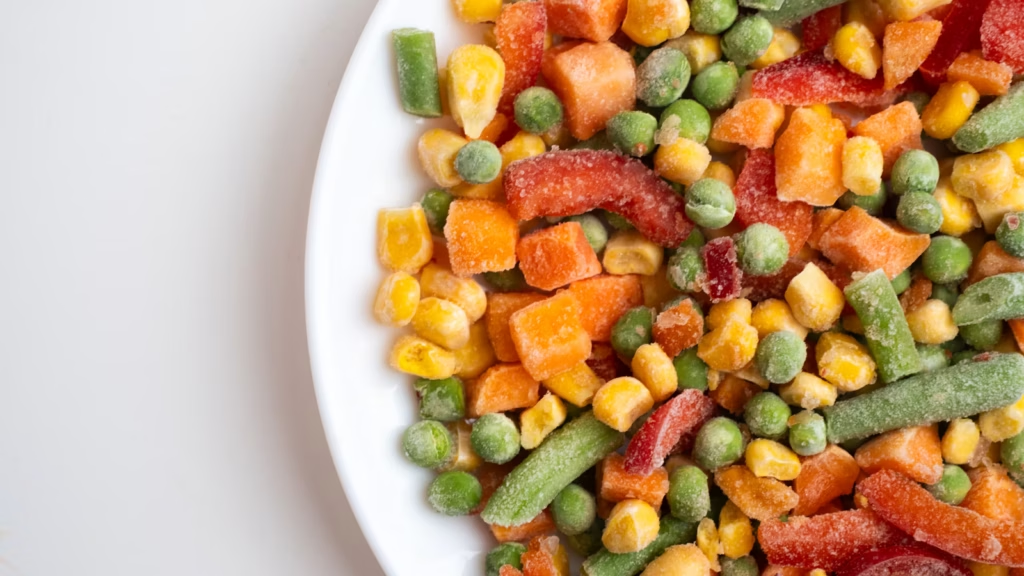
The broccoli in the produce bin looks lovely, but there’s a bag in the freezer that won’t ask you to find a chopping board tonight. When comparing frozen vegetables vs fresh, frozen can be a nutritious, practical choice, while fresh often makes more sense when crisp texture is the point. Start with what you’re cooking, then consider preparation and how much you’ll use.
A useful vegetable purchase has a place in dinner, not just a promising place in the cart.
Frozen vegetables vs fresh: what the nutrition research says
“Fresh” describes a form of food, not a guarantee that every nutrient is higher. A 2015 UC Davis study compared minerals, fiber, and total phenolics in eight fruits and vegetables over storage periods; most tested items showed no significant fresh-versus-frozen difference for those measures.
- Keep the finding in bounds: that study doesn’t establish that every nutrient in every vegetable is identical. The crop, preparation, and storage conditions matter.
- Compare like with like: plain frozen broccoli and plain fresh broccoli make a clearer comparison than a cheese-sauce vegetable mix and an unseasoned fresh head.
- Read the ingredient list: sauces and seasoning blends change what’s in the bag. Check sodium and other label details when those affect your choice.
- Think beyond a single nutrient: variety and a meal you enjoy are useful planning goals. A comparison chart can’t decide which vegetables you’ll actually serve.
I’d rather give both forms a sensible job than turn the vegetable aisle into an exam. If frozen peas help you add a cooked vegetable to an otherwise bare plate, their convenience is part of their usefulness.
Choose texture before choosing fresh or frozen
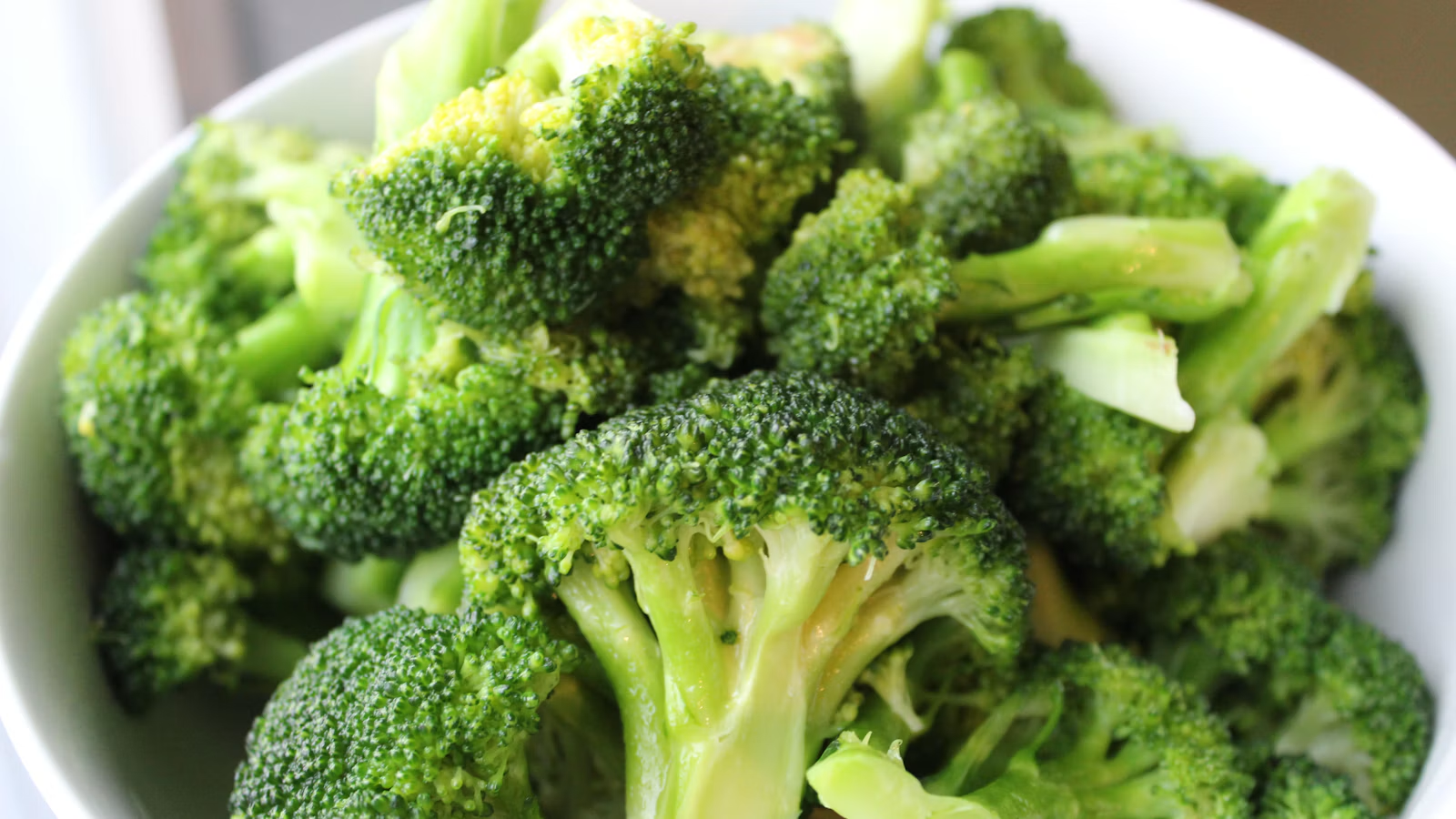
A crunchy broccoli salad and a smooth broccoli soup have different needs. Frozen vegetables often soften during processing and cooking, so they aren’t a universal swap for a fresh ingredient intended to stay raw and crisp.
- A crisp salad or snack plate: choose fresh vegetables for the crunch the dish promises. A thawed frozen floret won’t behave like a freshly cut one.
- A blended soup or cooked sauce: frozen vegetables can fit well because a firm raw texture isn’t the goal. Allow enough time for thorough cooking.
- A casserole or filling: check the recipe’s instructions for thawing and draining. Excess liquid can make a filling looser than intended.
- A browned side dish: use directions suited to the frozen product, avoid crowding, and let moisture escape as instructed. Expect differences from roasting fresh pieces.
My preference is to be clear about the result I want before changing an ingredient. If a recipe depends on a dry, crunchy vegetable, I wouldn’t quietly replace it with a softer frozen version and expect the same dinner. Where tenderness is welcome, the substitution is easier to plan.
The bag’s cooking directions still matter
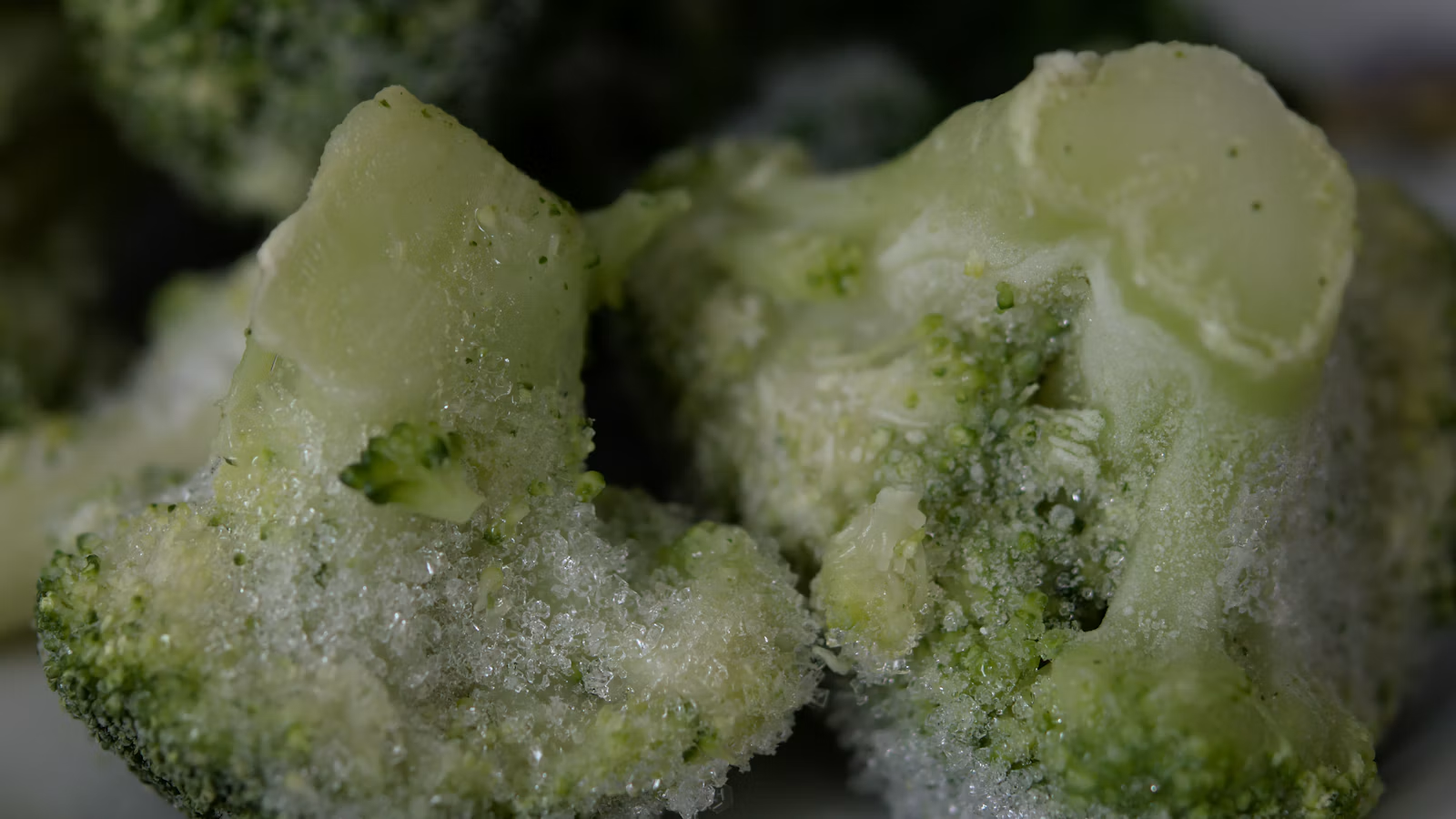
Frozen doesn’t automatically mean ready to eat. University of Maine Extension explains that freezing doesn’t kill all harmful bacteria and that most frozen vegetables need cooking; labels such as “ready to cook” describe a different product from “ready to eat.”
- Read the complete package instructions before putting the vegetables into a salad, smoothie, skillet, or microwave.
- Check whether the product should cook from frozen or be thawed first. A loose bag of peas and a tightly packed block of greens may need different handling.
- Follow the specified method, quantity, time, stirring, and temperature directions. If a thermometer target is given, don’t replace it with a guess based on color.
- For products requiring cooking, Maine Extension advises an internal temperature of 165°F (74°C). Texture preferences don’t replace safe preparation.
- After the required cooking, avoid keeping vegetables on the heat longer than needed. University of Minnesota guidance notes that overcooking damages color, flavor, and texture.
The practical detail I’d watch is the quantity: doubling a microwave portion doesn’t necessarily mean the original cooking time will still work. Follow the bag’s instructions for the amount you’re making, rather than treating a warm edge as evidence that every piece is ready.
Build a small supply you can use
A giant bag is only convenient if it fits your freezer and your meals. You don’t need a drawer full of every vegetable; two or three useful options can cover several dinners without making the shopping list complicated. For a concrete example, Tastiva’s five-day meal plan for one divides frozen broccoli and spinach across several meals.
- Give fresh produce a near-term plan: choose what will go into the first meals after shopping, especially vegetables you want to serve crisp.
- Give frozen vegetables a repeatable job: peas for a cooked rice dish, broccoli for soup, or chopped greens for a filling that calls for them.
- Compare usable portions: weigh the bag size against trimming and the amount you expect to use. A lower sticker price isn’t automatically a lower cost per dinner.
- Reseal the remainder: keep it protected from air and return it to the freezer promptly. Minnesota Extension recommends 0°F (-18°C) for frozen-food storage.
- Make the meal complete: pair vegetables with an appropriate protein, grain or other starch, and seasoning. A frozen vegetable bag is an ingredient, not a complete dinner by itself.
Fresh for the crunch you’re looking forward to, frozen for a cooked dish that needs to happen on a busy evening: that’s a plan with room for both. The better choice is the one that suits the meal and gets prepared safely.
Mayo Clinic dietitian Angie Murad explains why frozen produce can be a practical option and what to check on the package. Her shopping advice complements the texture comparison above; follow the product’s cooking instructions before serving.
Sources
- Bouzari, Holstege, and Barrett — mineral, fiber, and total phenolic retention in fresh and frozen produce.
- University of Maine Extension — cooking and handling frozen vegetables.
- University of Minnesota — cooking vegetables.
- University of Minnesota Extension — freezing and storage.

Hi, I’m Laura, the voice behind Tastiva. I’ve always believed that eating well should feel enjoyable, comforting, and realistic—not like another complicated rule to follow. I love creating recipes that fit into everyday life, sharing simple nutrition ideas, and finding small ways to make meals feel a little better without losing the pleasure of good food.