
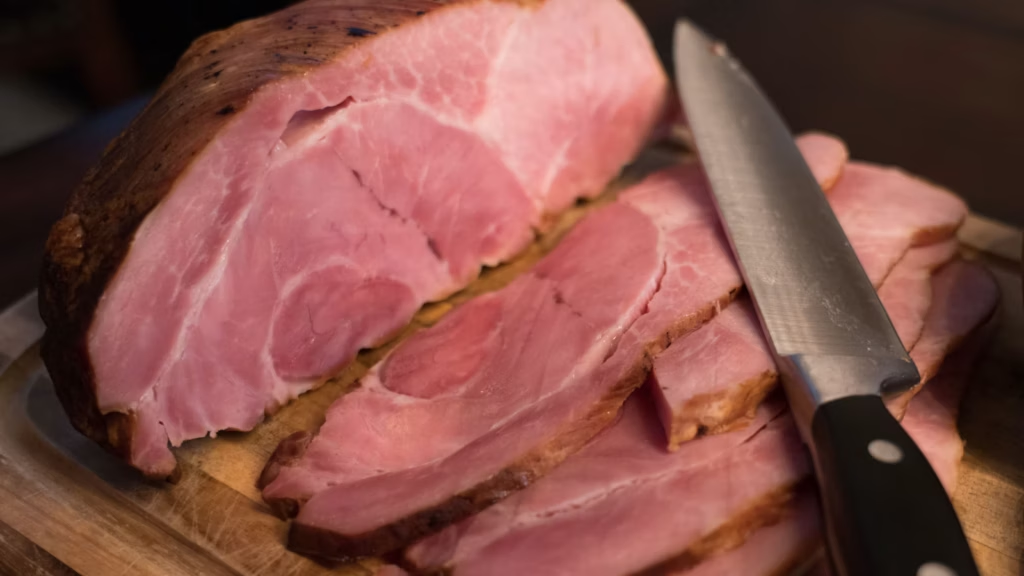
Gammon hock is one of those cuts that looks modest at the butcher counter and then quietly carries an entire pot of food. It is salty, savory, full of connective tissue, and happiest when it gets plenty of time rather than a fussy technique.
A gammon hock rewards patience: cook it gently, taste before salting, and let the meat tell you when it is tender.
What is a gammon hock?
A hock comes from the lower part of a pig’s leg, between the shank and the foot. It contains bone, skin, meat, and a good deal of collagen. Gammon refers to pork that has been cured, traditionally from the hind leg. Put the two ideas together and you have a cured hock with a deep pork flavor and enough gelatin to give soups and braises real body.
In the United States, you are more likely to see a similar cut labeled ham hock or smoked ham hock. The names are not perfectly interchangeable in every market, so the package matters more than the shorthand. Check whether the hock is smoked, whether it is fully cooked, and whether the label says it must be cooked before eating.
Gammon hock vs. ham hock
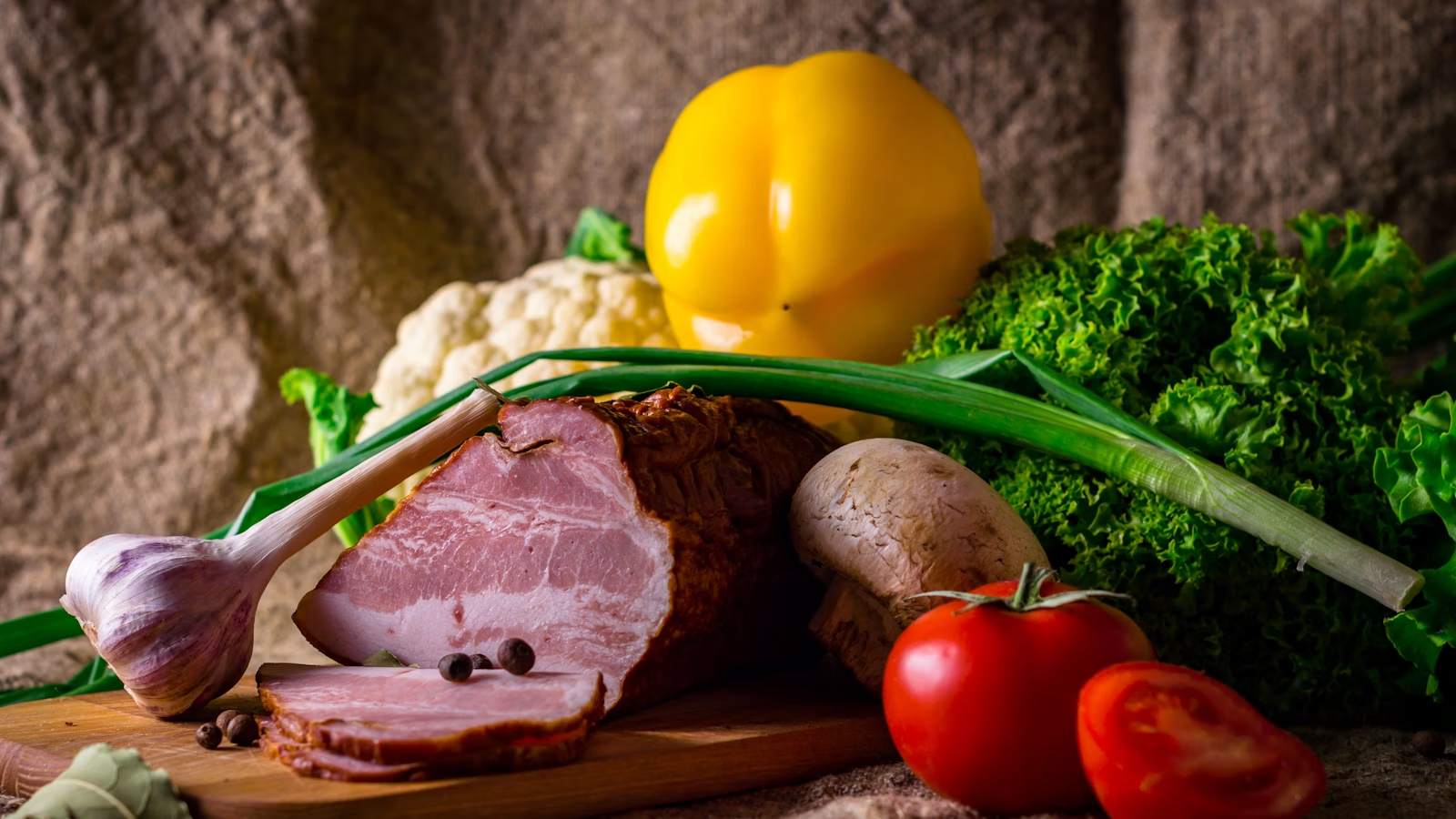
The simplest distinction is that gammon is cured pork sold before it is cooked, while ham is the cooked product. Real-world labels are less tidy. A smoked hock may be sold as a ham hock even when you still need to simmer it, and regional naming varies.
- Gammon hock: cured, usually sold for cooking, and common in British shops.
- Ham hock: the more familiar U.S. name; it may be smoked and may be sold cooked or cook-before-eating.
- Fresh pork hock: uncured, milder, and seasoned entirely by the cook.
My practical rule is unglamorous but reliable: read the label. It settles questions that the product name cannot.
Do you need to soak gammon hock?
Not always. Modern cures vary, and some hocks are much saltier than others. If the package gives soaking directions, follow them. Otherwise, you can place the hock in a large bowl, cover it with cold water, refrigerate for several hours, then drain. For a very salty hock, change the water once.
If you are unsure, a short first simmer is useful. Cover the hock with fresh water, bring it just to a boil for about five minutes, then discard that water and begin the actual braise with fresh liquid. This removes some surface salt, though it also takes away a little flavor. I would rather season the finished pot than gamble with extra salt at the start.
How to cook gammon hock until tender
Use a pot that holds the hock without acres of empty space. Add onion, carrot, celery, bay, peppercorns, and enough water or unsalted vegetable stock to cover. Bring it to a brief boil, lower the heat, and keep the liquid at a lazy simmer. A hard boil can make the outside ragged before the connective tissue has had time to soften.
Most hocks need roughly two to three hours, but size and cure matter. Turn the hock once or twice and add hot water if the liquid drops below the meat. It is ready for shredding when a knife slips into the thickest part easily and the meat loosens from the bone. That texture cue is more useful than a rigid minute count.
Food-safety checks that matter
A cured or smoked appearance does not prove that a hock is ready to eat. The USDA notes that cook-before-eating ham must be identified on the label. For raw fresh or smoked ham, its safe minimum is 145°F (63°C) followed by a three-minute rest. Fully cooked ham from a USDA-inspected plant can be reheated to 140°F (60°C); other cooked ham should reach 165°F (74°C). Follow the package when its directions are more specific.
For a hock, safety is only the first checkpoint. The collagen needs longer gentle cooking before the meat becomes pleasantly tender. Insert the thermometer into the thickest meat without touching bone, then keep cooking until the texture is right. Refrigerate the meat and cooking liquid within two hours, preferably in shallow containers, and use cooked leftovers within three to four days.
What to make with it
Gammon hock is excellent with split peas, white beans, lentils, cabbage, or sturdy greens. Shred the cooked meat and return only as much as the dish needs; one hock can be assertive. The strained cooking liquid is valuable too, but chill it first so you can lift off excess fat and taste its saltiness before using it as stock.
For a less traditional plate, toss the shredded meat with mustard and herbs, fold it into a potato hash, or serve a small amount over soft polenta. Acid is your friend here. A spoonful of mustard, a splash of cider vinegar, or pickled onions can brighten the richness without hiding it.
Buying and storing
Choose a hock with a reasonable amount of meat around the bone and packaging that is intact. Decide whether smoke suits the dish: it is wonderful with beans, but it can dominate a delicate broth. Keep the unopened hock refrigerated according to its use-by date and freeze it if you will not cook it in time.
The cut is economical, but it is not a shortcut. Its real value is flavor, texture, and the way one small piece can season several servings. Give it a quiet afternoon and it will do the rest.
Scott Rea demonstrates cooking a ham hock until tender, then serving it with peas and a mustard sauce. Labels and curing vary, so follow the package checks above when choosing a hock for this approach.
Sources
- USDA Food Safety and Inspection Service: Hams and Food Safety
- USDA FSIS: Safe Minimum Internal Temperature Chart
- UK Food Standards Agency: Cooking Your Food
- Agriculture and Horticulture Development Board: Hock

Hi, I’m Laura, the voice behind Tastiva. I’ve always believed that eating well should feel enjoyable, comforting, and realistic—not like another complicated rule to follow. I love creating recipes that fit into everyday life, sharing simple nutrition ideas, and finding small ways to make meals feel a little better without losing the pleasure of good food.