
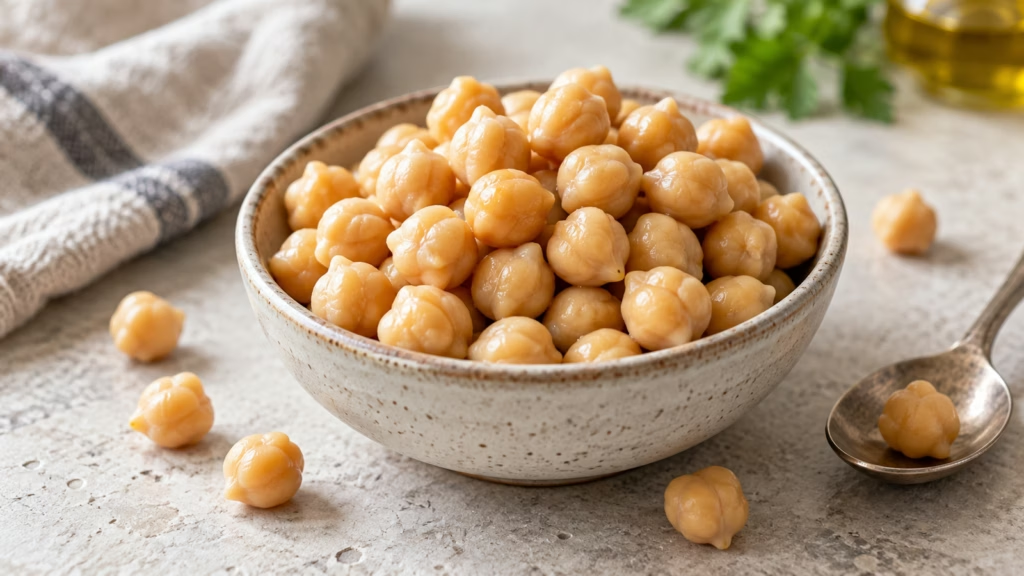
One recipe asks for chickpeas, the can in the cupboard says garbanzo beans, and there’s no reason to make another shopping trip. Garbanzo beans and chickpeas are the same ingredient. The more useful distinction is whether yours are dried, canned, or already cooked, because those forms need very different amounts of time.
Garbanzo and chickpea mean the same thing. Dried and cooked do not: choose the form before you start the recipe.
I’d settle that question before chopping anything else. A can can go into a quick lunch; a bag of dried chickpeas needs a cooking plan. Neither is the wrong choice, but they are not interchangeable straight from the package.
What garbanzo beans are
Garbanzos are legumes. The familiar plump beige type is commonly called Kabuli; smaller, darker Desi chickpeas are another type. The Academy of Nutrition and Dietetics describes the beige variety as nutty and creamy when cooked. A different color or size does not necessarily mean you have bought an unrelated bean.
- Garbanzo beans and chickpeas: Two common names for the same food. Recipes may use either.
- Dried chickpeas: Firm seeds that need hydration and cooking before they can stand in for cooked beans in a salad or soup.
- Canned chickpeas: Already cooked. Further heating is for the dish, not a requirement to make the beans ready to eat.
- Chickpea flour or split chana dal: Related pantry products with their own uses. Follow a recipe written for that form rather than swapping them for whole cooked chickpeas.
For most everyday shopping, the label’s preparation words are the ones to notice: cooked, dried, drained, or in a seasoned sauce. They tell you much more about the next step than which of the two familiar names appears in large print.
Canned or dried: choose for the job
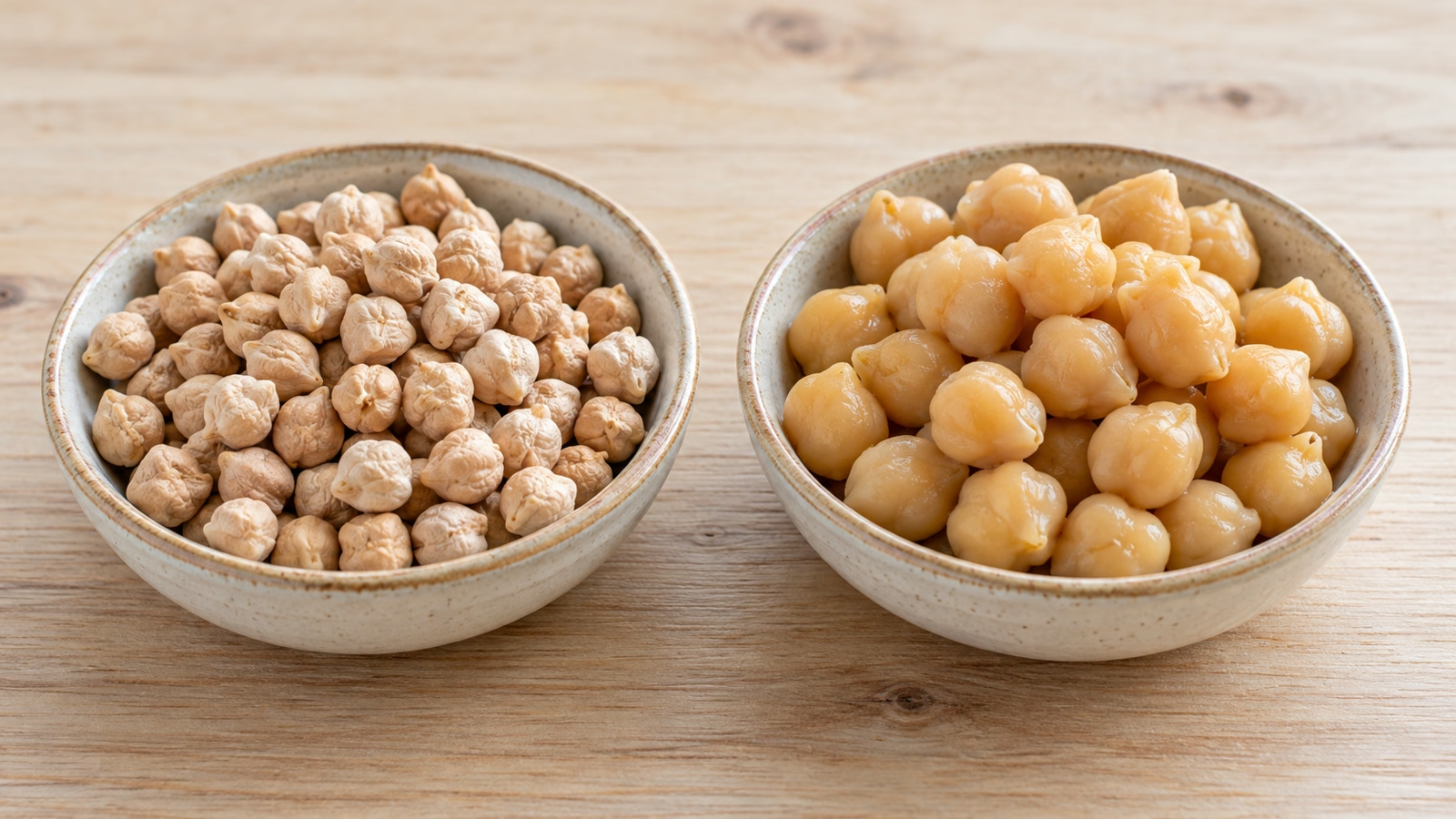
Canned garbanzos are useful when the meal needs to happen now. Dried chickpeas give you a chance to cook a larger batch and choose the finished texture, but they ask for more time. I’d keep the decision practical rather than turn it into a contest over which pantry shelf is more virtuous.
- For a quick salad: Canned chickpeas are convenient. Drain and rinse if that suits the dressing, then let extra water drain away.
- For a batch to portion: Cook dried chickpeas, then divide them into amounts you will actually use.
- For sodium control: Compare the labels on canned products and consider no-salt-added options. Rinsing can reduce some sodium, but the starting product still matters.
- For a recipe measured in cooked cups: Measure the beans after cooking and draining as directed. A cup of dried chickpeas is not a cup of cooked chickpeas.
- For recipes using the liquid: Read before draining. Tastiva’s guide to rinsing canned beans explains when the packing liquid may have a useful role.
If the recipe calls for a can, check whether its measurement includes the liquid or refers to drained beans. That small reading habit prevents an avoidable texture problem, especially in dips and fillings where extra moisture has nowhere to hide.
Cook dried garbanzos until the center is tender
Start by sorting out small stones and damaged beans, then rinse. For an overnight soak, the University of Maine recommends keeping covered beans in plenty of water in the refrigerator. Leave room for expansion, drain the soaking water, and cook in fresh water according to the package or a reliable method.
- Bring the pot to a boil, then reduce to a simmer. Keep enough water in the pot as the beans cook.
- Use time as a planning aid. USA Pulses gives roughly 1½–2 hours for simmering soaked chickpeas, but older beans may take longer.
- Check a few beans rather than one. The center should be tender, without a hard or chalky core.
- For a salad, stop when the beans are tender but still hold together. For a smooth dip, a softer bean is easier to mash.
- Add acidic ingredients, such as tomatoes or lemon juice, after the chickpeas are tender; they can slow softening.
Soaking is preparation, not the finished cooking step for a bowl of beans. A falafel recipe that calls for soaked, uncooked chickpeas is a separate method with its own later cooking. Don’t borrow that instruction for a salad, and don’t assume canned chickpeas will behave the same in every falafel recipe.
Turn cooked chickpeas into a meal, then store the rest
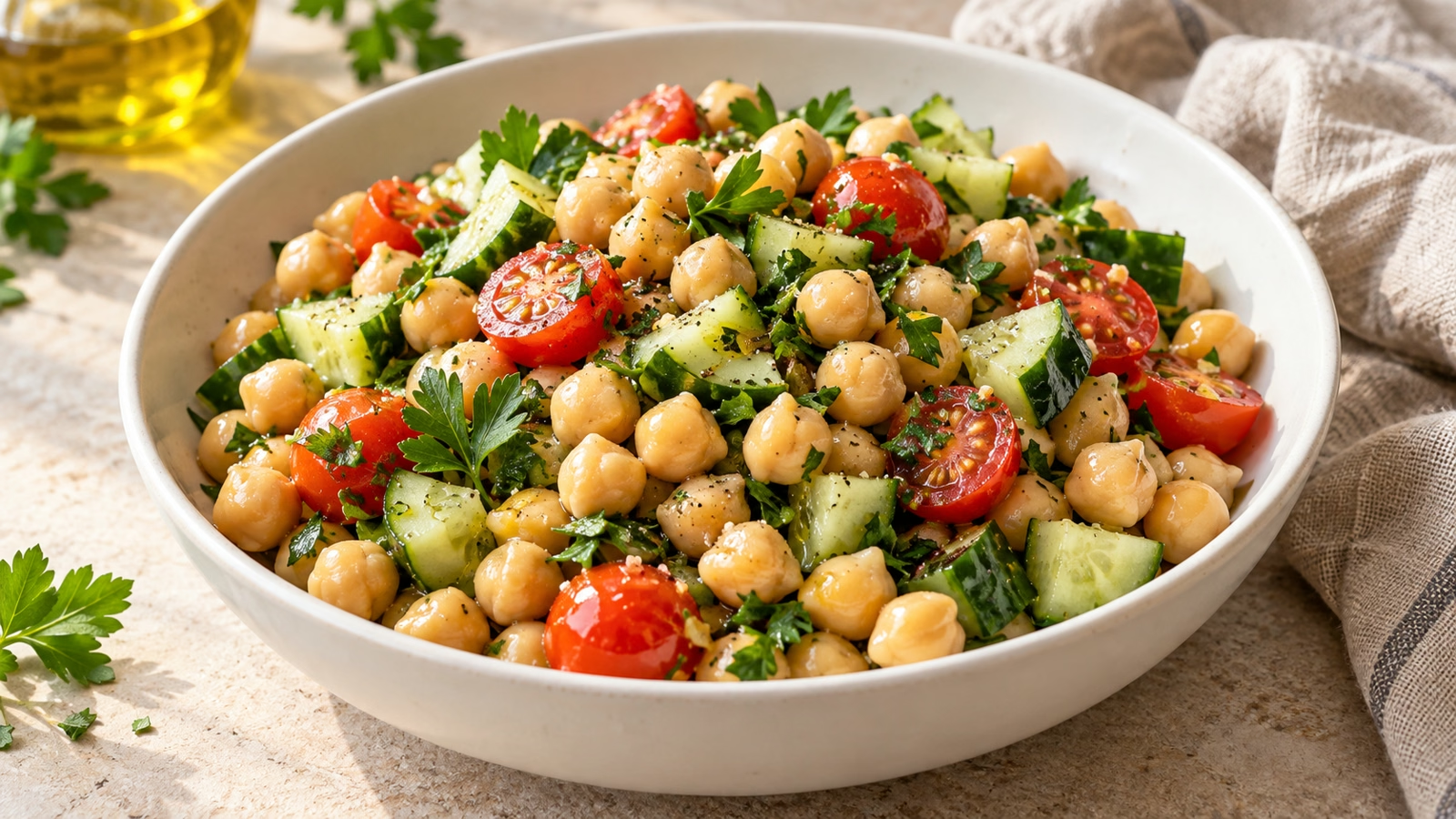
A cooked garbanzo has a mild enough flavor to take several directions. Think about the texture first: whole beans for a bowl, roughly mashed beans for a sandwich, or very soft beans for a purée. Seasoning can follow that decision.
- A crisp vegetable bowl: Combine cooked chickpeas with cucumber, tomatoes, and herbs, then add a dressing you enjoy. Drain watery ingredients so the bowl stays pleasantly coated.
- A sheet-pan dinner: Tastiva’s gnocchi with chickpeas and vegetables starts with canned chickpeas that are rinsed and dried before roasting.
- A soup or stew: Add cooked beans where the recipe calls for them. They are not on the same timetable as dried ones.
- A rough mash: Leave some pieces for texture and add your chosen creamy ingredient gradually. The goal is a filling that holds together, not a wet purée.
Refrigerate cooked or opened canned chickpeas promptly in a covered container and use within 3–4 days. Freeze portions you won’t use in that window; the University of Maine suggests one- or two-cup amounts and refrigerator thawing. Keep dried beans sealed in a cool, dry place, away from heat and humidity.
My most useful planning question is “where will the second portion go?” If there is no answer, freeze it rather than letting a well-intentioned batch disappear behind the milk. Garbanzo beans are an easy ingredient to use often when the preparation and the portion fit the meal. The University of Maine Cooperative Extension video below demonstrates cooking and storing dry beans. Use your chickpea package and tenderness checks for the timing of your own batch.
Sources
- N.C. Cooperative Extension: Chickpeas or Garbanzo or Cece?.
- University of Maine Cooperative Extension: Storing and Cooking Dried Beans.
- USA Pulses: Chickpea Cooking and Storage Guide.
- Academy of Nutrition and Dietetics: All About Chickpeas.

Hi, I’m Laura, the voice behind Tastiva. I’ve always believed that eating well should feel enjoyable, comforting, and realistic—not like another complicated rule to follow. I love creating recipes that fit into everyday life, sharing simple nutrition ideas, and finding small ways to make meals feel a little better without losing the pleasure of good food.