
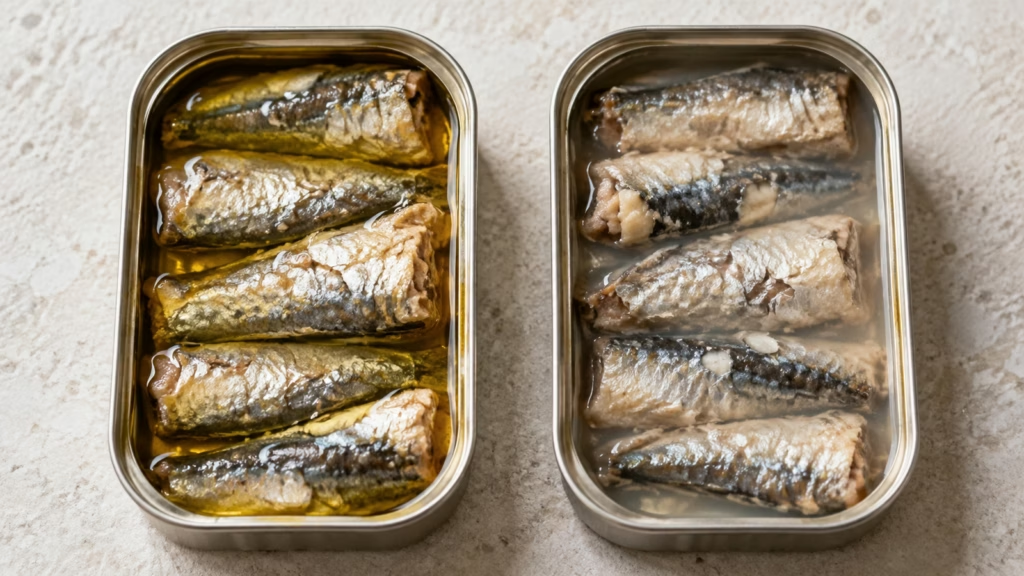
Two tins promise the same fish, but one is packed in olive oil and the other in water. For sardines in oil vs water, the useful first question is what you want to eat: oil adds richness and a ready-to-serve coating, while water gives you a plainer base to season yourself. Nutrition comparisons need a closer look at the drained serving and the rest of the label.
Pick the tin for the meal, then compare the amount of fish you will actually eat.
Sardines in oil vs water changes the starting point
Oil-packed sardines can work straight from the tin on bread or crackers, with an acidic or crisp accompaniment to balance the richness. Water-packed fish can suit a salad, spread, or sauce where you want to choose the dressing separately. Neither format guarantees better fish or better flavor in every brand.
- Oil-packed: Useful for a simple plate or toast where the oil is part of the seasoning.
- Water-packed: Useful when another dressing or sauce is already planned.
- Brine: A salted packing liquid is not the same as plain water. Check the label rather than grouping all pale liquids together.
- Flavored oil or sauce: Lemon, tomato, mustard, or chile changes the comparison again. Decide whether those flavors belong in your meal.
I would begin with a small quantity of a plain product and try it with toast, tomato, and lemon. That gives you a clearer impression than covering an unfamiliar tin with several strongly flavored condiments.
Compare equal portions, not the front of the can
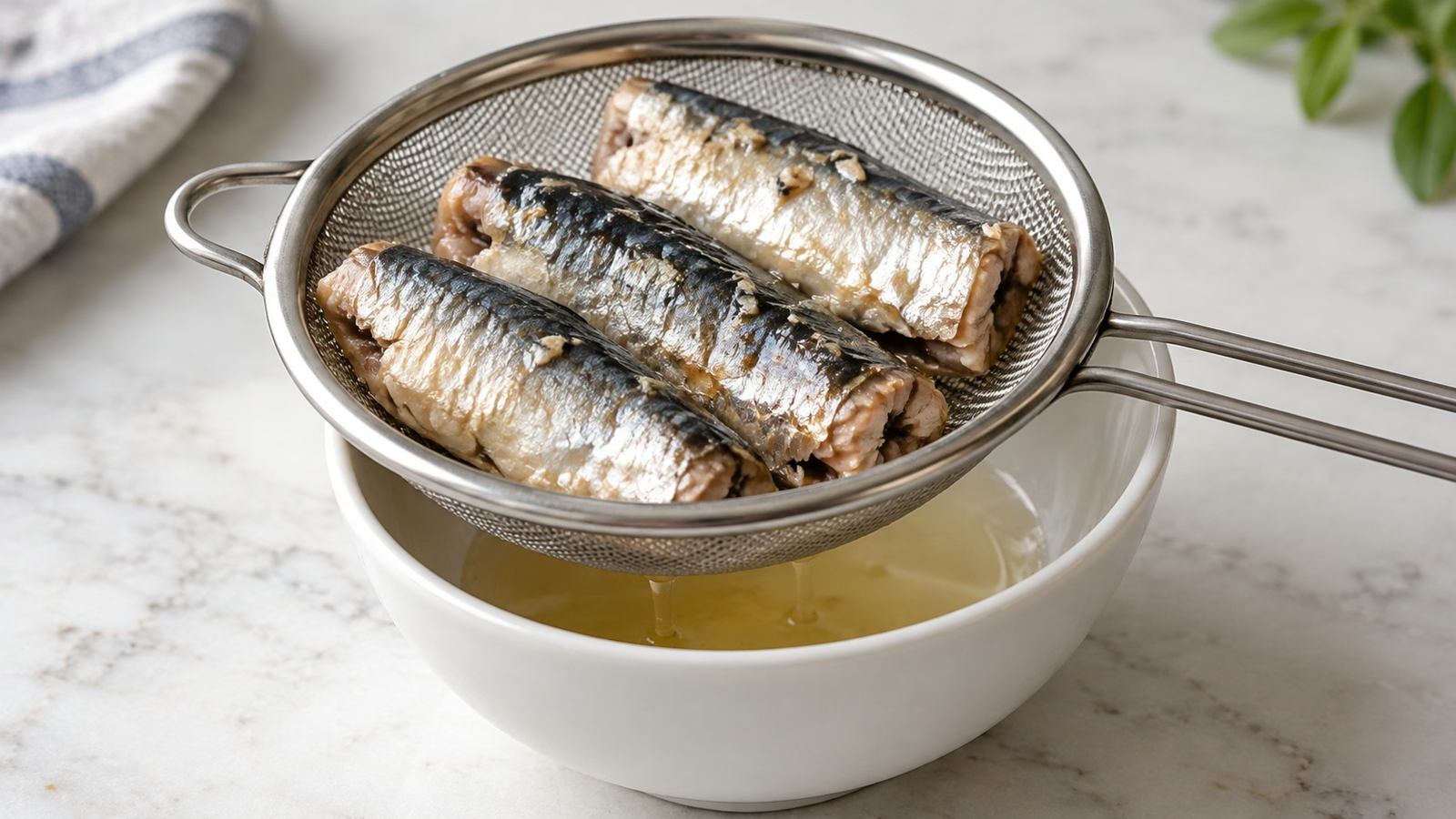
The net weight may include packing liquid, while the nutrition panel may describe a drained serving. Different tins also contain different numbers of servings. Read those details before deciding that one product has more protein, fewer calories, or less sodium than another.
- Serving basis: Look for wording such as drained and compare the same gram amount where possible.
- Calories and fat: Oil left on the fish or eaten with the meal contributes energy. Draining removes some free oil, not every trace.
- Sodium: Water-packed does not automatically mean low sodium. Salt can be added to either format.
- Bones: Bone-in and boneless products differ. The softened edible bones contribute calcium, so packing liquid alone cannot explain a calcium difference.
- Fish type: Species and processing can vary across products sold as sardines. The label gives more context than the can’s artwork.
Avoid subtracting the entire visible oil layer from the printed nutrition numbers as if it were a precise calculation. Unless the maker explains the basis, you do not know exactly how much retained oil its panel assumes. The most useful comparison is two clearly labeled products on the same serving basis.
Choose a tin for toast, salad, or a warm dish
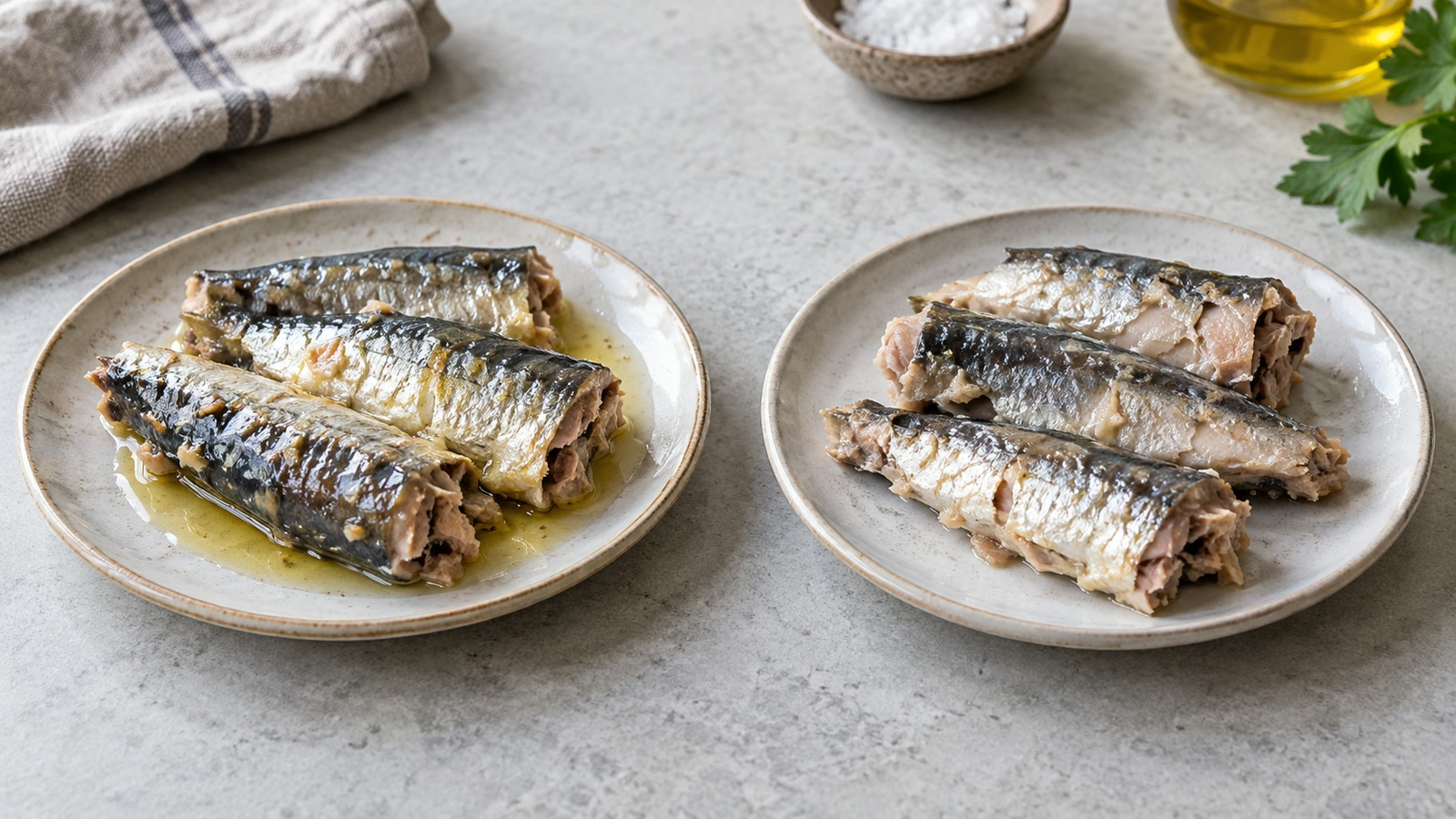
For toast, drain enough liquid to protect the bread, then use a fresh or acidic topping for contrast. In a salad, the choice depends on the dressing: oil-packed fish may need less added oil, while water-packed fish lets you control that component from the start.
- Toast: Keep the bread separate until serving. A drained topping avoids a soggy base.
- A creamy spread: Drain thoroughly before mixing so the final texture is easier to control.
- Pasta: Fold fish in gently near the end if you want recognizable pieces. Repeated vigorous stirring breaks it down.
- A bean bowl: Add lemon, herbs, or crisp vegetables before deciding whether more salt or oil is needed.
Oil from a newly opened, sound tin can be part of the dish if you enjoy its flavor, but it is optional. Treat it as a perishable fish-associated ingredient once opened, not as a fresh bottle of shelf-stable cooking oil. Do not store it indefinitely on the counter.
Keep the trend in perspective
FoodNavigator’s August 2026 report describes renewed online attention to sardines. Convenience and flavor are good reasons to try them; a social trend is not a reason to eat the same fish at every meal or assume a guaranteed health outcome.
- Mercury: Sardines are listed among FDA/EPA Best Choices. Follow the agency’s serving guidance for the group it applies to, rather than treating the category as unlimited permission.
- Variety: Keep other protein foods and the rest of the meal in the picture.
- Storage: Once opened, refrigerate promptly in a covered container and follow product guidance. Use refrigerated leftovers within three to four days.
- Safety: Reject damaged, leaking, or swollen tins. Do not taste suspect food to decide whether it is safe.
- Allergy: Sardines are fish, and sauces can introduce additional allergens.
The better tin is the one that suits your meal, budget, and preferences after those checks. Tastiva’s food-date-label guide helps separate quality dates from handling advice, but a date does not override visible can damage or poor storage.
Chef John of Food Wishes shows one useful role for oil-packed sardines in this pasta with fennel, including adding some of the tin’s oil to the sauce. It is a cooking example, not an oil-versus-water nutrition test.
Sources
- FDA/EPA: fish choices and serving guidance
- King Oscar: example of an oil-packed, boneless product
- FoodNavigator: August 2026 sardine trend reporting
- USDA: safe leftovers

Hi, I’m Laura, the voice behind Tastiva. I’ve always believed that eating well should feel enjoyable, comforting, and realistic—not like another complicated rule to follow. I love creating recipes that fit into everyday life, sharing simple nutrition ideas, and finding small ways to make meals feel a little better without losing the pleasure of good food.