
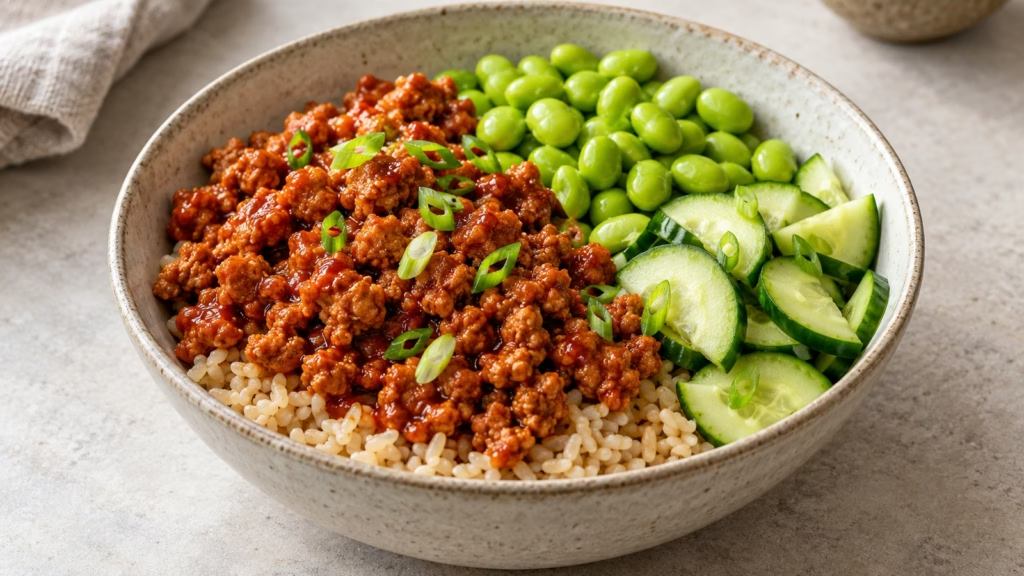
A pan of ground chicken can go from pale crumbles to a proper dinner quickly, but the sauce needs good timing. These gochujang ground chicken bowls start with browned chicken, then add a spicy-sweet glaze, warm brown rice, cooked edamame, and cool cucumber. Keep the cucumber out of the skillet and the contrast stays part of the meal.
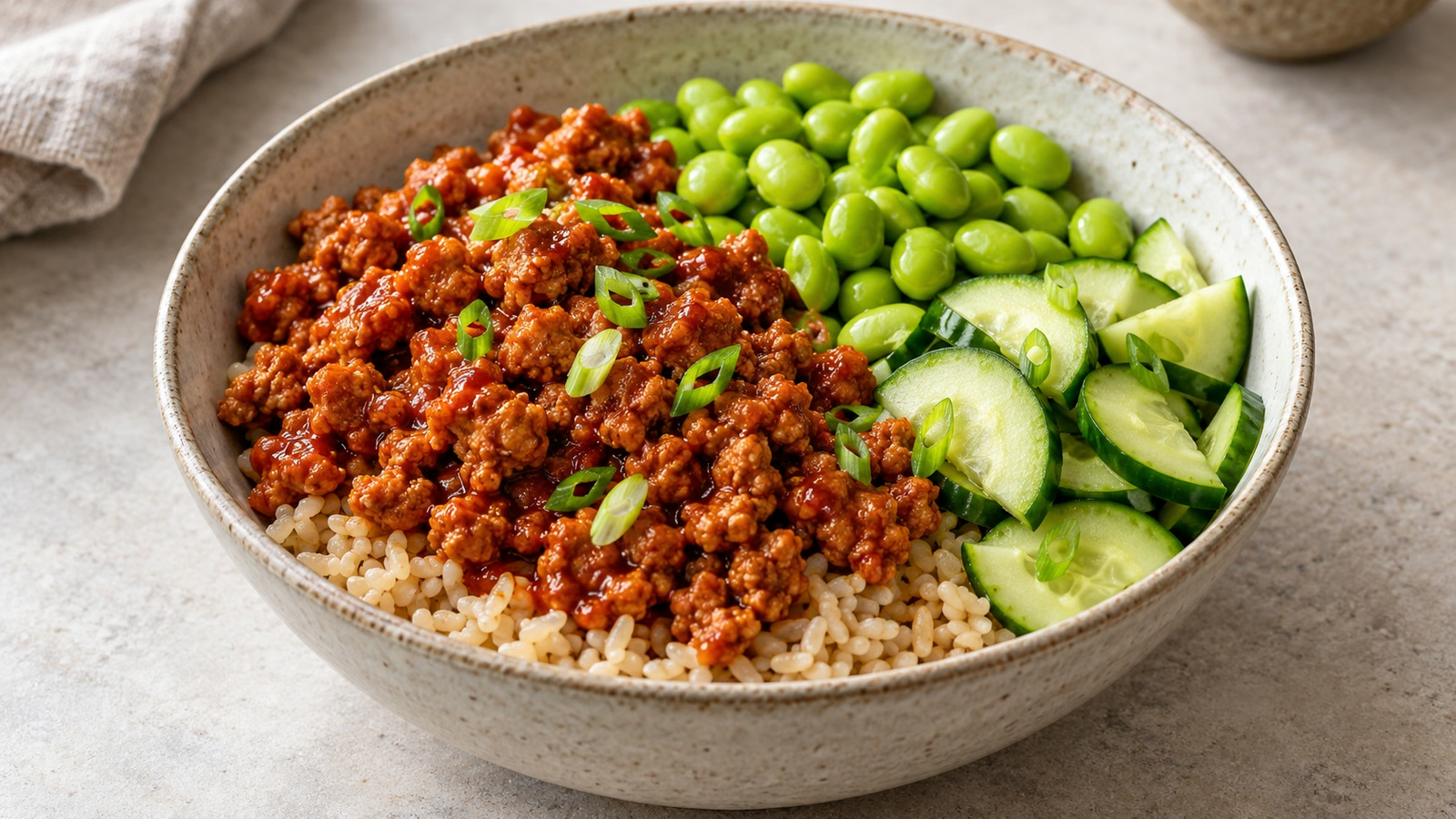
Brown the chicken first, add the glaze near the end, and let each bowl keep a little cool crunch.
Build a bowl with four useful parts
The chicken brings the hot, savory center; rice catches the sauce; edamame adds a tender bite; and cucumber makes the finished bowl feel fresher. This is a Korean-inspired weeknight combination, not a claim to reproduce a traditional Korean dish.
I’d give the cucumber its own corner instead of stirring everything together in the pan. A bowl can have several textures without requiring four separate cooking projects.
- Brown rice: Start with three cups already cooked. A plain microwaveable product is useful here; cooking dry brown rice adds time beyond the recipe’s 25-minute estimate.
- Edamame: Buy shelled beans, not pods. Cook frozen edamame according to its package, then drain it well; thawing alone is not a substitute for cooking instructions.
- Ground chicken: Break it into bite-size crumbles rather than pressing it into a fine paste. The package’s fat content will affect both browning and nutrition.
- Cucumber: Slice it shortly before serving. Toss it with a little unseasoned rice vinegar, then spoon it out of any liquid that collects.
Choose the paste, then adjust the heat
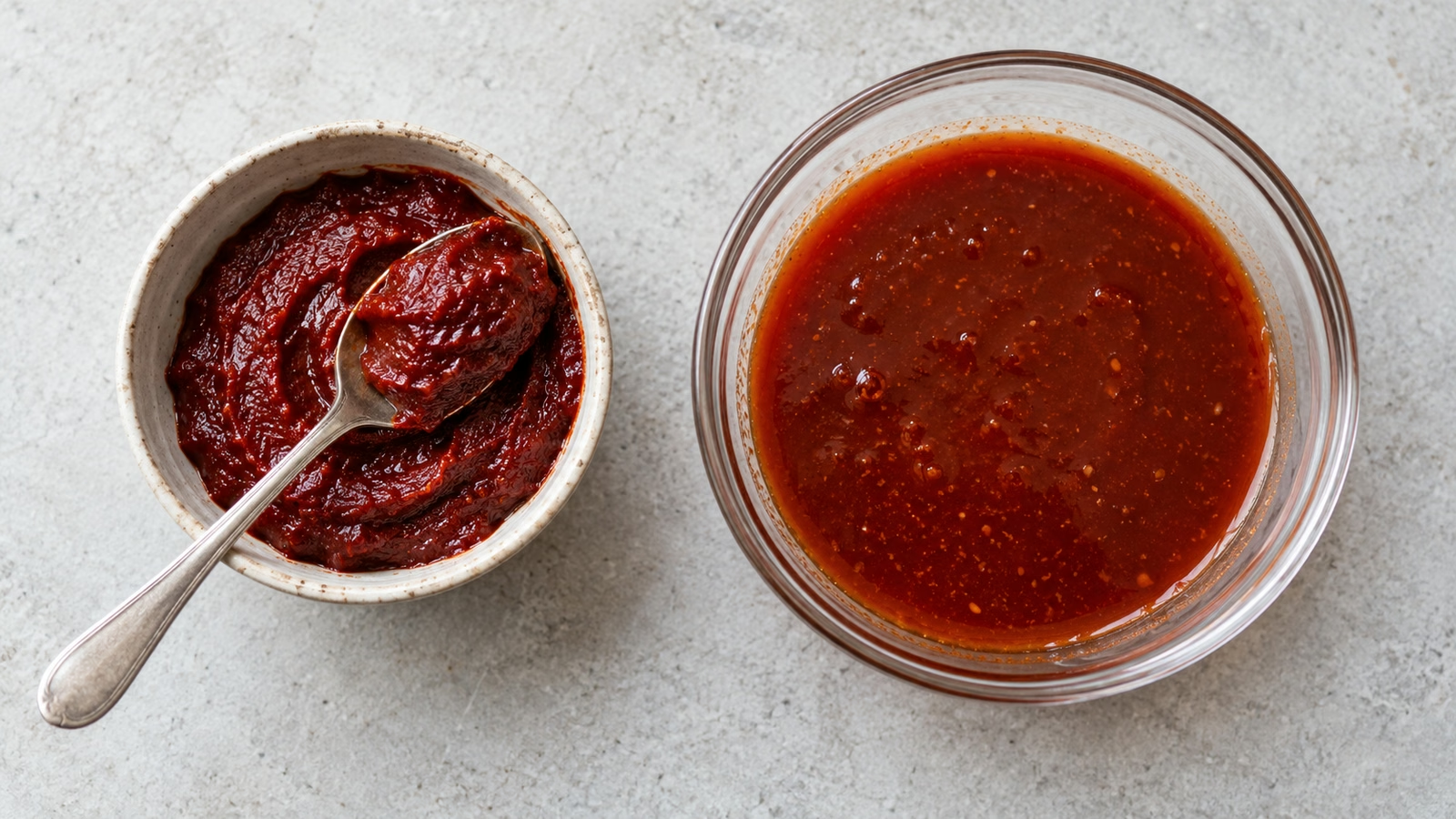
Gochujang is a concentrated Korean fermented chile paste with salt, sweetness, and savory depth. A squeeze-bottle gochujang sauce may already contain extra sweetener, vinegar, and other seasonings, so it is not necessarily interchangeable with the paste measured here. The gochujang ingredient guide explains the distinction in more detail.
I would taste a little of the sauce mixture before it touches raw chicken. That tells you more about this particular jar than an optimistic promise that two tablespoons will always be mild.
- Start lower: Use one tablespoon of paste instead of two and add one extra tablespoon of water. The result also has less concentrated seasoning; taste only after the chicken is safely cooked before making further adjustments.
- Keep it bolder: Use the full two tablespoons, then serve extra paste separately for people who want more heat. Thin a small spoonful with water rather than dropping a dense lump onto dinner.
- Check the vinegar: Use unseasoned rice vinegar. Seasoned versions add sugar and salt, which changes the balance.
- Read allergen labels: Edamame and soy sauce contain soy; many soy sauces and gochujang products contain wheat. Sesame oil adds sesame. A gluten-free soy sauce alone does not make the whole dish gluten-free.
Gochujang Ground Chicken Bowls Recipe
This recipe makes four bowls, each with three-quarters of a cup of cooked rice and a quarter of the chicken, edamame, and cucumber. Have the rice ready before heating the skillet. The cooking time includes warming it and cooking the edamame alongside the chicken.
The ingredient-based estimate is about 522 calories, 35 grams of protein, and 7 grams of fiber per bowl. It includes the full two tablespoons of paste, all the listed oil, and the rice; different chicken and condiment labels will change the numbers.
Gochujang Ground Chicken Bowls Recipe

Ingredients
- 3 cups cooked brown rice 585 g; warm; use plain microwaveable rice or safely stored cooked rice
- 2 cups cooked shelled edamame 310 g after cooking; prepare frozen edamame according to its package
- 1 large English cucumber about 300 g; thinly sliced
- 1 tablespoon unseasoned rice vinegar 15 ml; for the cucumber
- 2 scallions about 30 g; thinly sliced
- 1 pound ground chicken 454 g
- 2 teaspoons canola oil 9 g
- 3 garlic cloves 9 g; finely minced
- 1 tablespoon grated fresh ginger 6 g
- 2 tablespoons gochujang paste 44 g for the label used in the nutrition estimate; see notes for gentler heat
- 1 tablespoon less-sodium soy sauce 15 ml
- 1 tablespoon unseasoned rice vinegar 15 ml; for the glaze
- 2 teaspoons honey 14 g
- 3 tablespoons water 45 ml; plus more if needed
- 1 teaspoon toasted sesame oil 4.5 g
Equipment
- 1 12-inch skillet
- 1 Mixing bowl and small sauce bowl
- 1 Spatula
- 1 Food thermometer
- 1 Saucepan or microwave-safe container for edamame and rice
- 1 Knife and cutting board
Instructions
- Warm the cooked brown rice and cook the edamame according to its package instructions. Drain the beans well. Toss the sliced cucumber with 1 tablespoon rice vinegar in a separate bowl; keep it out of the hot pan.
- Whisk the gochujang, less-sodium soy sauce, remaining 1 tablespoon rice vinegar, honey, water, and sesame oil together. Taste the mixture now, before it contacts raw chicken, and use the lower-heat option in the notes if needed.
- Heat the canola oil in a 12-inch skillet over medium-high heat. Add the ground chicken and spread it in an even layer. Leave it for about 2 minutes, then break it into crumbles and cook for another 4–6 minutes, stirring occasionally, until released moisture has evaporated and some surfaces have browned.
- Reduce the heat to medium. Add the garlic and ginger and stir for about 30 seconds. Pour in the glaze and cook, stirring, for 2–3 minutes until it coats the chicken. Add water 1 tablespoon at a time if it thickens too quickly. Check a mound of chicken crumbles with a food thermometer in several places: it must reach 165°F (74°C).
- Divide the warm rice among four bowls, about 3/4 cup per bowl. Add a quarter each of the chicken and edamame. Lift the cucumber from its liquid and add it in a separate section. Finish with the scallions and serve.
Nutrition
Video
Video: Aaron and Claire demonstrate browning minced chicken, adding a gochujang sauce and serving it over rice. Their version includes oyster sauce, mirin, chile flakes and a dressed salad; this recipe uses a honey-vinegar glaze with brown rice, edamame and cucumber. Follow the quantities and cooking instructions above.
Notes
- For gentler heat, use 1 tablespoon gochujang plus 1 extra tablespoon water. Brands vary in heat, salt, sweetness, and tablespoon weight; the lower-paste version has different nutrition.
- The 25-minute time assumes cooked rice is ready. If starting from dry rice, follow the package and allow its additional cooking time.
- Contains soy and sesame. Soy sauce and some gochujang products contain wheat; check both labels for any gluten-free requirement.
- Refrigerate cooked components promptly in shallow containers within 2 hours (1 hour above 90°F/32°C). Keep at 40°F/4°C or below and use within 3–4 days. Reheat rice, chicken, and edamame to 165°F/74°C and add cucumber after reheating.
- Nutrition is an estimate per complete bowl from USDA SR Legacy data, Roland gochujang (44g total), Kikkoman Less Sodium Soy Sauce (15ml), and Marukan unseasoned vinegar. It includes all oil and 3 cups cooked brown rice. Ground-chicken fat content and product labels vary.
Tried this recipe?
Let us know how it turned out!Brown first so the sauce can do its job
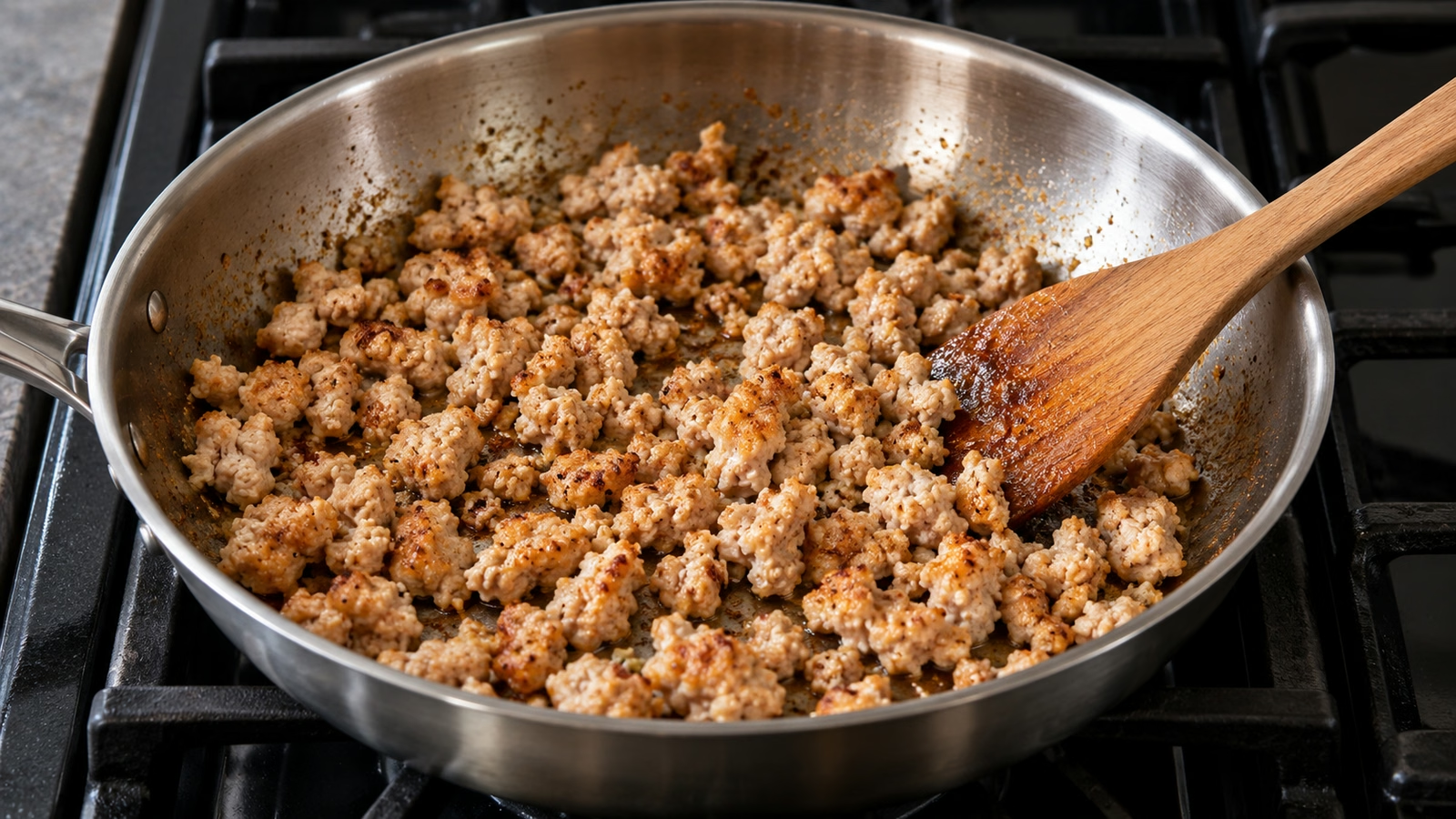
A wet skillet gives you steam before it gives you browned edges. Spread the chicken over a broad pan, leave it briefly before breaking it up, and let released liquid cook away. Add the garlic and ginger after the chicken has had time to brown; adding them at the start gives those small pieces a head start toward scorching.
- Give the meat space. Use a 12-inch skillet and spread the chicken in an even layer. Work in two batches if a smaller pan is crowded.
- Watch the sauce stage. Lower the heat before adding the glaze. It contains sugar and should coat the crumbles rather than burn onto the skillet.
- Loosen only as needed. Add water a tablespoon at a time if the coating becomes sticky before the chicken is done. You want a spoonable mixture, not a pool of sauce.
- Check safety directly. Ground chicken must reach 165°F (74°C). Gather some crumbles into a mound and check with a food thermometer in several spots, keeping its tip off the pan.
Pack the leftovers in separate parts
For tomorrow’s lunch, I’d pack the cucumber separately from the rice and chicken. It avoids the small disappointment of reheating something that was supposed to be crunchy. Keep any extra sauce separate too, so the second meal can be adjusted rather than automatically made hotter.
- Chill promptly: Refrigerate cooked components in shallow containers within two hours, or one hour when the temperature is above 90°F (32°C). Keep the refrigerator at 40°F (4°C) or below.
- Use within three to four days: That window applies to properly chilled cooked chicken and rice. Prepare cucumber closer to serving for the best texture.
- Reheat the hot components: Add a splash of water to the rice and chicken, cover loosely, and heat until several spots reach 165°F (74°C). Add the cold cucumber afterward.
Sources
- USDA FoodData Central: ingredient data for the nutrition estimate
- Roland gochujang: paste ingredients and label used in the calculation
- Kikkoman Less Sodium Soy Sauce: soy sauce label used in the calculation
- Marukan unseasoned rice vinegar
- FoodSafety.gov cooking temperatures
- USDA leftovers and food safety
Hi, I’m Laura, the voice behind Tastiva. I’ve always believed that eating well should feel enjoyable, comforting, and realistic—not like another complicated rule to follow. I love creating recipes that fit into everyday life, sharing simple nutrition ideas, and finding small ways to make meals feel a little better without losing the pleasure of good food.