
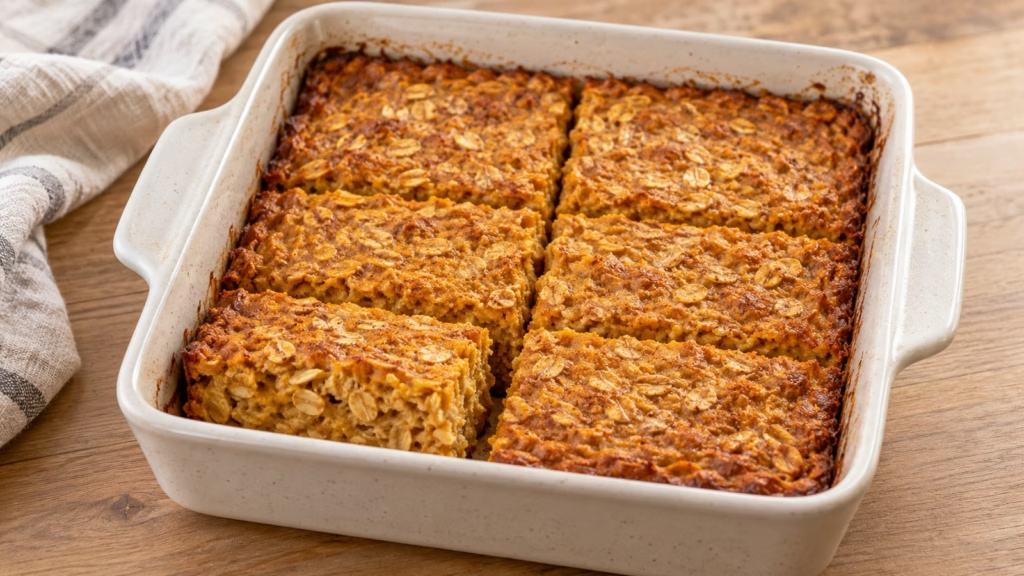
Breakfast gets awkward when there is time to reheat something but no time to stand over the stove. This pumpkin cottage cheese baked oatmeal is built for that gap: an 8-inch pan of cinnamon-spiced oats you can divide into six portions. Blended cottage cheese adds moisture and protein, while pumpkin gives the bake its warm color and soft center.
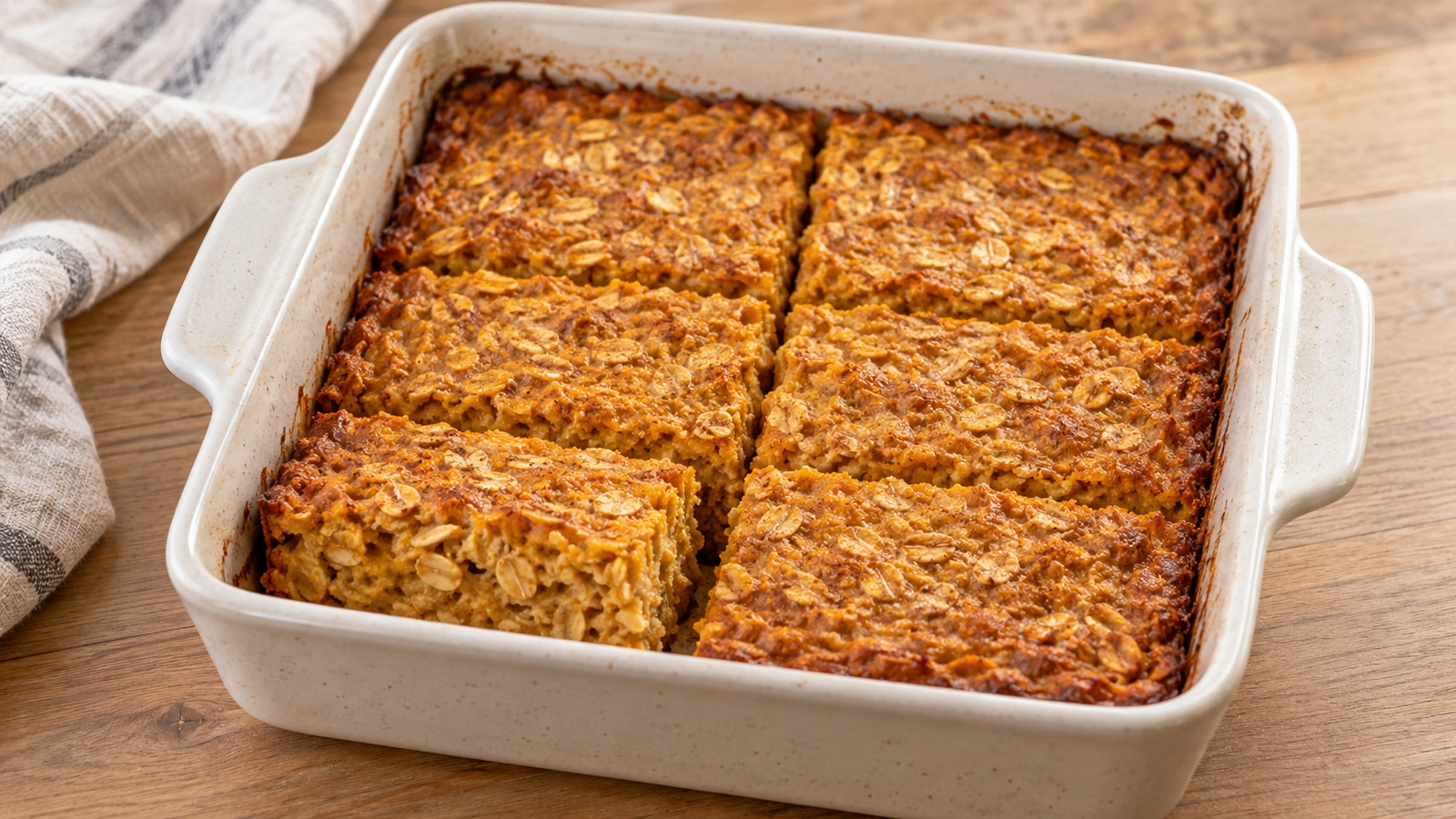
Keep the oats whole, blend the cottage cheese, and give the pan a short rest before slicing.
Why whole oats matter here
This is baked oatmeal with a tender, spoon-friendly texture, rather than a fluffy pumpkin cake or a firm granola bar. The rolled oats stay visible, and the eggs help hold the portions together. A warm piece will be softer than a chilled one.
I’d keep the oats out of the blender. Smoothing the cottage cheese is useful; turning every ingredient into batter takes away the oat texture that makes this breakfast appealing.
- For a softer breakfast: Serve a warm portion in a bowl with a little milk added at the table.
- For a tidier portion: Refrigerate the baked oatmeal before lifting individual pieces into containers.
- For extra contrast: Add fresh apple slices or a spoonful of plain yogurt when serving, rather than baking them into the mixture.
Choose ingredients with texture in mind
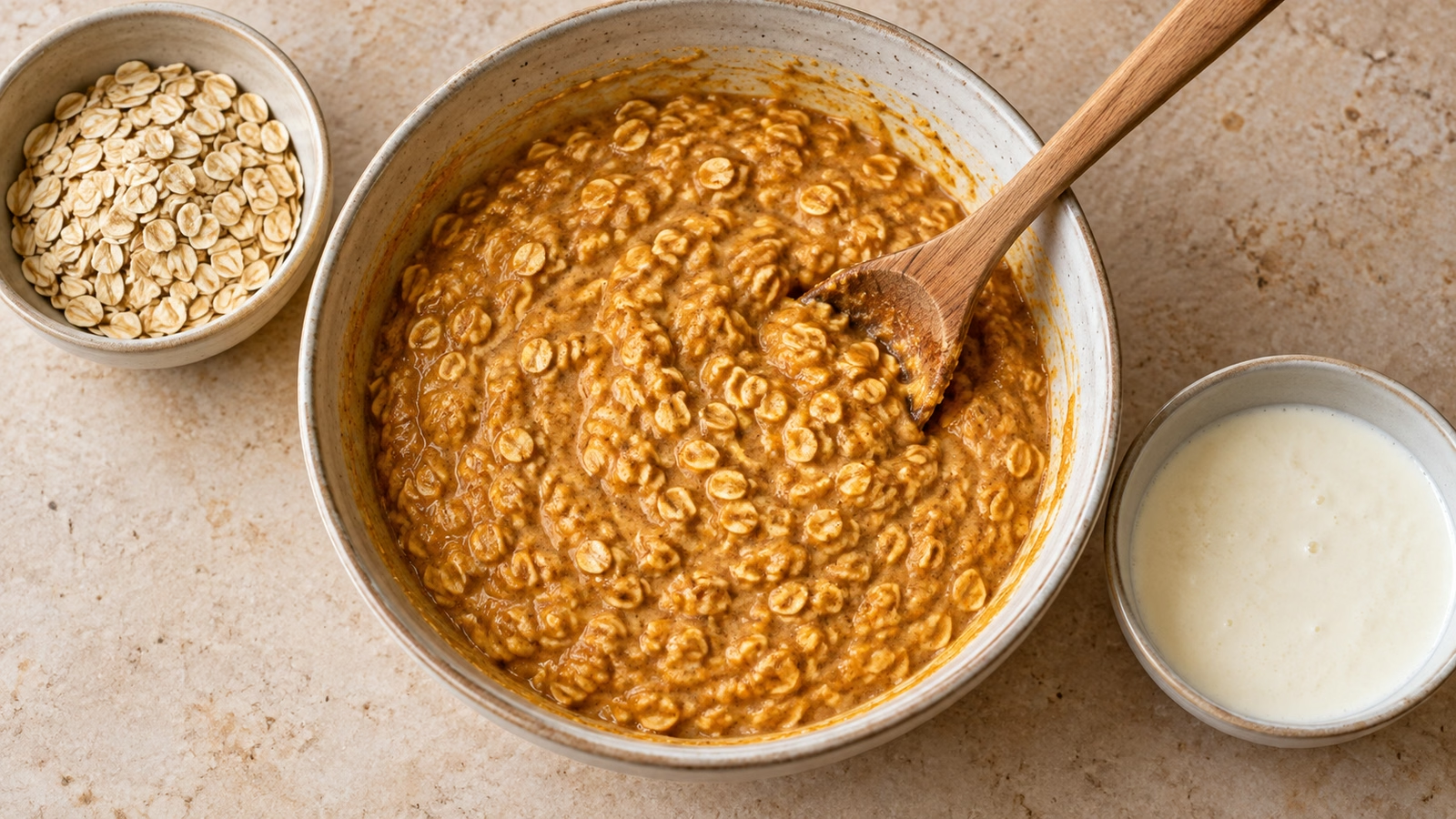
The ingredient list is short, but the forms matter. Use plain canned pumpkin, which contains pumpkin without the sugar and seasoning of pie filling. The recipe measures one cup; tipping in a whole 15-ounce can would add considerably more moisture.
- Old-fashioned rolled oats: These are the starting point for the quantities below. Quick oats make a softer mixture, and steel-cut oats need a different cooking method; neither is a straight swap here.
- Cottage cheese: Stir the container before measuring. Blend the measured cheese with the milk until smooth so you do not have little curd pockets throughout the bake.
- Milk: The nutrition estimate uses regular 2% dairy milk. Another milk changes the nutrient totals; replacing it alone does not make this dairy-free.
- Maple syrup: The measured amount keeps the base gently sweet. Add any extra sweetness to an individual serving rather than pouring more syrup into the batter.
- Spices: Cinnamon leads, with ginger and nutmeg behind it. For a closer look at cinnamon varieties, see the Ceylon cinnamon guide.
Pumpkin Cottage Cheese Baked Oatmeal Recipe
Use an 8-inch square baking pan at least 2 inches deep. A wider pan spreads the mixture thinner and changes the baking time, so this is worth checking before you mix. Plan on about 15 minutes of preparation, 40–50 minutes in the oven, and a 15-minute rest.
The recipe card makes six portions. Each has approximately 233 calories, 11 grams of protein, and 4.3 grams of fiber before toppings, calculated from USDA ingredient data. Brands and serving sizes will change those estimates. Milk and eggs are present; if you need gluten-free ingredients, use certified gluten-free oats and check every packaged ingredient.
Pumpkin Cottage Cheese Baked Oatmeal Recipe

Ingredients
- 1 teaspoon canola oil 4.5 g; for greasing; included in the nutrition estimate
- 1 cup 2% cottage cheese 226 g; stir the container before measuring; do not drain
- 3/4 cup 2% milk 183 g
- 1 cup plain canned pumpkin puree 244 g; not pumpkin pie filling; do not use the whole can
- 2 large eggs 100 g; weight without shells
- 1/4 cup pure maple syrup 80 g
- 2 teaspoons vanilla extract 8.4 g
- 2 cups old-fashioned rolled oats 160 g; not steel-cut; keep the flakes whole
- 1 1/2 teaspoons double-acting baking powder 6 g
- 1 1/2 teaspoons ground cinnamon 3.9 g
- 1/2 teaspoon ground ginger 0.9 g
- 1/4 teaspoon ground nutmeg 0.55 g
- 1/4 teaspoon fine table salt 1.5 g
Equipment
- 1 8-inch (20 cm) square baking pan, at least 2 inches (5 cm) deep
- 1 Blender or immersion blender with a suitable container
- 1 Large mixing bowl and a second bowl
- 1 Whisk and flexible spatula
- 1 Measuring cups and spoons or kitchen scale
- 1 Instant-read food thermometer
- 1 Heatproof cooling rack
- 1 Shallow storage containers
Instructions
- Heat the oven to 350°F (175°C), with a rack in the middle. Brush the base and sides of an 8-inch (20 cm) square baking pan, at least 2 inches (5 cm) deep, with the canola oil.
- Blend the cottage cheese and milk until the mixture is smooth. Pour into a large mixing bowl, then whisk in the pumpkin puree, eggs, maple syrup, and vanilla until evenly combined.
- In a second bowl, stir together the oats, baking powder, cinnamon, ginger, nutmeg, and salt. Fold the dry mixture into the wet mixture until all the oats are moistened. Let stand for 10 minutes while the oven finishes heating.
- Transfer the mixture to the prepared pan and spread it evenly. Bake for 40–50 minutes. The edges should be lightly browned, the center should no longer ripple like liquid, and a toothpick should have moist oat crumbs rather than wet batter. Check that the center reaches at least 165°F (74°C) with a food thermometer. If the top browns before the center is ready, cover loosely with foil and continue baking, checking in 5-minute increments.
- Set the pan on a heatproof rack for 15 minutes, then cut into 6 equal rectangular portions. Serve warm with a spoon, or refrigerate for firmer portions. Optional milk, fruit, yogurt, and extra maple syrup are not included in the nutrition estimate.
- Transfer leftovers to shallow containers and refrigerate within 2 hours of cooking, or 1 hour above 90°F (32°C). Keep at 40°F (4°C) or below and use within 3–4 days. For freezing, chill promptly, wrap individual portions, and place in a freezer container. Aim to use within 2 months for quality. Thaw overnight in the refrigerator, then reheat with a splash of milk, loosely covered, until several spots reach 165°F (74°C).
Nutrition
Notes
- Use the gram weights for the most consistent proportions. Brands of cottage cheese and pumpkin differ in moisture; the center cues matter more than an exact minute.
- Keep the rolled oats whole. Steel-cut oats require a different formula, and egg-free or dairy-free versions are not established by this recipe.
- The warm bake is spoon-friendly. Chill it for tidier portions; avoid extending the baking time just to make it cut like a firm bar.
- For gluten-free ingredients, use certified gluten-free rolled oats and check every other packaged ingredient. The base recipe contains milk and eggs.
- Nutrition is an ingredient-based estimate for 1/6 of the bake, using USDA SR Legacy entries, 2% dairy milk and cottage cheese, and all the pan oil. It excludes optional toppings. Brand differences, portion sizes, and cooking losses affect actual values.
Tried this recipe?
Let us know how it turned out!A set center without dry edges
My priority here is the center. A browned edge tells you where the pan is hottest, but it cannot tell you whether the middle is finished. Use the texture cues and a food thermometer together; the center should reach at least 165°F (74°C), following the meatless-casserole guidance from FoodSafety.gov.
- Start with the right pan. Keep it on the oven’s middle rack, where the top has room to cook without sitting close to the heating element.
- Check before adding time. The middle should no longer ripple like liquid when the pan is nudged. A toothpick can have moist oat crumbs, but should not carry wet batter.
- Protect a darkening top. If the surface browns before the middle sets, loosely cover it with foil and continue baking, checking in five-minute increments.
- Rest before cutting. A hot portion that falls apart may simply need time to settle. Do not keep baking solely to make it cut like a cookie.
Portion, refrigerate, and freeze
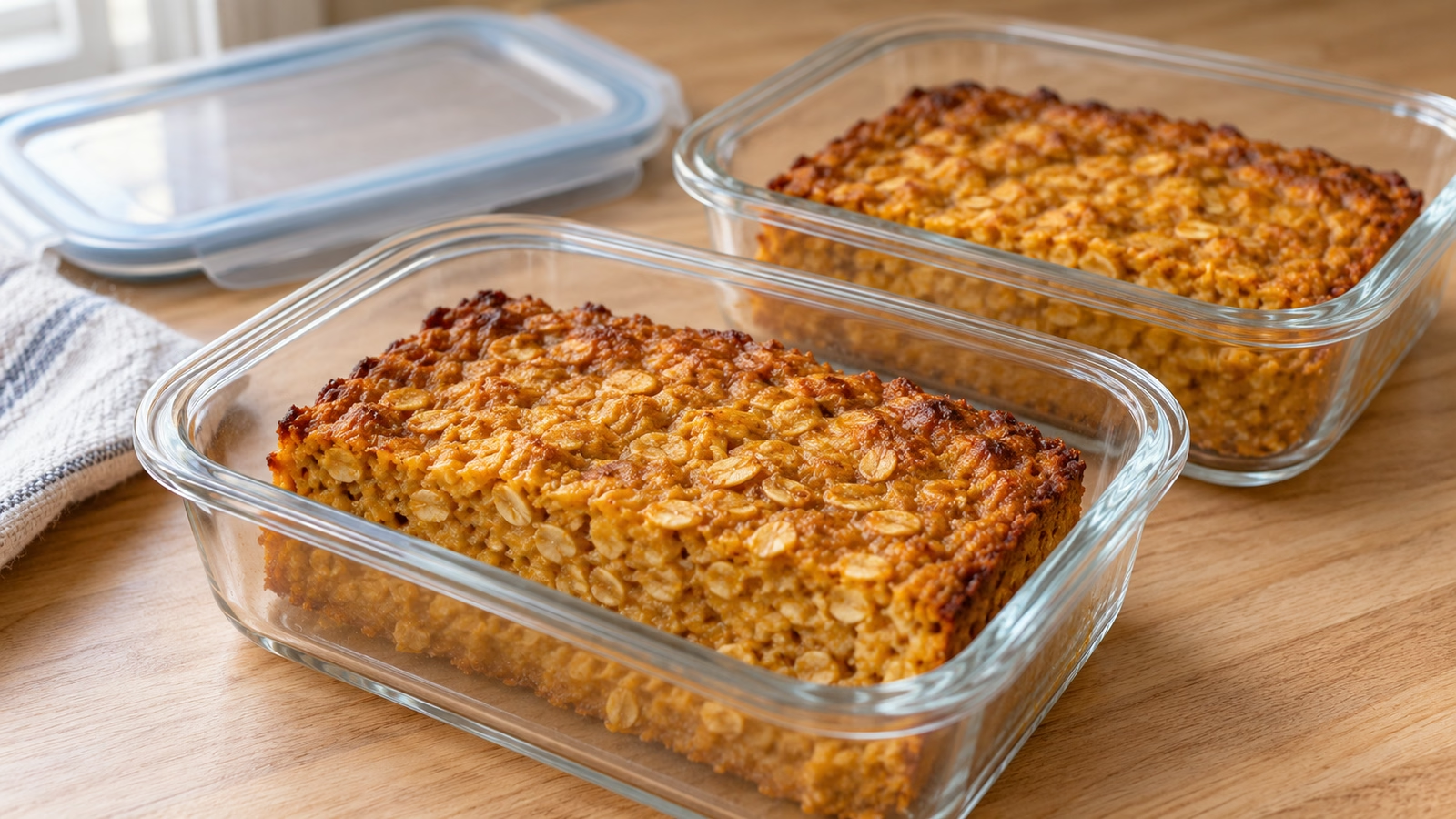
Bake first for make-ahead breakfasts, then store individual portions. That gives you a ready-to-reheat breakfast without asking the morning to accommodate a full baking session. I’d keep yogurt and fruit separate until serving, so each can keep its own texture.
- Refrigerate promptly: After the brief slicing rest, transfer portions to shallow containers. Refrigerate within two hours, or within one hour above 90°F (32°C). Keep the refrigerator at 40°F (4°C) or below and use within three to four days.
- Freeze the extra portions: Chill promptly, then wrap pieces individually and place them in a freezer container. Label the date and aim to use within two months for quality. Thawed portions may be softer, so reheat in a bowl rather than expecting handheld bars.
- Reheat gently: Thaw overnight in the refrigerator. Add a small splash of milk, cover loosely, and microwave in short intervals, rotating the dish. Check several spots for 165°F (74°C); a hot edge can hide a cold center.
Sources
- USDA FoodData Central: ingredient data used for the nutrition estimate
- LIBBY’S pure pumpkin: plain pumpkin ingredients and serving information
- FoodSafety.gov safe cooking temperatures
- USDA leftovers and food safety
Hi, I’m Laura, the voice behind Tastiva. I’ve always believed that eating well should feel enjoyable, comforting, and realistic—not like another complicated rule to follow. I love creating recipes that fit into everyday life, sharing simple nutrition ideas, and finding small ways to make meals feel a little better without losing the pleasure of good food.