
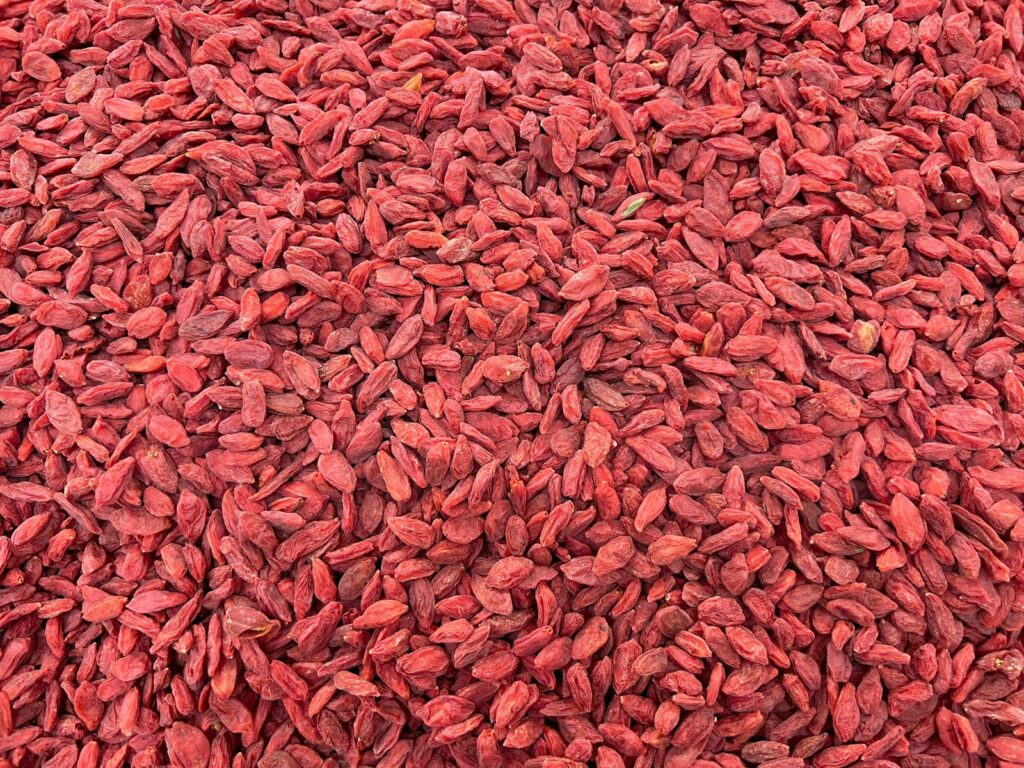
Goji berries look almost too vivid to be pantry food—tiny red-orange ribbons with a tart-sweet flavor somewhere between cranberry, tomato, and raisin. The clearest goji berry benefits come from treating them as dried fruit: they provide fiber and carotenoid pigments, especially zeaxanthin, and add color and chew to meals. Small human trials suggest a possible eye-health benefit, but goji berries have not been proved to prevent disease, reverse aging, “detox” the liver, or replace a varied diet.
Goji berries can be a lovely part of breakfast or a savory bowl. They do not need a superfood halo to earn their place in the pantry.
What goji berries offer as food
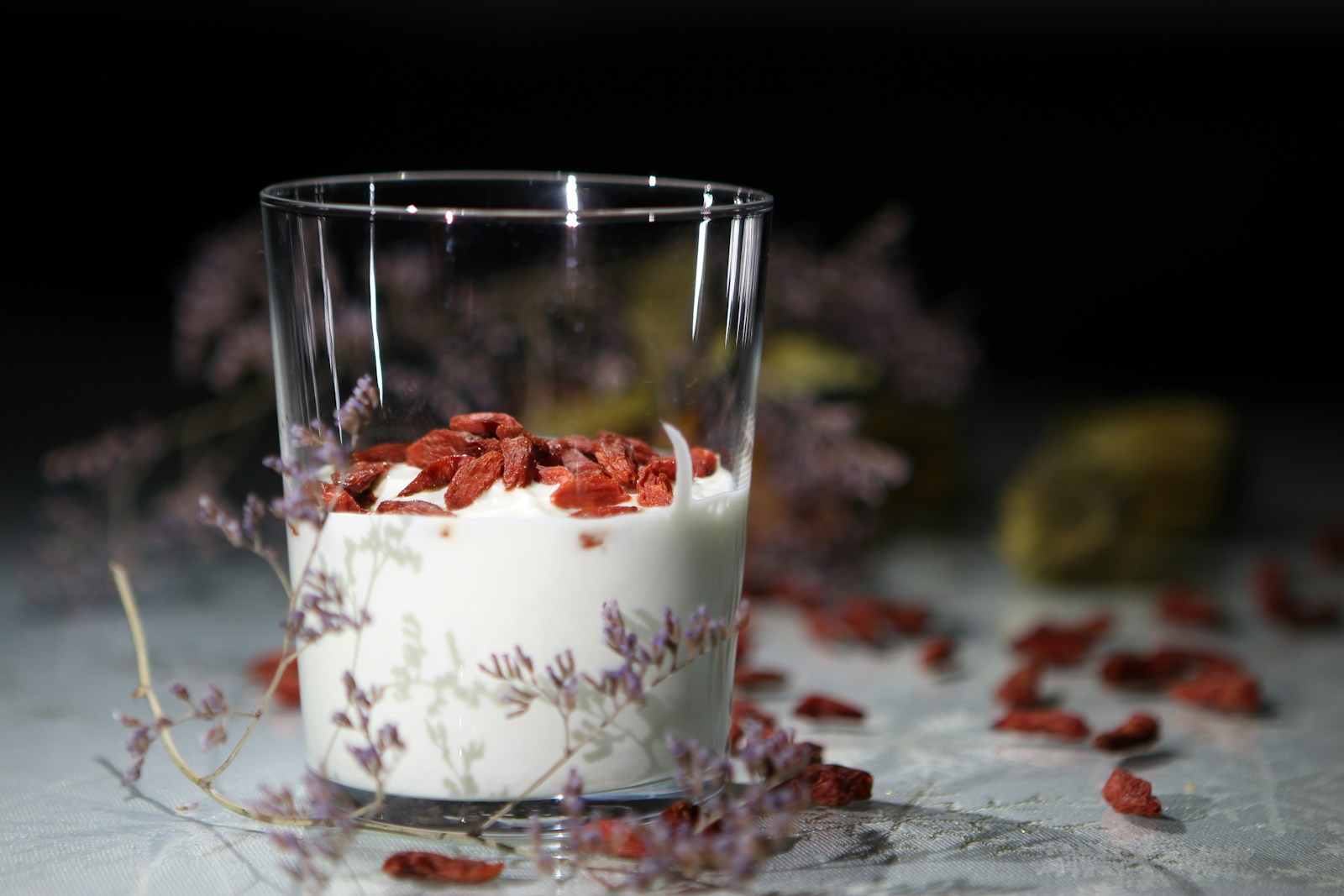
Goji is a common name for the fruit of Lycium barbarum and related Lycium species, also called wolfberry. Fresh berries are delicate, so U.S. shoppers are more likely to find them dried, powdered, brewed into tea, bottled as juice, or sold in capsules. Dried goji berries are concentrated fruit: mostly carbohydrate, with some fiber and protein, plus carotenoids that create their warm red-orange color.
Zeaxanthin is the standout compound because it is one of the pigments found in the macula, the central part of the retina. Goji berries contain much of it as zeaxanthin dipalmitate, an esterified form. They also contain other carotenoids and phenolic compounds. Those details make goji scientifically interesting, but they do not turn one fruit into complete nutrition.
I would place goji berries in the same practical lane as raisins, dried cherries, or apricots: flavorful, portable, and easy to scatter. A small handful can brighten plain oatmeal or a grain bowl; a large, unmeasured handful can also deliver dried fruit's concentrated sweetness quickly. The serving on the package is a better reality check than the word superfood. Tastiva's Nutrition guides take the same food-first approach.
The eye-health evidence is promising but small
The strongest human research centers on macular pigment. In a 2021 randomized pilot trial, 27 healthy adults ages 45 to 65 were analyzed after consuming either 28 grams of dried goji berries five days a week or a lutein-zeaxanthin supplement for 90 days. Macular pigment optical density increased at two measured retinal locations in the goji group, and skin carotenoid scores also rose.
That is encouraging, not conclusive. The trial was small and unmasked, lasted three months, and measured biomarkers—not whether participants avoided age-related macular degeneration or preserved vision years later. Earlier research used proprietary goji formulations or involved people with early retinal changes, so the products and populations are not interchangeable.
The honest conclusion is narrower than many headlines: regular goji intake may raise certain carotenoid-related markers. It has not been established as an AMD prevention or treatment. People with eye disease should follow an ophthalmologist's care plan; goji berries are food, not a substitute for an eye exam or an evidence-based supplement recommended for a specific diagnosis.
Other popular benefit claims need better trials
Goji research also explores blood glucose, cholesterol, immune measures, liver markers, mood, and general well-being. Many studies are small, short, use juices or standardized extracts, or lack the design needed to separate a real effect from chance, diet changes, or expectation. Cell and animal findings are useful for forming questions, but they cannot tell us what a bowl of dried berries will do in a person.
| Claim | What we actually know | What I would do |
|---|---|---|
| Supports eye health | Small human trials show changes in zeaxanthin or macular-pigment markers | Enjoy as one carotenoid-containing food; keep regular eye care |
| Controls blood sugar | Limited trials use different preparations and populations | Count dried goji as carbohydrate; do not alter diabetes medicine |
| Boosts immunity | Lab findings and changes in selected markers do not prove fewer illnesses | Build the whole pattern: sleep, vaccines, food variety, and medical care |
| Protects the liver | Human evidence is not strong enough for treatment claims | Skip “detox” promises and seek care for abnormal liver tests |
| Slows aging | This is marketing language, not a defined clinical outcome | Buy them for taste and usefulness, not a promise of youth |
I like one question for every dramatic benefit claim: Was the research done in people, using ordinary berries, and did it measure something that matters to daily health? If the answer is no, there may be a hypothesis—but not a reason to reorganize breakfast or buy an expensive supplement.
How to choose, use, and eat goji berries safely
Choose dried berries that are pliable rather than damp, with goji berries as the only ingredient unless you intentionally want added sugar or oil. Store them tightly sealed in a cool, dry place, following the package after opening. Their tart edge works in oatmeal, yogurt, trail mix, couscous, rice pilaf, soups, and salads. Soaking them for five to ten minutes softens the chew; the soaking liquid can go into the dish.
- Start with 1 to 2 tablespoons in a meal and adjust for taste and your carbohydrate needs.
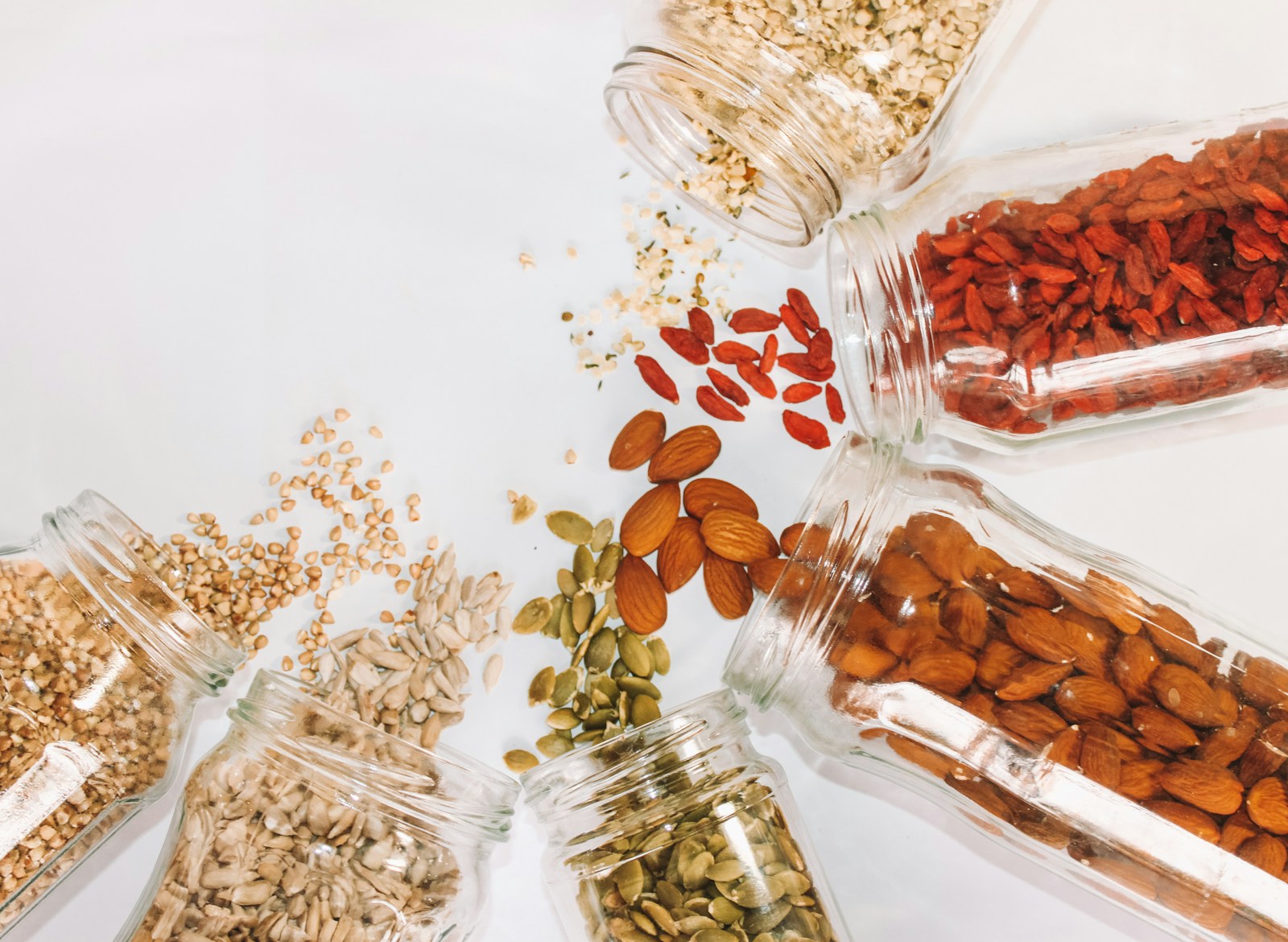
- Combine them with nuts or plain yogurt rather than treating a bag as an unlimited snack.
- Use tea or juice for flavor, not as a concentrated “cleanse.”
- Choose whole berries over capsules when your goal is simply to add fruit variety.
- Stop eating them and seek advice if you develop hives, swelling, wheezing, or another allergic reaction.
Goji products deserve extra care around medicines. Published case reports and reviews describe interactions with warfarin, including excessive anticoagulant effects, and a report involving the antiarrhythmic drug flecainide. If you take warfarin, another narrow-therapeutic-index medicine, or glucose-lowering drugs, ask your pharmacist or prescriber before making goji tea, juice, extracts, or large daily portions a routine. A berry can be food and still interact with medicine.
Sources
- USDA FoodData Central: Goji Berries Search
- Li et al.: Goji Berry Intake and Macular Pigment—Randomized Pilot Trial
- Bucheli et al.: Goji Berry Effects on Macular Characteristics and Plasma Zeaxanthin
- Wilson et al.: Lutein/Zeaxanthin Intake and Human Macular Pigment—Systematic Review
- Vidović et al.: Health Benefits, Uses, and Safety of Goji Berries—Review
- MedlinePlus: Warfarin—Herbal and Dietary Product Precautions

Hi, I’m Laura, the voice behind Tastiva. I’ve always believed that eating well should feel enjoyable, comforting, and realistic—not like another complicated rule to follow. I love creating recipes that fit into everyday life, sharing simple nutrition ideas, and finding small ways to make meals feel a little better without losing the pleasure of good food.