
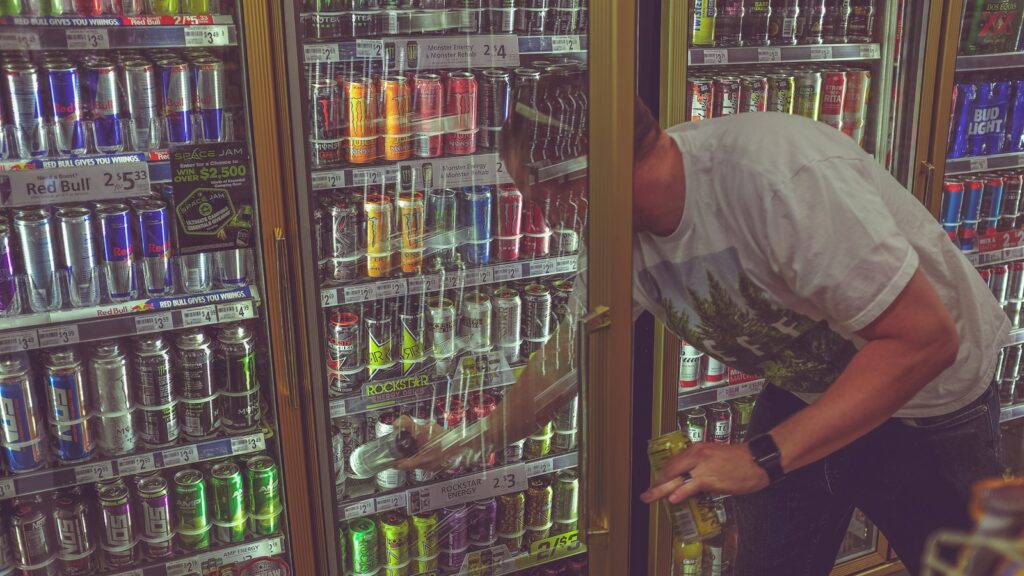
At a convenience-store cooler, the loudest can is rarely the most useful one to choose. If you are asking for the healthiest energy drink, I would start with a more honest answer: there is no single best can for everyone. Look at the caffeine per whole container, added sugar, serving size, and the rest of what you have already had that day. For everyday hydration, water is the simpler choice; if you want caffeine, a lower-caffeine option may fit better than a large energy drink.
Read the caffeine and added-sugar numbers for the entire can. The front label cannot tell you whether that drink fits your day.
What a healthier energy drink choice depends on
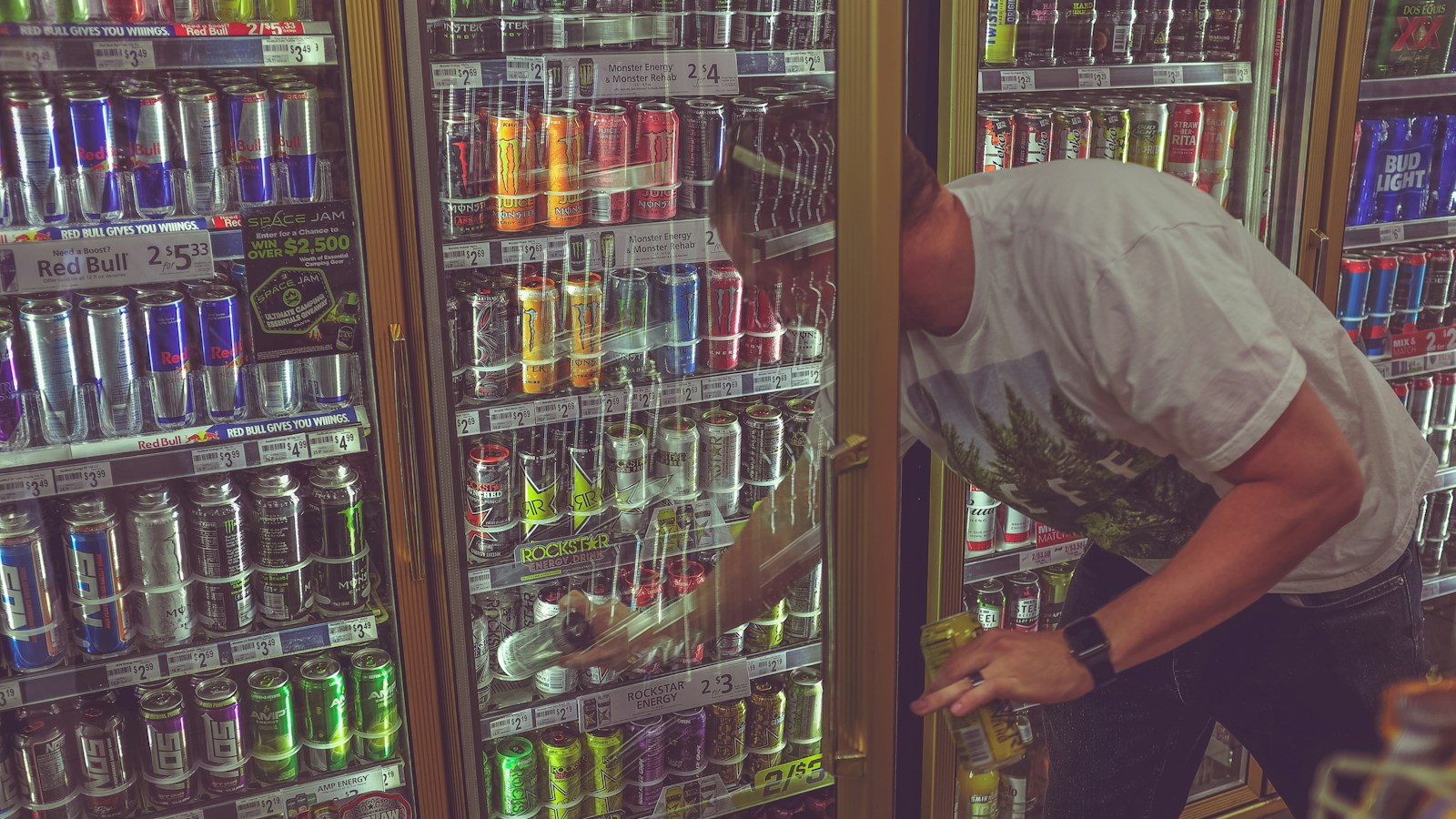
The healthiest energy drink for one person may still be a poor fit for another. The word healthy can hide a lot of different priorities. Someone trying to avoid a late-day sleep disruption is asking a different question from someone comparing added sugars. My first check would be the reason for the drink: do you want fluid, a little caffeine, something sweet, or all three? An energy drink is usually built around caffeine, sometimes with sugar and other ingredients, and its marketing name is not a nutrition category.
The FDA says energy drinks generally range from 54 to 328 milligrams of caffeine per 16 fluid ounces, while some 12-ounce products range from 41 to 246 milligrams. Those are broad market ranges, not a recommended serving. The label on the exact can in your hand matters. If the container holds more than one serving, multiply the per-serving numbers before comparing it with another product.
I would also read the ingredient list for other caffeine sources such as guarana. Many U.S. energy drinks list total caffeine from all sources, according to FDA, but confirm what your package says. A brightly colored can that advertises vitamins is still a caffeinated beverage; a vitamin callout does not answer the questions about caffeine, sugar, or your own tolerance.
Compare caffeine and sugar on the same basis
To find the healthiest energy drink for your needs, put two cans side by side and compare caffeine per full container, not one brand’s 8-ounce serving with another brand’s 16-ounce can. Then look at the Nutrition Facts line for added sugars. FDA explains that added sugars are identified separately from total sugars on the label. Zero added sugar can be a useful choice for someone limiting it, but it does not erase the caffeine or make the product suitable for every person.
For most adults, FDA cites 400 milligrams of caffeine a day as an amount not generally associated with negative effects. Sensitivity varies widely, and medications, conditions, pregnancy, and breastfeeding can change what is appropriate. I would count coffee, tea, cola, and chocolate alongside the can, not treat each drink as a separate allowance. Our coffee guide has more context for an ordinary daily cup.
A ‘natural caffeine’ label does not change how the body handles caffeine; FDA says naturally occurring and added caffeine are handled the same way. If a product leaves the total amount unclear, it is reasonable to choose one with a clearer label or to contact the maker. Knowing the number is more useful than guessing from a brand’s name, color, or promise of focus.
Who should be especially cautious
Energy drinks are a poor choice for children and teens. CDC relays the American Academy of Pediatrics’ advice that caffeine and other stimulants in these drinks have no place in their diets. The adult 400-milligram context is not a child target. If a teen wants a drink during sports, water is a sensible starting point for ordinary hydration; an energy drink is not the same as a sports drink.
Adults can also have different reactions to caffeine. The FDA lists possible signs of too much, including jitters, sleep disruption, palpitations, and upset stomach. If a drink repeatedly makes you feel unwell, a smaller or caffeine-free alternative deserves consideration. If you have a condition or take medication that may matter, ask your healthcare professional about your own limit rather than relying on a general article.
Timing belongs in this decision too. A can at the end of a long afternoon may be exactly when its caffeine is least welcome at bedtime. I would look at the full day before choosing a second caffeinated drink, including a large coffee earlier on. Neither sugar-free nor low-calorie wording changes the time caffeine spends affecting you.
A practical choice when you just need a drink

For thirst, water or unsweetened sparkling water gives you fluid without added caffeine. Unsweetened tea is another option if you want its flavor and are comfortable with its caffeine. If you are comparing cans for the healthiest energy drink, I would choose the smallest container whose caffeine amount is clear, compare added sugars, and decide whether that total fits the rest of the day. This is a comparison method, not an endorsement of any brand.
A product labeled zero sugar may use sweeteners, while a regular version may contain added sugars. Those are different trade-offs; the label can tell you what is in the can, but it cannot tell you how the drink will feel to you. Keep food and sleep in the picture too. A can is not a substitute for a meal or a night’s rest, even when the advertising suggests otherwise.
The short answer to ‘healthiest energy drink’ is therefore a label check, not a winner’s podium. If you want hydration, begin with water. If you want caffeine, compare the total in the entire container and your other sources. Choose deliberately, and leave the can that asks you to trust its front label more than its facts.
Sources
- FDA, Spilling the Beans: How Much Caffeine Is Too Much?
- CDC, The Buzz on Energy Drinks
- FDA, Added Sugars on the Nutrition Facts Label
- FDA, How to Understand and Use the Nutrition Facts Label

Hi, I’m Laura, the voice behind Tastiva. I’ve always believed that eating well should feel enjoyable, comforting, and realistic—not like another complicated rule to follow. I love creating recipes that fit into everyday life, sharing simple nutrition ideas, and finding small ways to make meals feel a little better without losing the pleasure of good food.