
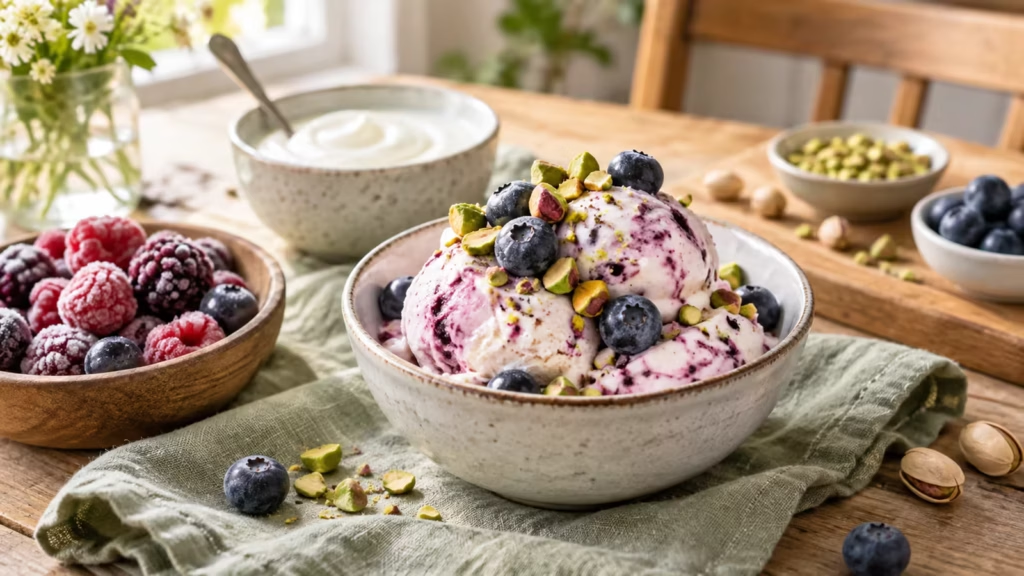
“Healthy ice cream” can mean almost anything in the freezer aisle: lower calorie, higher protein, no added sugar, dairy-free, organic, tiny serving, or a pint with a very athletic label. No single ice cream is healthiest for everyone; a better choice is one that fits your allergies and goals, offers a portion you can enjoy, and tastes satisfying enough that you are not still searching for dessert afterward. Ice cream remains dessert, and that is not a flaw. I would rather eat a lovely scoop deliberately than chase a wellness halo through a carton whose ingredient list and promises are doing more work than its flavor.
A healthier dessert is not the one that apologizes hardest for being dessert; it is the one you can enjoy with clarity, satisfaction, and no magic claims.
What “healthy” can—and cannot—tell you
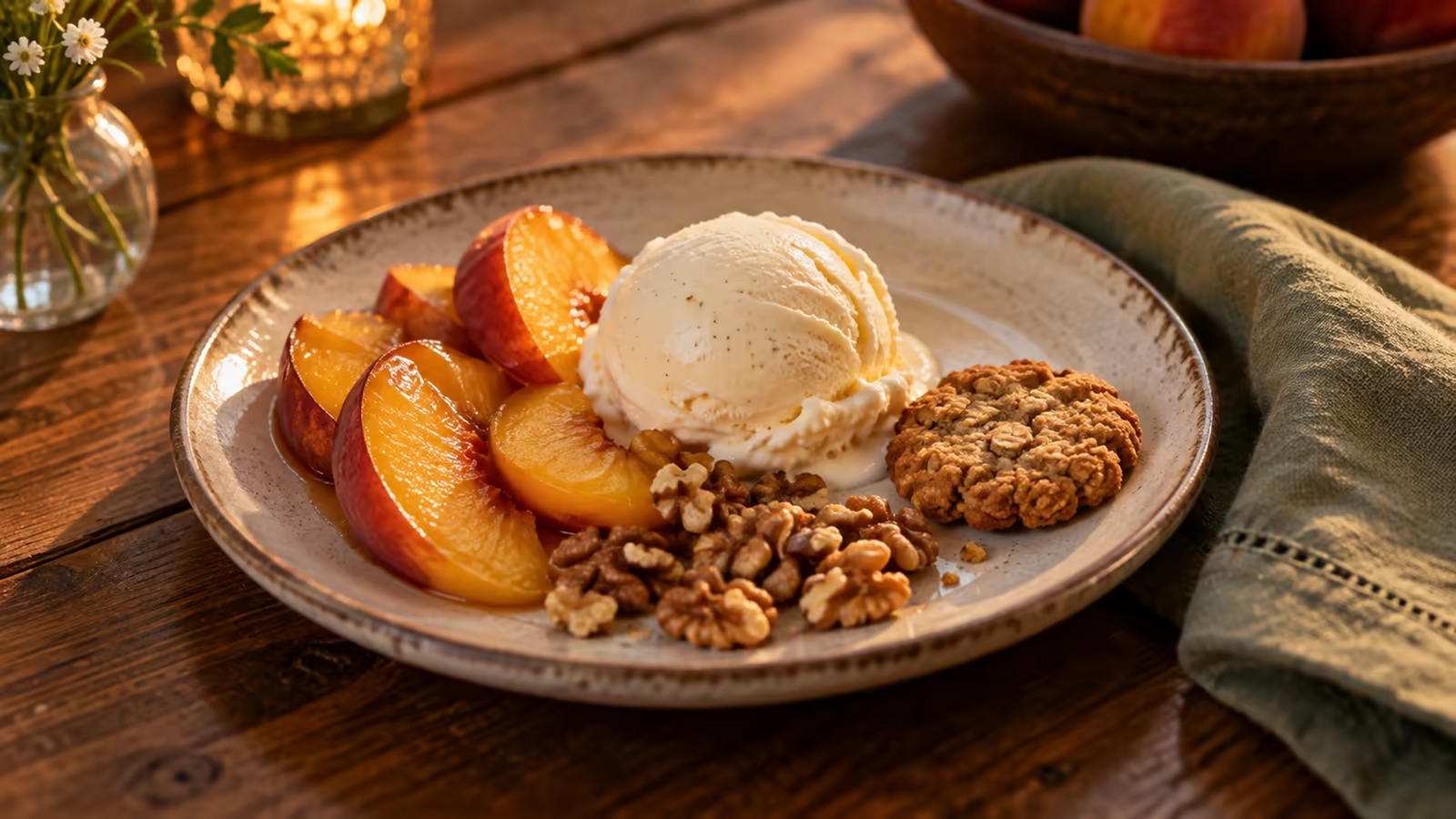
FDA has updated the criteria for foods that voluntarily use the word “healthy” as a regulated nutrient-content claim on packaging. That rule has specific food-group and nutrient limits; it is different from casual language in an article or a brand name. Many desserts will not qualify for the formal claim, yet an occasional serving can still fit within an overall nourishing pattern.
Start by naming your priority. Someone with a milk allergy needs a truly dairy-free product made with attention to cross-contact. Someone managing blood glucose may focus on total carbohydrate, serving size, and response. A person who wants more staying power may value protein or fiber. A person with irritable bowel symptoms may need to avoid certain sugar alcohols or added fibers. “Healthy” without a person and a purpose is just fog.
Do not let a single front-label number make the decision. “Low calorie” can come from a smaller serving, more air, less fat, high-intensity sweeteners, or all four. “Plant-based” may still be high in saturated fat when coconut is the base. “High protein” does not automatically mean low in added sugar or easy to digest.
Read the label in an order that makes sense
First compare serving weights, not just cups or fractions of a pint. Air changes volume, so two-thirds of a cup of one product may contain much less actual mixture than the same volume of another. Then look at calories only in context with added sugars, saturated fat, protein, fiber, sodium, and ingredients. The nutrients that matter most depend on your health needs and the rest of your diet.
- Added sugars: useful to compare across equal gram weights; “no added sugar” can still contain natural milk or fruit sugar.
- Saturated fat: often higher in cream- and coconut-based products; compare if it is a priority for you.
- Protein: may improve staying power, but a dessert does not need to replace a meal.
- Fiber: added fibers can increase the number and may also cause gas or bloating for some people.
- Sweeteners: sugar alcohols and high-intensity sweeteners taste and digest differently; tolerance is individual.
Ingredients are listed by weight, but a longer list is not proof of harm. Stabilizers such as gums help control ice crystals; emulsifiers support smooth texture. The better question is whether you tolerate the formula and enjoy the result. If a product leaves a cooling aftertaste, stomach discomfort, or a strangely unsatisfying finish, its impressive panel may not be a practical win.
Allergen statements deserve their own read every time, especially because flavors and manufacturing can change. “Non-dairy” has a specific history on some products and may not always mean free of milk-derived ingredients; look for a clear dairy-free or vegan claim, the ingredient list, and the Contains statement when milk allergy is involved.
Make a satisfying portion instead of a punishment bowl
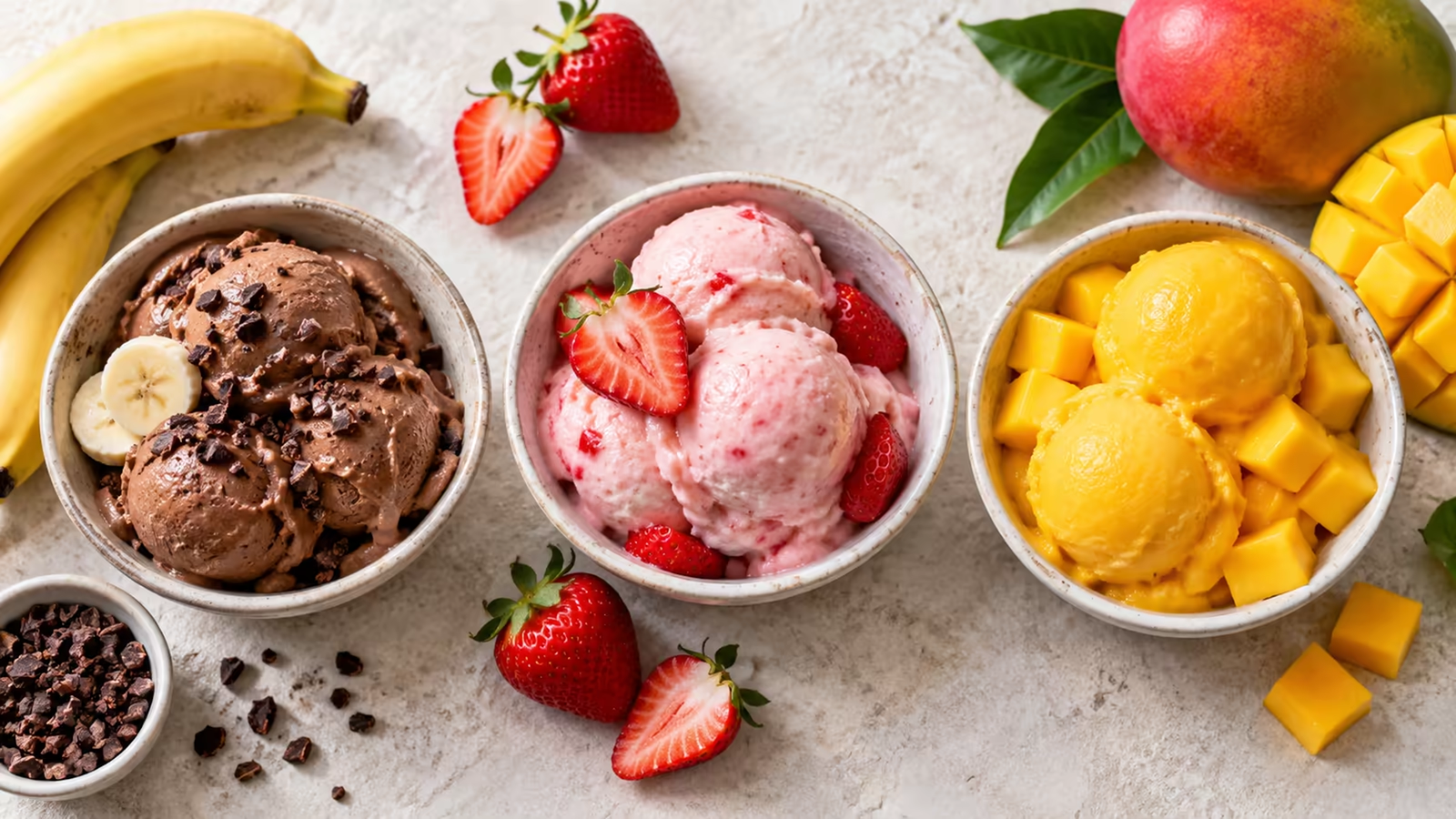
Satisfaction is part of portion control. Put ice cream in a bowl rather than eating distractedly from the carton, add texture or contrast if you want it, and sit down. Fruit adds freshness and volume; nuts add crunch and richness; a warm baked peach can make one scoop feel generous. None of those additions “earns” dessert—they simply build a better one.
If a standard ice cream is your favorite, a modest scoop may satisfy more than a large bowl of a substitute. If you love a lighter high-protein pint, enjoy that too. The point is not to force every product into equivalence. Choose the experience you want, notice fullness, and avoid turning the nutrition label into a score for personal virtue.
People with a history of restrictive eating may find calorie-per-pint marketing especially unhelpful. You do not need to finish a container because the label frames it as permissible, and you do not need to avoid traditional ice cream because it is richer. A flexible pattern has room for both nutrition and pleasure.
Homemade ideas and smart freezer habits
Homemade frozen desserts let you choose the ingredients, but they are not automatically more nutritious. Blend frozen banana with cocoa for a soft fruit-based bowl; freeze strained yogurt with berries for more protein; or purée mango with lime for a simple sorbet-style dessert. These are alternatives with their own textures, not convincing replacements for every ice-cream craving.
Keep commercial ice cream at a steady freezer temperature and return it promptly after serving. Repeated melting and refreezing creates large crystals and can raise food-safety concerns if the product sits warm for too long. A piece of parchment pressed against the surface reduces air exposure, and a shallow container makes homemade mixtures easier to scoop.
For a clearer comparison of traditional frozen styles, read our gelato versus ice cream guide. My final test is simple: does the dessert suit your body, your values, and the moment—and does it actually taste good? If yes, the scoop is doing its job.
Sources
- U.S. Food and Drug Administration: Use of the “Healthy” Claim on Food Labeling
- U.S. Food and Drug Administration: Added Sugars on the Nutrition Facts Label
- U.S. Food and Drug Administration: Food Allergies

Hi, I’m Laura, the voice behind Tastiva. I’ve always believed that eating well should feel enjoyable, comforting, and realistic—not like another complicated rule to follow. I love creating recipes that fit into everyday life, sharing simple nutrition ideas, and finding small ways to make meals feel a little better without losing the pleasure of good food.