
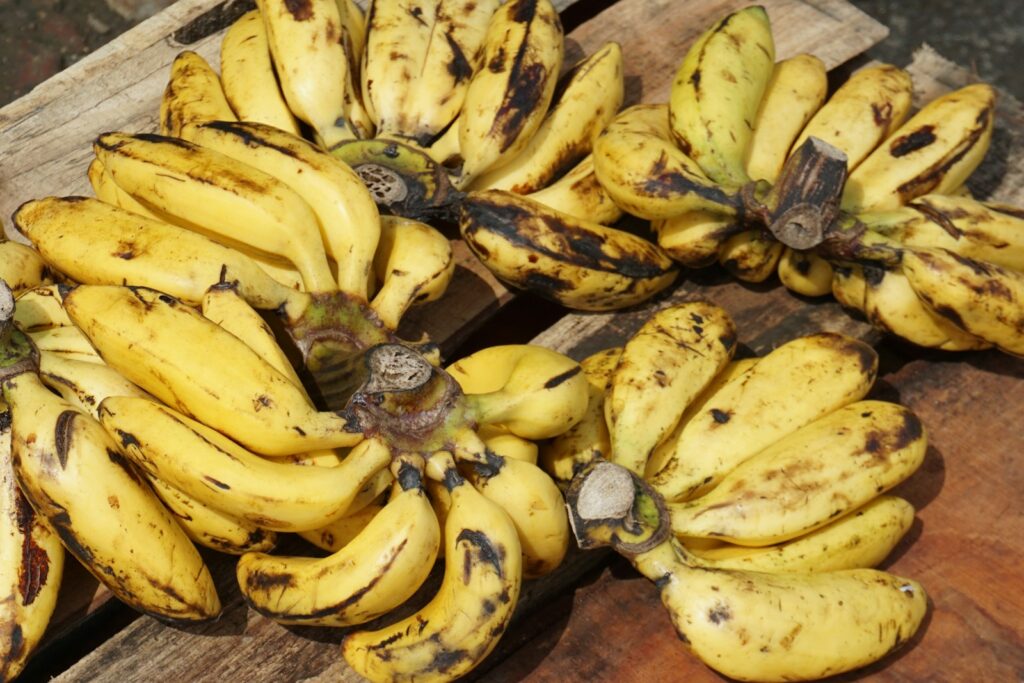
A banana can look like the simplest snack in the fruit bowl—until you’re counting carbohydrates and notice one is nearly twice the size of another. According to USDA FoodData Central, a medium raw banana contains about 27 grams of total carbohydrate, including 3.1 grams of fiber and 14.4 grams of naturally occurring sugar. Half of that banana has roughly 13.5 grams of carbs.
A banana’s carb count makes much more sense once you look at its size, not just its peel.
How Many Carbs Are in a Banana by Size?
The useful answer isn’t one fixed number. USDA serving weights run from 81 grams of edible fruit for an extra-small banana to 152 grams for an extra-large one. These estimates are calculated from USDA values for raw banana per 100 grams, then rounded to one decimal place.
| Banana size | Edible weight | Total carbs | Fiber | Total sugar |
|---|---|---|---|---|
| Extra small, under 6 inches | 81 g | 18.5 g | 2.1 g | 9.9 g |
| Small, 6 to 6⅞ inches | 101 g | 23.1 g | 2.6 g | 12.4 g |
| Medium, 7 to 7⅞ inches | 118 g | 27.0 g | 3.1 g | 14.4 g |
| Large, 8 to 8⅞ inches | 136 g | 31.1 g | 3.5 g | 16.6 g |
| Extra large, 9 inches or longer | 152 g | 34.7 g | 4.0 g | 18.6 g |
For a quick kitchen estimate, call a typical medium banana 27 grams of carbs, a small one 23 grams, and half a medium one 13.5 grams. Natural foods vary, so these are practical estimates rather than promises down to the decimal.
Total Carbs, Net Carbs, Fiber, and Sugar Explained
The 14.4 grams of sugar in a medium banana are already included in its 27 grams of total carbohydrate; they aren’t added on top. That sugar occurs naturally in the fruit. A plain fresh banana contains no added sugar, although sweetened banana products may be another story entirely.
“Net carbs” isn’t a standardized number on U.S. Nutrition Facts labels. Using the common calculation of total carbohydrate minus fiber, a medium banana has about 23.9 grams of net carbs. If you count carbohydrates for insulin or another medical plan, use the method your diabetes care team recommends rather than switching automatically to net carbs.
A food scale is the neatest solution when the banana has been sliced, frozen, or mashed. Peeled banana provides about 22.8 grams of total carbs per 100 grams. USDA portions also work out to approximately:
- 1 cup sliced, 150 grams: 34.3 grams of carbs
- 1 cup mashed, 225 grams: 51.4 grams of carbs
- Half a medium banana, about 59 grams: 13.5 grams of carbs
Does Ripeness Change a Banana’s Carbs?
Ripening changes the form of a banana’s carbohydrate more clearly than it changes the number most people should use for everyday carb counting. As a green banana ripens, enzymes convert much of its starch into soluble sugars. That’s why firm, slightly green fruit tastes mild while a spotted banana tastes softer and dramatically sweeter.
USDA Agricultural Research Service-supported research found a substantial rise in fructose, glucose, and total sugar between unripe and ripe bananas. It also showed that measured fiber can vary depending on whether the laboratory method captures resistant starch. In practical terms, greener bananas contain more resistant starch, while ripe bananas contain more readily available sugar.
Published glycemic-index figures summarized by Harvard put slightly underripe bananas around 42 and ripe bananas around 51, both within the conventional low-GI range. Their estimated glycemic loads were moderate because a full banana still supplies a meaningful carb portion. Variety, ripeness, portion size, the rest of the meal, and an individual’s response all matter, so peel color can offer context but not a guaranteed blood-sugar result.
Can Bananas Fit a Blood-Sugar-Friendly Eating Plan?
Yes, bananas can fit many balanced eating plans, including plans for people with diabetes. The banana still needs to be counted as a carbohydrate food. CDC guidance notes that eating carbohydrate with protein, fat, or fiber can slow how quickly blood sugar rises compared with eating the carbohydrate alone.
A few practical combinations are:
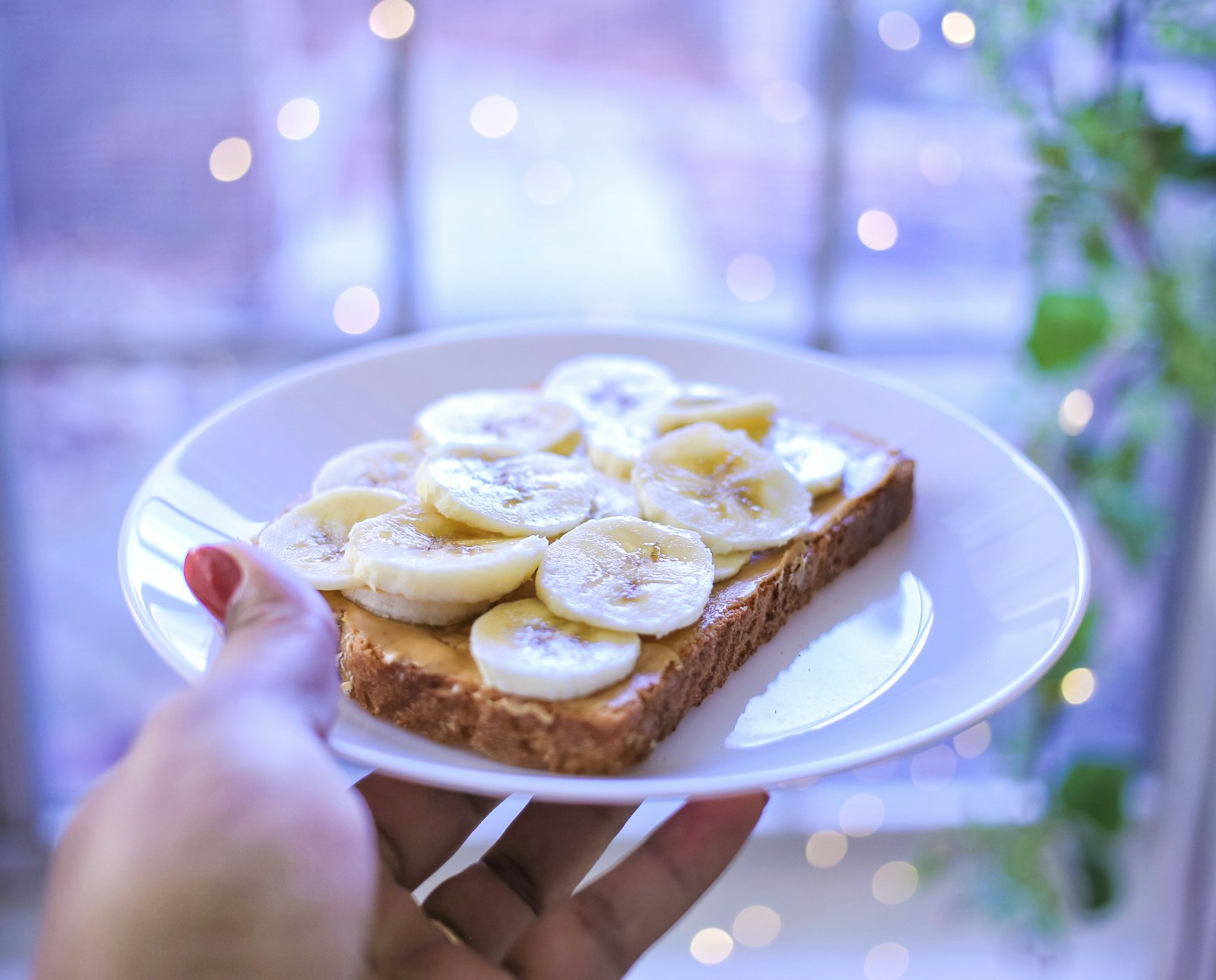
- Half a medium banana with unsweetened peanut butter
- A small banana with plain Greek yogurt
- Banana slices with cottage cheese and cinnamon
- Half a banana with a small handful of nuts
Pairing doesn’t cancel the banana’s carbs, and other foods may contribute carbs of their own. If your plan treats 15 grams as one carbohydrate serving, half a medium banana—about 13.5 grams—is a convenient estimate. A whole extra-small banana contains closer to 18.5 grams, while a large banana supplies a little over 31 grams.
Whole fruit is generally easier to portion than juice, dried banana, or banana chips. For smoothies, count every banana that goes into the blender; blending doesn’t make its carbohydrate disappear. People who use insulin or medicines that can cause low blood glucose should follow their personalized carb targets and discuss uncertain portions with a registered dietitian or diabetes care professional.
Sources
- USDA FoodData Central — Bananas, raw, FDC ID 173944
- USDA Agricultural Research Service — Dietary Fiber, Starch, and Sugars in Bananas at Different Ripeness
- CDC — Diabetes Meal Planning
- CDC — Choosing Healthy Carbs
- Harvard T.H. Chan School of Public Health — Bananas
- NIDDK — Healthy Living with Diabetes

Hi, I’m Laura, the voice behind Tastiva. I’ve always believed that eating well should feel enjoyable, comforting, and realistic—not like another complicated rule to follow. I love creating recipes that fit into everyday life, sharing simple nutrition ideas, and finding small ways to make meals feel a little better without losing the pleasure of good food.