
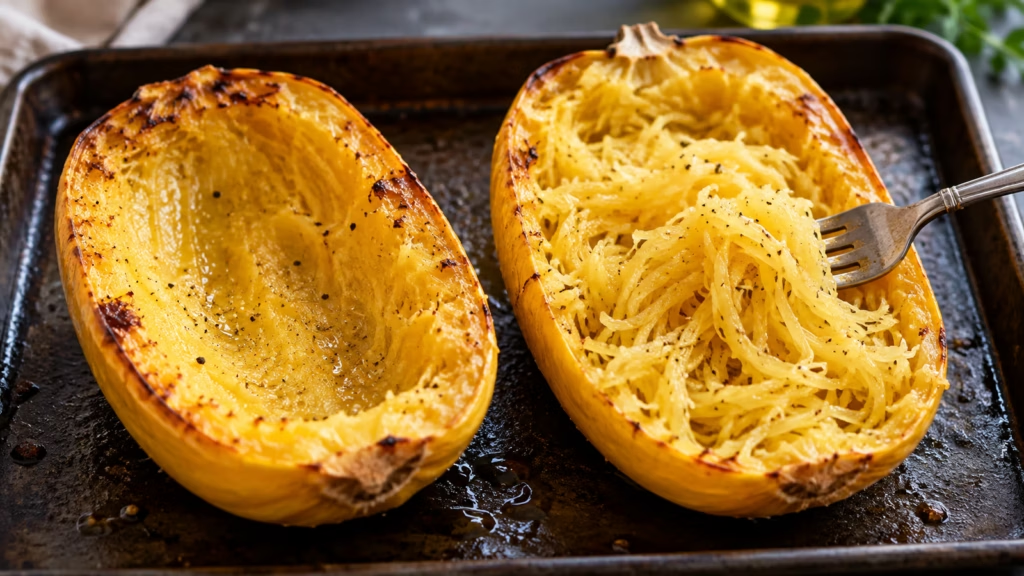
A fork scrapes across a roasted squash, and suddenly the solid flesh separates into thin golden strands. If you’re wondering how to cook spaghetti squash, start with halved squash roasted cut-side down at 400°F (200°C), then check for tenderness before scraping. The goal is distinct strands with a little bite, rather than a soft heap that needs rescuing with sauce.
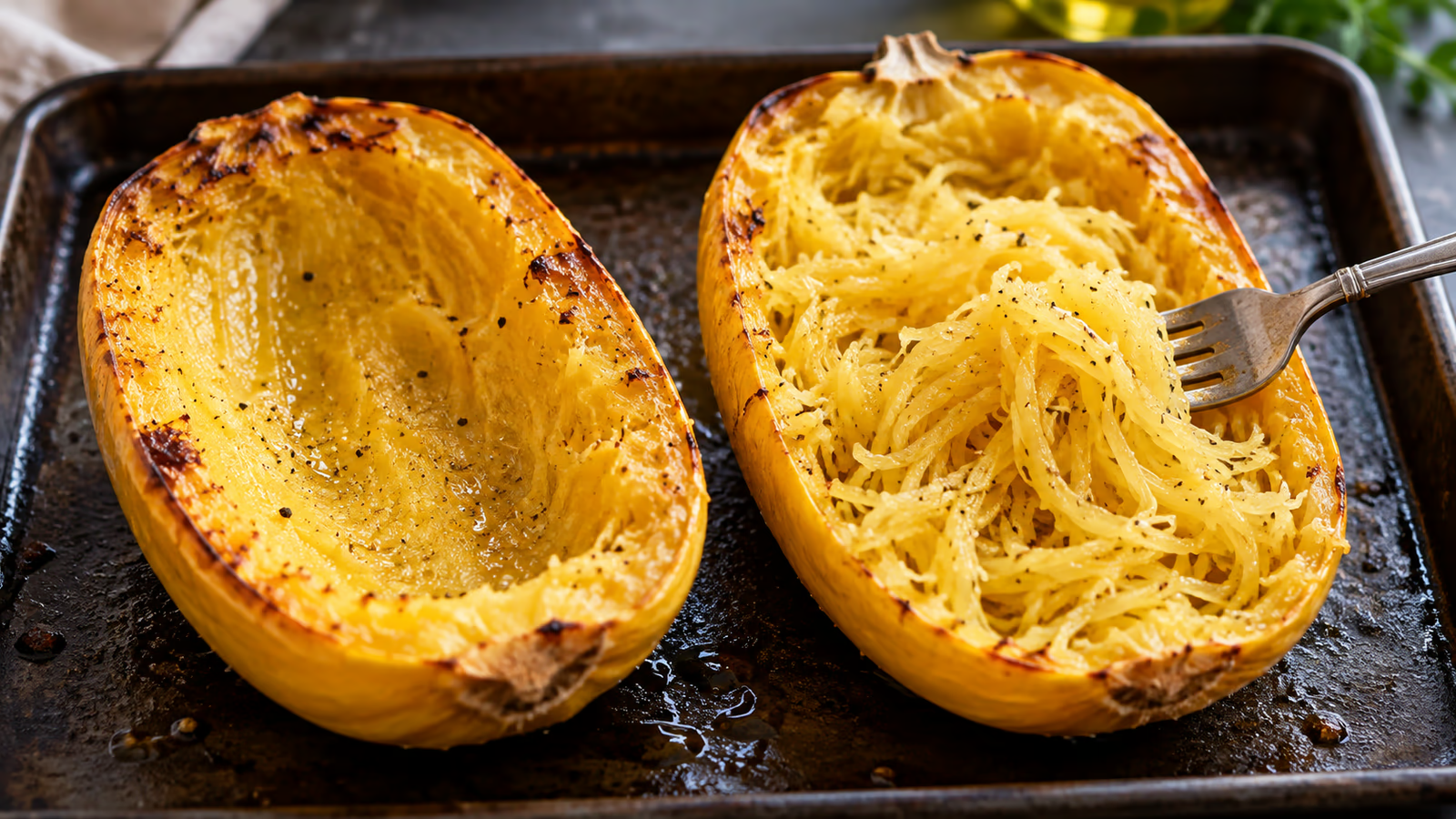
Stop roasting when the strands separate easily; a tender squash still has room for a little texture.
How to cook spaghetti squash starts with a steady cut
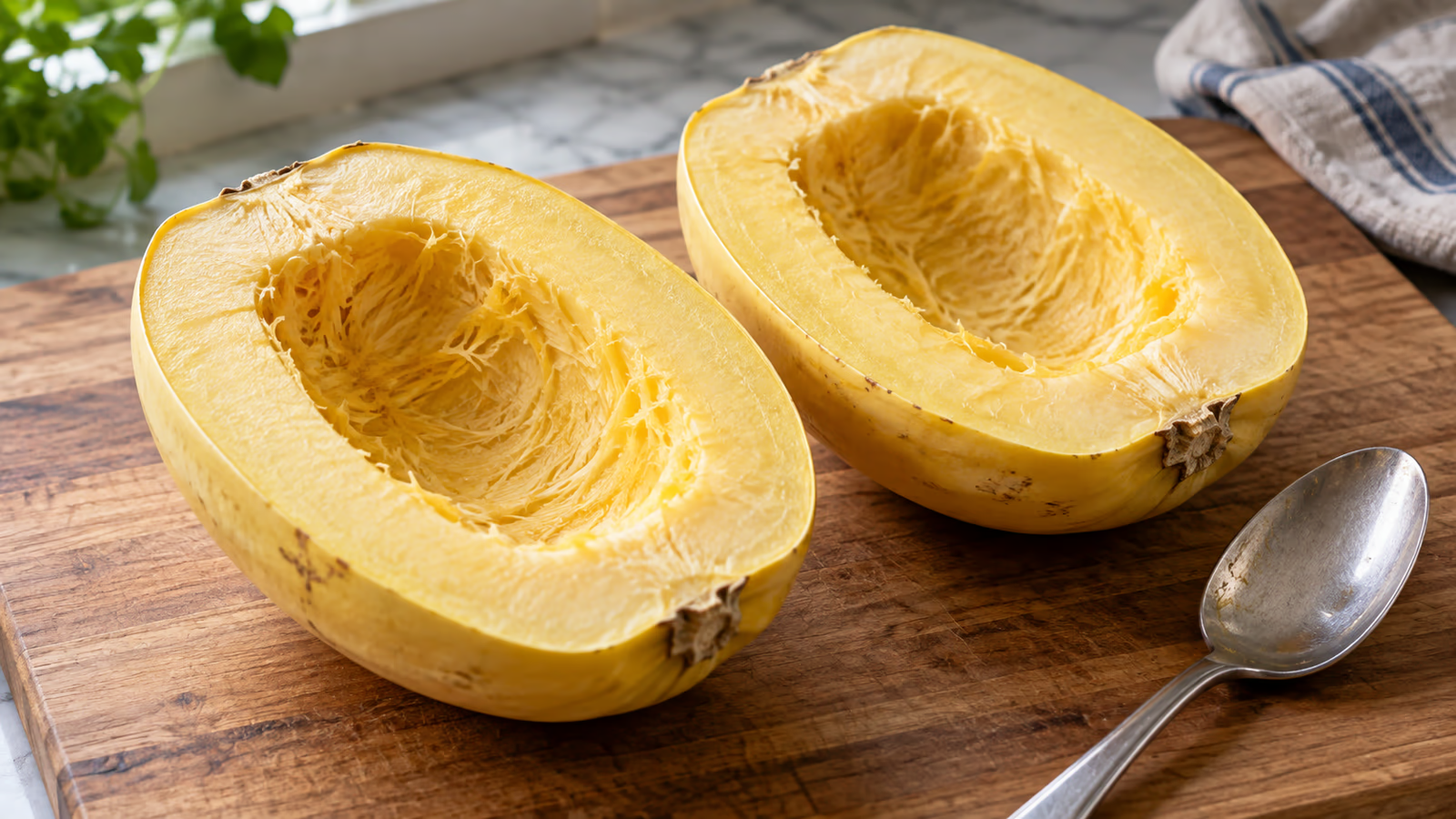
Choose a firm squash without soft, sunken patches. A medium squash is easier to manage than an enormous one, and two smaller halves fit comfortably on a sheet pan. Wash and dry the rind before your knife goes through it; the outside still touches your hands and cutting board.
I would spend an extra minute making the cutting setup stable before worrying about the oven. A sharp chef’s knife and a board that does not slide matter more than a special squash gadget. Keep your supporting hand clear of the blade’s path, and stop if the squash rocks or the knife sticks.
- Set up securely: Put a damp towel under a slippery board. Trim a thin slice from the base if needed to create a stable resting surface.
- Work around the stem: Cut lengthwise through the flesh without trying to force the knife through the hard woody stem. Separate the halves carefully.
- Clear the cavity: Scoop out the seeds and loose strings with a spoon. Leave the firmer flesh against the rind; that is the part you will eat.
- Need an easier starting point? Buy pre-cut halves when available. There is no prize for wrestling a vegetable.
Roast for strands, not a soft mash
A light coating of oil is enough to cover the cut surfaces. Arrange the halves cut-side down on a rimmed baking sheet, leaving some space around them. This keeps the method simple: the enclosed flesh softens while the edges touching the pan can color.
Start checking around 35 minutes for a medium squash; a larger one can need 50 minutes or longer. Timing is a range, not a promise. Oven temperature, squash size and the thickness of its walls all change how quickly the center becomes tender.
- Test more than the rim: Carefully turn a half with oven mitts or tongs and check the thickest flesh. The very edge may soften before the rest.
- Look for gentle resistance: A fork should separate strands without hard scraping. If the flesh feels crunchy and resists, return it to the oven briefly.
- Skip the extra water: This is a roasting method. Pouring water into the pan changes the cooking environment and can leave a wetter result.
- Plan for later cooking: If the strands will go into a hot skillet or casserole, stop at just tender so they have some structure left.
Loosen the strands and choose a light finish
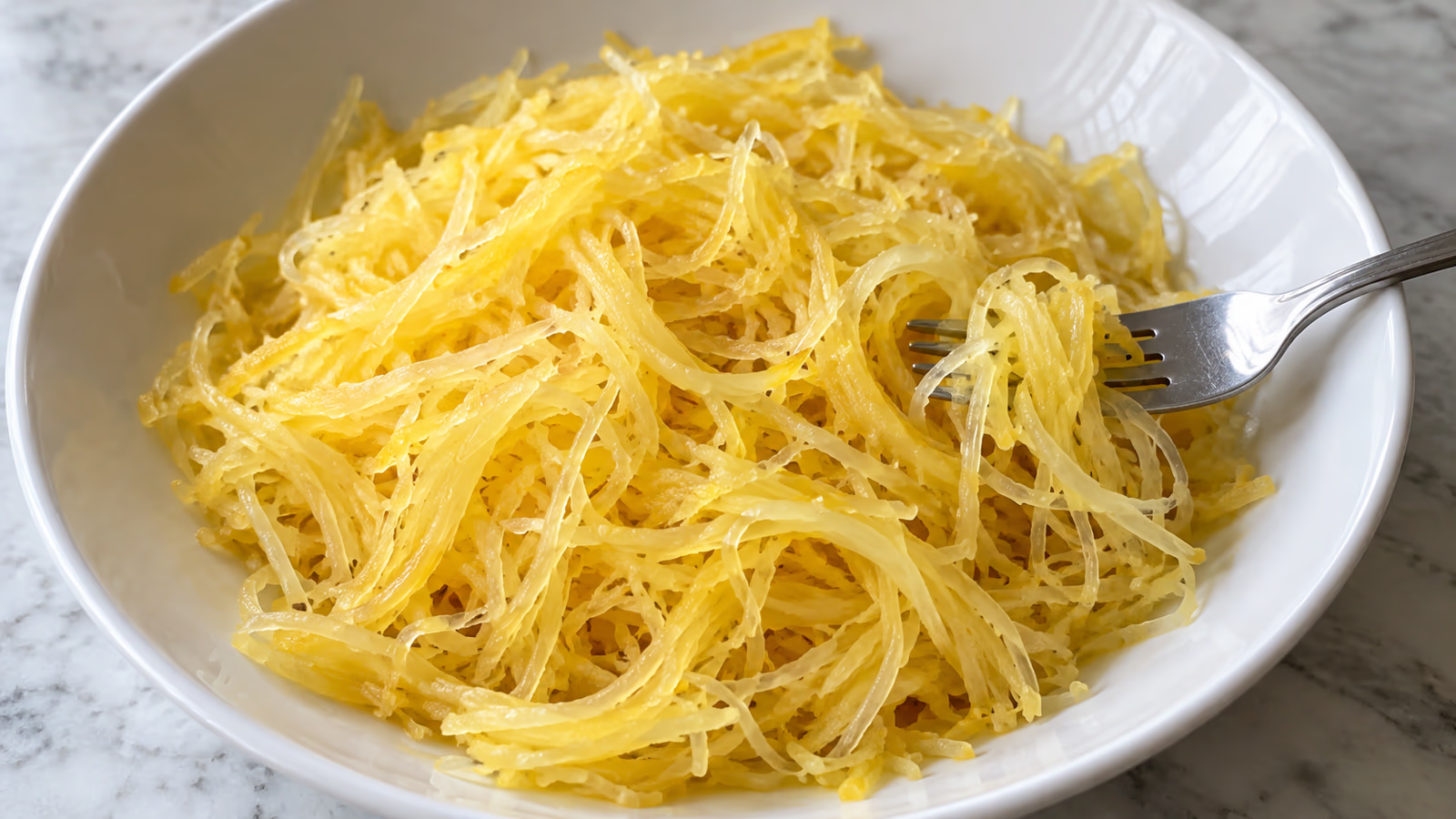
Let the halves stand until you can handle them safely, then draw a fork through the flesh and lift the strands out. Avoid digging through the rind. I prefer to separate a small patch first so I can judge the texture before scraping the entire half.
Spaghetti squash brings mild sweetness and a tender vegetable texture. It can carry a sauce, but it will not behave exactly like wheat pasta or replace its protein and carbohydrate content gram for gram. Think of it as a vegetable with useful strands, and dinner becomes easier to plan.
- For a simple side: Add a little lemon juice, chopped herbs or grated cheese after cooking. Taste before adding more salt.
- For a fuller plate: Pair the squash with beans, chicken, fish or tofu and another vegetable. Keep the sauce amount modest at first.
- If liquid collects: Let the strands drain briefly, then warm them in a wide skillet. More sauce will not solve extra water.
- If you wanted creamy cubes: That is a different squash job. Our butternut squash ideas cover roasting, mashing and blending instead.
Cool promptly and reheat only what you need
Cooked strands are handy for another meal, but do not leave the whole tray out until bedtime. Transfer leftovers into shallow containers and refrigerate promptly. USDA guidance is to refrigerate perishable food within two hours, or within one hour when the surroundings are hotter than 90°F (32°C).
- Refrigerate: Keep at 40°F (4°C) or below and use within three to four days. Label the container so the cooking date stays clear.
- Reheat: Warm the portion you need to 165°F (74°C), checking the center. Stir partway through microwave reheating for more even heating.
- Expect softer strands: Storage and reheating change the texture. Add delicate toppings after reheating, and avoid repeatedly heating the whole batch.
- About the estimate: The card assumes 1,000 g of edible raw squash flesh divided into four servings. Actual yield varies; sauces and toppings add their own nutrients.
Spaghetti Squash Recipe

Ingredients
- 1 medium spaghetti squash about 3 pounds (1.4 kg) whole; approximately 1,000 g edible flesh
- 1 tablespoon olive oil 13.5 g
- 1/4 teaspoon fine salt 1.5 g
- 1/4 teaspoon ground black pepper 0.5 g
Equipment
- 1 Rimmed baking sheet
- 1 sharp chef’s knife
- 1 stable cutting board
- 1 large spoon
- 1 Fork
- 1 Oven mitts
- 1 Food thermometer for reheating
Instructions
- Heat the oven to 400°F (200°C). Wash and dry the squash. On a stable board, carefully halve it lengthwise, working around the hard stem. Scoop out the seeds and loose strings. If you cannot cut it safely, use prepared halves rather than forcing the knife.
- Rub the cut flesh with the measured oil and sprinkle with salt and pepper. Place the halves cut-side down on a rimmed baking sheet.
- Roast for about 35–50 minutes, checking the thickest flesh from 35 minutes. Carefully turn a half using oven mitts or tongs. A fork should separate the flesh into tender strands with slight resistance; continue in short intervals if it is still firm.
- Let stand about 10 minutes, until safe to handle. Scrape the flesh gently with a fork, leaving the rind behind. Divide the strands into four portions and serve.
Nutrition
Video
Notes
Tried this recipe?
Let us know how it turned out!Sources
- Illinois Extension: preparing winter squash
- Downshiftology: roasted spaghetti squash method and instructional video
- USDA: safe handling and storage of leftovers
- USDA: reheating food safely
- USDA FoodData Central: ingredient-composition data
Hi, I’m Laura, the voice behind Tastiva. I’ve always believed that eating well should feel enjoyable, comforting, and realistic—not like another complicated rule to follow. I love creating recipes that fit into everyday life, sharing simple nutrition ideas, and finding small ways to make meals feel a little better without losing the pleasure of good food.