
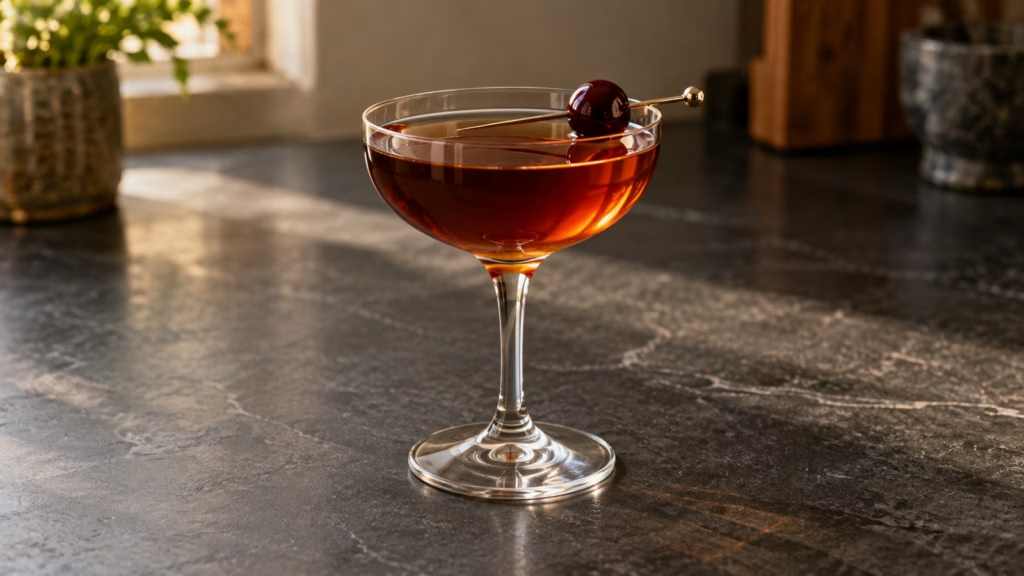
A beautifully chilled glass can still hold a disappointing Manhattan if the whiskey goes in by guesswork and the ice barely gets a stir. This Manhattan recipe starts with two parts rye whiskey to one part sweet vermouth, adds aromatic bitters, and gives the mixture enough time over ice to become cold and gently diluted. You need about five minutes, a measuring tool, and a spoon.
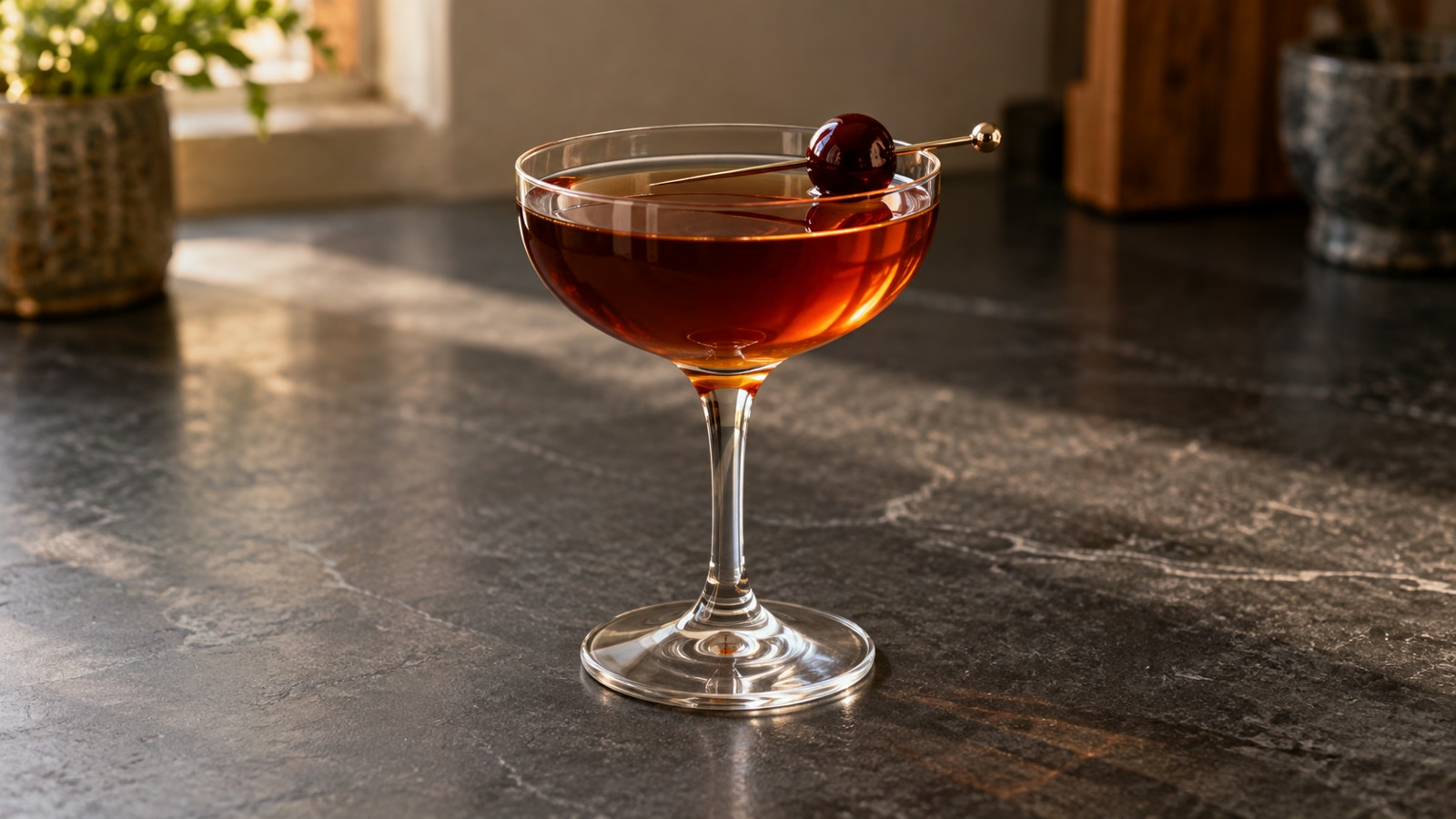
Measure the whiskey and vermouth, then let a calm stir bring the drink together.
The Manhattan recipe ratio and what each bottle contributes
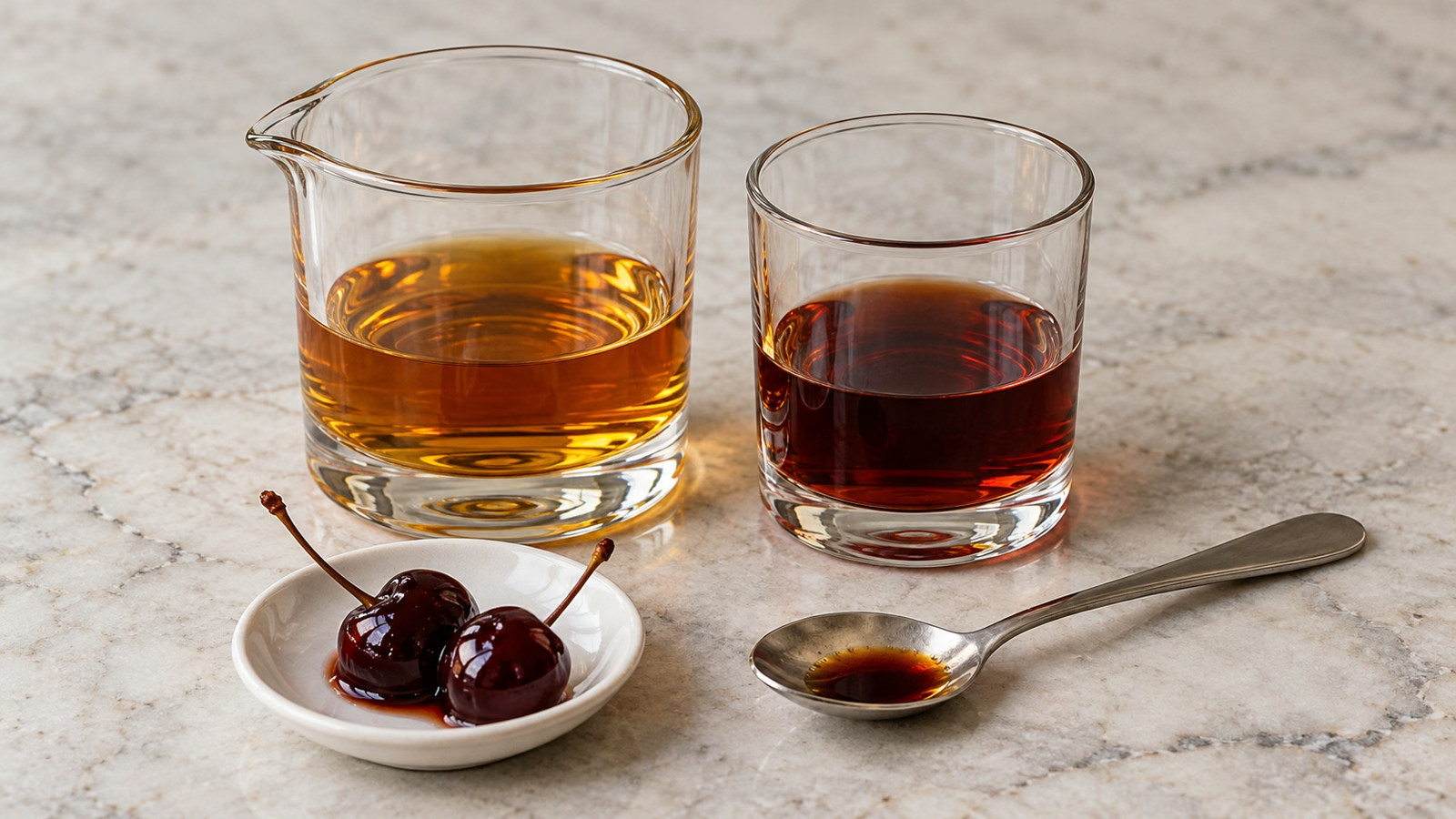
The familiar 2:1 formula is a useful home-bar starting point, rather than the only legitimate specification. The International Bartenders Association’s Manhattan uses 50 ml rye to 20 ml sweet vermouth. Here, the slightly larger vermouth share makes its herbal character easier to notice.
I would put the attention on the vermouth before reaching for a more expensive whiskey. It is a substantial part of the drink, not a rinse that disappears. Choose a sweet red vermouth you enjoy, and keep the measured amounts consistent while deciding what to change.
- Rye whiskey: Its often spicy character offers a useful contrast to sweet vermouth. The base recipe uses 80-proof whiskey; a higher-proof bottle makes a stronger drink even at the same volume.
- Sweet red vermouth: Brings wine, sweetness and botanical flavor. Dry vermouth is a deliberate variation, not a like-for-like substitute.
- Aromatic bitters: Two controlled dashes add concentrated seasoning. A dash is a brief firm shake of the bottle, not a spoonful poured freely.
- Cocktail cherry: Drain it before garnishing. Spoonfuls of its syrup change the balance, so keep that syrup out of the mixing glass.
Stir with ice, then strain into a cold glass

A Manhattan has no citrus juice or other ingredient that needs vigorous shaking. Stirring is the established method, and it leaves the drink clear rather than frothy. The ice does two jobs: it chills the mixture and supplies water as it melts.
Start with a generous amount of solid ice and stir around the inside of the glass for roughly 25–35 seconds. Ice size, room temperature and starting ingredient temperatures all change that timing. The spoon should move the ice smoothly; this is a small circular motion, not an audition for a kitchen percussion section.
- Chill the serving glass first: Fill it with ice and water while measuring, then empty it completely before straining.
- Use a practical substitute: A sturdy mixing jug and long teaspoon work if you do not own dedicated bar tools. A small fine-mesh strainer can hold back the ice.
- Serve up: Strain into the cold coupe without ice for the classic presentation. A small rocks glass with fresh ice is an alternative, with continued dilution as it sits.
- Do not chase a fixed volume: The finished amount includes melted ice. A colder, balanced drink matters more than filling the glass to its rim.
Adjust the flavor without losing the structure
Make one measured version before changing the formula. I prefer changing one element at a time: otherwise, a different whiskey, extra cherry syrup and less vermouth leave you with no clear idea which adjustment helped.
- Too sweet: First check that you used sweet vermouth rather than added syrup as well. Next time, try the IBA’s slightly drier 50:20 balance.
- Too sharp: Check the whiskey’s proof and whether the drink was stirred sufficiently. More vermouth also changes sweetness, so it is not an automatic fix for too little dilution.
- Bourbon instead of rye: Use the same measured quantity for a rounder variation. Expect the particular bottle to influence the result.
- A perfect Manhattan: “Perfect” names a style that splits the vermouth between sweet and dry. It does not mean the regular version needs apologizing for.
Keep the vermouth fresh and the serving size clear
Follow your bottle’s storage directions after opening. For example, Cocchi recommends keeping its sweet vermouth chilled and using it within a month. Return the bottle to the refrigerator after measuring rather than treating it like shelf-stable whiskey.
One cocktail is not necessarily one standard drink. With 2 ounces of 40% ABV whiskey and 1 ounce of 16% vermouth, this contains about 1.6 U.S. standard drinks before the small contribution from bitters, using NIAAA’s definition. Stirring adds water but does not remove alcohol.
- For guests skipping alcohol: Offer a clearly separate option, such as sparkling water with pomegranate grenadine. It is a different drink rather than a direct Manhattan substitute.
- For preparation ahead: Measure the whiskey and vermouth into a covered container and refrigerate briefly; stir individual portions over ice when serving.
- For serving: Keep drinking water available and do not drive after drinking. This recipe is intended for adults of legal drinking age.
Manhattan Recipe

Ingredients
- 2 fluid ounces rye whiskey about 60 ml; 80 proof for the nutrition estimate
- 1 fluid ounce sweet red vermouth about 30 ml
- 2 dashes Angostura aromatic bitters approximately 2.5 ml; dash sizes vary
- 1 cocktail cherry drained, about 5 g
- ice cubes enough to fill the mixing glass generously
Equipment
- 1 mixing glass or sturdy jug
- 1 jigger or small measuring cup
- 1 long spoon
- 1 cocktail strainer
- 1 coupe or small cocktail glass
Instructions
- Fill a coupe or small cocktail glass with ice and water while you prepare the drink.
- Measure the rye whiskey, sweet vermouth and bitters into a mixing glass or sturdy jug. Add plenty of solid ice cubes.
- Stir smoothly around the inside of the mixing glass for about 25–35 seconds, until thoroughly chilled. Timing varies with the ice and starting temperatures; do not shake.
- Empty the ice water from the serving glass. Strain the cocktail into it, leaving the mixing ice behind. Add the drained cocktail cherry and serve promptly.
Nutrition
Video
Notes
Tried this recipe?
Let us know how it turned out!Sources
- International Bartenders Association: Manhattan specification
- Cocchi: sweet vermouth storage and product information
- NIAAA: U.S. standard drink definition
- USDA FoodData Central: ingredient composition data
- Martini Rosso electronic nutrition label, hosted by Bernabei
Hi, I’m Laura, the voice behind Tastiva. I’ve always believed that eating well should feel enjoyable, comforting, and realistic—not like another complicated rule to follow. I love creating recipes that fit into everyday life, sharing simple nutrition ideas, and finding small ways to make meals feel a little better without losing the pleasure of good food.