
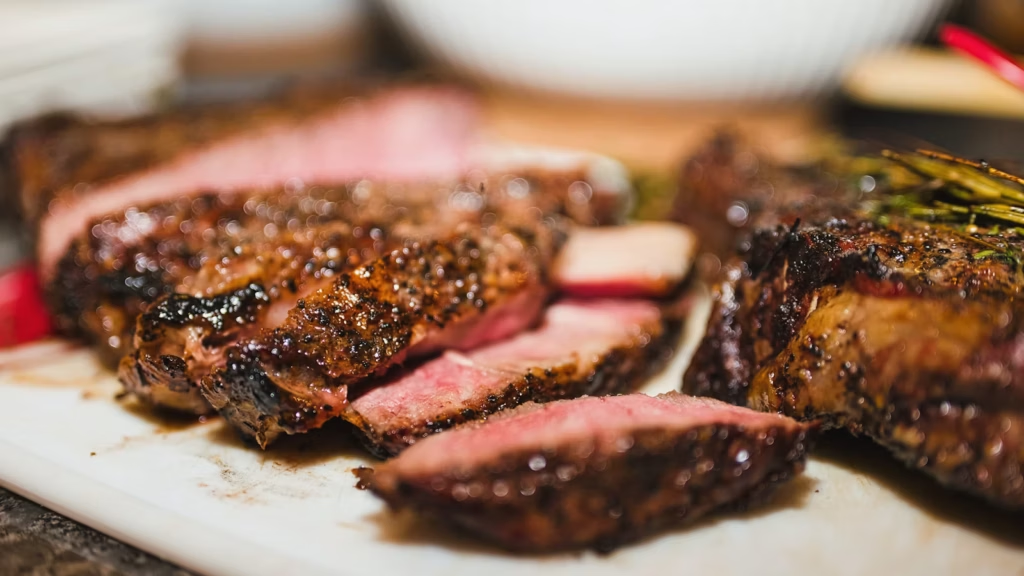
Learning how to cook steak is less about memorizing minutes and more about managing three things: a dry surface, steady heat, and the final internal temperature. Get those right and even a weeknight steak can have a deeply browned crust, a juicy center, and the kind of pan butter that makes bread mysteriously disappear.
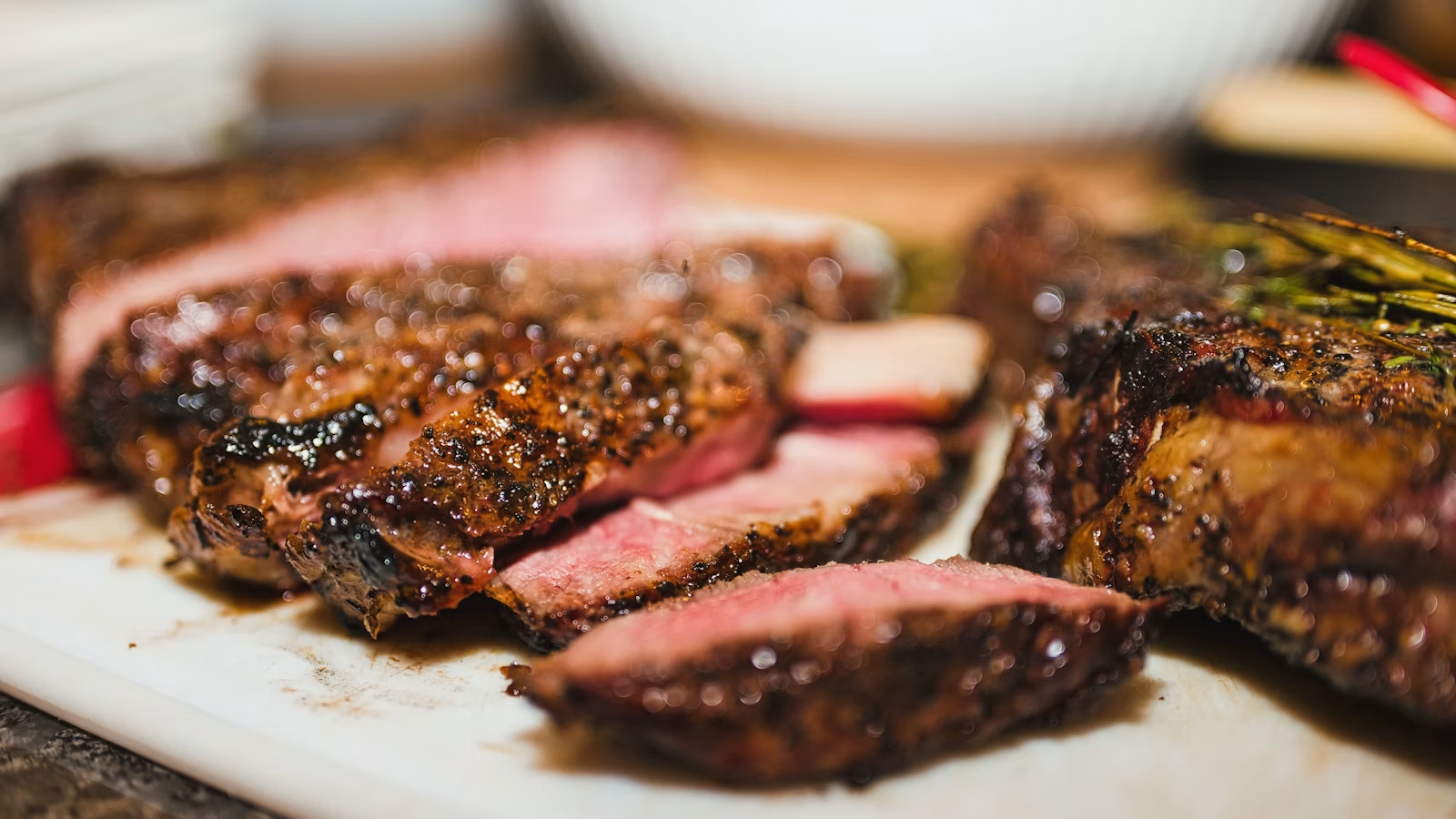
The thermometer is not an admission of defeat. It is the shortest route between an expensive steak and the dinner you actually wanted.
Choose the right steak and thickness
For pan cooking, I like boneless strip, ribeye, or top sirloin steaks about 1¼ inches thick. Thin steaks cook through before the surface develops a serious crust; very thick steaks often need an oven finish. Look for even thickness and visible marbling, then choose the cut whose balance of tenderness, flavor, and price works for you.
Keep the steak refrigerated until you begin preparing the pan. Pat it thoroughly dry with paper towels and season every surface, including the edges. Moisture is the enemy of browning because the pan must boil it away before the meat can sear. Salt and black pepper are enough; garlic and herbs join later so they do not burn.
Prepare uneven cuts and the pan
If the steaks are noticeably uneven, ask the butcher for a more uniform pair or cook them as individuals rather than pretending the thinner one will politely wait. Tie a loose butcher’s-twine loop around a floppy tenderloin or compact ribeye if it needs help holding its shape. For cuts with a thick outer fat cap, stand the steak on that edge with tongs for a minute first; rendering some fat gives the pan flavor and prevents a rubbery strip at the table.
Do not crowd the skillet. Two steaks fit comfortably in a 12-inch pan, but four usually lower the heat and create steam. If your pan is smaller, cook in batches and wipe out any burned butter before beginning the second. Open a window or run the exhaust fan early. A proper sear is delicious, but it is not subtle about announcing itself to the smoke detector. Keep a dry towel nearby for the skillet handle.
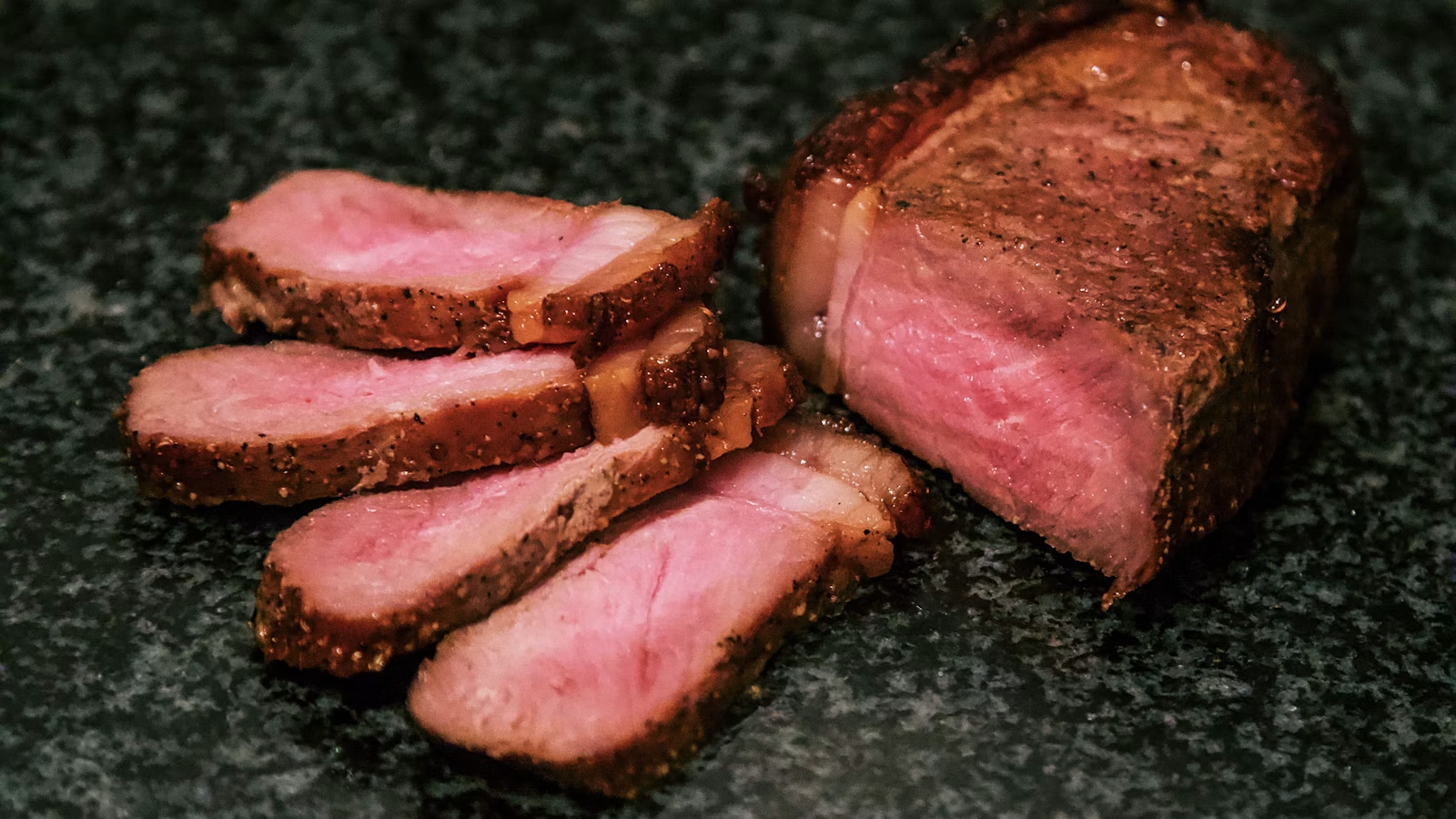
Build a browned crust without burning the pan
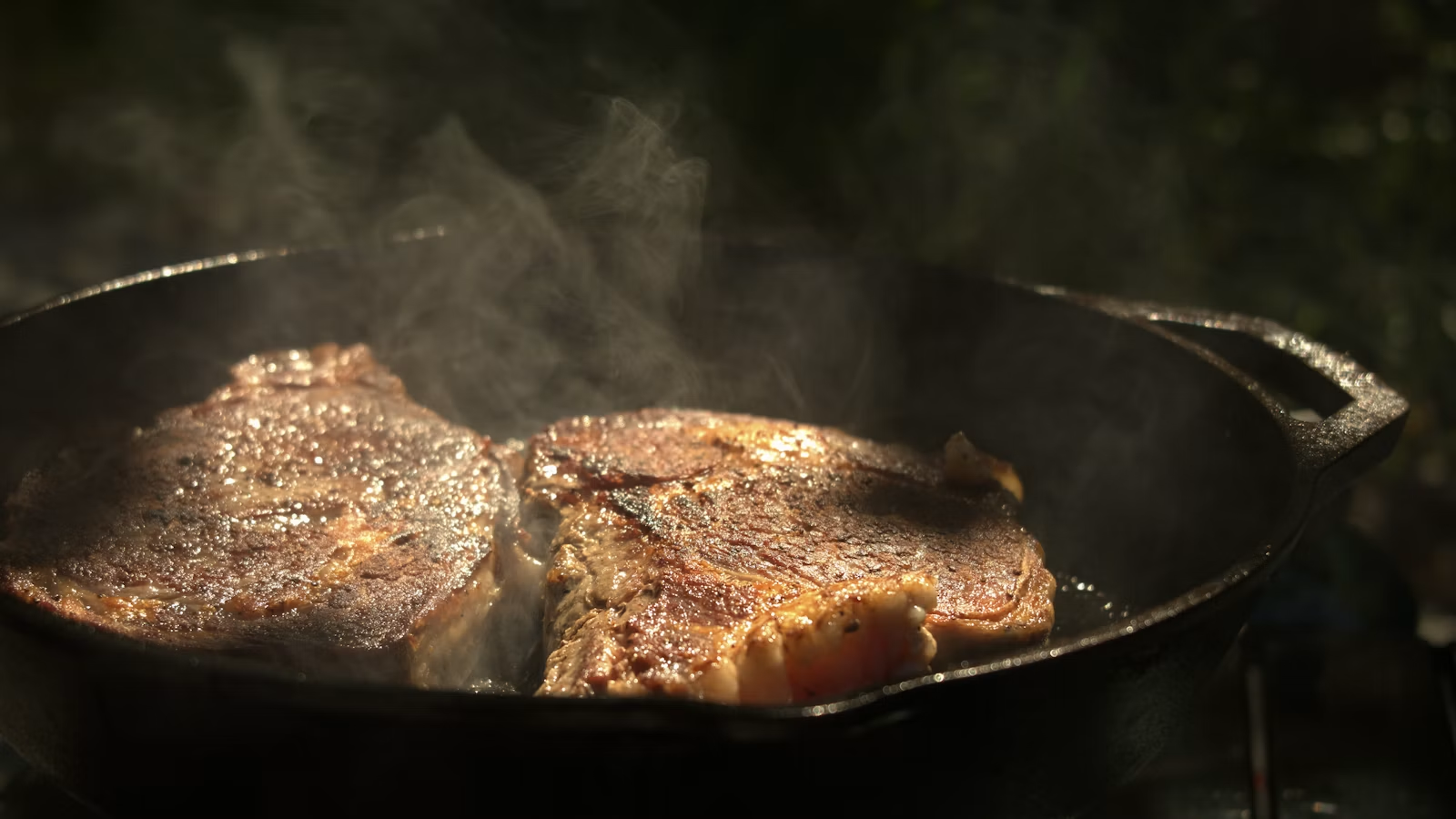
Cast iron is excellent because it holds heat, but a heavy stainless-steel skillet also works. Heat the empty pan over medium-high, then add a thin film of high-smoke-point oil. When the oil shimmers, lay the steak away from you to reduce splatter. It should sound lively immediately.
Leave the first side alone for three to four minutes. Tugging at the steak every 20 seconds tears the forming crust and tells you nothing useful. Once the meat releases easily and the underside is brown, turn it. After the second side has color, reduce the heat and add butter, crushed garlic, and thyme or rosemary. Tilt the pan carefully and spoon the foaming butter over the steak.
How to cook steak recipe
The card below gives a complete cast-iron method for two steaks. Times are estimates because thickness, cut, pan weight, and stove output all change the pace. Start checking early and let temperature—not wishful thinking—make the final decision.
Steak Recipe

Ingredients
- 2 boneless strip, ribeye, or sirloin steaks 8 to 10 ounces each and about 1 1/4 inches thick
- 1 teaspoon kosher salt
- 1/2 teaspoon freshly ground black pepper
- 1 tablespoon avocado or canola oil
- 2 tablespoons unsalted butter
- 2 cloves garlic lightly crushed
- 2 sprigs fresh thyme or rosemary optional
Equipment
- 1 12-inch cast-iron or heavy stainless-steel skillet
- 1 Instant-read thermometer
- 1 pair of tongs
- 1 Cutting board
Instructions
- Pat the steaks very dry with paper towels. Season both sides and the edges with salt and pepper.
- Heat the empty skillet over medium-high heat for 3 to 4 minutes. Add the oil; it should shimmer immediately.
- Lay the steaks in the pan away from you. Cook without moving for 3 to 4 minutes, until the undersides are deeply browned and release easily. Turn and cook the second side for 2 to 3 minutes.
- Reduce heat to medium. Add the butter, garlic, and herbs. Tilt the skillet carefully and spoon the foaming butter over the steaks for 1 to 2 minutes, turning once more if needed.
- Insert an instant-read thermometer through the side into the center. For USDA guidance, cook beef steaks to at least 145°F (63°C), then rest for at least 3 minutes.
- Transfer to a cutting board and rest 5 minutes. Slice across the grain and spoon the pan butter over the top.
Nutrition
Video
Notes
Tried this recipe?
Let us know how it turned out!Temperature, resting, slicing, and leftovers
Insert an instant-read thermometer through the side so the sensing tip reaches the center without touching the pan. USDA guidance calls for beef steaks to reach at least 145°F (63°C), followed by a rest of at least three minutes. A thermometer is more dependable than color or the familiar finger-pressure test.
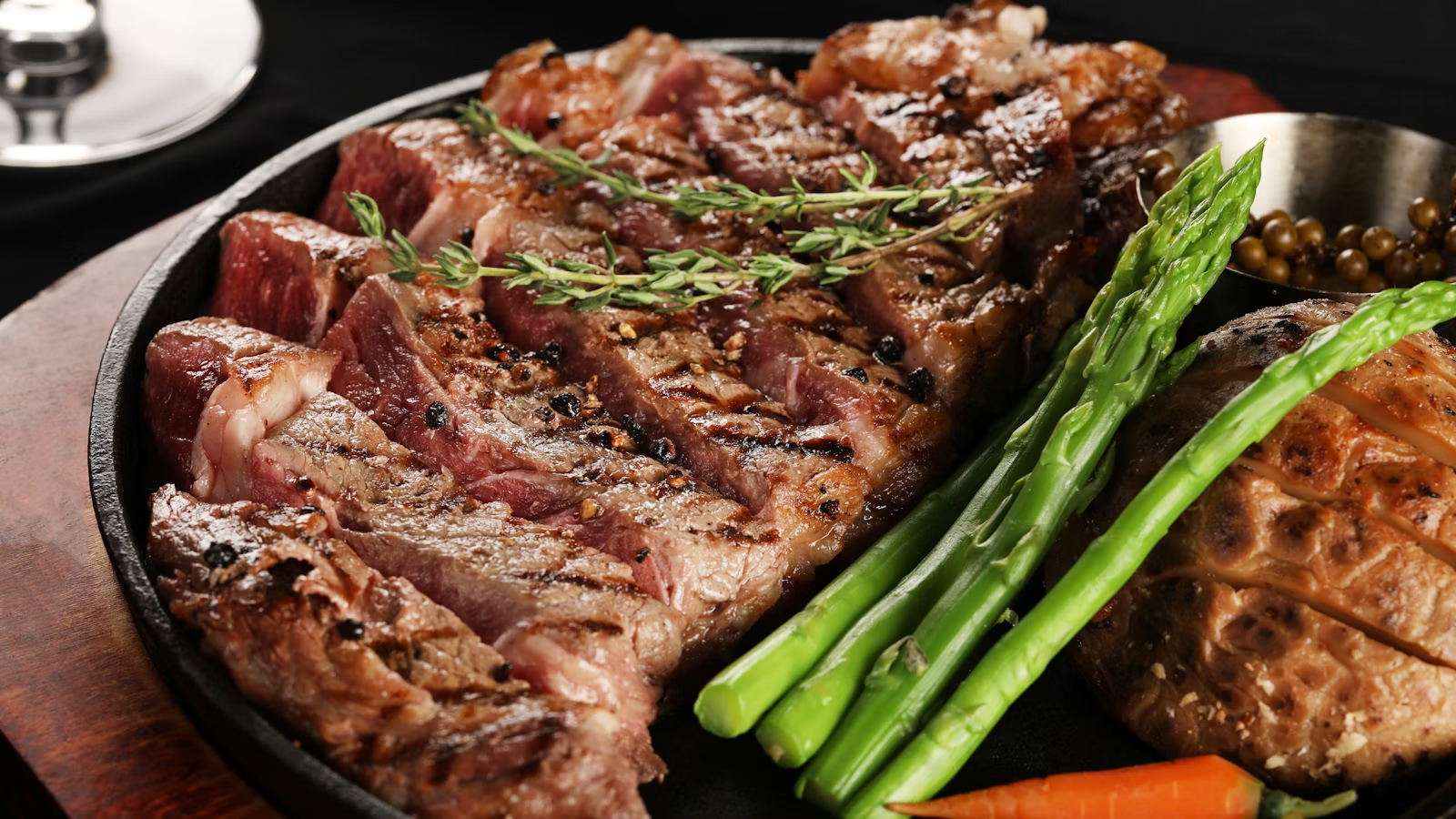
Rest the steak on a cutting board for five minutes. Cutting immediately sends juices across the board and leaves the slices drier. When it is time to carve, look for the direction of the muscle fibers and cut across them. Shortening those fibers makes each bite easier to chew, especially with sirloin.
Refrigerate leftovers promptly in a shallow airtight container and use them within three to four days. Reheat gently in a covered skillet with a spoonful of water, or slice the steak thin and serve it cold in a salad. A microwave can work, but short bursts at reduced power are kinder than one aggressive blast.
Sources
- USDA FSIS: Safe Minimum Internal Temperature Chart
- Beef. It’s What’s For Dinner: Skillet Cooking Basics
- Lodge Cast Iron: How to Sear a Steak
Hi, I’m Laura, the voice behind Tastiva. I’ve always believed that eating well should feel enjoyable, comforting, and realistic—not like another complicated rule to follow. I love creating recipes that fit into everyday life, sharing simple nutrition ideas, and finding small ways to make meals feel a little better without losing the pleasure of good food.