
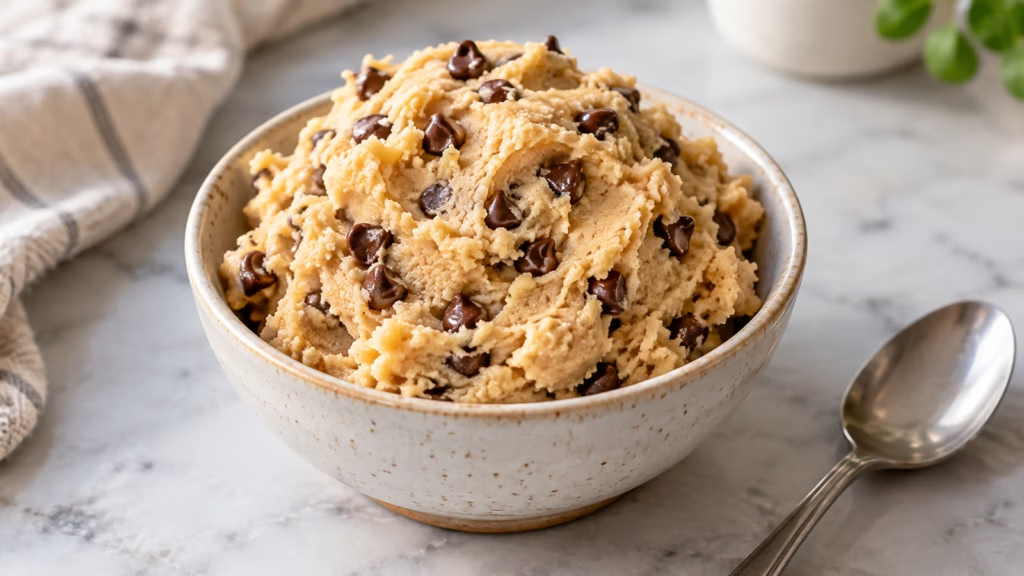
The chocolate chips are out, the butter is soft, and the mixing bowl looks dangerously tempting. If you want to know how to make edible cookie dough, start with commercially prepared flour specifically labeled ready to eat, leave out the eggs, and use pasteurized milk. Ordinary flour does not become suitable for uncooked dough simply because the recipe has no eggs.
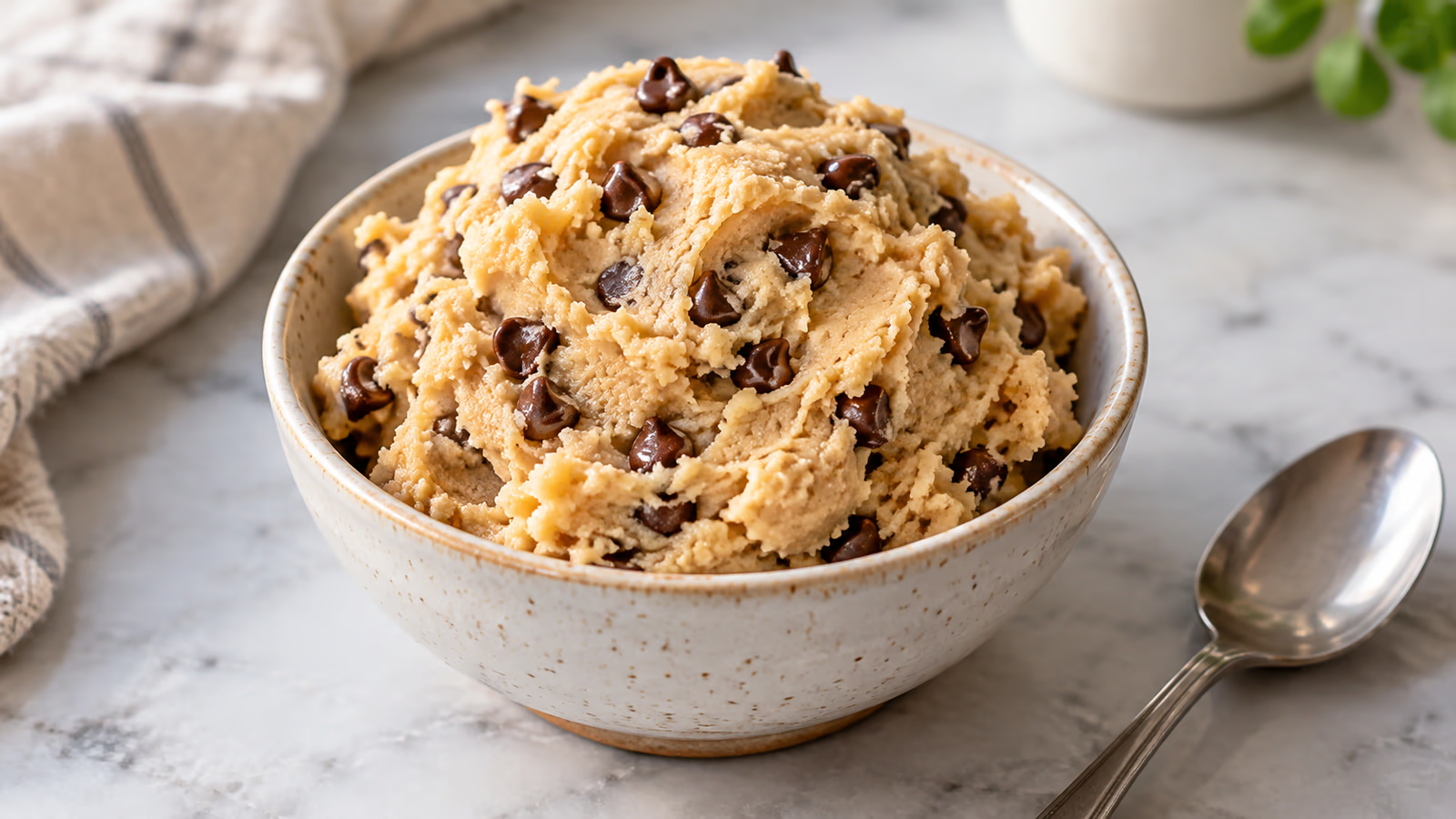
The best cookie-dough shortcut begins with the right flour, before the mixing bowl comes out.
This version keeps the familiar brown-sugar flavor and soft, spoonable texture of chocolate chip dough. It is a small chilled dessert, not a dough waiting for its turn in the oven. I would rather pause at the shopping step than turn a safety question into a guess.
Choose flour made for eating without baking
Most supermarket wheat flour is a raw agricultural food. The FDA advises against eating raw flour or trying to heat-treat it at home, because home treatments may not reliably kill harmful bacteria. A quick microwave session or oven thermometer reading is not a substitute for a validated commercial process.
- Look for an explicit ready-to-eat designation and instructions permitting use in uncooked cookie dough. Follow the manufacturer’s handling directions.
- Do not assume that bleached, organic, gluten-free or ordinary all-purpose flour is ready to eat. Those descriptions answer different questions.
- Even “heat treated” needs context. Ardent Mills distinguishes ready-to-eat flour treatments from flour products that still require a later cooking step.
- If you cannot obtain suitable flour, choose packaged cookie dough explicitly labeled edible or safe to eat raw instead of improvising with raw flour.
Keep the package until the batch is finished so you can check its storage instructions and allergen information. This recipe uses wheat flour and dairy; removing eggs does not make it suitable for every allergy. Commercial ready-to-eat flour availability varies, so check the actual product rather than assuming your usual bag qualifies.
Build the buttery, brown-sugar base
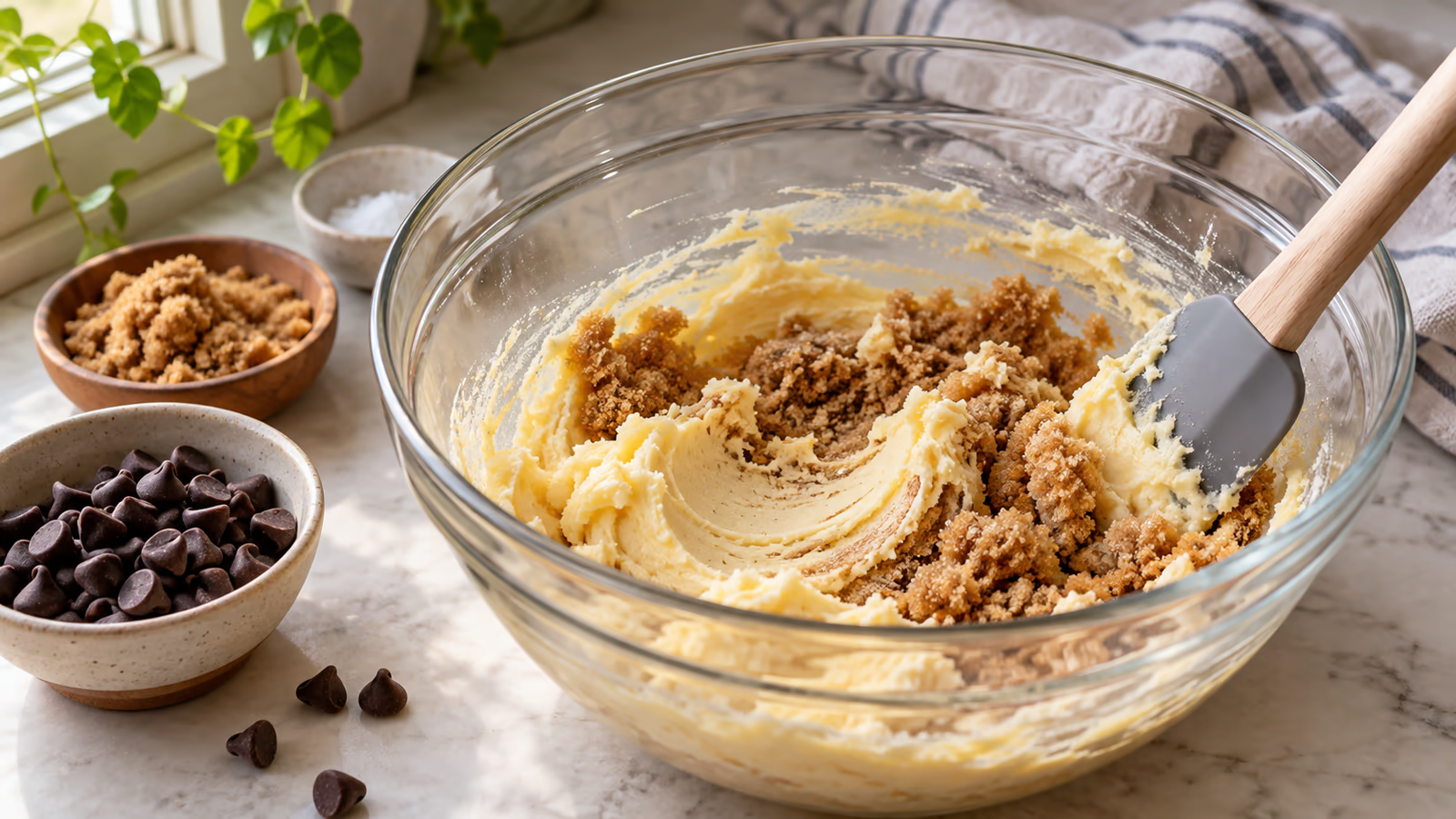
Softened butter should give under light pressure while still holding its shape. Beat it with brown and white sugars until evenly combined, then add vanilla and part of the milk. Brown sugar contributes a deeper flavor; the white sugar keeps that familiar cookie-dough sweetness. A little fine salt makes both less one-dimensional.
- Use a kitchen scale for the flour. Packing a measuring cup can produce a noticeably drier mixture.
- Choose pasteurized milk and ready-to-eat chocolate chips. Keep the equipment, counter and hands clean before starting.
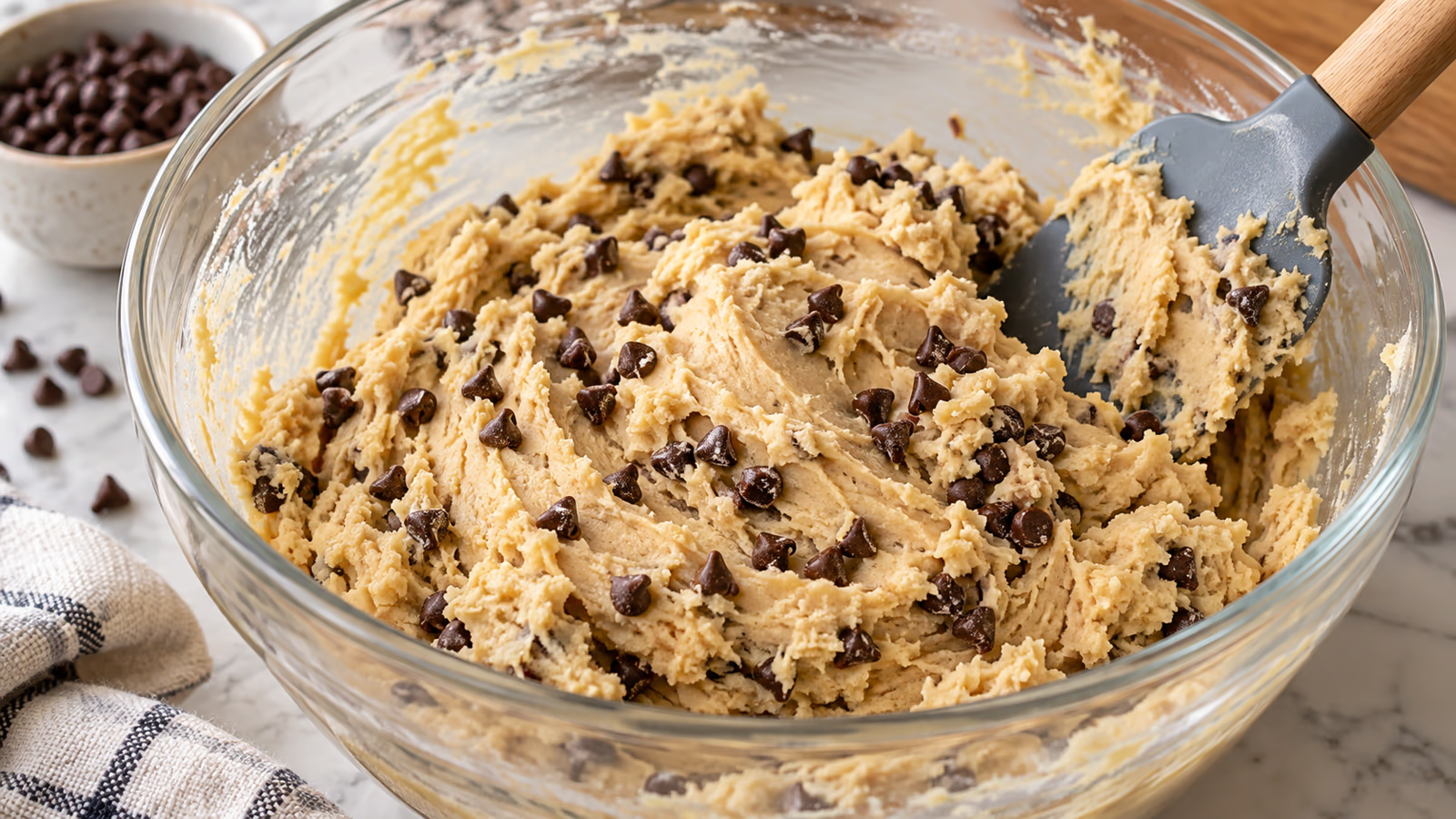
- Add the ready-to-eat flour gradually, mixing only until it disappears. Fold in the chips last so they stay distributed rather than collecting at the bottom.
Some sugar texture is normal: this is dough, not frosting. I prefer small chocolate chips here because each spoonful gets some chocolate without a large chunk taking over. If vanilla labels are confusing, the guide to pure vanilla extract explains the ingredient behind that background flavor.
Adjust the texture without changing the safety step
Add the remaining measured milk a little at a time. Different commercially treated flours can absorb liquid differently, and the goal is a thick mixture that holds a scoop, not a pourable batter. Stop adding milk when it reaches that point; the nutrition estimate counts the full amount.
- Too soft? Chill the covered bowl for about 30 minutes before deciding whether it needs adjustment. Warm butter can make an otherwise balanced dough feel loose.
- Too firm straight from the refrigerator? Let your serving soften briefly rather than thinning the whole batch.
- Want smaller portions? Roll chilled dough into bite-sized pieces with clean hands, then refrigerate them in a covered container.
Do not use ordinary raw flour to thicken the dough. This is also not a baking recipe: it contains no eggs or leavening, and baking performance has not been established. For cookies, begin with a recipe designed for the oven rather than asking this dessert to change jobs halfway through.
Serve a little and keep the rest chilled
Serve small scoops in dessert cups, or scatter a few chilled pieces over ice cream. The recipe makes about 14 portions of 37 grams when all the milk is used. Butter, sugar and chocolate make it a rich dessert; “edible” describes its intended uncooked preparation, not a nutritional advantage.
- Refrigerate promptly in a covered container at 40°F (4°C) or below. Follow any shorter storage limit on your flour or dairy packaging.
- For a conservative home plan, make only what you will eat within 3 days. This is not a laboratory-validated shelf-life claim.
- Keep time out of refrigeration within 2 hours, or 1 hour above 90°F (32°C), and use a clean spoon each time.
I would portion it before putting it away: a small cup is easier to serve than a very persuasive mixing bowl. Keep the remaining dough cold while you enjoy your portion, especially when serving outdoors.
Video guide: The Baking Explorer’s video below is a reference for mixing and serving cookie dough; its quantities and flour preparation differ. Follow this recipe’s measurements and use only commercially prepared flour explicitly labeled ready to eat. Do not follow the video’s home flour-treatment step. Home heating may not reliably make raw flour safe to eat.
Edible Cookie Dough Recipe

Ingredients
- 125 g commercially prepared ready-to-eat plain wheat flour REQUIRED: packaging must explicitly permit uncooked ready-to-eat use; do not substitute ordinary flour or home-heat-treated flour
- 113 g unsalted butter softened, not melted
- 100 g packed brown sugar
- 50 g granulated sugar
- 30 g pasteurized whole milk 2 tablespoons; add gradually as needed
- 1 teaspoon vanilla extract 4.2 g
- 1/4 teaspoon fine salt 1.5 g
- 90 g semisweet chocolate chips ready to eat
Equipment
- 1 Mixing bowl
- 1 hand mixer or sturdy spatula
- 1 Kitchen scale
- 1 covered refrigerator container
Instructions
- Verify that the flour is commercially prepared and explicitly labeled suitable for uncooked, ready-to-eat use. Follow its manufacturer instructions. If it is not, do not make this uncooked recipe with that flour. Do not try to make raw flour safe by heating it at home.
- With clean hands and equipment, beat the softened butter with both sugars until evenly combined. Mix in vanilla, salt and about half the milk.
- Gradually mix in the commercially ready-to-eat flour. Add the remaining measured milk a little at a time only until the mixture is thick and scoopable. Fold in the chocolate chips.
- Cover and refrigerate for about 30 minutes to firm slightly. Divide into about 14 small portions. This dough is intended as an uncooked dessert, not a recipe for baked cookies.
- Refrigerate promptly in a covered container at 40°F (4°C) or below. Use within 3 days as a conservative home plan, or follow any shorter manufacturer limit. Keep total time at room temperature within 2 hours, or 1 hour above 90°F (32°C).
Nutrition
Video
Notes
Tried this recipe?
Let us know how it turned out!Sources
- FDA: handling flour safely.
- CDC: preventing illness from raw dough.
- Ardent Mills: ready-to-eat and ready-to-bake flour distinctions.
- FDA: safe refrigerated storage.
- USDA FoodData Central: SR Legacy data used for ingredient-based estimates.
Hi, I’m Laura, the voice behind Tastiva. I’ve always believed that eating well should feel enjoyable, comforting, and realistic—not like another complicated rule to follow. I love creating recipes that fit into everyday life, sharing simple nutrition ideas, and finding small ways to make meals feel a little better without losing the pleasure of good food.