
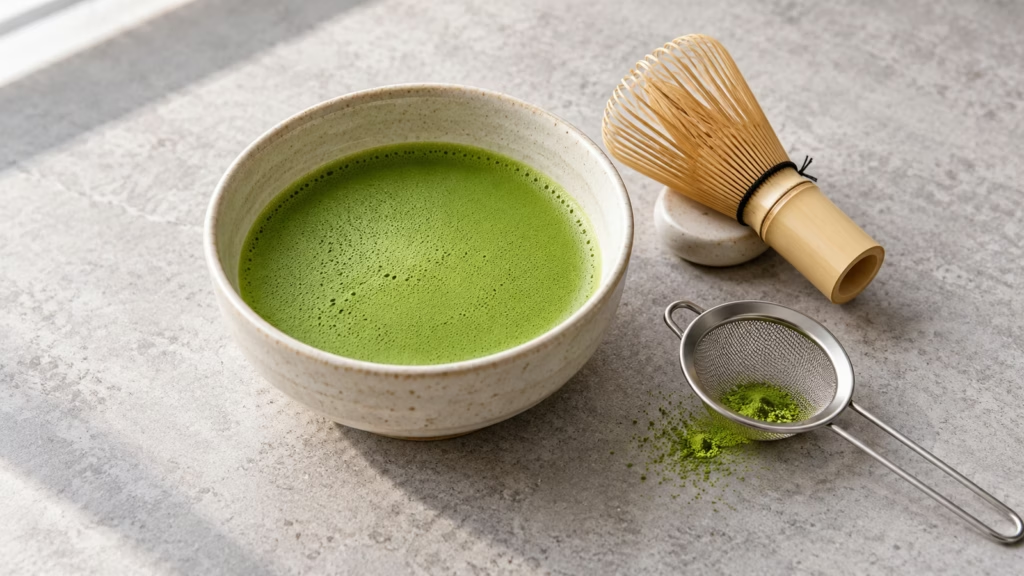
A green speck lands on your tongue, and suddenly that carefully made latte feels less like a treat. If you are wondering how to whisk matcha without clumps, start before the water goes in: sift the dry powder, give your whisk room to move, and mix the tea separately from the milk. Hotter water and a taller cloud of foam are not substitutes for breaking up dry lumps.
A smooth cup begins with the powder, long before the pretty pour.
Why matcha clumps instead of disappearing
Matcha is finely ground tea leaf. You are dispersing particles through water, not dissolving an instant powder into a clear drink. That distinction explains two different problems: dry lumps that were never broken apart, and fine sediment that settles after an evenly mixed cup has stood for a while.
Ippodo’s sifting guide notes that clumps develop naturally and do not simply vanish when hot water reaches them. I would fix that dry-powder step before buying another whisk or adding more milk to disguise the texture.
- Lumps appear straight away: the powder needs finer sifting or more thorough mixing.
- A smooth drink settles later: stir or shake it again. Settling is normal for suspended tea particles.
- The drink looks foamy but feels gritty: foam is only the surface. Check the liquid underneath for dry flecks.
- The powder looks damp or smells wrong: follow the producer’s storage advice and assess the product before trying to rescue its texture.
Start with plain matcha, not a sweetened latte mix, when following a tea-whisking method. Mixes can contain sugar, milk powder, or thickeners and may have different directions. Tastiva’s Japanese green tea guide explains how powdered matcha differs from leaf teas that you steep and strain.
How to whisk matcha with a bamboo whisk
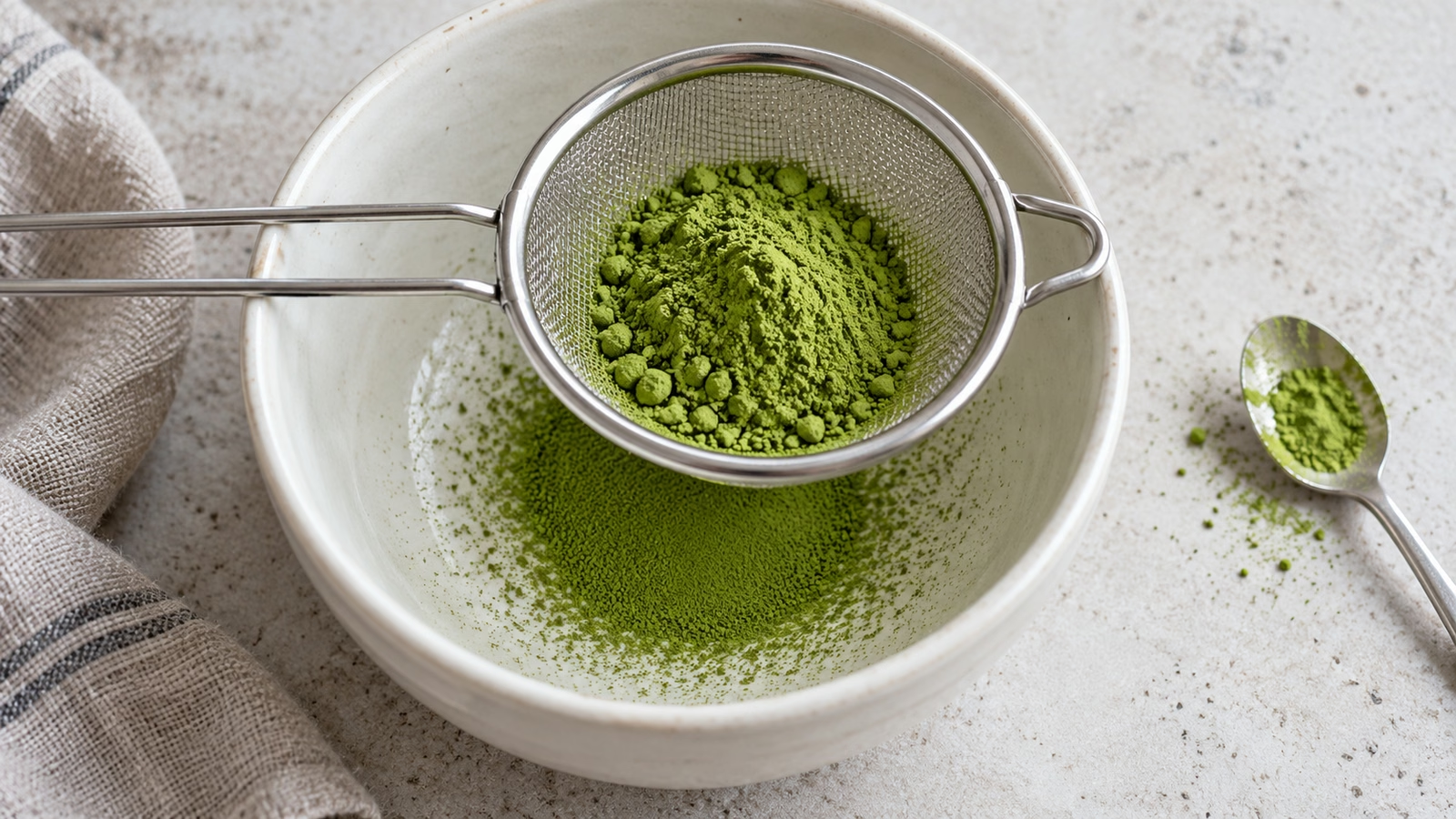
A bamboo whisk, or chasen, needs space for short, quick strokes. Choose a wide bowl rather than a narrow mug. For a practical reference, Ippodo’s classic matcha method uses 2 grams of powder, 60 milliliters of water at 176°F (80°C), and about 15 seconds of brisk whisking. Follow your tea’s directions if they differ.
- Prepare the whisk: soften its tips in water for a minute or two, then empty and dry the mixing bowl. Keep the strainer dry too.
- Sift the measured powder: rest a fine-mesh tea strainer over the bowl and gently push the powder through with a spoon or bamboo scoop.
- Add the water: measure it so you are not trying to mix a heap of powder into a few drops, or chasing it around a full mug.
- Move back and forth: use quick, small M-shaped strokes rather than slow circles. Keep the movement in the liquid without grinding the whisk into the bowl.
- Check, then finish: look for an even green mixture without dry islands. Add more water or milk only after the base is mixed.
The time is a starting point, not a stopwatch test you can fail. Bowl shape, whisk condition, and the amount of tea change what happens. I would stop to inspect the liquid rather than keep beating it solely to build a thicker foam cap.
No bamboo whisk? Choose a workable alternative
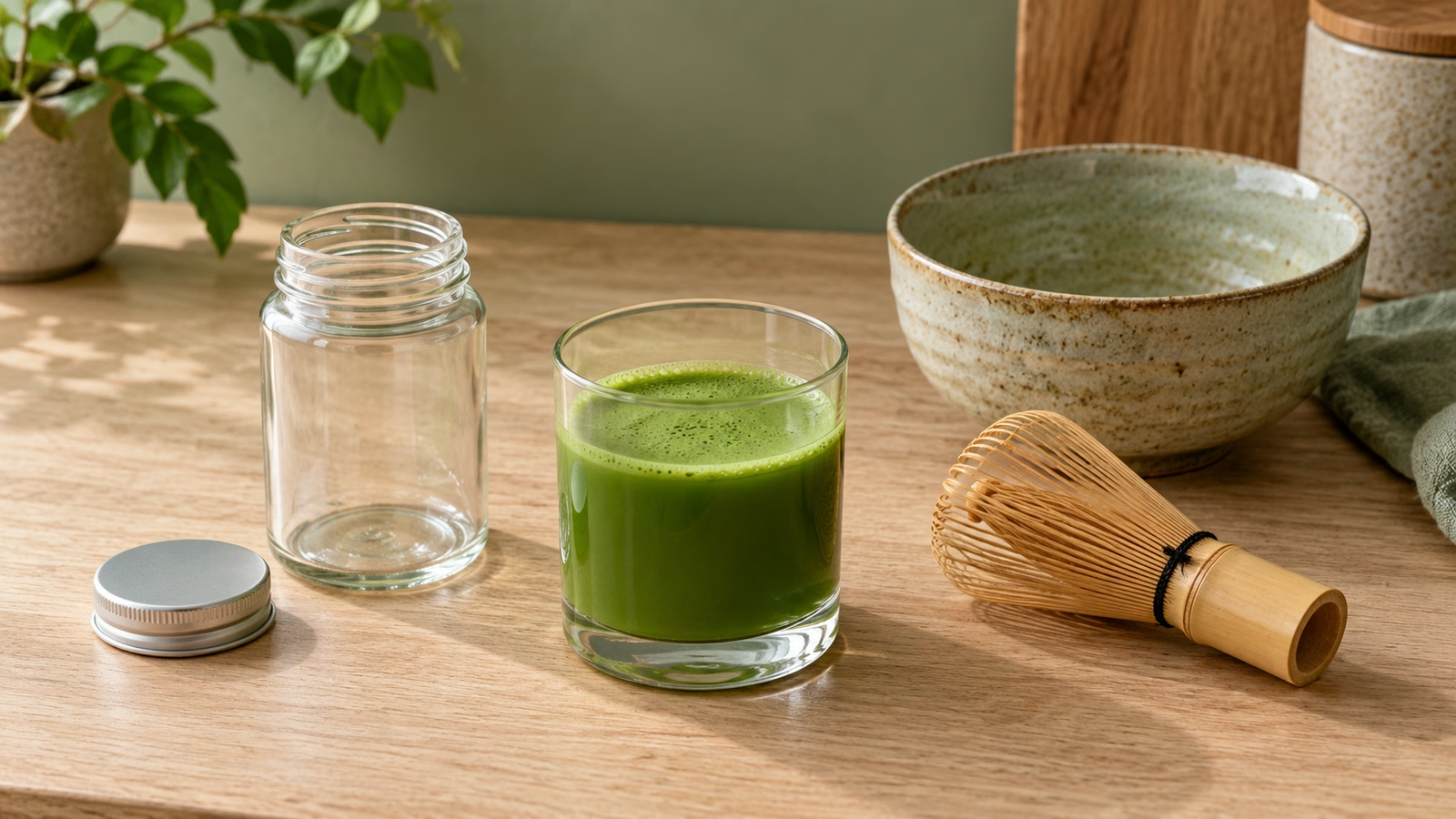
For an iced drink, a clean bottle or jar with a secure lid is a useful option. Ippodo recommends shaking matcha with cold water and notes that it may settle again. Use a container with room for the liquid to move, and open it carefully. Do not shake hot liquid in a sealed jar.
- Cold jar method: sift first, add cold water, close securely, and shake until evenly mixed. Inspect the bottom and sides for remaining dry powder.
- Small kitchen whisk: a compact whisk can help disperse sifted powder in a bowl, though it may not make the same fine foam as a chasen.
- Spoon alone: it is useful for stirring settled tea. It is less effective at breaking up a bowlful of dry lumps, so do not skip the strainer.
- Cold-whisked matcha: hot water is not mandatory. Ippodo also publishes a cold-water whisking method; cold preparation still begins with sifting.
For a latte, mix the tea and water first, then add milk. This also keeps the bamboo whisk working with tea rather than a sticky, sweetened drink. With fruit-matcha combinations now on café menus, it is tempting to assemble everything at once. Keeping the tea base separate makes the texture much easier to judge. The strawberry matcha latte recipe uses that same approach with real mashed berries.
Fix the next cup and keep the whisk ready
Change one thing at a time. If you switch the tea, water, bowl, and tool together, you will not know which change helped. My first adjustment would be the simplest: use a dry strainer and check that every bit of powder has passed through it.
- Lumps on the bowl’s sides: pause, bring them back into the liquid gently, then whisk again. A larger bowl can keep the work less cramped.
- A bitter cup: bitterness is a flavor issue, not proof that you need more whisking. Check the powder amount and your producer’s water-temperature guidance.
- A dusty finish after standing: give the drink another gentle mix. Adding boiling water will not turn ground leaf into instant tea.
- Brittle or broken whisk tips: replace a damaged whisk. For routine care, Ippodo advises rinsing after use, gently removing trapped powder, and air-drying rather than closing it in a case.
Keep the tin tightly closed and use a dry scoop. For the whisk, follow the maker’s care directions; Ippodo recommends water without soap and a whisk stand for maintaining its shape. A little attention after the cup is easier than picking dried tea out of the tines later.
Ippodo Tea’s brief usucha demonstration shows the brisk M-shaped whisking movement described above. It uses a bamboo whisk; the cold-jar alternative remains a separate method.
Sources
- Ippodo: Why and How to Sift Matcha
- Ippodo: Classic Matcha Preparation
- Ippodo: Cold-Whisked Matcha
- Ippodo: Shaking Matcha and Natural Settling
- Ippodo: Bamboo Whisk Care

Hi, I’m Laura, the voice behind Tastiva. I’ve always believed that eating well should feel enjoyable, comforting, and realistic—not like another complicated rule to follow. I love creating recipes that fit into everyday life, sharing simple nutrition ideas, and finding small ways to make meals feel a little better without losing the pleasure of good food.