
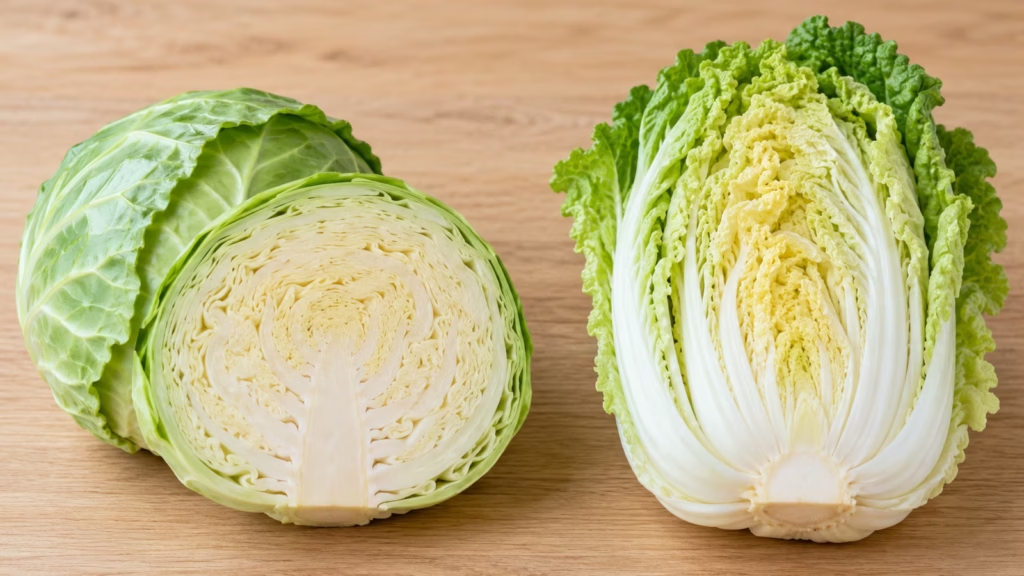
The shopping list says cabbage, and the produce bin offers two very different heads. One is round and tightly packed; the other is long, crinkly and almost leafy at the top. For green cabbage vs. napa cabbage, the useful answer is texture: green cabbage gives you a sturdier crunch, while napa has more delicate leaves and juicy white ribs. They can trade places in plenty of meals, as long as the cutting and cooking change with them.
Choose the cabbage for the texture you want, then adjust the cut and the moment it goes into the pan.
Green cabbage vs. napa cabbage at a glance
Standard green cabbage forms a compact round head with smooth, closely packed leaves. Napa grows in an elongated head with pale, crinkled leaves and broad white ribs. University of Minnesota Extension describes napa’s leaves as thinner and more tender than round cabbage. That distinction matters more to a soup pot than whether the two vegetables occupy the same shelf.
- Green cabbage: firm leaves, a dense head and a more substantial bite. I’d choose it for a slaw that needs structure, a browned skillet, or a longer-cooked dish.
- Napa cabbage: tender leafy tops with thicker, juicy ribs. It suits quick soups, lightly cooked vegetables and softer raw salads.
- Flavor: napa is generally milder and a little sweeter. Dressing, salt, heat and cut size still shape the finished dish, so the variety is only the starting point.
- Shopping names: napa may be labeled Chinese cabbage. Bok choy can share that broad label but has separate stalks rather than a napa-style head; our pak choi guide helps identify it.
Cabbage appears in Pinterest’s 2026 Cabbage Crush forecast, and Canadian Living revisited its cooking possibilities in September 2026. The renewed attention is a good excuse to learn the differences, rather than assume every cabbage needs the same treatment.
Where the swap works, dish by dish
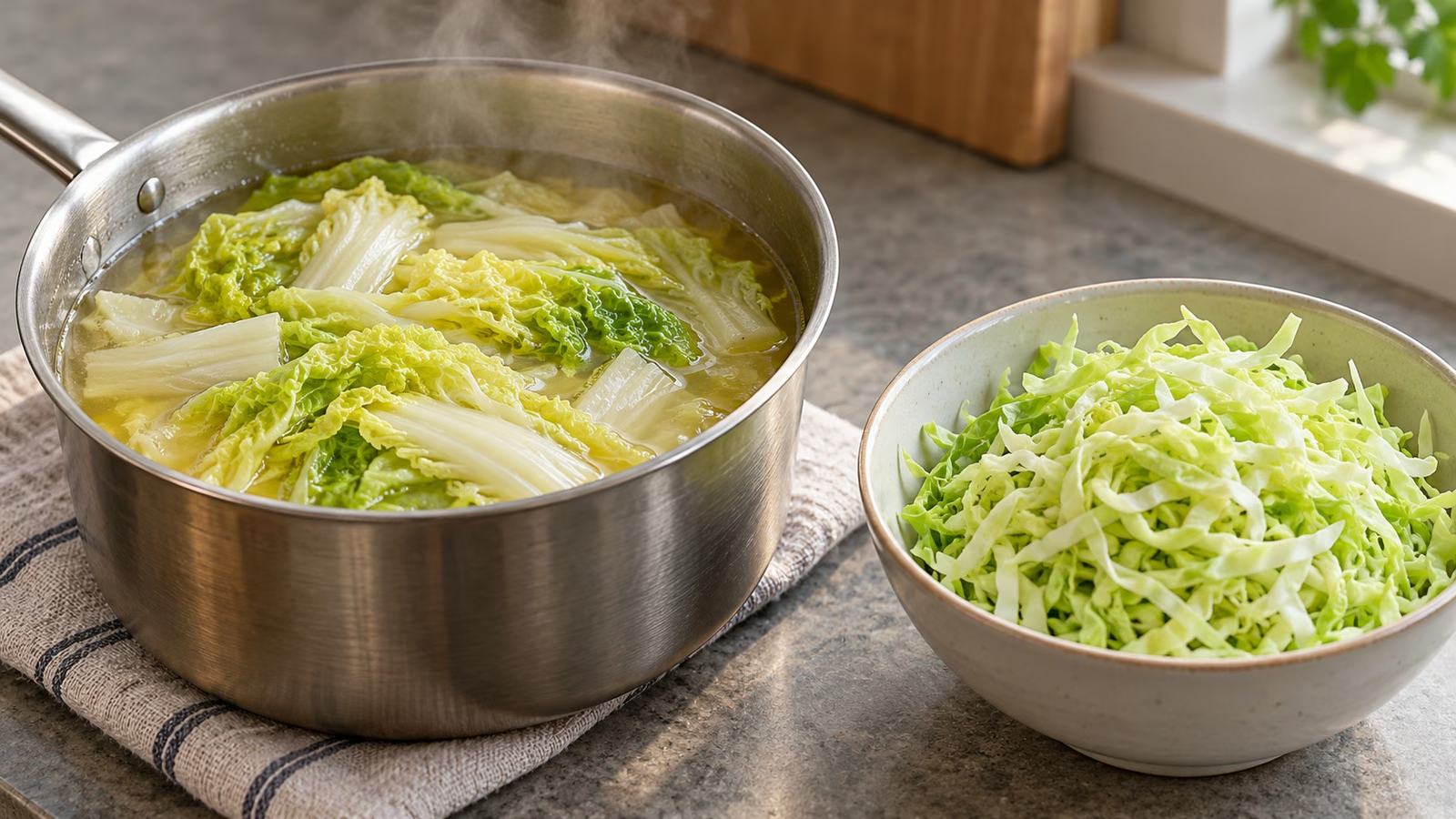
For flexible everyday cooking, both can provide cabbage flavor and leafy bulk. The swap becomes less exact when a dish depends on a rigid wedge, a particular leaf shape or a long hold after dressing. I would be more relaxed with a weeknight soup than with a recipe whose cabbage leaves are the whole structure.
- Slaw: green cabbage supplies a firmer bite; napa makes a softer salad with crisp ribs. If using napa in a green-cabbage slaw, dress it nearer serving and expect a different texture.
- Stir-fry: either can work. Cut green cabbage into finer strips; keep napa ribs separate from the leafy tops so they can enter at different times.
- Soup: green cabbage can go in earlier and cook toward tenderness. Add napa leaves later, especially when the broth already contains ingredients that cannot tolerate a long simmer.
- Dumpling filling: finely chop either variety and follow the recipe’s salting, draining or cooking step. A wetter filling can make wrapping difficult; switching cabbage does not remove that step.
- Roasted wedges: a dense green head is the easier choice when you want a sturdy piece that holds together. Napa needs a recipe built around its looser leaves and thicker ribs.
In Tastiva’s cabbage and white bean skillet, green cabbage gets room to soften and brown. In our cabbage dumpling soup, napa’s ribs start first and its leaves join later. Those are different jobs, even though both dinners begin with cabbage.
Change the preparation before changing the whole recipe
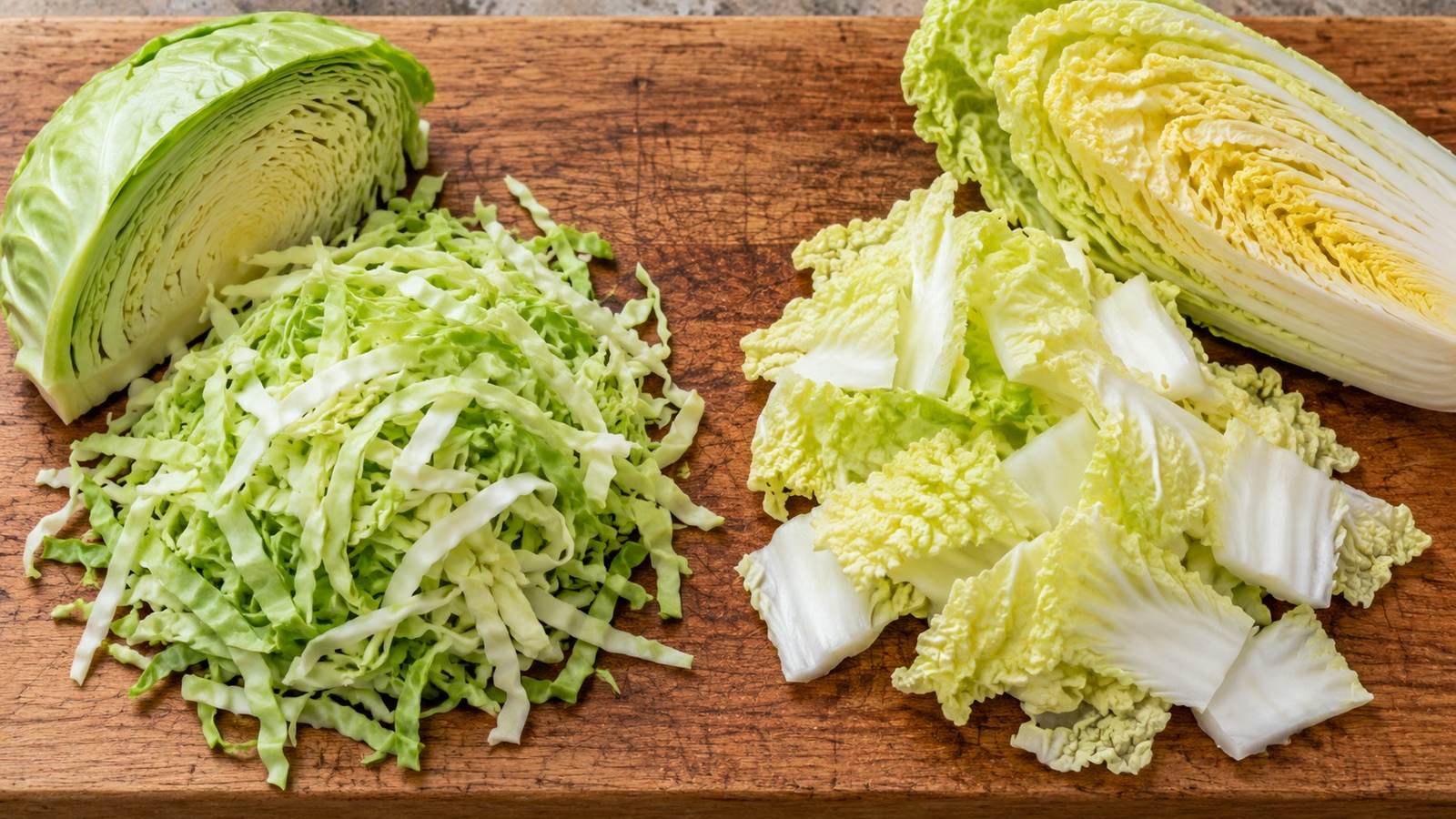
A head-for-head substitution is a poor measuring system: one cabbage can be much heavier than another. When a recipe gives a prepared weight, use that as the starting point after trimming. If it gives cups, match the described cut and avoid packing the measure tightly unless instructed.
- Trim deliberately. Remove damaged outer leaves. For shreds, quarter green cabbage and cut away the hard core; keep enough core in a roasting wedge to hold its leaves together.
- Wash, then drain. The FDA recommends running water, without soap or produce detergent. Rinse between napa’s layers where grit may hide.
- Cut for the heat. Finer green-cabbage strips soften more readily than thick chunks. With napa, separate broad white rib pieces from the thinner tops when their different cooking needs matter.
- Use texture as the checkpoint. In a quick dish, taste a safely cooked piece of the vegetable for the bite you want. A timer written for napa is not a promise that green cabbage will be equally tender.
- Make one change at a time. Keep the sauce, pan and other ingredients steady while adjusting the cabbage. Swapping three things at once makes a watery result rather harder to explain.
For stir-frying, drain or dry washed cabbage well so you are not pouring extra water into the skillet. For soup, that surface moisture matters less. I’d save the careful drying for the dish that actually benefits from it.
When a close substitute is still the wrong choice
Some recipes ask more of cabbage than flavor. Stuffed leaves need to bend without tearing, fermented cabbage depends on a deliberate process, and a salad prepared far ahead needs to keep its texture. In those cases, choose a recipe designed for the cabbage you have instead of forcing a one-for-one promise.
- Stuffed leaves: napa’s broad ribs and delicate tops handle differently from round cabbage leaves. Use the specified blanching and trimming method; do not assume the same leaf size means the same strength.
- Kimchi and sauerkraut: start with a reliable recipe for your cabbage and keep its preparation and salt instructions intact. This cooking-swap guide is not a fermentation formula.
- Meal planning: use the more delicate napa earlier when both are in the refrigerator. Keep cut produce refrigerated and follow package dates where provided.
- Nutrition comparisons: do not turn a texture decision into a contest over which cabbage is universally better. Your portion, dressing, salt and the rest of the meal also matter.
The simplest choice is often the one that avoids extra work: green cabbage when structure is the point, napa when you want tenderness quickly. If a recipe is precise about its cabbage, let that specificity help you rather than treating it as a challenge.
Chef Martin Yan compares napa and green cabbage in this short video from Melissa’s Produce, with ideas for using napa in salads, soups and stir-fries.
Sources
- University of Minnesota Extension: identifying napa and bok choy
- University of Missouri Extension: cabbage varieties and culinary uses
- University of Tennessee Extension: selecting and preparing cabbage
- U.S. FDA: selecting and serving produce safely
- Pinterest Predicts 2026: Cabbage Crush
- Canadian Living: September 2026 cabbage coverage

Hi, I’m Laura, the voice behind Tastiva. I’ve always believed that eating well should feel enjoyable, comforting, and realistic—not like another complicated rule to follow. I love creating recipes that fit into everyday life, sharing simple nutrition ideas, and finding small ways to make meals feel a little better without losing the pleasure of good food.